
Search results for "Emotional cues" in Home Design Ideas

 2MIX interiors
Amy Brogna Baione
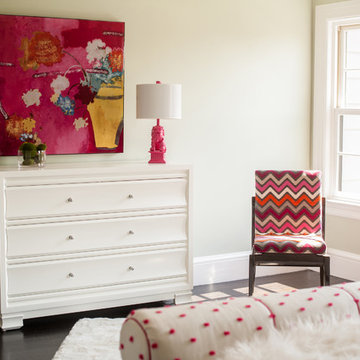
Example of a mid-sized transitional guest dark wood floor and brown floor bedroom design in Boston with beige walls and no fireplace
Example of a mid-sized transitional guest dark wood floor and brown floor bedroom design in Boston with beige walls and no fireplace
 Boyenga Team / Compass
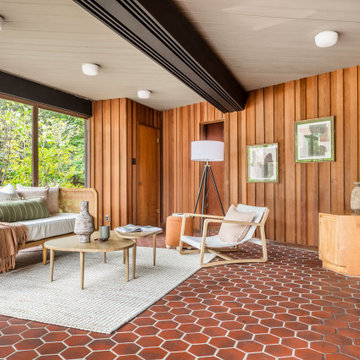
At 19 Irving Avenue, the family room unfolds as the emotional center of Joseph Eichler’s personal residence—a space where architecture, light, and daily life converge in a way that feels both effortless and intentional.
7
From the moment you enter, the room reveals Eichler’s emerging vision of California Modern living. Walls dissolve into glass, pulling in views of the surrounding landscape and the geometric pool beyond, while natural light moves freely through the space from morning to evening. The effect is immersive—less like a room and more like a continuation of the outdoors.
The proportions are deliberate yet relaxed. Clean lines and an open layout allow the space to breathe, while subtle architectural cues—beam lines, ceiling planes, and sightlines—quietly guide movement and perspective. There’s no sense of confinement; instead, the room feels expansive, designed to flex with the rhythms of everyday life.
It’s easy to imagine how this space functioned for Eichler and his family—not as a formal living room, but as a place to gather, to connect, to live. That distinction matters. This wasn’t about showcasing design for its own sake; it was about redefining how a home could feel—casual, connected, and deeply human.
In many ways, the family room at 19 Irving is where Eichler’s philosophy comes into focus. The openness, the transparency, the seamless indoor-outdoor flow—it all begins here, in a space that quietly set the tone for an entirely new way of living in California.
Find the right local pro for your project
 Mayflower Construction Group
How to Tell When a Design Trend is Timeless
Design trends come and go, but some styles withstand the test of time. Whether in architecture, interior design, or branding, timeless design is one that remains relevant and appealing for decades. But how can you tell if a trend is truly timeless or just a fleeting fad? Here are key indicators to help you identify designs that will never go out of style.
1. Simplicity Over Complexity
Timeless designs are often clean, simple, and functional. They avoid excessive ornamentation or gimmicky elements that might feel outdated in a few years. Classic materials, neutral color palettes, and well-balanced proportions contribute to a look that remains fresh over time.
2. Rooted in Functionality
If a design prioritizes function as much as form, it is more likely to endure. Practicality and usability should be at the core, ensuring that the design continues to serve its purpose efficiently. In construction, for example, well-planned layouts and durable materials contribute to long-lasting appeal.
3. Inspired by Nature
Natural elements, such as stone, wood, and earth tones, have always been a staple of timeless design. Since nature itself is everlasting, incorporating organic textures and colors helps create a look that never feels outdated.
4. Influenced by History, Not Hype
Timeless designs often take cues from historical influences that have proven their longevity. Architectural styles like mid-century modern, classical, and industrial remain relevant because they have strong foundations in design principles rather than passing fads.
5. Balanced and Harmonious Composition
Good design follows fundamental principles such as symmetry, proportion, and scale. If a trend maintains a sense of balance and harmony, it’s more likely to stand the test of time. Designs that feel chaotic or unbalanced tend to fade quickly as they become overwhelming or impractical.
6. Adaptability Across Different Eras
A timeless design is versatile enough to blend with evolving styles and trends. Whether paired with modern elements or classic details, it should integrate seamlessly without looking out of place.
7. Enduring Materials and Craftsmanship
Materials and craftsmanship play a major role in a design’s longevity. High-quality materials like marble, hardwood, and concrete age beautifully, while cheap, synthetic alternatives often deteriorate and lose appeal. Investing in quality ensures a long-lasting impact.
8. Avoiding Overly Trendy Details
Fads are often characterized by extreme variations in color, form, or material. If a design heavily relies on a specific moment’s aesthetic (like neon colors in the '80s or millennial pink in the 2010s), it will likely feel outdated once the hype fades.
9. Emotional Connection and Comfort
Timeless design tends to evoke a sense of comfort, nostalgia, or familiarity. Whether in architecture, web design, or fashion, people gravitate toward designs that make them feel at ease and connected to something meaningful.
Conclusion
The key to identifying a timeless design trend is recognizing qualities that prioritize longevity, function, and balance over fleeting hype. Whether designing a website, a home, or a brand identity, choosing elements that are simple, high-quality, and adaptable will ensure lasting appeal.
Do you want a design that stands the test of time? Let’s create something that never goes out of style!

1