
Search results for "Fertilizer" in Home Design Ideas
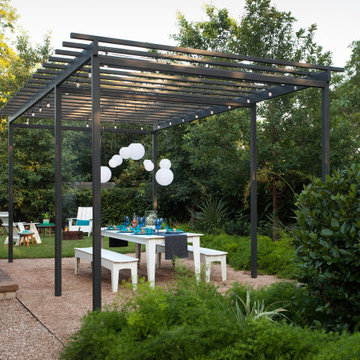

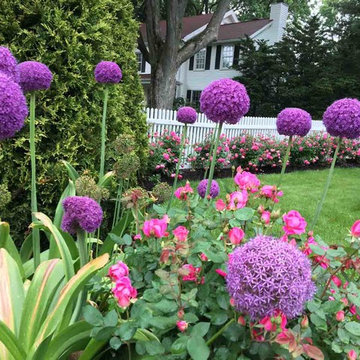
 English Gardens And Designs LLC
Inspiration for a large traditional full sun backyard mulch formal garden in New York.

Find the right local pro for your project
 MJ McCabe-Garden Design
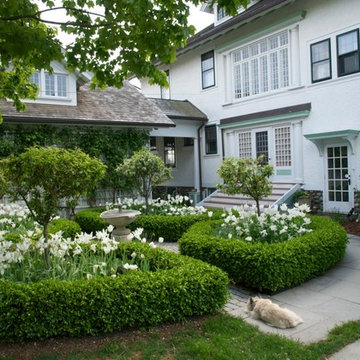
M J McCabe-Garden Design
Inspiration for a traditional landscaping in Bridgeport.
Inspiration for a traditional landscaping in Bridgeport.
 Tom Meaney Architect, AIA
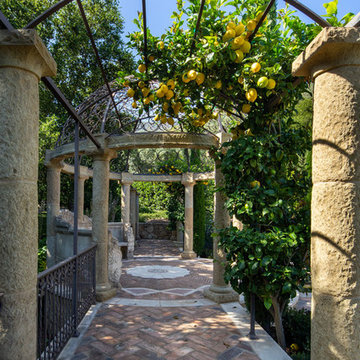
Wrought iron and stone arbor with crawling lemon trees.
Inspiration for a huge mediterranean full sun side yard stone water fountain landscape in Santa Barbara.
Inspiration for a huge mediterranean full sun side yard stone water fountain landscape in Santa Barbara.


 The Gardener of Urban
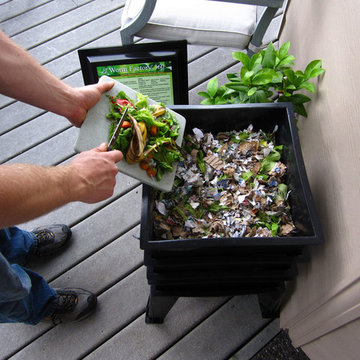
Your worm composter fits anywhere. No mess.
Mid-sized porch vegetable garden idea in DC Metro
Mid-sized porch vegetable garden idea in DC Metro
 English Gardens And Designs LLC
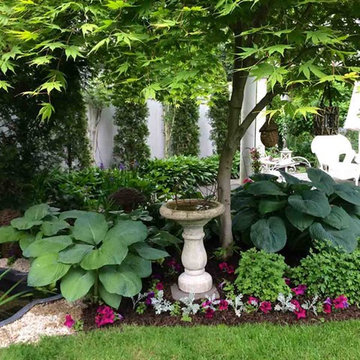
Photo of a mid-sized traditional shade backyard mulch formal garden in New York.
 English Gardens And Designs LLC
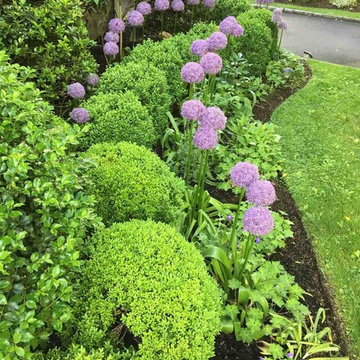
Design ideas for a mid-sized traditional full sun backyard mulch formal garden in New York.

 Steve Masley Consulting and Design
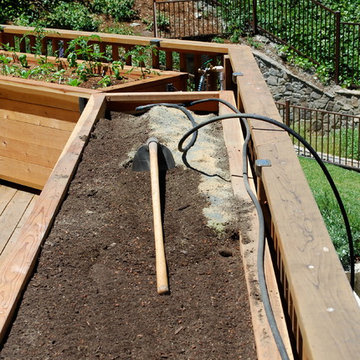
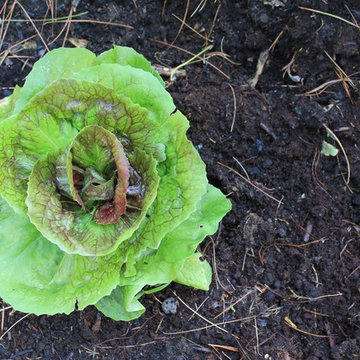
Organic soil amendments are cultivated into the soil. Since their nutrients are released by soil microbes, they need to be mixed into the soil so they're in contact with the soil food web. These organic fertilizers are built into the soil at the start of the season, and release over time--no need for additional fertilizers, it's like winding up a clock.
Photo by Steve Masley


 Northern Lights Exteriors
James Hardie Aspyre V-Groove Primed & Painted.
Inspiration for a contemporary yellow two-story concrete fiberboard house exterior remodel in Denver
Inspiration for a contemporary yellow two-story concrete fiberboard house exterior remodel in Denver

 Southern Living Plant Collection
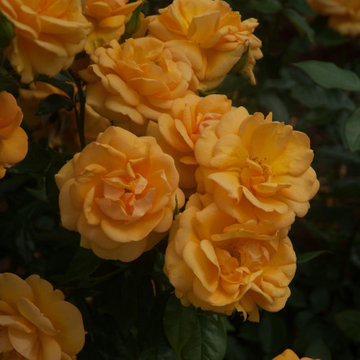
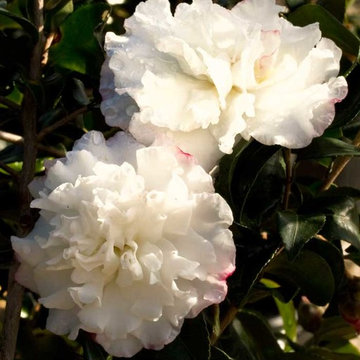
Compact and mounded, Snow offers large, uniquely frilled double white flowers with magenta edges in fall. Copper new spring growth adds even more interest.
FEATURES
Bloom/Feature White and magenta blooms in the fall
Plant Type Shrubs
Evergreen or Deciduous Evergreen
USDA Zones 7,8,9
Zone Detail Hardy to 0°F
Key Features Fall blooming
Use Accent, hedge
Exposure Full sun to part shade
Bloom Season Fall
Dimension 5-7' H x 5-6' W
Growth Rate Moderate
CARE
Water Water as needed
Soil Type Well-drained sand to clay soil
Fertilizer Late spring
Pruning Shape after bloom cycle
PLANTING INSTRUCTIONS
water before planting
plant in full sun to part shade
dig hole 3X the width of pot,
backfill and plant 1”-2” above soil level
water and add more soil if needed
mulch plants
 FormLA Landscaping
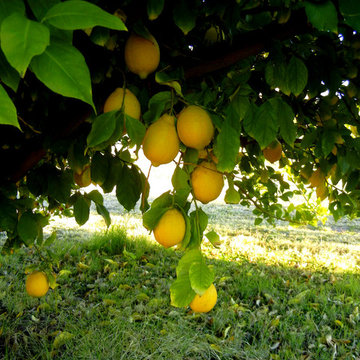
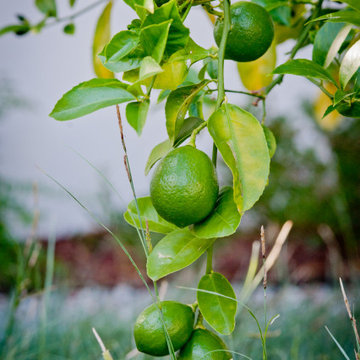
Citrus trees do well among the native grasses and foliage. Because the natives need no fertilizers or pesticides to thrive, fruit is also chemical free.
 Mariani Landscape
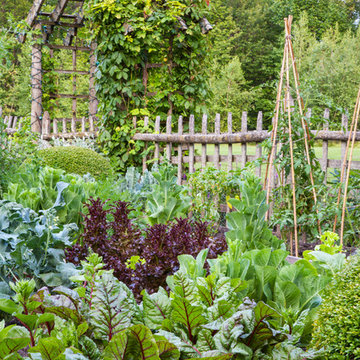
This project represents the evolution of a 10 acre space over more than three decades. It began with the pool and space around it. As the vegetable garden grew, the orchard was established and the display gardens blossomed. The prairie was restored and a kitchen was added to complete the space. Although, it continues to change with a pond next on the design plan. Photo credit: Linda Oyama Bryan


 gardenaar
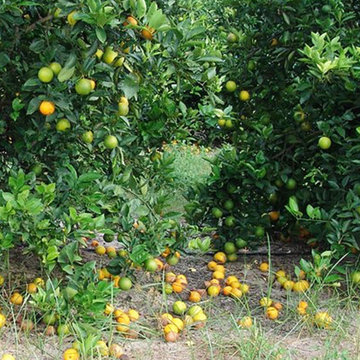
Does your orange tree drop its fruit before it reaches full size, or worse, does it drop flowers before the fruit starts to form?
Trees photosynthesize to produce carbohydrates like sugar which they store as a source of energy. They can maintain a limited amount, which is used to drive the growth of new leaves, branches, roots and stem. Fruitfulness requires the tree to divert its limited energy sources away from these vital functions to the production of flowers, blossoms and fruits.
Fruit development involves maturity followed by fertilization, growth, maturity and maturity. This process takes between 6-7 months in warmer climates, which requires a large number of tree energy sources as a result.
Trees are able to manage their resources, and will also divert them to emergencies ...
Fruit Drop and Crop Depression
In regions where oranges produce one crop per year, they go through a series of growth stages as follows:
Sprout formation and flower launching (mid-winter)
Flowers and fruit set (early spring)
Fruit growth - cell division (late spring to early summer)
Fruit growth - cell proliferation (mid-summer to early autumn)
Fruit ripening (autumn to late winter)
The difference is in the regions where most citrus crops are produced year-round. In these cases, the different stages of development will take place simultaneously.
The orange tree can handle its plant load well, and it will bear as much fruit as we can support. It is natural for all citrus trees to produce too little fruit and too little flowers in early spring to prevent overproduction. There is no need to worry too much about flowering, as an orange tree needs only 1% to 2% of flowers to produce a good crop, and sometimes even less than 1% is enough.
If a tree is depressed because it does not get enough water in hot, dry weather, and if it dies of nitrogen starvation because it is not given enough fertilizer, fruit set will be very difficult in the spring. There may also be a small number of fruit losses in the summer under stressful conditions.
Solution: Provide enough water, and water often in hot weather and strong winds. Orange feed with moderate fertilizer in early spring (September in Southern hemisphere, March in the Northern Hemisphere)
Fruit Drop and Lack of Potassium Nutrient
When orange trees are heavy, the decline in fruit can be exacerbated by low potassium levels.
Potassium, also known as potash (represented by the chemical mark K on fertilizer labels meaning N-P-K or nitrogen-phosphorus-potassium ratio) is a major macronutrient needed for flowering and fruit formation. Next to nitrogen, plants absorb more potassium than any other nutrient. Without potassium, the trees stop flowering and fruiting, which is what happens if they are not fed regularly.
Before any smug horticulturist declares to you that potassium has no direct effect on flowering and fruit set, let me say that as a horticulturist and biochemist, plant chemistry, like the chemistry of all living things is complex, but some input it is necessary to produce certain results. , and the references I have made to the end of this article support what I am saying!
Entering science, Potassium (K) is essential for water, nutrients and the movement of carbohydrates in plant tissues. It also activates enzymes that facilitate the synthesis of complex chemicals within the plant - such as starch, protein and adenosine triphosphate (ATP) production. The role of ATP is to transport the energy needed for all cellular metabolic activities to all living things, and in plants ATP production can regulate the level of photosynthesis.
Potassium also helps regulate the opening and closing of stomata, holes or cavities under which oxygen and carbon dioxide are exchanged with the atmosphere, and respiratory losses are controlled. It increases root growth which increases the absorption of nutrients and improves drought resistance, and increases resistance to frost, pests and diseases. High potassium levels produce similar maturity and fruit growth rate, as well as better nutritional quality, taste and range.
Agricultural extension agencies suggest that large amounts of potash are needed in many crops, and that potassium deficiency or macronutrient deficiency leads to reduced crop growth and reduced yields, and that potassium levels not only affect yield, but fruit size, juice. quality and shelf life.
Since potassium plays an important role in water regulation, deficiency can clearly increase the pressures associated with the declining fruit mentioned in the previous section.
Solution: Make sure that the orange trees are fertilized with the right fertilizer as previously discussed. Extra potassium can be brought in using seaweed extract (which is not a fertilizer but contains a good amount of potassium), wood ash (used in small quantities only as it is very alkaline), or potash sulphate (potassium sulphate) - all this is guaranteed. as acceptable in a natural garden.
Never use potassium chloride as it can be harmful to plants, it is a very inexpensive alternative to fertilizer manufacturers to save money!
Even if there are sufficient levels of potassium in the soil, it may not be accessible to plants, unless we make some improvements.
3