
Search results for "Handle overnight" in Home Design Ideas

 Staging With Style NYC
This studio offers an open floor plan configuration along with refurbished hardwood floors. We selected the Henry 2-piece pull-down sleeper sectional with storage from West Elm. It is perfect for small New York City apartments, as it works triple-duty: in addition to its roomy seats and storage space, a handle is added to easily pull it out to reveal a mattress for overnight guests. The hand patched patterned cowhide rug provides an inspired piece of art for the floor.

 Great Northwest Homes
Large rustic kitchen, room for everyone to help and enjoy. Two refrigerators help with large groups and overnight guests.
Photos by Bill Johnson
Eat-in kitchen - large rustic u-shaped medium tone wood floor eat-in kitchen idea in Seattle with an undermount sink, shaker cabinets, medium tone wood cabinets, granite countertops, beige backsplash, stone slab backsplash, stainless steel appliances and an island
Eat-in kitchen - large rustic u-shaped medium tone wood floor eat-in kitchen idea in Seattle with an undermount sink, shaker cabinets, medium tone wood cabinets, granite countertops, beige backsplash, stone slab backsplash, stainless steel appliances and an island

 Brooklyn City Furniture
The Flipside Sofabed’s unique design allows it to effortlessly convert from a stylish, modern sofa to a Queen size bed with one quick flip. The luxurious, loose-back cushions are not only comfortable, they are also sustainable as they are filled with eco-friendly synthetic-down. It features a removable, pre-shrunk, machine-washable cotton top sheet which fastens securely to the bed. The frame is constructed with kiln-dried 100% FSC®-Certified hardwood in support of responsible forest management.
Easy-pull fabric handles are hidden on inside of seat cushion to allow simple conversion between sofa and bed.
Sofabed designed to accommodate overnight guests.
Back cushions use eco-friendly PET synthetic-down which is created from recycled water bottles.
Cushion fill is Dacron®-wrapped for a structured look.
Solid wood block feet are dark Wenge finish.
Bumpers on the bottom of feet to protect hardwood floors.
Kiln-dried 100% FSC®-Certified hardwood frame(FSC® 092551).
Manufactured to meet California TB117-2013 fire safety standards without the use of flame retardant additives in the upholstery foam.
Find the right local pro for your project

 Simply Elegant Interiors
Decorating small spaces can be a challenge. A small bedroom that is used as a guest room needs to handle a larger bed. This room had a large window along one wall, a closet on another, and the entry door on another wall. That left one wall for the bed. The room is narrow so we divided it into the sleeping area and a small sitting area. Small dressers on either side of the bed eliminated the need for a dresser while giving ample storage for overnight guests.
The room is small in size but big on style.
 Details Creative Home
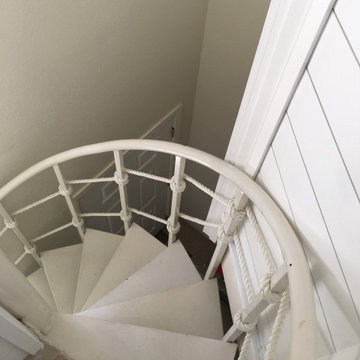
The homeowner added rope to this outdated staircase giving it an updated feel instantly
Home design - coastal home design idea in Houston
Home design - coastal home design idea in Houston

 Pangaea Interior Design, Portland, OR
Vinyl wall covering creates a dramatic backdrop for original art.
Jeffrey Freeman Photography
Living room - contemporary living room idea in Portland
Living room - contemporary living room idea in Portland

 Lore Patterson
squash blossoms - edible flowers | Lore Patterson
Inspiration for a traditional landscaping in Seattle.
Inspiration for a traditional landscaping in Seattle.
Sponsored
Sunbury, OH

J.Holderby - Renovations
Franklin County's Leading General Contractors - 2X Best of Houzz!
 Brooklyn City Furniture
The Flipside Sofabed’s unique design allows it to effortlessly convert from a stylish, modern sofa to a Queen size bed with one quick flip. The luxurious, loose-back cushions are not only comfortable, they are also sustainable as they are filled with eco-friendly synthetic-down. It features a removable, pre-shrunk, machine-washable cotton top sheet which fastens securely to the bed. The frame is constructed with kiln-dried 100% FSC®-Certified hardwood in support of responsible forest management.
Easy-pull fabric handles are hidden on inside of seat cushion to allow simple conversion between sofa and bed.
Sofabed designed to accommodate overnight guests.
Back cushions use eco-friendly PET synthetic-down which is created from recycled water bottles.
Cushion fill is Dacron®-wrapped for a structured look.
Solid wood block feet are dark Wenge finish.
Bumpers on the bottom of feet to protect hardwood floors.
Kiln-dried 100% FSC®-Certified hardwood frame(FSC® 092551).
Manufactured to meet California TB117-2013 fire safety standards without the use of flame retardant additives in the upholstery foam.

 User
UserMake your dinner an even more enjoyable one and pour your tea or juice from this incredibly unique Large Glass Tilted Pitcher. This pitcher features a graceful and sturdy handle to allow you to serve a refreshing beverage with ease, and the unique tilted design will definitely catch the eye of your guests. Make your dinner an even more enjoyable one and pour your tea or juice from this incredibly unique Large Glass Tilted Pitcher. This pitcher features a graceful and sturdy handle to allow you to serve a refreshing beverage with ease, and the unique tilted design will definitely catch the eye of your guests.

 The Basket Lady
Pole handle basket with linens placed on bed.
Example of a bedroom design in Philadelphia
Example of a bedroom design in Philadelphia

 Meadowlark Design+Build
A desk with a view. The second bedroom acts as an office and craft room, but is also large enough to handle overnight guests in this near net-zero home built by Meadowlark Design + Build in Ann Arbor, Michigan
 User
UserSpectrum Construction & Development, based out of Roxbury Twp., New Jersey is the recipient of the 2016 Awards of Excellence presented by the Metropolitan Builders & Contractors Association of New Jersey in the Custom Single-Family Home Category ($1,000,000 - $2,000,000)
The homeowners moved to Morris County, New Jersey to be closer to their grown children and their families. They found a mid-century style home on a beautiful tree-lined street less than a mile away from their children's homes. Although the location was ideal and the corner lot perfectly situated for the homeowners, it was in disrepair and did not offer them the space, design features and finishes they wanted. Spectrum Construction arranged for the original home to be deconstructed with any salvageable material sold to the public for reuse or re-purposing.
The custom 4-bedroom, 4.5-bath home that Spectrum Construction designed and built in its place combines country charm with modern elegance. This new home incorporates many unique features including the “drive through” two-car garage that allows the homeowners access to the converging streets. The massive first-floor master bedroom suite consists of a marble surround fireplace, 2 sizeable walk-in-closets as well as his and her luxurious master bathrooms. Two home offices provide the homeowners with ample room to take care of business. An elevator was installed to enable the homeowners and aging guests to easily and safely access the second floor. Abundant storage areas throughout the home, including the cavernous full basement, offer plenty of space to stow extra belongings.
The second story was designed with the homeowners’ grandchildren in mind. The additional bedrooms, playroom and upstairs den make room for both daytime visits and overnight stays. Space for entertaining adult guests was also considered. The first floor includes a spacious great room with floor to ceiling stone fireplace which opens to a covered, screened-in back porch with a second stone fireplace. The stylish kitchen, containing two counter seating areas and an eat-in nook, along with the formal dining room give the homeowners plenty of room to accommodate large gatherings.


Sponsored
Sunbury, OH
J.Holderby - Renovations
Franklin County's Leading General Contractors - 2X Best of Houzz!
 Details Creative Home
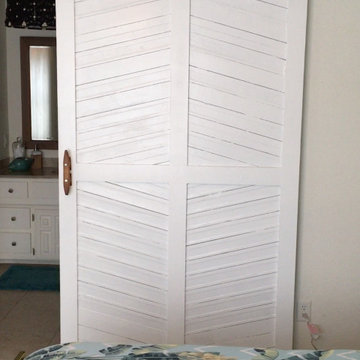
custom sliding door
Mid-sized beach style ceramic tile and white floor bedroom photo in Houston with white walls
Mid-sized beach style ceramic tile and white floor bedroom photo in Houston with white walls

 IL Decor
Easy-pull fabric handles are hidden on inside of seat cushion to allow simple conversion between sofa and bed
Sofabed designed to accommodate overnight guests
Cushion fill is Dacron®-wrapped for a structured look
Solid wood block feet are dark Wenge finish
Bumpers on the bottom of feet to protect hardwood floors Manufactured By GUS.

 LOLLOV FURNITURE INC.
The Sofa bed Featuring 2 uses in one, this sectional sofa is designed to be used as either a sofa or bed depending on your immediate needs.
The Pullout Couch Bed Perfect for accommodating overnight guests during the holiday seasons or unexpected drop-ins, simply grab the thick fabric handles secured underneath the seat cushions and pull to release the twin sized mattress for sleeping.
Lift and push the mattress back into the sofa when finished and tuck away the handles to have this piece Upholstery Loveseat Sleeper look like a standard U-Shape sectional. This sofa with Storage Space under Chaise, Can store sheets and pillows, as well as books or some objects. This is a beautiful and practical sofa, it is a very good choice.

Sponsored
Sunbury, OH
J.Holderby - Renovations
Franklin County's Leading General Contractors - 2X Best of Houzz!

 LOLLOV FURNITURE INC.
The Sofa bed Featuring 2 uses in one, this sectional sofa is designed to be used as either a sofa or bed depending on your immediate needs.
The Pullout Couch Bed Perfect for accommodating overnight guests during the holiday seasons or unexpected drop-ins, simply grab the thick fabric handles secured underneath the seat cushions and pull to release the twin sized mattress for sleeping.
Lift and push the mattress back into the sofa when finished and tuck away the handles to have this piece Upholstery Loveseat Sleeper look like a standard U-Shape sectional. This sofa with Storage Space under Chaise, Can store sheets and pillows, as well as books or some objects. This is a beautiful and practical sofa, it is a very good choice.
 safe ZOnea
Every year, the same thing happens. The first real snowfall arrives, demand for de-icing materials spikes overnight, and the businesses that waited too long find themselves scrambling for supply at the worst possible moment. Facility managers, property owners, contractors, and municipalities all depend on a steady supply of salt and ice melt to keep their properties safe and operational through winter. The ones who plan ahead sail through. The ones who don't pay more, wait longer, and take on real risk.
Sourcing de-icing materials well is not complicated, but it does require thinking ahead and understanding the options. The choices you make about what to buy, how to buy it, and who to buy it from have a direct effect on your costs, your reliability, and your ability to keep people safe when conditions turn dangerous. This article lays out what matters.
Why Your Choice of Supplier Matters More Than You Think
It is easy to treat de-icing material as a commodity, something you grab whenever you need it without much thought about where it comes from. That works fine until the moment it doesn't, usually in the middle of a storm when everyone needs supply at once and the casual sources have run dry. At that point, the relationships you built before the season become the difference between staying stocked and being stuck.
Reliable supply is the whole game in winter operations. A property that runs out of ice melt during a storm faces safety hazards, liability exposure, and disruption, none of which can wait for a back-ordered shipment. This is why establishing relationships with dependable rock salt suppliers before the season starts is one of the smartest moves a facility manager or contractor can make. It locks in supply, often locks in better pricing, and removes a major source of mid-winter stress.
The lesson here is to treat sourcing as a planning decision rather than a last-minute errand. The businesses that come through winter smoothly are almost always the ones that secured their supply chain early, chose suppliers who could actually deliver when it counted, and never had to gamble on finding material during a shortage. Reliability bought in advance is far cheaper than scarcity paid for in a crisis.
Bagged or Bulk: Matching the Material to the Job
One of the first practical decisions is whether to buy de-icing material in bags or in bulk, and the right answer depends entirely on the operation. Each format has clear advantages, and many operations end up using both for different purposes.
Bagged material offers convenience, control, and easy storage. It is simple to handle, easy to distribute to different locations or crews, straightforward to store without special equipment, and convenient for spot application by hand. It suits smaller properties, businesses without bulk storage, and situations where portion control and tidiness matter. Bulk material, on the other hand, tends to make sense for large operations that go through high volumes, where buying in quantity lowers the per-unit cost and the operation has the equipment and space to store and handle it. The tradeoff is between the convenience and flexibility of bags and the volume economics of bulk.
For many operations, the right approach is a mix: bulk for the high-volume core of the work and bags for flexibility, spot treatment, and locations where bulk handling is impractical. The key is to match the format to how the material will actually be stored, moved, and applied, rather than defaulting to one or the other out of habit. Thinking this through in advance avoids both the waste of over-buying bulk you can't handle and the expense of relying entirely on bags for a large operation.
Rock Salt Is Not Your Only Option
Rock salt, or sodium chloride, is the workhorse of winter de-icing for good reason. It is effective, widely available, and cost-efficient, which makes it the default choice for most operations most of the time. But it has limits, and understanding the alternatives helps you choose the right material for the conditions you actually face.
The most important limitation is temperature. Rock salt becomes less effective as temperatures drop, and in genuinely cold conditions it can struggle to do the job at all. This is where alternatives come in. Calcium chloride, for instance, works at much lower temperatures than rock salt and acts quickly, which makes it valuable when conditions are severe or when fast melting matters. Operations that face hard freezes or need dependable performance in extreme cold often keep calcium chloride for sale on hand for exactly those situations, using it alongside rock salt rather than instead of it.
The practical approach is to understand the conditions your property faces and stock accordingly. For many operations, rock salt handles the bulk of the work while a faster, colder-rated material like calcium chloride covers the extreme days when ordinary salt falls short. Matching the material to the temperature and the urgency of the situation is what separates an operation that stays ahead of winter from one that is constantly reacting to it.
Securing Your Supply Before the Season
Knowing what to buy is only half the equation. The other half is making sure you can actually get it when you need it, which means securing your supply before winter arrives rather than after it has already started. Timing is one of the most underrated factors in winter operations.
The logic is simple. Demand for de-icing materials is highly seasonal and spikes sharply during storms, when everyone needs supply simultaneously. Prices and availability both move against the buyer at exactly those moments. By contrast, planning ahead, estimating your needs and arranging supply before the season, puts you in a far stronger position. Working with established rock salt suppliers ahead of time means your material is accounted for before the rush, often at better pricing and with the confidence that it will be there when the first storm hits.
This kind of planning also lets you think clearly rather than react under pressure. You can estimate your seasonal needs based on your property and past winters, decide on the right mix of materials and formats, and arrange storage in advance. Operations that do this consistently spend less, worry less, and never find themselves making frantic calls during a storm. The effort of planning ahead is modest, and the payoff in reliability and cost savings is substantial.
Storing and Handling What You Buy
Securing supply is not much use if the material degrades before you can use it, which makes proper storage and handling an important and often overlooked part of the equation. De-icing materials are sensitive to moisture, and poor storage can turn a good supply into a clumped, hardened mess that is difficult to apply.
The fundamentals are straightforward. Keep material dry and protected from moisture, since salt and ice melt readily absorb water and can harden if exposed. Store it in a way that suits the format, whether that means a proper bulk storage area or a dry space for stacked bags. Keep it accessible, so crews can get to it quickly when a storm hits and time is short. And handle it with the right equipment for the format and volume, which protects both the material and the people working with it. None of this is complicated, but neglecting it can undermine even a well-planned supply.
Good storage practices protect the investment you made in securing supply early. There is little point in arranging your materials ahead of the season only to have them degrade before use. Treating storage and handling as part of the overall plan, rather than an afterthought, ensures that the material you secured is actually usable when the moment comes. It is the final link in a supply chain built to perform under winter conditions.
Estimating How Much You Actually Need
One question trips up operations of every size: how much de-icing material to buy. Order too little and you risk running short during a storm. Order too much and you tie up money and storage space in material you may not use. Getting the estimate reasonably right is a meaningful part of sourcing well.
Several factors shape the answer. The size and type of the areas you treat, sidewalks, lots, entrances, and drive lanes, set the baseline for how much material each application consumes. The local climate matters too, since colder regions and those with frequent snowfall go through far more material than milder ones. Application frequency depends on how often storms hit and how quickly surfaces need to be cleared, which varies with the kind of property and the expectations of the people who use it. And the type of material plays a role, since different products are applied at different rates.
Past experience is often the best guide. Operations that track what they used in previous winters, adjusted for the size of the property and the severity of the season, can estimate their needs with reasonable confidence. For newer operations without that history, it helps to plan conservatively and to work with a supplier who can replenish stock reliably, so that a low estimate does not turn into a mid-storm shortage.
The goal is not perfect precision but a sound, slightly cautious estimate paired with a dependable supply relationship. That combination lets an operation keep enough material on hand to handle the season without over-committing to volume it cannot store or use. Thinking this through before winter, rather than guessing during it, is one more way that planning ahead pays off when the snow starts to fall.
The Bottom Line
Sourcing de-icing materials well comes down to a few straightforward principles: plan ahead, choose reliable suppliers before the season, match your materials and formats to your actual needs and conditions, and store what you buy properly. The operations that follow these principles move through winter with confidence, while those that improvise pay more and take on needless risk.
Winter is predictable in one respect: it arrives every year, and demand for de-icing material spikes the moment it does. The businesses that prepare for that reality, rather than being surprised by it, are the ones that keep their properties safe, their costs controlled, and their operations running no matter what the season throws at them. A little foresight before the first snowfall pays off through every storm that follows.
2