
Search results for "Image" in Home Design Ideas
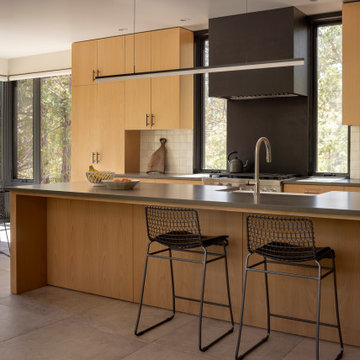
 Prentiss Balance Wickline Architects
Example of a minimalist galley ceramic tile and gray floor kitchen design in Seattle with light wood cabinets, quartz countertops, white backsplash, ceramic backsplash, stainless steel appliances, an island, gray countertops, a farmhouse sink and flat-panel cabinets

 Dalgliesh Gilpin Paxton - DGP - Architects
Example of a classic galley medium tone wood floor, brown floor and coffered ceiling kitchen design in Other with an undermount sink, beaded inset cabinets, white cabinets, green backsplash, mosaic tile backsplash, stainless steel appliances, an island and green countertops
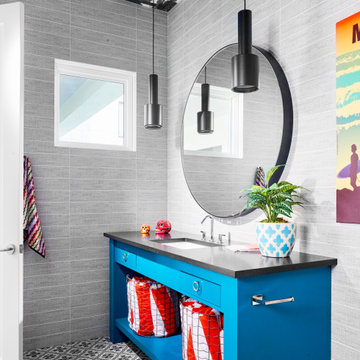
 Ashby Collective
Mid-sized beach style 3/4 gray tile ceramic tile, gray floor and single-sink bathroom photo in Austin with open cabinets, blue cabinets, gray walls, a drop-in sink, black countertops and a built-in vanity
Find the right local pro for your project
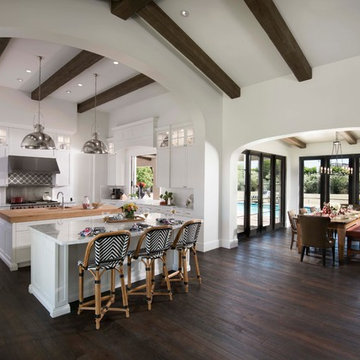


 sensitive design inc.
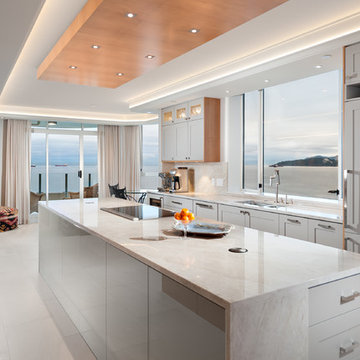
Kitchen with view to the Ocean
Large transitional galley open concept kitchen photo in Vancouver with a double-bowl sink, shaker cabinets, beige cabinets, glass sheet backsplash and an island
Large transitional galley open concept kitchen photo in Vancouver with a double-bowl sink, shaker cabinets, beige cabinets, glass sheet backsplash and an island
 TMP Imaging/Tony Marinella Photography
Tony Marinella
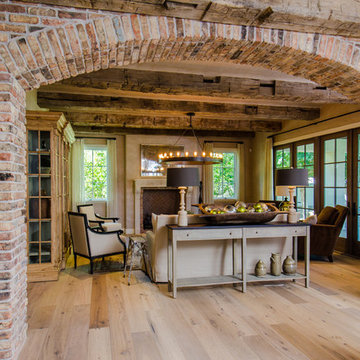
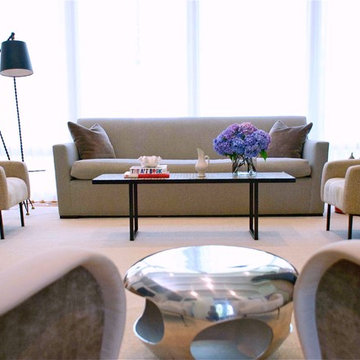
Example of a country living room design in Phoenix
Example of a country living room design in Phoenix
 Kitchen Design Concepts
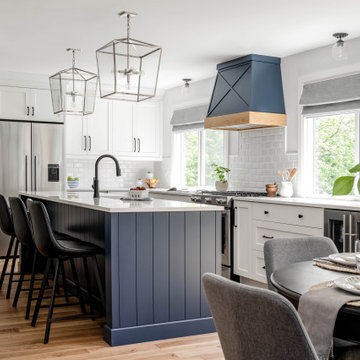
We introduce to you one of our newer services we are providing here at Kitchen Design Concepts: spaces that just need a little reviving! As of recent, we are taking on projects that are in need of minimal updating, as in, spaces that don’t need a full-on remodel. Yes, you heard right! If your space has good bones, you like the layout of your kitchen, and you just need a few cosmetic changes, then today’s feature is for you! Recently, we updated a space where we did just this! The kitchen was in need of a little love, some fresh paint, and new finishes. And if we’re being honest here, the result looks almost as if the kitchen had a full-on remodel! To learn more about this space and how we did our magic, continue reading below:
The Before and After
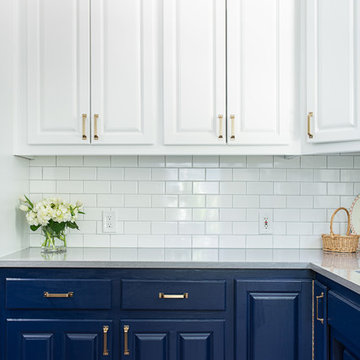
First, see what an impact new finishes can make! The “before” image shows a kitchen with outdated finishes such as the tile countertops, backsplash, and cabinetry finish. The “after” image, is a kitchen that looks almost as if its brand new, the image speaks for itself!
Cabinetry
With the wooden cabinetry in this kitchen already having great bones, all we needed to do was our refinishing process that involved removing door and drawer fronts, sanding, priming, and painting. The main color of the cabinetry is white (Sherwin Williams Pure White 7005) and as an accent, we applied a deep navy blue that really pops in this space (Sherwin Willaims Naval 6244). As a special design element, we incorporated a natural wooden band across the hood which is subtle but adds an element of surprise.
Countertops
The original countertops in this space were a 12×12 tile with cracks and discolored grout from all the wear and tear. To replace the countertops, we installed a clean and crisp quartz that is not only durable but easy to maintain (no grout here!). The 3cm countertops are a Cambria quartz in a grey-tone color (Carrick).
Backsplash
Keeping things simple, yet classic, we installed a 3×6 subway tile from Interceramic. The crisp white pairs well with all the other finishes of the space and really brighten the space up! To spice things up, we paired the white tile with a contrasting grout color (Cape Grey) that matches the countertop. This is a simple method to add interest to your white backsplash!
Fixtures and Fittings
For the fixtures and fittings of the kitchen, we wanted pieces that made a statement. That’s why we selected this industrial style faucet from Brizo! The faucet is a Brizo LITZE™ PULL-DOWN FAUCET WITH ARC SPOUT AND INDUSTRIAL HANDLE (63044LF-BLGL). The matte black paired with the luxe gold elements really make a statement! To match the gold elements of the faucet, we installed cabinetry hardware from Topknobs in the same gold finish. The hardware is a Channing pull TK743HB. Lastly, the large single bowl sink (who doesn’t want a large sink?!) is a great functional touch to the kitchen. The sink is a Blanco Precision 16″ R10 super single with 16″ Drainer in stainless steel (516216).

 Affecting Spaces Design Studio
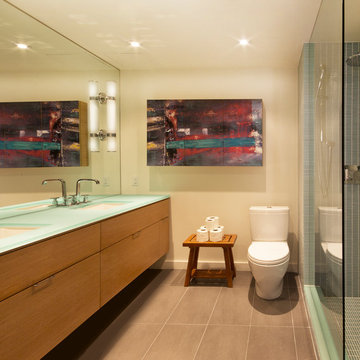
This washroom has so many creative elements: a medicine cabinet that doubles as art, frosted aqua glass, counter tops, aqua blue mosaic glass tile in the shower, and honey coloured, white oak to keep the space warm and inviting. This washroom also houses a hidden laundry room that disappears into the decor of the washroom.
 ARAS Imaging
Kitchen - large transitional l-shaped kitchen idea in Toronto with shaker cabinets and an island


 New Image Construction
Mid-sized traditional white two-story brick exterior home idea in Other with a shingle roof

 NuImagePro Awnings
The G150 features beautiful, traditional styling on a commercial grade frame. It will enhance the beauty of your home whether open and providing 94% UV protection or closed accenting your architecture. Your G150 will be manufactured with up to a 14'6" projection and 40' wide, assuring you all of the shade protection you desire. With arm components made from drop forged aluminum that is pound-for-pound four times stronger than typical castings, the G150 delivers unmatched durability and performance for those who demand the best

 highland
Ever been out in a park, forest, or even just in your backyard and wanted to see just a small side of the picture? Beauty is in the midst of us, but we are not doing enough to see it—we see only at a superficial level. The reality is that there is an entire universe on a scale that is so miniscule yet all around us, waiting to be discovered.
Put the digital microscope camera on the scope, and that little quantum universe you never knew was there awaits your gaze. Makes everyday outdoor activities exciting adventures and learning experiences with leaves, rocks, and bugs that are all interesting. It used to look just the same, and now it's vibrant with patterns, textures, and stories you didn't know before!
What is a Digital Microscope Camera?
A digital microscope camera is a compact device that magnifies very small objects and can display its real-time image on the screen. This new type of microscope can be taken outside and is much easier to transport than a conventional microscope. It is based on three important technologies: the magnification lenses, digital imaging, and As the name implies, snapping up shots of the objects when you bring them close and displaying them clearly on your smartphone, tablet, or its built-in display. This gives you the power to see details of a microworld anywhere you go, with no special equipment.
How a Digital Microscope Camera Works in Real Life
It is easy and yet powerful to operate a digital microscope camera. It brings very small objects closer by employing a system of lenses, and through a digital sensor, it turns the image into a compelling display. After focusing, the image becomes so big that it displays details that the human eye isn't able to see. Whereas, in an actual setting, an individual can simply place the gadget over an object, such as a leaf, insect, or soil surface. This is then performed to get a focus on the details, clear and sharp. In the blink of an eye, you will be exploring a hidden reality with patterns and structures.
Why Nature Looks Completely Different at the Micro Level
If you watch nature with an unbiased eye, it's all straightforward. Leaves are green; insects are tiny and land on a mere brown earth. However, things look so different through the microscope camera's zoom-in. A leaf is more than a leaf: it is a complex system of veins and cells! However, the insect is not merely a tiny insect anymore, but it gradually turns into an object with wings, eyes, and patterns, all of which seem almost like art. From soils a combination of small particles of rock, organic material, and unseen creatures.
Gaining appreciation for the details in leaves and plants.
Plant life is one of the most interesting objects to be examined under the microscope. The details on the leaves, stems, and petals are amazing and would get lost in the details otherwise. By using a digital microscope camera, the vein network that transports water and nutrients can be readily observed. These veins are naturally occurring and run in patterns that resemble roads and/or rivers in the landscape. Every leaf grows differently and is as individual as a fingerprint.
Discovering the Hidden World of Insects
There is no better thing to see under the microscope than one of the many interesting insects. They may appear at first glance to be quite unassuming and tiny, but magnified, they let one in on the whole other universe. They feature fine patterns in their wings – like those found on glass artworks – that are often difficult to see. They have eyes comprised of multiple repeating units. Even their legs and segments of their bodies have special textures.
The Secret Life Inside Soil and Sand
A microscope camera reveals a soil in which activity is taking place in a lively world in the seemingly lifeless soil. The very small particles of rock, decayed plant material, and micro-living organisms are interacting. Sand grains look similar to miniature crystals; all of them are distinctively shaped and structured. As organic matter decomposes, it forms patterns that illustrate how nature continually recycles itself.
Tree Bark: A Natural Storybook
Another interesting area of interest for micro-focusing is the bark of trees. Apparently, this appears to be rough and simple, but under magnification, it is seen as a highly detailed landscape of cracks, lines, and textures. The bark patterns that can be observed on each branch offer a glimpse of the branch's years of growth, weather, and environmental stresses. It's as if someone wrote the history of a tree on its trunk!
Tips for Getting the Best Microscopic Results Outdoors
A few simple techniques can make a big difference in the variety of images you get before getting clear and detailed images. Always make sure that the hands are stable or have a resting surface so that there is no shaking. Moving, even slightly, can cause the picture to become blurry. Lighting is one of the other important ones. This is because natural soft lighting is best suited, as it doesn't create strong reflections and it does show detail. Minimize exposure to strong sunlight/deep shade when possible.
Conclusion:
The digital microscope camera isn't just a camera; it's a new way of viewing life. Makes routine walks outdoors into thrilling explorations of the scientific world and how minute details make a difference. It can teach us something about living by the rules of nature! It is something that we can contemplate, clarify, and enjoy more.
What is a Digital Microscope Camera?
A digital microscope camera is a compact device that magnifies very small objects and can display its real-time image on the screen. This new type of microscope can be taken outside and is much easier to transport than a conventional microscope. It is based on three important technologies: the magnification lenses, digital imaging, and As the name implies, snapping up shots of the objects when you bring them close and displaying them clearly on your smartphone, tablet, or its built-in display. This gives you the power to see details of a microworld anywhere you go, with no special equipment.
How a Digital Microscope Camera Works in Real Life
It is easy and yet powerful to operate a digital microscope camera. It brings very small objects closer by employing a system of lenses, and through a digital sensor, it turns the image into a compelling display. After focusing, the image becomes so big that it displays details that the human eye isn't able to see. Whereas, in an actual setting, an individual can simply place the gadget over an object, such as a leaf, insect, or soil surface. This is then performed to get a focus on the details, clear and sharp. In the blink of an eye, you will be exploring a hidden reality with patterns and structures.
Why Nature Looks Completely Different at the Micro Level
If you watch nature with an unbiased eye, it's all straightforward. Leaves are green; insects are tiny and land on a mere brown earth. However, things look so different through the microscope camera's zoom-in. A leaf is more than a leaf: it is a complex system of veins and cells! However, the insect is not merely a tiny insect anymore, but it gradually turns into an object with wings, eyes, and patterns, all of which seem almost like art. From soils a combination of small particles of rock, organic material, and unseen creatures.
Gaining appreciation for the details in leaves and plants.
Plant life is one of the most interesting objects to be examined under the microscope. The details on the leaves, stems, and petals are amazing and would get lost in the details otherwise. By using a digital microscope camera, the vein network that transports water and nutrients can be readily observed. These veins are naturally occurring and run in patterns that resemble roads and/or rivers in the landscape. Every leaf grows differently and is as individual as a fingerprint.
Discovering the Hidden World of Insects
There is no better thing to see under the microscope than one of the many interesting insects. They may appear at first glance to be quite unassuming and tiny, but magnified, they let one in on the whole other universe. They feature fine patterns in their wings – like those found on glass artworks – that are often difficult to see. They have eyes comprised of multiple repeating units. Even their legs and segments of their bodies have special textures.
The Secret Life Inside Soil and Sand
A microscope camera reveals a soil in which activity is taking place in a lively world in the seemingly lifeless soil. The very small particles of rock, decayed plant material, and micro-living organisms are interacting. Sand grains look similar to miniature crystals; all of them are distinctively shaped and structured. As organic matter decomposes, it forms patterns that illustrate how nature continually recycles itself.
Tree Bark: A Natural Storybook
Another interesting area of interest for micro-focusing is the bark of trees. Apparently, this appears to be rough and simple, but under magnification, it is seen as a highly detailed landscape of cracks, lines, and textures. The bark patterns that can be observed on each branch offer a glimpse of the branch's years of growth, weather, and environmental stresses. It's as if someone wrote the history of a tree on its trunk!
Tips for Getting the Best Microscopic Results Outdoors
A few simple techniques can make a big difference in the variety of images you get before getting clear and detailed images. Always make sure that the hands are stable or have a resting surface so that there is no shaking. Moving, even slightly, can cause the picture to become blurry. Lighting is one of the other important ones. This is because natural soft lighting is best suited, as it doesn't create strong reflections and it does show detail. Minimize exposure to strong sunlight/deep shade when possible.
Conclusion:
The digital microscope camera isn't just a camera; it's a new way of viewing life. Makes routine walks outdoors into thrilling explorations of the scientific world and how minute details make a difference. It can teach us something about living by the rules of nature! It is something that we can contemplate, clarify, and enjoy more.
 Luxury Antonovich Design AE
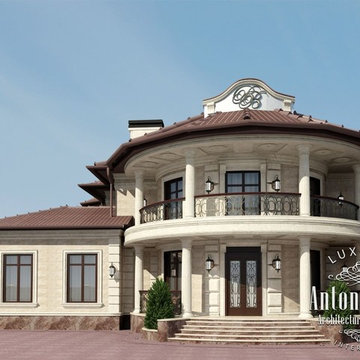
An unforgettable first impression of the external image of the building consists of its aesthetically perfect forms. Design Studio Dubai Luxury Antonovich Design offers its customers a unique approach to the creation of architectural projects. The exterior design of buildings takes into account all the nuances of modern trends in design and architecture. The combination of the author's ideas, creative solutions form integral and expressive images.
The harmony of the external image of the house
Exterior design is a deep and multi-faceted process which involves the creation of a perfect and harmonious image of the building with clean lines and forms. In order to harmonize the forms of facades in any style, from classical to modern, Dubai architects skillfully use all methods of composition. This is the right scale, rhythm of the building, its perfect proportions, proportionality, texture of materials and shades. As well as exterior lighting of the house. Gracefully combining such traditional architectural elements as portals, stairs, doors, windows, railings, balustrades, balconies, and others, we create luxurious exteriors of homes that are true masterpieces of architecture.
Basics of exteriors expressiveness
By creating unique and visually appealling exteriors of buildings, we aim to reflect the respectability of the house and elegantly hint that interior is not less luxurious than exterior. Often, the house exterior design is closely related to interior design. Such things as color, texture, light and shade are the means of architectural composition, with which the architect Dubai creates facades of the unique beauty. To make the exterior more clear and vivid, we use materials with a natural texture, as well as those treated in special ways. And we also combine advantages of natural light and additional artificial lighting of buildings.
The exterior design and landscape design
The basis of the ideal image of the building is its perfect harmony with the surrounding landscape. Typically, the exterior design of the building is closely related to landscape design. The surrounding landscape becomes a beautiful frame of a nice building. Sculptures in the garden can pick up the elegant decor motives of the building. The highlight of the modern houses design becomes vertical gardening. Especially popular this decor in projects, which are designed in a modern style. Modern technologies allow to create beautiful vertical landscapes, giving the image of a cozy and warm character.
The building exterior design is a very important moment in the work on each project. We offer our customers 3D visualization of the exterior, which can also include 3D visualization of landscape design.


 Dino Carbetta Italian Fine Art Photography
“The mystical reflections of Villa Borghese – Rome”… I stumbled into photography just before graduation at the U of TN while volunteering at a local hospital where I was influenced to attend Brooks Institute. The instructors preached the technical aspects of photography, and upon graduation…we could implement our own artistic vision. As a commercial photographer since graduation, I have had little time to express my artistic vision…until I went to Italy for the first time, where I discovered my true love and passion! I consider myself a “contemplative” photographer, and as such, I have a three-part process to achieve my final presentation for each image: the discovery, how I perceive the image creation, and how I hope others will perceive the image. This artistic pursuit, I imagine, is similar to Michelangelo viewing a piece of marble for the first time. Villa Borghese in Roma is a famous Gardens and Museum begun in the early 17th century, highlighted by a "Temple of Aesculapius” at the garden lake. Surrounding this small lake is a three-foot iron fence, which I now affectionately call “Il lago di dolore”, or Lake Pain! I tried to cross this iron fence with camera in hand and a 20lb bag on my shoulder…needless to say, it did not go well! Despite the intense pain, I continued to take 60 images around the lake, and upon return home, I stubbornly refused to look at them until recently. My disdain for Lake Pain kept me from discovering the true artistic vision I first saw when I began creating these images. I finally gave into the contempt I had for the Lake and began working on several images. Perhaps, the viewer will perceive the great pain it took to finally engender a feeling of solace and peace in the true vision, and find that suffering eventually brought forth eminent beauty. As for this photographer, Il lago di dolore will be a constant reminder that the creation of great art sometimes endures great pain!



73