
Search results for "Implied" in Home Design Ideas
 Newtown Builders Inc.
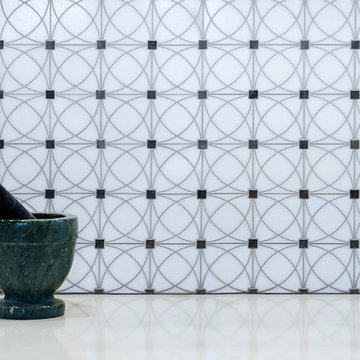
Illusion petit water jet cut marble mosaic backsplash from Ambiente Tile in Seattle.
Example of a mid-sized transitional u-shaped dark wood floor home design design in Seattle with a farmhouse sink, shaker cabinets, light wood cabinets, quartz countertops, gray backsplash, mosaic tile backsplash, stainless steel appliances, green walls and an island
Example of a mid-sized transitional u-shaped dark wood floor home design design in Seattle with a farmhouse sink, shaker cabinets, light wood cabinets, quartz countertops, gray backsplash, mosaic tile backsplash, stainless steel appliances, green walls and an island

 KHJ Designs LLC
We took a little girl's room and made it into a cool teenage space for he and her friends.
Bedroom - mid-sized contemporary carpeted bedroom idea in Salt Lake City with purple walls
Bedroom - mid-sized contemporary carpeted bedroom idea in Salt Lake City with purple walls
 Amuneal Manufacturing Corp.
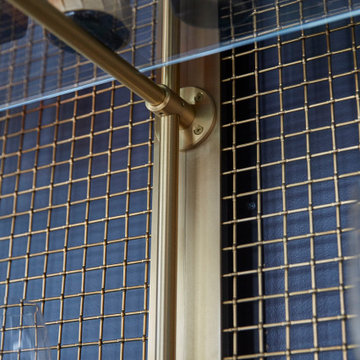
This version of Amuneal’s Collector’s Shelving Unit features solid machined brass fittings and posts with a wire mesh surround in a warm brass finish. The unit mounts to the wall to support a series of easily adjustable glass shelves. All of our Collector’s Shelving Units are fabricated in Amuneal’s Philadelphia-based furniture studio and can be customized as required for residential and commercial spaces.
Find the right local pro for your project

 Neumann & Rudy Architecture
*Spatial Composition & Architectural Volume**
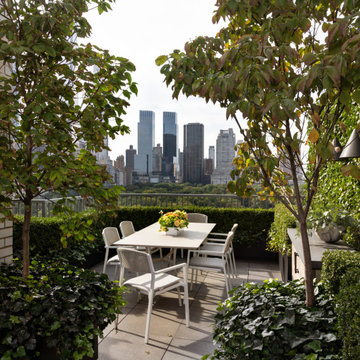
This terrace operates as an outdoor room in the fullest architectural sense: a discrete volume carved from the open air of the upper Manhattan skyline, its perimeter defined not by masonry but by a disciplined green architecture of clipped boxwood parterre hedging and multi-stemmed dogwood standards. The plan is organized on a clear axial logic — the rectilinear dining table sits centered on the sightline that threads between the flanking specimen trees and terminates in the middle distance on the Central Park tree canopy and the Columbus Circle towers beyond. That deliberate framing device is the composition's essential move: the trees function as proscenium, the hedge line as a low balustrade wall, and the powder-coated metal railing as a nearly dematerialized threshold, so the borrowed landscape is enlisted as the room's fourth elevation. Vertical enclosure is calibrated in three tiers — ground-plane ivy at ankle height, hedge and planter coping at seated eye level, and the airy tracery of tree canopy overhead — producing a ceiling plane implied rather than built, dappled and permeable. To the left, the load-bearing buff brick of the building's flank grounds the scheme with genuine architectural mass and reads as a masonry pilaster anchoring an otherwise open-sided plan, while at right a low stone-topped service console with recessed pull hardware and a monumental orb planter provides an asymmetrical counterweight, terminating circulation and articulating a secondary zone without interrupting flow. Large-format square paving, laid in a regular grid, provides the module against which all furniture placement is measured.
**Materiality, Color & Texture**
The material palette is restrained to a narrow tonal band of warm neutrals, allowing chlorophyll green to carry the scheme's entire chromatic charge. Underfoot, honed grey-taupe stone pavers offer a matte, slightly granular surface with a cool undertone; adjacent, the brick wall introduces a sandy, oatmeal-toned masonry with visible mortar coursing whose horizontality and faint striation supply the composition's only decorative pattern. Furniture is executed in a matte white or bone powder-coated aluminum frame with woven cord or resin-strap seat backs — an open basketweave that reads as textile rather than metal and softens the geometry with a hand-crafted grain. Cushions in pale greige linen-weave add a further degree of tactile compliance. Planters are dark bronze-toned metal, deliberately recessive so that mass reads as foliage rather than container, while the pale cast-stone orb planter introduces a sculptural, slightly chalky, faceted surface that catches light like unglazed ceramic. The horticultural texture work is the true material sophistication here: the tight, fine-leaved matte density of boxwood set against the broad, glossy, lacquer-like foliage of the ivy, and both played against the dogwoods' larger leaves already turning bronze, oxblood, and citron at the edges. The single note of saturation — a low, tightly massed arrangement of coral, apricot, and chartreuse blooms in a white cachepot — functions as a deliberate chromatic accent, keyed precisely to the autumnal leaf-turn overhead.
**Lighting, Atmosphere & Style Profile**
Natural light is the primary design instrument. The photograph captures a high, diffuse, slightly overexposed sky that renders the skyline in soft atmospheric perspective while raking light filters through the canopy to scatter mobile dappling across the paving — a chiaroscuro that animates an otherwise static geometry and shifts the room's character hourly. Artificial lighting is intentionally understated and architectural in intent: a suspended conical pendant in dark matte metal, hung at the right beneath the canopy, signals evening use and provides a small, precise silhouette against the ivy screen, while low-level integrated fixtures within planters and hedging would supply the subdued wash appropriate to a terrace that must never compete with the ambient glow of the city. The resulting atmosphere is one of considered seclusion — a green-walled cloister suspended above the metropolis, contemplative rather than performative. Stylistically, the project reads as Soft Minimalism in dialogue with a distinctly European, formal-garden discipline: the axial planning, clipped topiary, and standard-trained trees derive from classical parterre tradition, but they are executed with contemporary restraint — no ornament, no historicist detail, a single furniture gesture, a monochrome envelope. The synthesis might be termed Tailored Naturalism: an aesthetic in which rigorous geometry and a near-silent material palette exist precisely to give primacy to living texture, seasonal change, and the framed view.

 Seeber Build
Wood + Rebar combination
Photography by Tanis Seeber, @ tanisphoto
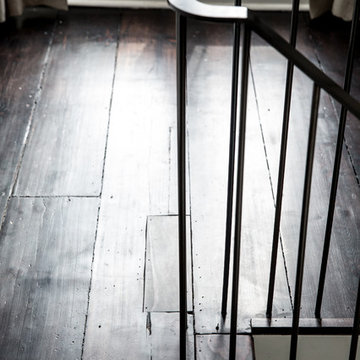
Staircase - industrial staircase idea in Vancouver
Staircase - industrial staircase idea in Vancouver

 Wine Cellar Specialists
The most extraordinary aspect of this wine cellar design Michigan is the ladder.
To maximize the available space, our wine cellar builders stacked the wine racks up to the ceiling.
The ladder provides easy access to each bottle.
Also depicted here are horizontal display racks, high reveal display rows, diamond bin racking, an arch display, and more.
All is of Redwood.
Wine Cellar Specialists
858 W Armitage Ave #385 Chicago, IL 60614
(773) 234-0112
winecellarspec.com

 DesignerStone® Panels
18" x 48" holds 4 bottles - $1099.00
24" x 48" holds 8 bottles - $1369.00
48" x 48" holds up to 16 bottles - $2,255.00
Custom wine racks available up to 48" x 96"
Translucent and Non-Translucent stones available.
Stones are thin cut DesignerStone Panels.

 highland
Ever been out in a park, forest, or even just in your backyard and wanted to see just a small side of the picture? Beauty is in the midst of us, but we are not doing enough to see it—we see only at a superficial level. The reality is that there is an entire universe on a scale that is so miniscule yet all around us, waiting to be discovered.
Put the digital microscope camera on the scope, and that little quantum universe you never knew was there awaits your gaze. Makes everyday outdoor activities exciting adventures and learning experiences with leaves, rocks, and bugs that are all interesting. It used to look just the same, and now it's vibrant with patterns, textures, and stories you didn't know before!
What is a Digital Microscope Camera?
A digital microscope camera is a compact device that magnifies very small objects and can display its real-time image on the screen. This new type of microscope can be taken outside and is much easier to transport than a conventional microscope. It is based on three important technologies: the magnification lenses, digital imaging, and As the name implies, snapping up shots of the objects when you bring them close and displaying them clearly on your smartphone, tablet, or its built-in display. This gives you the power to see details of a microworld anywhere you go, with no special equipment.
How a Digital Microscope Camera Works in Real Life
It is easy and yet powerful to operate a digital microscope camera. It brings very small objects closer by employing a system of lenses, and through a digital sensor, it turns the image into a compelling display. After focusing, the image becomes so big that it displays details that the human eye isn't able to see. Whereas, in an actual setting, an individual can simply place the gadget over an object, such as a leaf, insect, or soil surface. This is then performed to get a focus on the details, clear and sharp. In the blink of an eye, you will be exploring a hidden reality with patterns and structures.
Why Nature Looks Completely Different at the Micro Level
If you watch nature with an unbiased eye, it's all straightforward. Leaves are green; insects are tiny and land on a mere brown earth. However, things look so different through the microscope camera's zoom-in. A leaf is more than a leaf: it is a complex system of veins and cells! However, the insect is not merely a tiny insect anymore, but it gradually turns into an object with wings, eyes, and patterns, all of which seem almost like art. From soils a combination of small particles of rock, organic material, and unseen creatures.
Gaining appreciation for the details in leaves and plants.
Plant life is one of the most interesting objects to be examined under the microscope. The details on the leaves, stems, and petals are amazing and would get lost in the details otherwise. By using a digital microscope camera, the vein network that transports water and nutrients can be readily observed. These veins are naturally occurring and run in patterns that resemble roads and/or rivers in the landscape. Every leaf grows differently and is as individual as a fingerprint.
Discovering the Hidden World of Insects
There is no better thing to see under the microscope than one of the many interesting insects. They may appear at first glance to be quite unassuming and tiny, but magnified, they let one in on the whole other universe. They feature fine patterns in their wings – like those found on glass artworks – that are often difficult to see. They have eyes comprised of multiple repeating units. Even their legs and segments of their bodies have special textures.
The Secret Life Inside Soil and Sand
A microscope camera reveals a soil in which activity is taking place in a lively world in the seemingly lifeless soil. The very small particles of rock, decayed plant material, and micro-living organisms are interacting. Sand grains look similar to miniature crystals; all of them are distinctively shaped and structured. As organic matter decomposes, it forms patterns that illustrate how nature continually recycles itself.
Tree Bark: A Natural Storybook
Another interesting area of interest for micro-focusing is the bark of trees. Apparently, this appears to be rough and simple, but under magnification, it is seen as a highly detailed landscape of cracks, lines, and textures. The bark patterns that can be observed on each branch offer a glimpse of the branch's years of growth, weather, and environmental stresses. It's as if someone wrote the history of a tree on its trunk!
Tips for Getting the Best Microscopic Results Outdoors
A few simple techniques can make a big difference in the variety of images you get before getting clear and detailed images. Always make sure that the hands are stable or have a resting surface so that there is no shaking. Moving, even slightly, can cause the picture to become blurry. Lighting is one of the other important ones. This is because natural soft lighting is best suited, as it doesn't create strong reflections and it does show detail. Minimize exposure to strong sunlight/deep shade when possible.
Conclusion:
The digital microscope camera isn't just a camera; it's a new way of viewing life. Makes routine walks outdoors into thrilling explorations of the scientific world and how minute details make a difference. It can teach us something about living by the rules of nature! It is something that we can contemplate, clarify, and enjoy more.
 Studio NOO Design
Anne B
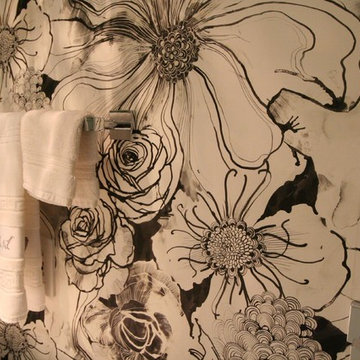
Example of a small eclectic white tile and porcelain tile porcelain tile home design design in Montreal with open cabinets, a one-piece toilet, multicolored walls and a console sink
Example of a small eclectic white tile and porcelain tile porcelain tile home design design in Montreal with open cabinets, a one-piece toilet, multicolored walls and a console sink



 Wine Cellar Specialists
Proper wine storage almost always requires a wine cellar cooling unit Atlanta. Because wines cannot tolerate temperature fluctuations, heat, or dryness of the air, a wine cellar cooling system is necessary to keep the precious beverages safe. It must be chosen based on the size of the room, the number of bottles to be stored, and budget of the owner.
For this Atlanta Georgia wine cellar project, our wine cellar builders installed a WhisperKool XLT3000 wine cellar refrigeration unit.
It is ideal for the small wine storage space, and functions quietly and efficiently. WhisperKool has been one of the trusted manufacturers of cooling equipment.
Learn more about this project: http://www.winecellarspec.com/custom-wine-cellars-atlanta-georgia-rr/
Wine Cellar Specialists
Take a video tour of this project: http://www.youtube.com/watch?v=hlaDBV0m5P0
+1 (972) 454-0480
info@winecellarspec.com

 flair21
These white and navy drapery panels get a bit of modern nautical flair with contrast banding.
Living room - contemporary living room idea
Living room - contemporary living room idea





 Cabinets To Go
Rich smokey hues of slate, ash and oyster give the newest addition to our raised panel collection a patina that is both cosmopolitan and rustic. Kensington Mist brings a classic look with a modern palette.

 Pratt + Larson
Close up of the repeating pattern of Pratt and Larson's 6x6 Motif A (MT-66XA) in a custom colorfill
Inspiration for a contemporary kitchen remodel in Portland
Inspiration for a contemporary kitchen remodel in Portland

 Lambert Home
Mid-sized arts and crafts guest carpeted and gray floor bedroom photo in Dallas with green walls and no fireplace
29