
Search results for "Invasive" in Home Design Ideas
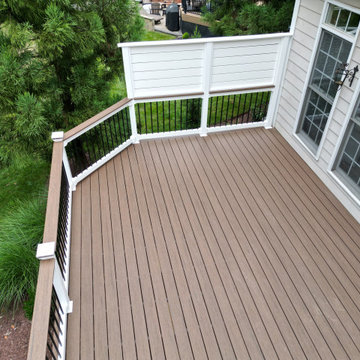
 Velero Deck Designs
This project was all about resurfacing an existing deck, which provides a significant amount of benefits, including:
- Enhanced Aesthetics: A deck resurfacing project can transform the appearance of the deck, giving it a fresh and modern look that can significantly improve the curb appeal of the entire home.
- Cost Savings: Resurfacing is often more cost-effective than completely rebuilding a deck. It allows homeowners to achieve a like-new appearance without the expense of a full replacement.
- Increased Durability: New materials used in resurfacing are designed to be more resistant to wear, fading, and the elements, resulting in a longer lifespan for the deck.
- Improved Safety: Addressing structural issues during the resurfacing process ensures the deck's safety and stability, reducing the risk of accidents.
- Less Disruption: Compared to a full deck replacement, resurfacing typically involves less disruption to the homeowner's daily routine, as it's a faster and less invasive process.
- Customization: Homeowners can choose from a wide range of materials, colors, and finishes to match their design preferences and complement their home's style.
- Environmentally Friendly: Resurfacing reduces the amount of old material that needs to be disposed of, making it a more environmentally conscious option.
By undertaking a deck resurfacing project, homeowners can rejuvenate their outdoor space, enjoy a beautiful and functional deck for years to come and increase the overall value of their property.
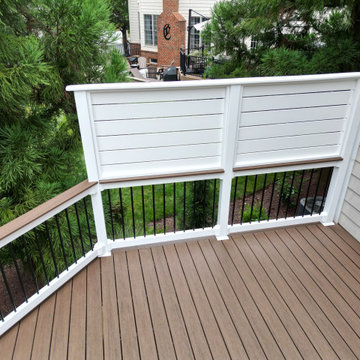 Velero Deck Designs
This project was all about resurfacing an existing deck, which provides a significant amount of benefits, including:
- Enhanced Aesthetics: A deck resurfacing project can transform the appearance of the deck, giving it a fresh and modern look that can significantly improve the curb appeal of the entire home.
- Cost Savings: Resurfacing is often more cost-effective than completely rebuilding a deck. It allows homeowners to achieve a like-new appearance without the expense of a full replacement.
- Increased Durability: New materials used in resurfacing are designed to be more resistant to wear, fading, and the elements, resulting in a longer lifespan for the deck.
- Improved Safety: Addressing structural issues during the resurfacing process ensures the deck's safety and stability, reducing the risk of accidents.
- Less Disruption: Compared to a full deck replacement, resurfacing typically involves less disruption to the homeowner's daily routine, as it's a faster and less invasive process.
- Customization: Homeowners can choose from a wide range of materials, colors, and finishes to match their design preferences and complement their home's style.
- Environmentally Friendly: Resurfacing reduces the amount of old material that needs to be disposed of, making it a more environmentally conscious option.
By undertaking a deck resurfacing project, homeowners can rejuvenate their outdoor space, enjoy a beautiful and functional deck for years to come and increase the overall value of their property.
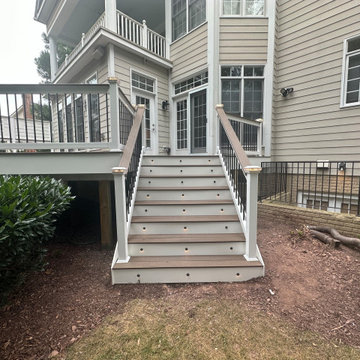 Velero Deck Designs
This project was all about resurfacing an existing deck, which provides a significant amount of benefits, including:
- Enhanced Aesthetics: A deck resurfacing project can transform the appearance of the deck, giving it a fresh and modern look that can significantly improve the curb appeal of the entire home.
- Cost Savings: Resurfacing is often more cost-effective than completely rebuilding a deck. It allows homeowners to achieve a like-new appearance without the expense of a full replacement.
- Increased Durability: New materials used in resurfacing are designed to be more resistant to wear, fading, and the elements, resulting in a longer lifespan for the deck.
- Improved Safety: Addressing structural issues during the resurfacing process ensures the deck's safety and stability, reducing the risk of accidents.
- Less Disruption: Compared to a full deck replacement, resurfacing typically involves less disruption to the homeowner's daily routine, as it's a faster and less invasive process.
- Customization: Homeowners can choose from a wide range of materials, colors, and finishes to match their design preferences and complement their home's style.
- Environmentally Friendly: Resurfacing reduces the amount of old material that needs to be disposed of, making it a more environmentally conscious option.
By undertaking a deck resurfacing project, homeowners can rejuvenate their outdoor space, enjoy a beautiful and functional deck for years to come and increase the overall value of their property.
Find the right local pro for your project
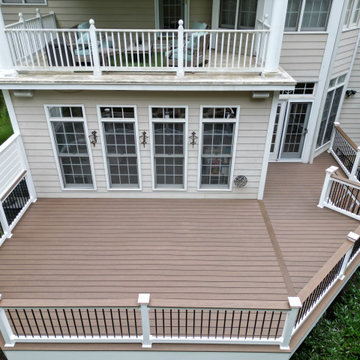 Velero Deck Designs
This project was all about resurfacing an existing deck, which provides a significant amount of benefits, including:
- Enhanced Aesthetics: A deck resurfacing project can transform the appearance of the deck, giving it a fresh and modern look that can significantly improve the curb appeal of the entire home.
- Cost Savings: Resurfacing is often more cost-effective than completely rebuilding a deck. It allows homeowners to achieve a like-new appearance without the expense of a full replacement.
- Increased Durability: New materials used in resurfacing are designed to be more resistant to wear, fading, and the elements, resulting in a longer lifespan for the deck.
- Improved Safety: Addressing structural issues during the resurfacing process ensures the deck's safety and stability, reducing the risk of accidents.
- Less Disruption: Compared to a full deck replacement, resurfacing typically involves less disruption to the homeowner's daily routine, as it's a faster and less invasive process.
- Customization: Homeowners can choose from a wide range of materials, colors, and finishes to match their design preferences and complement their home's style.
- Environmentally Friendly: Resurfacing reduces the amount of old material that needs to be disposed of, making it a more environmentally conscious option.
By undertaking a deck resurfacing project, homeowners can rejuvenate their outdoor space, enjoy a beautiful and functional deck for years to come and increase the overall value of their property.
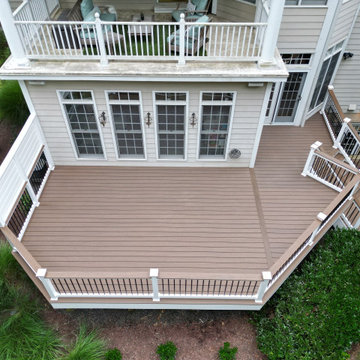 Velero Deck Designs
This project was all about resurfacing an existing deck, which provides a significant amount of benefits, including:
- Enhanced Aesthetics: A deck resurfacing project can transform the appearance of the deck, giving it a fresh and modern look that can significantly improve the curb appeal of the entire home.
- Cost Savings: Resurfacing is often more cost-effective than completely rebuilding a deck. It allows homeowners to achieve a like-new appearance without the expense of a full replacement.
- Increased Durability: New materials used in resurfacing are designed to be more resistant to wear, fading, and the elements, resulting in a longer lifespan for the deck.
- Improved Safety: Addressing structural issues during the resurfacing process ensures the deck's safety and stability, reducing the risk of accidents.
- Less Disruption: Compared to a full deck replacement, resurfacing typically involves less disruption to the homeowner's daily routine, as it's a faster and less invasive process.
- Customization: Homeowners can choose from a wide range of materials, colors, and finishes to match their design preferences and complement their home's style.
- Environmentally Friendly: Resurfacing reduces the amount of old material that needs to be disposed of, making it a more environmentally conscious option.
By undertaking a deck resurfacing project, homeowners can rejuvenate their outdoor space, enjoy a beautiful and functional deck for years to come and increase the overall value of their property.
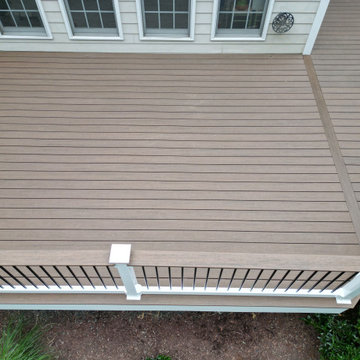 Velero Deck Designs
This project was all about resurfacing an existing deck, which provides a significant amount of benefits, including:
- Enhanced Aesthetics: A deck resurfacing project can transform the appearance of the deck, giving it a fresh and modern look that can significantly improve the curb appeal of the entire home.
- Cost Savings: Resurfacing is often more cost-effective than completely rebuilding a deck. It allows homeowners to achieve a like-new appearance without the expense of a full replacement.
- Increased Durability: New materials used in resurfacing are designed to be more resistant to wear, fading, and the elements, resulting in a longer lifespan for the deck.
- Improved Safety: Addressing structural issues during the resurfacing process ensures the deck's safety and stability, reducing the risk of accidents.
- Less Disruption: Compared to a full deck replacement, resurfacing typically involves less disruption to the homeowner's daily routine, as it's a faster and less invasive process.
- Customization: Homeowners can choose from a wide range of materials, colors, and finishes to match their design preferences and complement their home's style.
- Environmentally Friendly: Resurfacing reduces the amount of old material that needs to be disposed of, making it a more environmentally conscious option.
By undertaking a deck resurfacing project, homeowners can rejuvenate their outdoor space, enjoy a beautiful and functional deck for years to come and increase the overall value of their property.

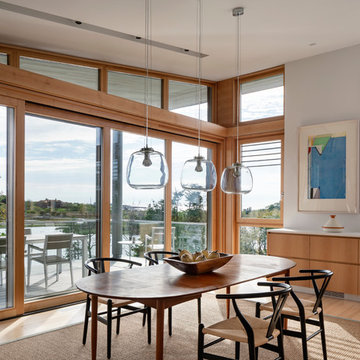
 Amanda Martocchio Architecture
When a world class sailing champion approached us to design a Newport home for his family, with lodging for his sailing crew, we set out to create a clean, light-filled modern home that would integrate with the natural surroundings of the waterfront property, and respect the character of the historic district.
Our approach was to make the marine landscape an integral feature throughout the home. One hundred eighty degree views of the ocean from the top floors are the result of the pinwheel massing. The home is designed as an extension of the curvilinear approach to the property through the woods and reflects the gentle undulating waterline of the adjacent saltwater marsh. Floodplain regulations dictated that the primary occupied spaces be located significantly above grade; accordingly, we designed the first and second floors on a stone “plinth” above a walk-out basement with ample storage for sailing equipment. The curved stone base slopes to grade and houses the shallow entry stair, while the same stone clads the interior’s vertical core to the roof, along which the wood, glass and stainless steel stair ascends to the upper level.
One critical programmatic requirement was enough sleeping space for the sailing crew, and informal party spaces for the end of race-day gatherings. The private master suite is situated on one side of the public central volume, giving the homeowners views of approaching visitors. A “bedroom bar,” designed to accommodate a full house of guests, emerges from the other side of the central volume, and serves as a backdrop for the infinity pool and the cove beyond.
Also essential to the design process was ecological sensitivity and stewardship. The wetlands of the adjacent saltwater marsh were designed to be restored; an extensive geo-thermal heating and cooling system was implemented; low carbon footprint materials and permeable surfaces were used where possible. Native and non-invasive plant species were utilized in the landscape. The abundance of windows and glass railings maximize views of the landscape, and, in deference to the adjacent bird sanctuary, bird-friendly glazing was used throughout.
Photo: Michael Moran/OTTO Photography
 Velero Deck Designs
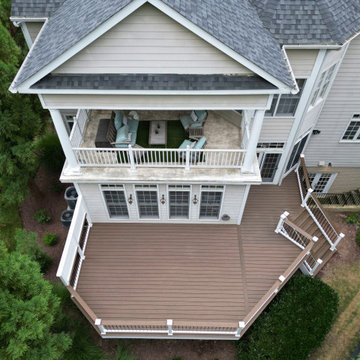
This project was all about resurfacing an existing deck, which provides a significant amount of benefits, including:
- Enhanced Aesthetics: A deck resurfacing project can transform the appearance of the deck, giving it a fresh and modern look that can significantly improve the curb appeal of the entire home.
- Cost Savings: Resurfacing is often more cost-effective than completely rebuilding a deck. It allows homeowners to achieve a like-new appearance without the expense of a full replacement.
- Increased Durability: New materials used in resurfacing are designed to be more resistant to wear, fading, and the elements, resulting in a longer lifespan for the deck.
- Improved Safety: Addressing structural issues during the resurfacing process ensures the deck's safety and stability, reducing the risk of accidents.
- Less Disruption: Compared to a full deck replacement, resurfacing typically involves less disruption to the homeowner's daily routine, as it's a faster and less invasive process.
- Customization: Homeowners can choose from a wide range of materials, colors, and finishes to match their design preferences and complement their home's style.
- Environmentally Friendly: Resurfacing reduces the amount of old material that needs to be disposed of, making it a more environmentally conscious option.
By undertaking a deck resurfacing project, homeowners can rejuvenate their outdoor space, enjoy a beautiful and functional deck for years to come and increase the overall value of their property.

 Velero Deck Designs
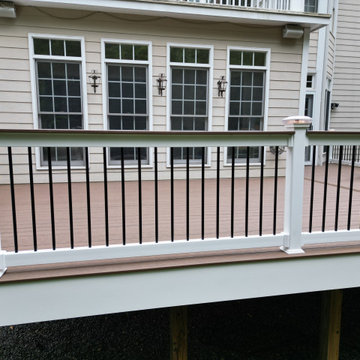
This project was all about resurfacing an existing deck, which provides a significant amount of benefits, including:
- Enhanced Aesthetics: A deck resurfacing project can transform the appearance of the deck, giving it a fresh and modern look that can significantly improve the curb appeal of the entire home.
- Cost Savings: Resurfacing is often more cost-effective than completely rebuilding a deck. It allows homeowners to achieve a like-new appearance without the expense of a full replacement.
- Increased Durability: New materials used in resurfacing are designed to be more resistant to wear, fading, and the elements, resulting in a longer lifespan for the deck.
- Improved Safety: Addressing structural issues during the resurfacing process ensures the deck's safety and stability, reducing the risk of accidents.
- Less Disruption: Compared to a full deck replacement, resurfacing typically involves less disruption to the homeowner's daily routine, as it's a faster and less invasive process.
- Customization: Homeowners can choose from a wide range of materials, colors, and finishes to match their design preferences and complement their home's style.
- Environmentally Friendly: Resurfacing reduces the amount of old material that needs to be disposed of, making it a more environmentally conscious option.
By undertaking a deck resurfacing project, homeowners can rejuvenate their outdoor space, enjoy a beautiful and functional deck for years to come and increase the overall value of their property.
 Barbara Wilson Landscape Architect, LLC
Photo by Barbara Wilson Landscape Architect, LLC
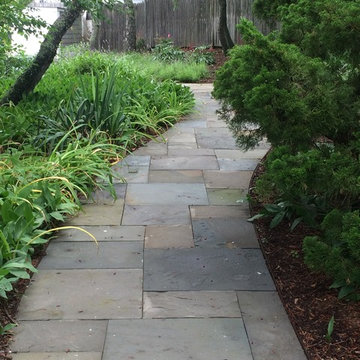
A small residential, seaside property located on Fairfield Beach, Fairfield was renovated by the new owners and adapted for their active family. Barbara was the landscape architect in charge of all of the landscape elements upgrades. She designed new bluestone curving paths to access the front and side doors and designed new landscape lighting to enhance the walks. The existing trees were saved and she designed new shade and salt-tolerant plantings which were added to provide seasonal color and interest while respecting the existing plantings. Along the beach front additional native beach grasses were added to stabilize the dunes while removing some invasive plantings. This work will be phased over the next few years in an effort to keep the sand stable. Beach roses were incorporated into a hollow in the dunes. A small lawn area was renovated and the surrounding Black Pines pruned to provide a small play area and respite from the sun. Beautiful reblooming hydrangeas line the edge of the gravel driveway. Rounded beach stones were used instead of mulch in the island planting along the edge of the adjacent road planted with Miscanthus, Mugo pine and yucca.
Barbara designed a custom kayak rack, custom garbage enclosure, a new layout of the existing wooden deck to facilitate access to the side doors, and detailed how to renovate the front door into only an emergency access with new railings and steps.
She coordinating obtaining bids and then supervised the installation of all elements for the new landscape the project.
The interiors were designed by Jack Montgomery Design of Greenwich, CT and NYC . Tree work was completed by Bartlett Tree Experts. Freddy’s Landscape Company of Fairfield, CT installed the new plantings, installed all the new masonry work and provides landscape maintenance services. JT Low Voltage and Electric installed the landscape lighting.

 Tulinda's Garden, LLC
Trachelospermum jasminoides (Confederate jasmine), not a Florida native, but Florida friendly and wonderfully fragrant.
Tulinda's Garden, LLC
 Jeffrey Gordon Smith Landscape Architecture
Chris Leschinsky
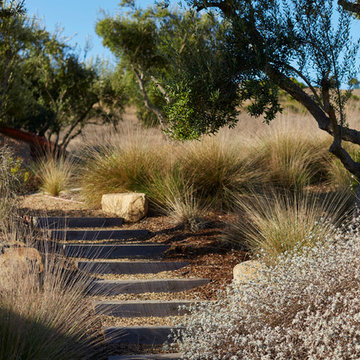
Design ideas for a mediterranean landscaping in San Luis Obispo.
Design ideas for a mediterranean landscaping in San Luis Obispo.
 The Design Build Company
Eclectic botanical home by landscape designer Rob Hill
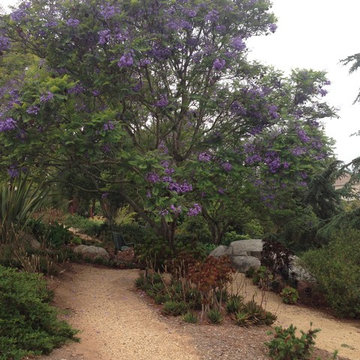
Photo of a mid-sized eclectic drought-tolerant and partial sun hillside gravel landscaping in San Diego for summer.
Photo of a mid-sized eclectic drought-tolerant and partial sun hillside gravel landscaping in San Diego for summer.
 Van Zelst Inc
Photo by Kirsten Gentry and Terra Jenkins for Van Zelst, Inc.
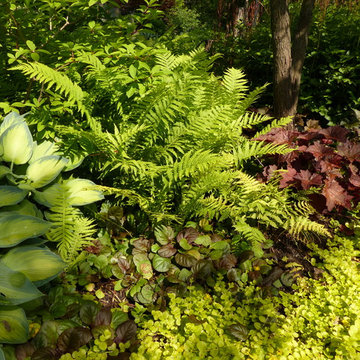
Design ideas for a huge traditional shade backyard garden path in Chicago for summer.
Design ideas for a huge traditional shade backyard garden path in Chicago for summer.
 Robert M. Cain, Architect
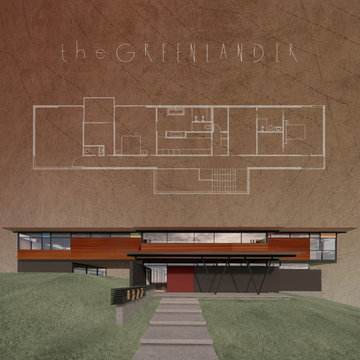
View from street: Greenlander will occupy an undeveloped residential lot in a desirable intown neighborhood. With dense forestation and old growth specimen trees scattered throughout the site, Greenlander will nestle into the steep slopes, limit grading, minimize impact to the existing tree canopy and understory.
Greenlander’s ambitious sustainability goals are:
o Near net-zero energy consumption
o Incorporate sustainable technologies: Geothermal heating/cooling, photovoltaics, passive solar design, natural ventilation
o Utilize low maintenance materials
o Eliminate exotic and invasive species; repopulate native species throughout.
o Preserve/restore riparian buffers area of the site as a Doug Tallamy style Homegrown National Park
 Pennsylvania Landscape & Nursery Association
Terran Landscapes http://www.terranlandscapes.com
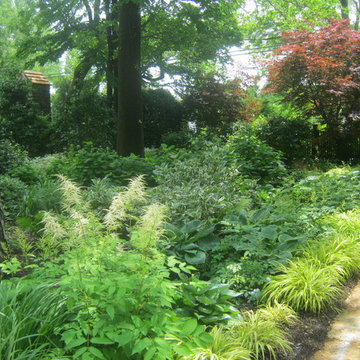
Project Entry: Fishers Woodland Garden
2014 PLNA Awards for Landscape Excellence Winner
Category: Theme Garden $15,000-$30,000
Award Level: Bronze
Photo Description:
We were contracted by the client to design a calming space for their staff to relax, take a walk, and enjoy a leisurely lunch as well as to provide their grandchildren a place to run and pick flowers. The space was originally dominated by large trees and had been overgrown with ivy, sumac and aggressive vines, providing an unwelcome, dark space with little color or visual appeal. The client requested a colorful blend of shrubs and perennials that would provide interest throughout the seasons, as well as provide privacy by screening the street traffic along Carisbrooke Road.
Our goal was to create the privacy screen along the road by layering plants from the ground to the tree canopy. The theme was to let nature inspire the landscape, allowing a space that was originally woodland to become an enhanced version of itself, creating a beautiful habitat for birds and butterflies to excite the senses and satisfy all who enjoy the beauty of nature.
We began by clearing the brush and removing all aggressive vines and ivy that jeopardized the health of the trees. We kept and transplanted all non- invasive or native plant material in the area to various locations throughout the property. Several yards of compost were then tilled into the soil and the existing trees fertilized to provide a rich growing environment.
A few challenges occurred during the design process. It was decided that a new generator was to be installed in the woodland and due to a future addition to the house, we were forced to eliminate planned additional impervious pathway surfaces. We provided screening to hide the generator and buffer the noise, and created a meandering path and sitting area out of natural woodchips instead of the proposed bluestone to solve the impervious space issue. The woodchips add a sense of informality and invite the viewer to walk slowly through the space. The reduced noise from the additional screening of the generator allows for quiet reflection as chipmunks scurry and hummingbirds dart about between the flowers.
Our plant palette consists of shady understory plants that thrive and flower vigorously from spring through fall. A tall, lush, evergreen backdrop of Ilex opaca and Prunus laurocerasus ‘Schipkaensis’ provides the screening and blends into a middle layer of ‘Ivory Halo’ dogwood, hydrangeas and winterberry hollies. Beautiful perennials and groundcovers bloom along the woodland path, providing a low visual layer of color and texture. Movement throughout the garden is provided by the graceful Calamagrostis brachytricha and Hakenchloa that soften the nearby hardscaping. The woodland floor is full of shade-loving Solomon’s seal, hosta, astilbe, ferns, bleeding heart, Tiarella and Aconitum.
The street side of this woodland required plants with a preference for a little more sun and drought tolerance. A palette of oakleaf hydrangea, Agastache, Liatris and Rudbeckia softens the fence line and provides the desired color.
As designed and installed, the woodland garden successfully provides the client’s family and office staff a quiet space where they can take a peaceful moment and enjoy nature.
Photo Credit: Lisa C. Falls
 Ravenscourt Landscaping and Design LLC
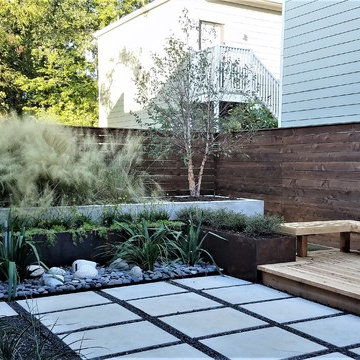
Wind in the grass, water in the stone bed, rusted steel, cedar deck and cement raised bed. This garden has it going on!
Inspiration for a small contemporary drought-tolerant and full sun backyard landscaping in Houston.
Inspiration for a small contemporary drought-tolerant and full sun backyard landscaping in Houston.
 Amanda Martocchio Architecture
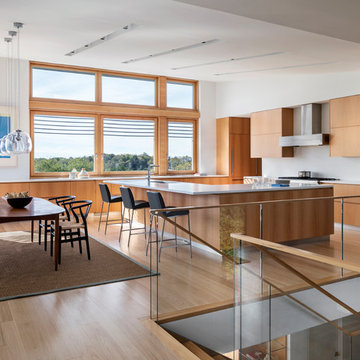
When a world class sailing champion approached us to design a Newport home for his family, with lodging for his sailing crew, we set out to create a clean, light-filled modern home that would integrate with the natural surroundings of the waterfront property, and respect the character of the historic district.
Our approach was to make the marine landscape an integral feature throughout the home. One hundred eighty degree views of the ocean from the top floors are the result of the pinwheel massing. The home is designed as an extension of the curvilinear approach to the property through the woods and reflects the gentle undulating waterline of the adjacent saltwater marsh. Floodplain regulations dictated that the primary occupied spaces be located significantly above grade; accordingly, we designed the first and second floors on a stone “plinth” above a walk-out basement with ample storage for sailing equipment. The curved stone base slopes to grade and houses the shallow entry stair, while the same stone clads the interior’s vertical core to the roof, along which the wood, glass and stainless steel stair ascends to the upper level.
One critical programmatic requirement was enough sleeping space for the sailing crew, and informal party spaces for the end of race-day gatherings. The private master suite is situated on one side of the public central volume, giving the homeowners views of approaching visitors. A “bedroom bar,” designed to accommodate a full house of guests, emerges from the other side of the central volume, and serves as a backdrop for the infinity pool and the cove beyond.
Also essential to the design process was ecological sensitivity and stewardship. The wetlands of the adjacent saltwater marsh were designed to be restored; an extensive geo-thermal heating and cooling system was implemented; low carbon footprint materials and permeable surfaces were used where possible. Native and non-invasive plant species were utilized in the landscape. The abundance of windows and glass railings maximize views of the landscape, and, in deference to the adjacent bird sanctuary, bird-friendly glazing was used throughout.
Photo: Michael Moran/OTTO Photography
36