
Search results for "Japanese inspired garden side yard" in Home Design Ideas
 Holmes Fine Gardens
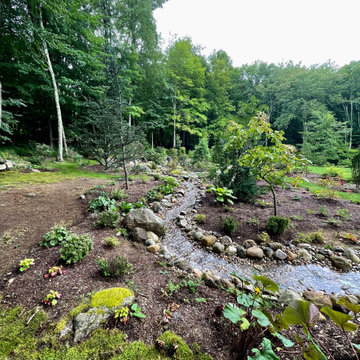
This early-phase Japanese-inspired garden draws from the Buddhist, Shinto, and Taoist philosophies and combines the basic elements of plants, water, and rocks along with simple, clean lines to create a tranquil backyard retreat. Plant material used includes Japanese varieties of trees, shrubs and perennials woven together to create interest throughout each season.
 Exterior Worlds Landscaping & Design
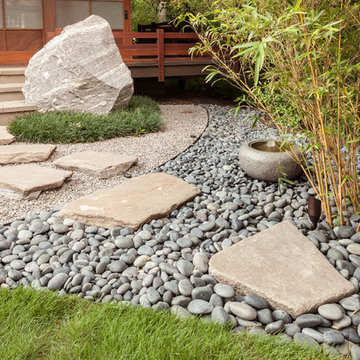
Discover the beauty of our Japanese-inspired garden design, featuring a harmonious arrangement of smooth river rocks, stepping stones, and vibrant bamboo. This elegant landscape transforms your outdoor space into a peaceful sanctuary.
 Holmes Fine Gardens
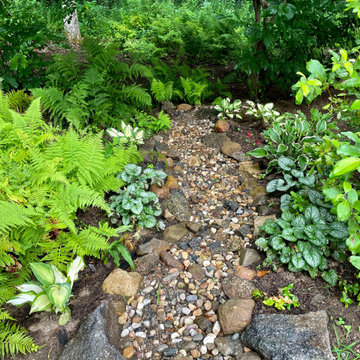
This early-phase Japanese-inspired garden draws from the Buddhist, Shinto, and Taoist philosophies and combines the basic elements of plants, water, and rocks along with simple, clean lines to create a tranquil backyard retreat. Plant material used includes Japanese varieties of trees, shrubs and perennials woven together to create interest throughout each season.
Find the right local pro for your project
 Holmes Fine Gardens
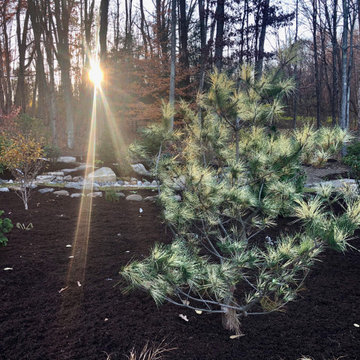
This early-phase Japanese-inspired garden draws from the Buddhist, Shinto, and Taoist philosophies and combines the basic elements of plants, water, and rocks along with simple, clean lines to create a tranquil backyard retreat. Plant material used includes Japanese varieties of trees, shrubs and perennials woven together to create interest throughout each season.
 Welcome To My Garden
Barbara Miller
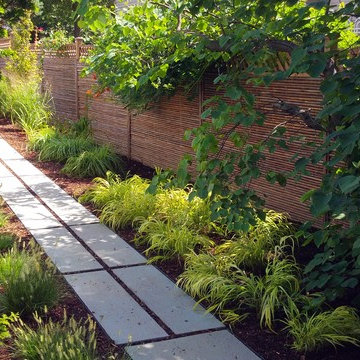
This is an example of a small asian partial sun backyard stone garden path in Newark.
This is an example of a small asian partial sun backyard stone garden path in Newark.
 Reflections Water Gardens
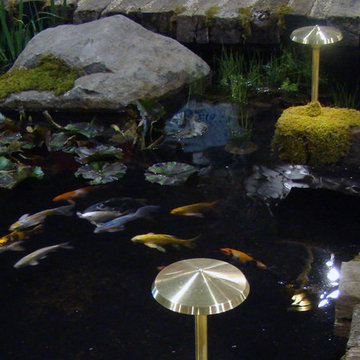
Asian influences blended with native plantings helped create this garden, which we call Prairie-fusion. Water is the main focus of the garden, which falls and flows creating both visual and audial impact. Colorful koi dot the dark waters which reflect light and landscape. Choices in construction material were made to enhance a rustic look while touches of Japanese-inspired influences were appropriately placed to introduce an exotic feel. In keeping with the traditional Japanese gardens, raked rocks and boulders simulate islands in water. While inspired by the East, the garden is rooted firmly in the Midwestern landscape, surrounded and softened by plants native to woodlands and wetlands, including ferns, sedges, wild columbine, blue flag iris, horsetail rush, water lilies and native maples. A ramp leading up to the decking combined both reclaimed railroad ties and gravel, tying in the two solid ground influences in the garden. Live moss was used heavily on boulders and wood creating the illusion of a garden which has been tucked away, living and growing for a long time. Photo by Larry Carnes
 Studio H Landscape Architecture
Photography by Studio H Landscape Architecture. Post processing by Isabella Li.
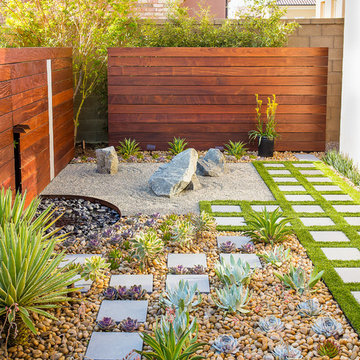
Design ideas for a small contemporary drought-tolerant and partial sun side yard stone garden path in Orange County.
Design ideas for a small contemporary drought-tolerant and partial sun side yard stone garden path in Orange County.
Sponsored
Columbus, OH

Structural Remodeling
Franklin County's Heavy Timber Specialists | Best of Houzz 2020!
 Howells Architecture + Design
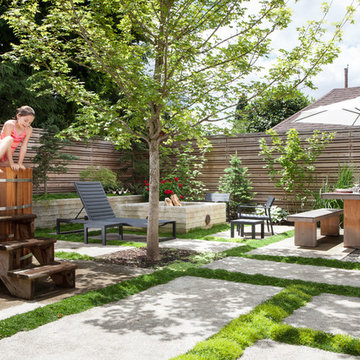
This project reimagines an under-used back yard in Portland, Oregon, creating an urban garden with an adjacent writer’s studio. Taking inspiration from Japanese precedents, we conceived of a paving scheme with planters, a cedar soaking tub, a fire pit, and a seven-foot-tall cedar fence. A maple tree forms the focal point and will grow to shade the yard. Board-formed concrete planters house conifers, maples and moss, appropriate to the Pacific Northwest climate.
Photo: Anna M Campbell: annamcampbell.com
 Holmes Fine Gardens
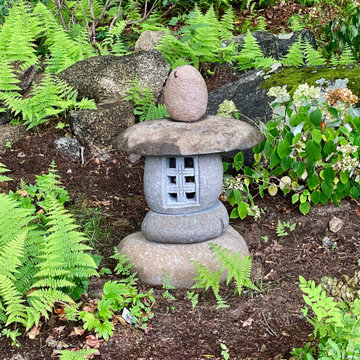
This early-phase Japanese-inspired garden draws from the Buddhist, Shinto, and Taoist philosophies and combines the basic elements of plants, water, and rocks along with simple, clean lines to create a tranquil backyard retreat. Plant material used includes Japanese varieties of trees, shrubs and perennials woven together to create interest throughout each season.
 Holmes Fine Gardens
This early-phase Japanese-inspired garden draws from the Buddhist, Shinto, and Taoist philosophies and combines the basic elements of plants, water, and rocks along with simple, clean lines to create a tranquil backyard retreat. Plant material used includes Japanese varieties of trees, shrubs and perennials woven together to create interest throughout each season.
 Bradford Associates, LLC
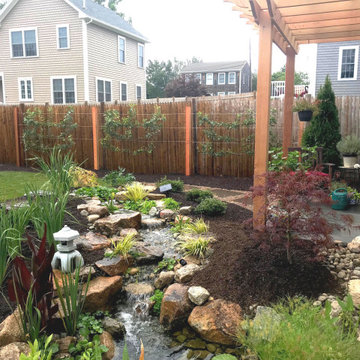
A custom designed koi pond is the central feature in the japanese inspired landscape. The waterfall is not only essential to the health of the fish and the aquatic plants, but it adds soothing, relaxing background noise to throughout the backyard. Espalier apple trees grow on custom built supports along the back fence.
 Reflections Water Gardens
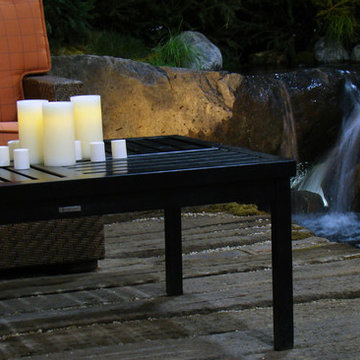
Asian influences blended with native plantings helped create this garden, which we call Prairie-fusion. Water is the main focus of the garden, which falls and flows creating both visual and audial impact. Colorful koi dot the dark waters which reflect light and landscape. Choices in construction material were made to enhance a rustic look while touches of Japanese-inspired influences were appropriately placed to introduce an exotic feel. In keeping with the traditional Japanese gardens, raked rocks and boulders simulate islands in water. While inspired by the East, the garden is rooted firmly in the Midwestern landscape, surrounded and softened by plants native to woodlands and wetlands, including ferns, sedges, wild columbine, blue flag iris, horsetail rush, water lilies and native maples. A ramp leading up to the decking combined both reclaimed railroad ties and gravel, tying in the two solid ground influences in the garden. Live moss was used heavily on boulders and wood creating the illusion of a garden which has been tucked away, living and growing for a long time. Photo by Larry Carnes
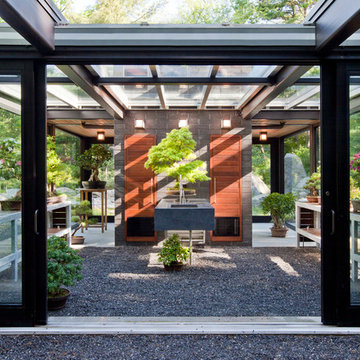
 Flavin Architects
Modern glass house set in the landscape evokes a midcentury vibe. A modern gas fireplace divides the living area with a polished concrete floor from the greenhouse with a gravel floor. The frame is painted steel with aluminum sliding glass door. The front features a green roof with native grasses and the rear is covered with a glass roof.
Photo by: Peter Vanderwarker Photography
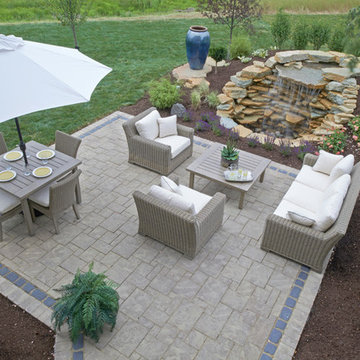

 Holmes Fine Gardens
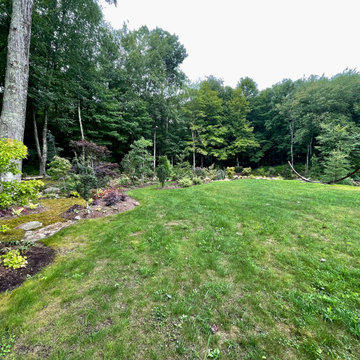
This early-phase Japanese-inspired garden draws from the Buddhist, Shinto, and Taoist philosophies and combines the basic elements of plants, water, and rocks along with simple, clean lines to create a tranquil backyard retreat. Plant material used includes Japanese varieties of trees, shrubs and perennials woven together to create interest throughout each season.
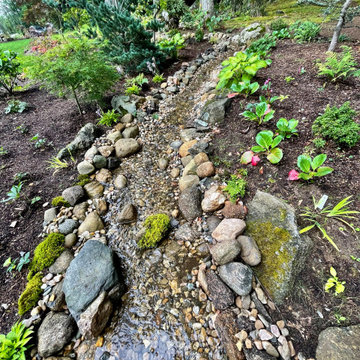 Holmes Fine Gardens
This early-phase Japanese-inspired garden draws from the Buddhist, Shinto, and Taoist philosophies and combines the basic elements of plants, water, and rocks along with simple, clean lines to create a tranquil backyard retreat. Plant material used includes Japanese varieties of trees, shrubs and perennials woven together to create interest throughout each season.
 Holmes Fine Gardens
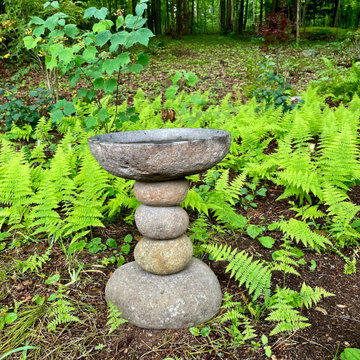
This early-phase Japanese-inspired garden draws from the Buddhist, Shinto, and Taoist philosophies and combines the basic elements of plants, water, and rocks along with simple, clean lines to create a tranquil backyard retreat. Plant material used includes Japanese varieties of trees, shrubs and perennials woven together to create interest throughout each season.
 Harrell Design + Build
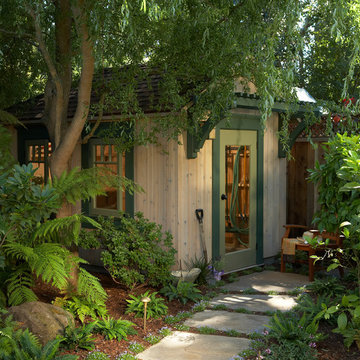
What our clients needed:
• Create a garden folly that doubles as a well-built shed for crafts and storage.
• Size the structure large enough for comfortable storage without dominating the garden.
• Discreetly locate the shed in the far corner of the rear yard while maintaining existing trees.
• Ensure that the structure is protected from the weather and carefully detailed to deter access of wildlife and rodents.
FUNCTION
• Construct the shed slab close to grade to permit easy access for bicycle storage, while building shed walls above grade to ensure against termites and dryrot.
• Install a French door and operable casement windows to admit plenty of daylight and provide views to the garden.
• Include rugged built-in work bench, shelves, bike racks and tool storage for a rustic well-organized and efficient space.
• Incorporate GFIC electrical service for safe access to power at this distant corner of the yard.
• Position energy-efficient interior lighting to ensure space can be used year-round.
• Switch control of exterior light from house and from shed for ease of command.
AESTHETICS
• Design and detail the shed to coordinate with the Arts and Crafts style house.
• Include an arbor for future flowering vines, further softening the shed’s garden presence.
• Simple and rustic interior surfaces ensure that the space is easy to clean.
• Create an aged and softly weathered appearance, and protect the exterior siding by finishing the cedar with a custom-colored semi-transparent stain.
INNOVATIVE MATERIALS AND CONSTRUCTION
• Factory-built components were pre-assembled to allow for a speedy assembly and for a shorter on-site construction schedule.
• Each component was easily transported through the yard without disturbing garden features.
• Decorative exterior trim frames the door and windows, while a simpler trim is used inside the unadorned shed.
OBSTACLE OVERCOME
• The structure is located in the corner of the yard to avoid disturbance of a curly willow tree.
• The low-profile structure is positioned close to property lines while staying beneath the allowable daylight plane for structures.
• To comply with daylight plane close to fence, the roof form combines hip and gable forms, with door located at gable end.
• The height of the modest interior is maximized, without exceeding the allowable building height.
CRAFTSMANSHIP
• The concrete slab was precisely formed and finished for ease of shed assembly before the factory-built components were delivered to site.
• Precision planning meant the pre-framed door fit exactly between raised concrete curb.
Sponsored
Westerville, OH

Custom Home Works
Franklin County's Award-Winning Design, Build and Remodeling Expert
 Holmes Fine Gardens
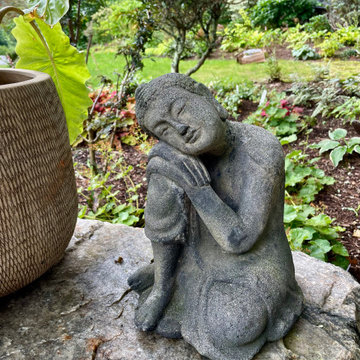
This early-phase Japanese-inspired garden draws from the Buddhist, Shinto, and Taoist philosophies and combines the basic elements of plants, water, and rocks along with simple, clean lines to create a tranquil backyard retreat. Plant material used includes Japanese varieties of trees, shrubs and perennials woven together to create interest throughout each season.
 Holmes Fine Gardens
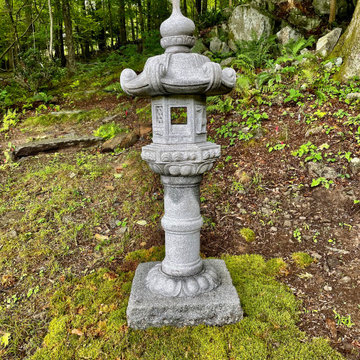
This early-phase Japanese-inspired garden draws from the Buddhist, Shinto, and Taoist philosophies and combines the basic elements of plants, water, and rocks along with simple, clean lines to create a tranquil backyard retreat. Plant material used includes Japanese varieties of trees, shrubs and perennials woven together to create interest throughout each season.
 Holmes Fine Gardens
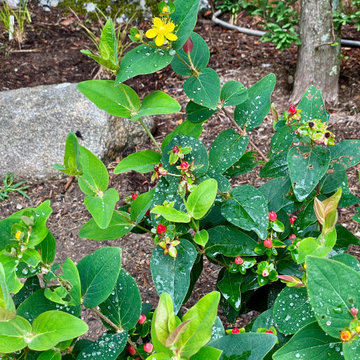
This early-phase Japanese-inspired garden draws from the Buddhist, Shinto, and Taoist philosophies and combines the basic elements of plants, water, and rocks along with simple, clean lines to create a tranquil backyard retreat. Plant material used includes Japanese varieties of trees, shrubs and perennials woven together to create interest throughout each season.
2