
Search results for "Lasting people" in Home Design Ideas
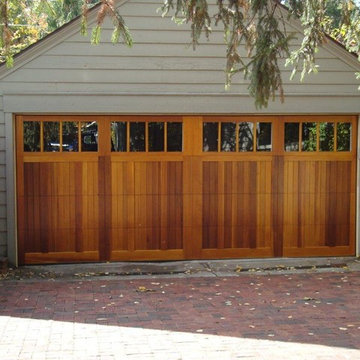
 United Garage Door Company
5431 C.H.I. Carriage House Mahogany
Clear Coat Finish with Madison Windows
Example of a mid-sized classic detached two-car garage design in Cleveland
Example of a mid-sized classic detached two-car garage design in Cleveland
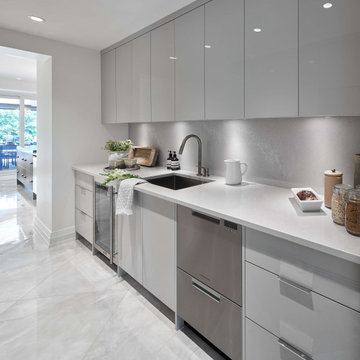
 Astro Design Inc.
This kitchen was designed with the intent of hosting large family gatherings, upwards of twenty people at a time. Locating the kitchen adjacent to the informal eating area, the family room and the patio, was the ideal choice for entertaining. The implementation of a large double island, in an unexpected “L” shape, allowed for a ton of extra space without consequently feeling like an industrial environment.
The choice to panel the expansive fridge and freezer allowed the mirrored stainless-steel display cabinets to really become a focal point in the space. These cabinets worked perfectly to house the client’s large stemware collection. Repeating the mirrored finish on the other side of the room, with a refined hood fan exudes glamour. Lastly, the sophisticated hardware and sculptural light fixtures elevate this kitchen to the contemporary, yet traditional, formal style found throughout the rest of the home.

 Simply Home Decorating
This beautiful North Vancouver home belongs to a nature-loving and health-conscious couple, Emma and Vince (names changed), their two young children, and their dog, Jasper. When they contacted us about renovating and furnishing their kitchen and family room, we walked in and saw a world of potential waiting to be uncovered.
Before: Larkhall Crescent Home:
Like many original North Vancouver homes, the interior was definitely dated. We encountered late ‘80s finishes in powder pink and teal green, old carpet, and a kitchen that wasn’t maximized to suit this family’s modern-day lifestyle. However, the size of the rooms offered us a ton of space with which to get creative.
Knowing our clients’ love of cooking, need for work spaces (Emma and Vince both work remotely), and growing family, we developed a design concept that would increase usable space, optimize storage, and create intimacy in this large area. As for the style, we were inspired by their European roots, inventing a new and modern take on “Belgian Farmhouse” style. Now, the home is truly one-of-a-kind.
After: Warm & Cozy Family Room:
Fresh, bright, and comfortable, this living area has been transformed! We started with the fireplace as a focal point, selecting aged brick tiles for added texture and a crisp wood mantle. The taupe-coloured sectional infuses the room with visual warmth and serves the added purpose of separating the family room from the kitchen.
Emma and Vince were also keen on using non-toxic materials in their home, and we were happy to oblige. To meet their needs, we sourced natural wood elements and sought out Canadian-made products - that adhere to high health standards - whenever possible.
Look closer at the elements of this space, and you will find this stunning, honeycomb-patterned rug in earthy gold, beige, and charcoal tones. It’s plush to the touch and full of visual texture that brings this room’s colour palette together. We sourced these two-tone chairs with caning, petrified wood side table, black sconces, and botanical prints in greyscale from local artist, Heather Johnston.
We topped off the space with this dark wood and rattan console that offers storage facing the kitchen and presents an opportunity to display cherished items. The result is a cozy lounging space brimming with comfort and functionality. It’s perfect for enjoying quality family time, or Emma can simply slide the coffee table away to make room for her morning yoga practice.
Now, let’s turn around and give some attention to the kitchen. Do you remember what the original kitchen looked like? If not, scroll back up, because the transformation is shocking…
Moody & Welcoming Kitchen for Healthy Living:
This kitchen looks very different from how it started, right? Though we didn’t touch any walls, the kitchen has almost doubled in usable space! We created a long, extended island with storage, an outlet for small appliances, and seating for comfortable prep, after-school snacking, or mingling among friends.
On the other side of the island, the family has even more storage and an integrated dishwasher within easy reach of the sink, perfect for quick clean-up. From this angle, you can also see the expansive custom Shaker cabinetry in white and the integrated double ovens. These facilitate their cooking experience and gave us the opportunity to add an additional surprise…
A coffee garage station and more hidden storage! Keeping these items located along the perimeter allows them to be accessed by the family or their guests without someone getting under the cook’s feet. These are the little details that make everyday life easier and more enjoyable.
Moving deeper into the kitchen, the seamless induction cooktop topped with a freestanding concealed hood fan commands attention in a soft yet prominent way. The natural wood accent mirrors the fireplace mantle, and the choice of off-black wood-grain cabinets not only continues our black-and-white colour palette but adds a sense of depth and contrast. The corner sink is located to the right and perfectly positioned with a view of their thriving backyard.
To invite more of this family’s character into the space, we mixed metals for interest — matte black, dark pewter, and warm brass — and created open shelves in white oak for their plants and decor. You can also glimpse the tumbled edge of the backsplash tile, which echoes the rustic brick of the fireplace. It adds that farmhouse charm while still feeling timeless and sophisticated.
Last but not least, we designed this dining banquette in the bay window (with integrated bench storage, of course), where the family can share a meal together, the kids can do homework, or Emma and Vince can work and enjoy a change of scenery from their offices. Like the other spaces in the home, it was designed to be beautiful, multi-functional, and long-lasting.
Praise from Our Clients:
It is clear that we love this home, but what did our clients have to say?
“Lori is a visionary and masters execution to the finest detail all at the same time. When she first met us to know more about who we are and how we live, she could right away envision how we could use the space in our kitchen and living room…The results exceeded our expectations.
Lori and her team were also a delight to work with — coordination with all the trades, fast problem-solving, regular updates, professional and friendly attitude of her entire team — made it the dream team. Thank you SHD for making our space so beautiful!”
In turn, we are so grateful for this family’s trust, their open communication, and for being wonderful people with whom to work. (So, thank you!)
Find the right local pro for your project



 Leger Wanaselja Architecture
Leger Wanaselja Architecture, Kiera Marie Condrey
Inspiration for an eclectic deck remodel in San Francisco
Inspiration for an eclectic deck remodel in San Francisco
 MODIVO light
CA fam ?—ever heard of the “10 Biggest Renovation Regrets”? #7 is a total trap that’s wrecked 90% of folks I know. My bestie just texted crying: her new kitchen walls are moldy, floors are buckling, and she’s out $30K fixing it.
Let’s be real: stop believing “CA is too dry for moisture control”. Especially if you’re in SF (fog city) or LA (rainy Nov-Mar)—painting walls with regular paint is basically rolling out a red carpet for mold. My neighbor’s walls last year? Peeling like a bad sunburn, and her oven grew mold (gross, I know).
Here’s the fix:
❶ Walls: Moisture-blocking primer + anti-mold paint (Sherwin-Williams’ “MoldBlock” is CA mom-approved).
❷ Floors: Water-resistant composite wood (skip cheap solid wood—it swells when humidity hits).
❸ Wet areas (kitchen/bath): Mini dehumidifier (Amazon “CA dehumidifier” under $100 saves your walls!).
No one wants renovation regrets, but dodging this? Saves you 30% in repair cash. Let’s enjoy CA sun and fog—without mold crashing the party. ?️

 Charlie
Buying term papers from academic writing services and freelance writers is becoming a popular deal. Therefore, former and current professors are entering this industry to write papers for money more and more often. Such services as CourseworkService.com are becoming popular among students all over the world. An interesting fact is that they hire not only former graduates but also out-of-work academics.
When professors find a compromise about cheating
Jennifer Sunseri, a former assistant professor, lost her job in 2009. She has been looking for a job for almost three years. At long last, she had abandoned all hope of finding a new job and started working as an academic writing service creating papers for college students.
Jenifer says, “I realize that it is legal, but highly unethical especially regarding the fact that I am a former professor. For me this is an equivalent of prostitution. But I have been living in a tight situation for years without an opportunity to visit a doctor or pay my bills. I am 53, and I have no kids to help me when I am out-of-work.”
She has been a tutor in Texas Tech since 1998, where she established a Slavic folklore course. Jenifer didn’t have any publications during her working years at Texas Tech, so when the time has come to apply for a venture, she realized that she has no chances and left. She moved to her sister and her mom and now she is living in her studio apartment with her two cats.
Sunseri was worried when she lost her job even though she has master’s degrees in Slavic linguistics and technical communications.
“I thought that my educator’s and writer’s skills will be useful,” she said. “However, I was shocked at the quantity of applications for an instructor at the local college, as well as for the office manager, or an adjunct at the local institution. Even an effort to apply for a substitute teacher failed. I cannot believe that those who have academic background, experience and a degree are in less demand than those have not.”
When Ph.D. and master’s degrees lose their magical power, people with academic background have no choice but to start their term paper writing career. Once professors become unemployed, one may say that they feel themselves like high school graduates looking for a part-time job. However, you will be surprised, but according to statistics sometimes those with high school or college diplomas are more welcome than people with higher education. The reason is that a lot of new job places in America were created at times of economic recovery and, therefore, they are low-paying and require specialists with lower skills. It turns to be that it is much easier to learn a less-educated worker and train him/her in a particular way suitable for a certain company or service than to teach a higher-educated worker all over again. In addition, higher educated job candidates are more selective about their choice.
How to become a ghostwriter if you have been punishing others for paper cheating
Jenifer was not fastidious. She was looking for a job that would correspond her skills and finally decided to try herself as an online editor. While searching for an editing job, she ran against term paper writing service. This company asked her to send examples of her works and complete a test task. She has been accepted as a ghostwriter.
In fact, term paper writing services gladly accept people with higher education and offer them to write papers of all kinds for money. Jenifer says that her first assignments for sale included a 5-page paper on public debt, 10-page paper on linguistics, and an editing work of someone else’s 20-page paper. All these assignments brought her about $150. Jenifer reports that it is possible to turn a useful penny by writing academic papers.
Jenifer realized that ghostwriting is a good source of income after she read an article about an anonymous academic writer who earned almost $70,000 a year writing papers for high school and college students.
“Currently this business becomes more and more popular. During finals and midterms, we have a lot of work to do since there are a lot of students ready to pay for a custom paper and submit it as their own,” he says. “It is no wonder that students use writing services. I have seen a lot of their writings, and I realize why they are so desperate about writing their assignments. Some of them are unable to compose a grocery list without additional help. They really need it. We help them pass a course, that’s all.”
Jenifer says that this work helped her be on form and develop her core skills like writing and researching all the time. She was unemployed for a long time and was afraid that her skills might become lower due to a lack of practice. However, at a writing company she never stops practicing. She claims that this is a hard work mostly because you have to be meet urgent deadlines.
The other challenge was a paper that she couldn’t complete once. The problem was not in a lack of competency, but in ethics. She discovered that it was an order for a student from her former place of work, Tech University. She says that she felt weird about completing this work and refused to write it.
“I became angry when I realized that I am going to serve a kid who is partying in Florida, while being a former faculty member of the university he is attending.”
Currently, Jenifer is working as a Russian translator. However, she is not abandoning academic writing industry even though she feels a little awkward about helping students to cheat. It is not that bad that unemployable professors have an opportunity to earn for living being ghostwriters even though it is not very ethical.
Ironically, a place of work like academic writing company that makes out-of-job educators feel that they are performing a crime assisting students in cheating seems to be the only place in the job market that values their experience in the sphere of education.

Sponsored
Columbus, OH

Wannemacher Interiors
Customized Award-Winning Interior Design Solutions in Franklin Cnty OH
 MODIVO light
CA fam ?—ever heard of the “10 Biggest Renovation Regrets”? #7 is a total trap that’s wrecked 90% of folks I know. My bestie just texted crying: her new kitchen walls are moldy, floors are buckling, and she’s out $30K fixing it.
Let’s be real: stop believing “CA is too dry for moisture control”. Especially if you’re in SF (fog city) or LA (rainy Nov-Mar)—painting walls with regular paint is basically rolling out a red carpet for mold. My neighbor’s walls last year? Peeling like a bad sunburn, and her oven grew mold (gross, I know).
Here’s the fix:
❶ Walls: Moisture-blocking primer + anti-mold paint (Sherwin-Williams’ “MoldBlock” is CA mom-approved).
❷ Floors: Water-resistant composite wood (skip cheap solid wood—it swells when humidity hits).
❸ Wet areas (kitchen/bath): Mini dehumidifier (Amazon “CA dehumidifier” under $100 saves your walls!).
No one wants renovation regrets, but dodging this? Saves you 30% in repair cash. Let’s enjoy CA sun and fog—without mold crashing the party. ?️
 otile
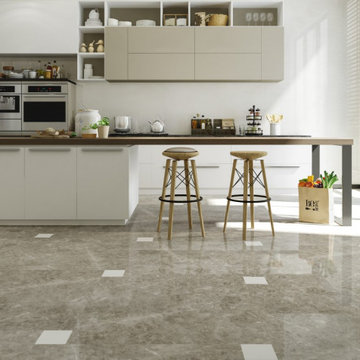
otileyou could choose ceramic tiles for the flooring o the kitchen, that's certainly an exquisite idea. Kitchen flooring is victim of spills every day, which means that the kitchen floor's floor ought to be wiped clean every day. Then again, ceramic tiles have a tendency to be wiped clean without difficulty, and they're a notable option for kitchen flooring. The ceramic tiles do not absorb microorganism and smell, that's critical for the kitchen. Ceramic tiles are also excellent due to their water-resistant nature and are a crucial element for kitchen floors. What are ceramic tiles made up of? Ceramic tiles are defined to be made from clay, and they're also recognized to be very sincere and can be set up easily as kitchen flooring. It must be referred to that every one of the tile must be set up properly over the sub tiles if you choose a higher result at the stop. The subfloor must be very smooth and flat so that while you install the ceramic tiles within the kitchen, you must make certain that every one of the edges are instantly and make the technique of grouting, however, less difficult and quicker. The ceramic kitchen tiles in addition to the porcelain tiles
ceramic tiles and porcelain tiles do have a difference between them, however, the difference is very moderate. The porcelain can soak up water, and the ceramic tiles can take in more water in amount compared to the porcelain. It ought to be brought that the porcelain wood pattern tiles have sand in them, and it's far brought to the clay mixture easily. Those all were made essentially below stress and warmth to produce a robust, tough, and even dense tile with a view to be porous in comparison to the ceramic tiles present. It must be stated that the porcelain timber tiles are suitable for getting used inside the kitchens and bathrooms, and you may even use them exterior as nicely. The unique nature which could stand and tolerate the weather conditions and climate is remarkable. Ceramic tiles and natural stones like marble and slate are extremely good for the kitchen floors as they are very long-lasting and strong. The porcelain is likewise considered to be from the tile family, and as we understand, tiles are an excellent option with regards to kitchen and toilet floorings. What are the advantages of ceramic tiles for kitchen flooring? Ceramic tiles have multiple benefits, and consequently, it's miles considered to be perfect for the kitchen floorings including:
it's miles incredible information that the ceramic kitchen flooring does now not have a tendency to burn. The ceramic tiles can't be charged electrically and purpose no friction. The tiles for the kitchen floors do no longer have any health hazards and are subsequently very safe for people. In the end, it should be said that the ceramic kitchen tiles are very long-lasting and lengthy-lasting. After all those huge benefits and blessings of the ceramic tile kitchens, nevertheless, you are unsure about what to select for the kitchen floor?

 Samantha Smith
Buying term papers from academic writing services and freelance writers is becoming a popular deal. Therefore, former and current professors are entering this industry to write papers for money more and more often. Such services as CourseworkService.com are becoming popular among students all over the world. An interesting fact is that they hire not only former graduates but also out-of-work academics.
When professors find a compromise about cheating
Jennifer Sunseri, a former assistant professor, lost her job in 2009. She has been looking for a job for almost three years. At long last, she had abandoned all hope of finding a new job and started working as an academic writing service creating papers for college students.
Jenifer says, “I realize that it is legal, but highly unethical especially regarding the fact that I am a former professor. For me this is an equivalent of prostitution. But I have been living in a tight situation for years without an opportunity to visit a doctor or pay my bills. I am 53, and I have no kids to help me when I am out-of-work.”
She has been a tutor in Texas Tech since 1998, where she established a Slavic folklore course. Jenifer didn’t have any publications during her working years at Texas Tech, so when the time has come to apply for a venture, she realized that she has no chances and left. She moved to her sister and her mom and now she is living in her studio apartment with her two cats.
Sunseri was worried when she lost her job even though she has master’s degrees in Slavic linguistics and technical communications.
“I thought that my educator’s and writer’s skills will be useful,” she said. “However, I was shocked at the quantity of applications for an instructor at the local college, as well as for the office manager, or an adjunct at the local institution. Even an effort to apply for a substitute teacher failed. I cannot believe that those who have academic background, experience and a degree are in less demand than those have not.”
When Ph.D. and master’s degrees lose their magical power, people with academic background have no choice but to start their term paper writing career. Once professors become unemployed, one may say that they feel themselves like high school graduates looking for a part-time job. However, you will be surprised, but according to statistics sometimes those with high school or college diplomas are more welcome than people with higher education. The reason is that a lot of new job places in America were created at times of economic recovery and, therefore, they are low-paying and require specialists with lower skills. It turns to be that it is much easier to learn a less-educated worker and train him/her in a particular way suitable for a certain company or service than to teach a higher-educated worker all over again. In addition, higher educated job candidates are more selective about their choice.
How to become a ghostwriter if you have been punishing others for paper cheating
Jenifer was not fastidious. She was looking for a job that would correspond her skills and finally decided to try herself as an online editor. While searching for an editing job, she ran against term paper writing service. This company asked her to send examples of her works and complete a test task. She has been accepted as a ghostwriter.
In fact, term paper writing services gladly accept people with higher education and offer them to write papers of all kinds for money. Jenifer says that her first assignments for sale included a 5-page paper on public debt, 10-page paper on linguistics, and an editing work of someone else’s 20-page paper. All these assignments brought her about $150. Jenifer reports that it is possible to turn a useful penny by writing academic papers.
Jenifer realized that ghostwriting is a good source of income after she read an article about an anonymous academic writer who earned almost $70,000 a year writing papers for high school and college students.
“Currently this business becomes more and more popular. During finals and midterms, we have a lot of work to do since there are a lot of students ready to pay for a custom paper and submit it as their own,” he says. “It is no wonder that students use writing services. I have seen a lot of their writings, and I realize why they are so desperate about writing their assignments. Some of them are unable to compose a grocery list without additional help. They really need it. We help them pass a course, that’s all.”
Jenifer says that this work helped her be on form and develop her core skills like writing and researching all the time. She was unemployed for a long time and was afraid that her skills might become lower due to a lack of practice. However, at a writing company she never stops practicing. She claims that this is a hard work mostly because you have to be meet urgent deadlines.
The other challenge was a paper that she couldn’t complete once. The problem was not in a lack of competency, but in ethics. She discovered that it was an order for a student from her former place of work, Tech University. She says that she felt weird about completing this work and refused to write it.
“I became angry when I realized that I am going to serve a kid who is partying in Florida, while being a former faculty member of the university he is attending.”
Currently, Jenifer is working as a Russian translator. However, she is not abandoning academic writing industry even though she feels a little awkward about helping students to cheat. It is not that bad that unemployable professors have an opportunity to earn for living being ghostwriters even though it is not very ethical.
Ironically, a place of work like academic writing company that makes out-of-job educators feel that they are performing a crime assisting students in cheating seems to be the only place in the job market that values their experience in the sphere of education.
 MODIVO light
CA fam ?—ever heard of the “10 Biggest Renovation Regrets”? #7 is a total trap that’s wrecked 90% of folks I know. My bestie just texted crying: her new kitchen walls are moldy, floors are buckling, and she’s out $30K fixing it.
Let’s be real: stop believing “CA is too dry for moisture control”. Especially if you’re in SF (fog city) or LA (rainy Nov-Mar)—painting walls with regular paint is basically rolling out a red carpet for mold. My neighbor’s walls last year? Peeling like a bad sunburn, and her oven grew mold (gross, I know).
Here’s the fix:
❶ Walls: Moisture-blocking primer + anti-mold paint (Sherwin-Williams’ “MoldBlock” is CA mom-approved).
❷ Floors: Water-resistant composite wood (skip cheap solid wood—it swells when humidity hits).
❸ Wet areas (kitchen/bath): Mini dehumidifier (Amazon “CA dehumidifier” under $100 saves your walls!).
No one wants renovation regrets, but dodging this? Saves you 30% in repair cash. Let’s enjoy CA sun and fog—without mold crashing the party. ?️

 Flat Rock Productions
DESIGN: Eric Richmond, Flat Rock Productions;
BUILDER: Gemkow Construction;
PHOTO: Stadler Studio
Inspiration for a timeless home design remodel in Seattle
Inspiration for a timeless home design remodel in Seattle
 MODIVO light
CA fam ?—ever heard of the “10 Biggest Renovation Regrets”? #7 is a total trap that’s wrecked 90% of folks I know. My bestie just texted crying: her new kitchen walls are moldy, floors are buckling, and she’s out $30K fixing it.
Let’s be real: stop believing “CA is too dry for moisture control”. Especially if you’re in SF (fog city) or LA (rainy Nov-Mar)—painting walls with regular paint is basically rolling out a red carpet for mold. My neighbor’s walls last year? Peeling like a bad sunburn, and her oven grew mold (gross, I know).
Here’s the fix:
❶ Walls: Moisture-blocking primer + anti-mold paint (Sherwin-Williams’ “MoldBlock” is CA mom-approved).
❷ Floors: Water-resistant composite wood (skip cheap solid wood—it swells when humidity hits).
❸ Wet areas (kitchen/bath): Mini dehumidifier (Amazon “CA dehumidifier” under $100 saves your walls!).
No one wants renovation regrets, but dodging this? Saves you 30% in repair cash. Let’s enjoy CA sun and fog—without mold crashing the party. ?️

Sponsored
Columbus, OH
Wannemacher Interiors
Customized Award-Winning Interior Design Solutions in Franklin Cnty OH

 Teakwoodcentral
Light fixture with direct emission, with fluorescent sources
• Available with base or fixed support (pivot) made up of mass-coloured concrete
• Diffuser in mass-pigmented polypropylene, screen in light-diffusing silkscreened methacrylate, reflector in painted aluminum
• Mobile-arm structure in extruded EN-AW-6060 aluminum with bright anodizing treat¬ment
• Polished-painted articulations in die-cast EN-AB 46100 aluminum
• Adjustment system in AISI 316 stainless steel
• Silicone seal gaskets
• Suitable for watertight connection
• Electronic ballast
• c.UL.us listed
Lead time: 2 - 4 weeks
Lamping explanation:
INC = incandescent FLU = fluorescent HAL = 120V halogen LV HAL = 12V halogen
MH = metal halide SBF = self-ballasted fluorescent LED = light emitting diode
All lamps are included with the fixtures
Artemide's design and research team focuses on developing quality and long-lasting products.
Utilization of recyclable materials is high priority in our process of conceiving new design.
80% of our lights are energy efficient fluorescent or LED lighting.
But what's more green than having a beautifully crafted light that continues to function well and looks stunning decades from now
The Artemide light has never been solely a function of seeing, or an opportunity for formal experimentation with lamps as objects. For more than forty years, Artemide has aimed to propose light as a companion to people, as a source of physical pleasure and mental comfort. Artemide has done so, with different work groups, searching through the whole design process, starting with a declaration of values - The human light.
Beyond the definition, the human light is intelligent light. A light that knows it has to relate to people, accompanying them in their daily activities. That is why Artemide's attention today is concentrated on the concept of the context of life, understood as a specific microenvironment in which an event occurs where one or more persons are the protagonist, every context of life can be associated with different light contexts, or the different atmospheres of light characterized by the activities that, at various moments of the day, have us as protagonists, starting from these contexts and the lighting conditions that characterize them, Artemide proposes products capable of meeting people's multiple needs and offering the light performance characteristics most suited to each moment of life, it is light that is flexible and adaptable, which produces the optimum visual precision, and consumes the minimum environmental resources, it is Artemide light.
The Artemide group, founded by Ernesto Gismondi in 1959, today operates throughout the world, with 16 subsidiaries and affiliated companies, and 35 exclusive distributors. They have production centers in Italy, France, Germany, the USA, Hungary and the Czech Republic. In a policy aimed at satisfying all lighting needs, the Artemide group has recently acquired companies that reinforce its position as a world leader and further diversifies the offerings. For contexts of life, Artemide offers not only lamps for moments of relaxation at home, but also large sophisticated installations for lighting public and private professional activities.
Technological and productive expertise is achieved through research and development centers, with the product planning and engineering section, laboratories for technical conformity and self-certification tests, and production units equipped with avant-garde processes. A production structure that can offer expertise in the processing of traditional materials such as glass, as well as the capacity for innovation with recently introduced materials such as titanium. Lighting performance characteristics extend from a light with atmosphere, variable, colored, to the most precise of lights for community environments. The vast range of options reflects the commitment of the whole organization to provide a product guaranteed by the Artemide brand, throughout the world, with an image that is strong and consistent - That of a leader in the lighting industry.
Rezek, an Artemide brand, with product development and manufacturing in the United States. Founded by designer Ron Rezek in 1978, the Rezek company has gained strong recognition and appreciation among the architectural and interior design community for the distinctly creative design and quality construction of its American made lighting products for residential and commercial applications.
 MODIVO light
CA fam ?—ever heard of the “10 Biggest Renovation Regrets”? #7 is a total trap that’s wrecked 90% of folks I know. My bestie just texted crying: her new kitchen walls are moldy, floors are buckling, and she’s out $30K fixing it.
Let’s be real: stop believing “CA is too dry for moisture control”. Especially if you’re in SF (fog city) or LA (rainy Nov-Mar)—painting walls with regular paint is basically rolling out a red carpet for mold. My neighbor’s walls last year? Peeling like a bad sunburn, and her oven grew mold (gross, I know).
Here’s the fix:
❶ Walls: Moisture-blocking primer + anti-mold paint (Sherwin-Williams’ “MoldBlock” is CA mom-approved).
❷ Floors: Water-resistant composite wood (skip cheap solid wood—it swells when humidity hits).
❸ Wet areas (kitchen/bath): Mini dehumidifier (Amazon “CA dehumidifier” under $100 saves your walls!).
No one wants renovation regrets, but dodging this? Saves you 30% in repair cash. Let’s enjoy CA sun and fog—without mold crashing the party. ?️
 safe ZOnea
Every year, the same thing happens. The first real snowfall arrives, demand for de-icing materials spikes overnight, and the businesses that waited too long find themselves scrambling for supply at the worst possible moment. Facility managers, property owners, contractors, and municipalities all depend on a steady supply of salt and ice melt to keep their properties safe and operational through winter. The ones who plan ahead sail through. The ones who don't pay more, wait longer, and take on real risk.
Sourcing de-icing materials well is not complicated, but it does require thinking ahead and understanding the options. The choices you make about what to buy, how to buy it, and who to buy it from have a direct effect on your costs, your reliability, and your ability to keep people safe when conditions turn dangerous. This article lays out what matters.
Why Your Choice of Supplier Matters More Than You Think
It is easy to treat de-icing material as a commodity, something you grab whenever you need it without much thought about where it comes from. That works fine until the moment it doesn't, usually in the middle of a storm when everyone needs supply at once and the casual sources have run dry. At that point, the relationships you built before the season become the difference between staying stocked and being stuck.
Reliable supply is the whole game in winter operations. A property that runs out of ice melt during a storm faces safety hazards, liability exposure, and disruption, none of which can wait for a back-ordered shipment. This is why establishing relationships with dependable rock salt suppliers before the season starts is one of the smartest moves a facility manager or contractor can make. It locks in supply, often locks in better pricing, and removes a major source of mid-winter stress.
The lesson here is to treat sourcing as a planning decision rather than a last-minute errand. The businesses that come through winter smoothly are almost always the ones that secured their supply chain early, chose suppliers who could actually deliver when it counted, and never had to gamble on finding material during a shortage. Reliability bought in advance is far cheaper than scarcity paid for in a crisis.
Bagged or Bulk: Matching the Material to the Job
One of the first practical decisions is whether to buy de-icing material in bags or in bulk, and the right answer depends entirely on the operation. Each format has clear advantages, and many operations end up using both for different purposes.
Bagged material offers convenience, control, and easy storage. It is simple to handle, easy to distribute to different locations or crews, straightforward to store without special equipment, and convenient for spot application by hand. It suits smaller properties, businesses without bulk storage, and situations where portion control and tidiness matter. Bulk material, on the other hand, tends to make sense for large operations that go through high volumes, where buying in quantity lowers the per-unit cost and the operation has the equipment and space to store and handle it. The tradeoff is between the convenience and flexibility of bags and the volume economics of bulk.
For many operations, the right approach is a mix: bulk for the high-volume core of the work and bags for flexibility, spot treatment, and locations where bulk handling is impractical. The key is to match the format to how the material will actually be stored, moved, and applied, rather than defaulting to one or the other out of habit. Thinking this through in advance avoids both the waste of over-buying bulk you can't handle and the expense of relying entirely on bags for a large operation.
Rock Salt Is Not Your Only Option
Rock salt, or sodium chloride, is the workhorse of winter de-icing for good reason. It is effective, widely available, and cost-efficient, which makes it the default choice for most operations most of the time. But it has limits, and understanding the alternatives helps you choose the right material for the conditions you actually face.
The most important limitation is temperature. Rock salt becomes less effective as temperatures drop, and in genuinely cold conditions it can struggle to do the job at all. This is where alternatives come in. Calcium chloride, for instance, works at much lower temperatures than rock salt and acts quickly, which makes it valuable when conditions are severe or when fast melting matters. Operations that face hard freezes or need dependable performance in extreme cold often keep calcium chloride for sale on hand for exactly those situations, using it alongside rock salt rather than instead of it.
The practical approach is to understand the conditions your property faces and stock accordingly. For many operations, rock salt handles the bulk of the work while a faster, colder-rated material like calcium chloride covers the extreme days when ordinary salt falls short. Matching the material to the temperature and the urgency of the situation is what separates an operation that stays ahead of winter from one that is constantly reacting to it.
Securing Your Supply Before the Season
Knowing what to buy is only half the equation. The other half is making sure you can actually get it when you need it, which means securing your supply before winter arrives rather than after it has already started. Timing is one of the most underrated factors in winter operations.
The logic is simple. Demand for de-icing materials is highly seasonal and spikes sharply during storms, when everyone needs supply simultaneously. Prices and availability both move against the buyer at exactly those moments. By contrast, planning ahead, estimating your needs and arranging supply before the season, puts you in a far stronger position. Working with established rock salt suppliers ahead of time means your material is accounted for before the rush, often at better pricing and with the confidence that it will be there when the first storm hits.
This kind of planning also lets you think clearly rather than react under pressure. You can estimate your seasonal needs based on your property and past winters, decide on the right mix of materials and formats, and arrange storage in advance. Operations that do this consistently spend less, worry less, and never find themselves making frantic calls during a storm. The effort of planning ahead is modest, and the payoff in reliability and cost savings is substantial.
Storing and Handling What You Buy
Securing supply is not much use if the material degrades before you can use it, which makes proper storage and handling an important and often overlooked part of the equation. De-icing materials are sensitive to moisture, and poor storage can turn a good supply into a clumped, hardened mess that is difficult to apply.
The fundamentals are straightforward. Keep material dry and protected from moisture, since salt and ice melt readily absorb water and can harden if exposed. Store it in a way that suits the format, whether that means a proper bulk storage area or a dry space for stacked bags. Keep it accessible, so crews can get to it quickly when a storm hits and time is short. And handle it with the right equipment for the format and volume, which protects both the material and the people working with it. None of this is complicated, but neglecting it can undermine even a well-planned supply.
Good storage practices protect the investment you made in securing supply early. There is little point in arranging your materials ahead of the season only to have them degrade before use. Treating storage and handling as part of the overall plan, rather than an afterthought, ensures that the material you secured is actually usable when the moment comes. It is the final link in a supply chain built to perform under winter conditions.
Estimating How Much You Actually Need
One question trips up operations of every size: how much de-icing material to buy. Order too little and you risk running short during a storm. Order too much and you tie up money and storage space in material you may not use. Getting the estimate reasonably right is a meaningful part of sourcing well.
Several factors shape the answer. The size and type of the areas you treat, sidewalks, lots, entrances, and drive lanes, set the baseline for how much material each application consumes. The local climate matters too, since colder regions and those with frequent snowfall go through far more material than milder ones. Application frequency depends on how often storms hit and how quickly surfaces need to be cleared, which varies with the kind of property and the expectations of the people who use it. And the type of material plays a role, since different products are applied at different rates.
Past experience is often the best guide. Operations that track what they used in previous winters, adjusted for the size of the property and the severity of the season, can estimate their needs with reasonable confidence. For newer operations without that history, it helps to plan conservatively and to work with a supplier who can replenish stock reliably, so that a low estimate does not turn into a mid-storm shortage.
The goal is not perfect precision but a sound, slightly cautious estimate paired with a dependable supply relationship. That combination lets an operation keep enough material on hand to handle the season without over-committing to volume it cannot store or use. Thinking this through before winter, rather than guessing during it, is one more way that planning ahead pays off when the snow starts to fall.
The Bottom Line
Sourcing de-icing materials well comes down to a few straightforward principles: plan ahead, choose reliable suppliers before the season, match your materials and formats to your actual needs and conditions, and store what you buy properly. The operations that follow these principles move through winter with confidence, while those that improvise pay more and take on needless risk.
Winter is predictable in one respect: it arrives every year, and demand for de-icing material spikes the moment it does. The businesses that prepare for that reality, rather than being surprised by it, are the ones that keep their properties safe, their costs controlled, and their operations running no matter what the season throws at them. A little foresight before the first snowfall pays off through every storm that follows.
 Redrra Deck Builder
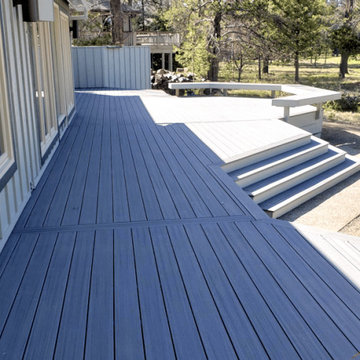
A functional outdoor space can add comfort and value to any property. Seattle Deck Builder, Redrra Deck Builder, is the trusted deck builder Seattle residents turn to for custom outdoor projects built around their lifestyle. We’re all about creating spaces that are inviting, functional, and made to last. From entertaining guests to relaxing with family, our team delivers quality craftsmanship and personalized service from start to finish.
Visit: https://redrra.com/
Sponsored
Columbus, OH
Wannemacher Interiors
Customized Award-Winning Interior Design Solutions in Franklin Cnty OH
 User
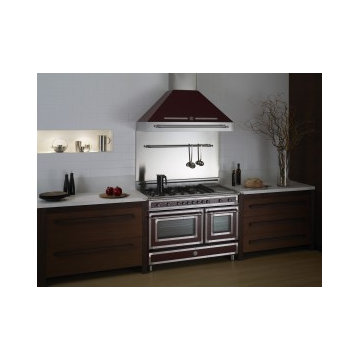
UserBertazzoni appliances are supremely functional – built by people who know all about cooking, for people who know how to cook. They come from Guastalla, which lies north east of Parma on the River Po in the region Emilia-Romagna, the heartland of Italian food and cooking. They are designed in Milan, capital of Italian flair and finesse, and engineered and built by the Bertazzoni family firm, which has been making high-quality ranges since the beginning of the last century.
The design is driven by the skills and needs of the modern cook, with the imaginative details and good looks for which Italians are renowned. All Bertazzoni products are precision engineered to the highest specifications. This gives them exceptional reliability and durability – a Bertazzoni appliance represents an absolute commitment to quality. Italian know-how specially developed for North Americans – drawing on the experience of making cooking appliances for different people and countries all over the world.
 Mayflower Construction Group
How to Tell When a Design Trend is Timeless
Design trends come and go, but some styles withstand the test of time. Whether in architecture, interior design, or branding, timeless design is one that remains relevant and appealing for decades. But how can you tell if a trend is truly timeless or just a fleeting fad? Here are key indicators to help you identify designs that will never go out of style.
1. Simplicity Over Complexity
Timeless designs are often clean, simple, and functional. They avoid excessive ornamentation or gimmicky elements that might feel outdated in a few years. Classic materials, neutral color palettes, and well-balanced proportions contribute to a look that remains fresh over time.
2. Rooted in Functionality
If a design prioritizes function as much as form, it is more likely to endure. Practicality and usability should be at the core, ensuring that the design continues to serve its purpose efficiently. In construction, for example, well-planned layouts and durable materials contribute to long-lasting appeal.
3. Inspired by Nature
Natural elements, such as stone, wood, and earth tones, have always been a staple of timeless design. Since nature itself is everlasting, incorporating organic textures and colors helps create a look that never feels outdated.
4. Influenced by History, Not Hype
Timeless designs often take cues from historical influences that have proven their longevity. Architectural styles like mid-century modern, classical, and industrial remain relevant because they have strong foundations in design principles rather than passing fads.
5. Balanced and Harmonious Composition
Good design follows fundamental principles such as symmetry, proportion, and scale. If a trend maintains a sense of balance and harmony, it’s more likely to stand the test of time. Designs that feel chaotic or unbalanced tend to fade quickly as they become overwhelming or impractical.
6. Adaptability Across Different Eras
A timeless design is versatile enough to blend with evolving styles and trends. Whether paired with modern elements or classic details, it should integrate seamlessly without looking out of place.
7. Enduring Materials and Craftsmanship
Materials and craftsmanship play a major role in a design’s longevity. High-quality materials like marble, hardwood, and concrete age beautifully, while cheap, synthetic alternatives often deteriorate and lose appeal. Investing in quality ensures a long-lasting impact.
8. Avoiding Overly Trendy Details
Fads are often characterized by extreme variations in color, form, or material. If a design heavily relies on a specific moment’s aesthetic (like neon colors in the '80s or millennial pink in the 2010s), it will likely feel outdated once the hype fades.
9. Emotional Connection and Comfort
Timeless design tends to evoke a sense of comfort, nostalgia, or familiarity. Whether in architecture, web design, or fashion, people gravitate toward designs that make them feel at ease and connected to something meaningful.
Conclusion
The key to identifying a timeless design trend is recognizing qualities that prioritize longevity, function, and balance over fleeting hype. Whether designing a website, a home, or a brand identity, choosing elements that are simple, high-quality, and adaptable will ensure lasting appeal.
Do you want a design that stands the test of time? Let’s create something that never goes out of style!

 Top Tread Stairways
Custom Curved Wooden Slides by Top Tread Stairways ~
Transform Your Home Into Something Extraordinary
Custom Curved Wooden Slides
When was the Last Time Someone Walked Into Your Home and Their Jaw Literally Dropped?
Picture this: Your guests arrive for dinner. They step into your foyer, and suddenly—silence. Wide eyes. A moment of pure disbelief. Then, inevitably, the question: “Is that really what I think it is?”
Welcome to the world of custom curved wooden slides, where Top Tread Stairways turns childhood dreams into sophisticated architectural statements.
The Secret is Out
For years, Clyde Martin and his team at Top Tread Stairways in Sierra Vista, Arizona, have been quietly building something extraordinary. While most stair companies focus on traditional projects, TopTread Stairways has been perfecting the art of custom hardwood slides—creating installations so remarkable that we joke about renaming the business “Chutes and Ladders.”
The truth? These aren’t just slides. They’re conversation pieces. Works of functional art. The kind of architectural element that sets your home apart from every other one on the planet.
And we build so many of them that we’ve shipped custom slides all over North America and beyond.
Four Ways to Make Your Home Unforgettable
Every slide project we undertake is unique, but they generally fall into four categories:
1. Curved Stair-Slide Combinations – The ultimate space-efficient solution, where stairs and slide spiral together in a stunning combination of form and function.
2. Curved Slides Separate from Stairways – For those who want the drama of a standalone curved slide that makes its own architectural statement.
3. Straight Stair-Slide Combinations – Perfect for modern, linear spaces where clean lines meet playful innovation.
4. Straight Slides Separate from Stairways – Sometimes simplicity creates the most powerful impact.
But here’s where it gets interesting: Some slides feature flat seat areas with vertical sides. Others embrace a barrel shape for enhanced comfort. We’ve built slides wide enough for several people to descend shoulder-to-shoulder, laughing all the way down. And we’ve crafted intimate slides designed for solo adventures, regardless of age or size.
Our clients? They absolutely love them.
Stories That Will Make You Rethink What’s Possible
Take the 11,000-square-foot home in Beverly Hills, overlooking the famous Sunset Strip. In one child’s bedroom, we installed a 12-foot curved slide crafted from white oak. Understated location, extraordinary feature.
Or consider the 35-foot-high round tower room in an 8,500-square-foot custom home bordering the Sacramento River in Northern California. This project has become our most famous installation—a stunning 33-foot curved stair-slide combination built entirely from solid black walnut, featuring 445 layers of cross-laminated hardwood and a spiral newel post that took eight months to construct in our shop.
The homeowners had searched for eight years to find someone “crazy enough” to build their dream. When we completed it, one of Clyde’s trusted business partners—someone who’d seen him tackle countless unique projects—admitted he thought Clyde had lost his mind taking this one on. He genuinely didn’t believe we could pull it off.
We did. And the homeowners? Still thrilled years later.
Where Imagination Meets Reality
But these slides aren’t just for private estates. We’ve installed a 24-foot hickory slide in an elementary school library just east of Dallas, where kids absolutely love it. And here’s something that will make you smile: We built the longest wood slide ever for a children’s hospital in Springfield, Illinois.
Have you ever heard a child beg to go to the doctor?
We’re pretty sure it happens in Springfield. That walnut slide stretches 45 feet long and 3 feet wide—spacious enough for three children to sit side-by-side or for an adult and child to slide together comfortably. We built it in one piece, filling an entire semi-trailer for transport. It lives in the hospital lobby, and no appointment is needed to experience it yourself.
In Raleigh, North Carolina, we installed a 36-foot white oak slide in a custom home. The client loved it so much they ordered a second one—literally 15 minutes after we finished the installation. When Clyde returned to the office, there was already a check in the mailbox for slide number two. This 14,000-square-foot home now features 72 linear feet of curved white oak slide: one connecting the second floor to the main level, another linking the main floor to the finished basement.
What a ride, indeed.
Then there’s the curved stair-slide combination in Visalia, California—32 feet of knotty alder complemented by a hanging netted loft and climbing wall. Creative? Absolutely. Fun? Beyond measure.
The People Behind the Dreams
What inspires us most isn’t the technical challenge of building these slides—though engineering a 33-foot curved slide from 445 layers of cross-laminated hardwood certainly keeps us engaged. It’s working with clients who refuse to think inside the box.
These are creative individuals willing to explore ideas that set their homes and businesses apart. They dream of installations that make people stop and stare. They understand that architecture can—and should—inspire joy.
Listening to them describe their visions, explaining their dreams of a slide design unlike anything else on earth? That’s a privilege. And bringing those dreams to life? That’s what we live for.
My team and I have as much fun designing and building these slides as our clients have riding them. We’d love nothing better than to hear from you!
Custom Curved Wooden Slides
What Sets Top Tread Stairways Apart
Since 2006, Clyde Martin has built Top Tread Stairways on a simple premise: there’s a better way to build stairs. With roots in eastern Pennsylvania and years of experience installing hundreds of pre-built stairways, Clyde brought that expertise west and founded a company dedicated to exceptional craftsmanship.
We stock thousands of stair parts in more than ten wood species—hickory, jatoba, maple, cherry, mahogany, alder, red oak, white oak, poplar, Douglas fir, and walnut. Quality levels are high. Lead times are short. We understand the urgency of your project schedule and deliver accordingly.
But here’s what really matters: When it comes to custom wooden slides, Top Tread Stairways is one of—if not the—premier builders of indoor wooden slides in the United States. This isn’t a side project for us. It’s a specialty we’ve refined through years of experience, countless installations, and an unwavering commitment to turning impossible dreams into breathtaking reality.
Your Home, Reimagined
Whether you’re envisioning a straight wooden stand-alone slide for your office or a jaw-dropping curved wooden slide/stairway combination that will become your home’s signature feature, we’d love to hear from you.
We’re not here to build ordinary. We’re here to build extraordinary.
Ready to set your home apart?
~ Custom Curved Wooden Slides ~ ART YOU RIDE!
17