
Search results for "Lasting today" in Home Design Ideas

 Five Star Tree Care
Oak trees have been a symbol of strength for a long time. They are also known to live for a very long time, given the right conditions. The reason they became a symbol of strength is because they themselves are very strong and are able to survive some of the harshest storms, when healthy. The wood it produces is undoubtedly very strong as well and is commonly used in the making of furniture, homes, and boats.
Oak trees are not only used for their strong wood, but also for their beauty. There are even certain species that produce distinctive lobed leaves, allowing them to stand out. Then, when fall comes around, they become even more majestic when their leaves turn bright and brilliant colours that add texture and a unique spectacle to the changing environment.
The beauty is so amazing that you might even want one for your own yard. Our team here at Five Star Tree Services is going to go over a few different types of oak trees that might be perfect for your landscape! These are guaranteed to have spectacular fall colours, great shade, and amazing texture.
Different Types of Oaks
You might be interested to know that oaks are one of the oldest trees in the world. Archeologists have been able to date them back to around 65 million years ago. A healthy oak can even live to about 200-300 years old. But do you know where these big trees come from? Little tiny acorns. A single oak tree is able to produce roughly 10 million acorns over the course of its lifetime.
Not only are oak trees beneficial to people but they are also great for animals. They are able to support more than 500 moth and butterfly species, which is more than other native trees can do. Insects also like to find homes in oak trees, which helps to feed the birds. Not to mention that small animals like squirrels also can utilize them for things like food, shade, and shelter. They also help larger animals, such as the white-tailed deer, who eats the acorns during the fall and winter season, which is about 75% of their diets.
Around the world, you can find more than 600 species of oak trees. Let’s go over a small handful of our favourites that are great for providing dazzling colourful displays during the fall months, when the leaves change colours. These are going to range from bronzes, to golds, to reds, and everything in between.
Black Oak
It might be apparent that the name comes from the outward appearance from the almost black bark that you see, along with the deep orange or yellow inner bark of the tree. Being quite a statement tree, you can enjoy the green glossy leaves in the summer and then enjoy them again then they turn orange and red in the fall. This tree has a tendency to look very similar to a red oak, but one of the major differences is that black oaks are a little smaller and are able to tolerate drier soil conditions.
Specifications:
-Growing Zones: 3-9
-Sun Tolerance: Full sun, which can equate to 6 hours of uninterrupted sunlight each day
-Soil: Needs slightly acidic, well-drained, and rich soil
-Growing height: 50-60 feet
White Oak
This oak tree is great for shade and can easily be spotted by the light colour of its bark. During the spring, it comes out with pinkish leaves that later on turn to dark green. The leaves of this tree are 4-9 inches long, have 7-9 lobes, and turn reddish-brown in the fall.
Specifications:
-Growing Zone: 3-9
-Sun Tolerance: Full sun, which can equate to 6 hours of uninterrupted sunlight each day
-Soil: Needs to be planted in well drained and slightly acidic soil
-Growing Height: 80 feet
Red Oak
This oak doesn’t have its name for nothing. It offers the brightest red leaves out of all the oak trees. In the fall, the leaves turn a beautiful deep red. During the summer, it has glossy green leaves and an open canopy. This is a widely adaptable tree and it also grows much faster than other oaks.
Specifications:
-Growing Zone: 3-9
-Sun Tolerance: Full sun, which can equate to 6 hours of uninterrupted sunlight each day
-Soil: Needs to be plated in slightly acidic, moist, but well-drained soil
-Growing Height: 50-75 feet
Bur Oak
One of the defining features of this tree is that it has unique acorns. They are larger than other trees and are fringed. It grows in a round shape that is dense with leaves, offering lovely shade and is able to tolerate heat stress and pollution. In the fall the leaves of this oak tree can turn either yellow/green, muted yellow, or yellow/brown.
Specifications:
-Growing Zones: 3-8
-Sun Tolerance: Full sun, which can equate to 6 hours of uninterrupted sunlight each day
-Soil: Needs neutral to alkaline soil
-Growing Height: 60-80 feet
Pin Oak
Typically found along rivers in eastern and central US, this oak tree’s unique feature is its distinctive branching pattern. It has large leaves that are pointed with sweeping U-shaped spaces between lobes. The leaves in the fall turn a scarlet red and eventually become bronze later in the fall.
Specifications:
-Growing Zone: 4-8
-Sun Tolerance: Full sun, which can equate to 6 hours of uninterrupted sunlight each day
-Soil: Needs slightly acidic soil. Can tolerate wet and heavy clay soils
-Growing Height: 60-70 feet
Live Oak
These are not usually super tall but they do have winding and spiraling branches which have the ability to grow into a massive diameter, larger than other oak trees, and this helps to provide a large area of shade. Another special thing about this particular type of tree is that it is the only evergreen, not a deciduous tree like the rest. This specific oak tree is one of the strongest and was used in colonial times for making ships in the US Navy. The glossy leathery leaves on this tree are 1-3 inches long and are dark green with lighter green underneath, which lasts during the entire winter.
Specifications:
-Growing Zone: 8-11
-Sun Tolerance: Full sun, which can equate to 6 hours of uninterrupted sunlight each day
-Soil: Needs to be planted in slightly acidic soil
-Growing Height: 40-80 feet
How Five Star Tree Services Can Help
Whether you are looking for the best oak tree for your yard or any other tree, our professionals here at Five Star Tree Services can help! With our wide variety of services, we can help you with all your tree care services in Richmond Hill! Give us a call today at (416) 990-3355!

 Root Design Company.com
Landscape & Pool Design: Root Design Company
Photo credits: Jessica Carr
Inspiration for a mediterranean landscaping in Austin.
Inspiration for a mediterranean landscaping in Austin.


Find the right local pro for your project
 SUPERIOR CHIMNEY SERVICES CORPORATION
The fun part about cold weather is the fireplace. It’s cozy, warm and just mesmerizing to watch. Sometimes, even with the warmth coming into the home, it still seems like some cool air is coming into the home. How can you get more heat into the house instead of it drifting up the chimney? Can a fireplace heat shield help?
What is a Fireplace Heat Shield?
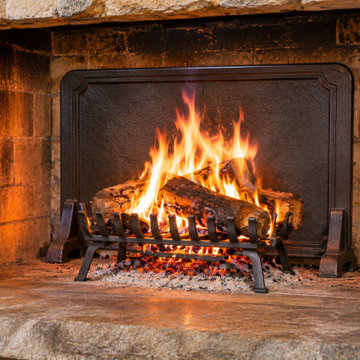
A fireplace heat shield is a thick stainless steel plate installed against the rear firewall of the fireplace. It pushes into the house anywhere from 20% to 40% more heat. However, a fireplace heat shield has other benefits as well such as protecting the firebricks and mortar.
The fireplace heat shield sits in front of the rear firewall. It takes the direct impact of the flame ensuring the infrastructure of the firebox and chimney stay intact.
Key Benefits of a Fireplace Heat Shield
We mentioned a couple of the benefits of a fireplace heat shield at the top of the article. Here is the full list of benefits and what it can mean to you and the comfort and protection of your home.
Does the Fireplace Need the Extra Protection?
Your firebox is built to handle intense heat from the fire. Over time, the heat cracks, pits and loosens the material. This is where the heat shield can help protect the firebox, and reduces the cost and frequency of repairs.
How Does the Heat Stay in the Back of the Firebox and Not Come Out?
A fire needs oxygen to burn. It finds it by pulling air into the firebox from your living space. As the air flows into the firebox, it pushes the heat from the fire right to the back of the firebox.
The intense heat causes the back wall made of brick and mortar to expand. When the fire dies down, the firebricks cool down and contract again. Yes, the cycle is similar to the freeze thaw cycle outside on the chimney which should be protected by Chimney Saver, a waterproofing agent.
For the fireplace, a heat shield reflects/radiates the heat’s direct contact, so your firebricks and mortar are protected.
Water Intrusion from the Chimney
Firebrick and firewall materials are porous - They tolerate very high temperatures. But, as we discussed in other articles, these materials also absorb water easily.
How can moisture get it? It can travel down from the top of the chimney through a crack in the chimney crown, a damaged cap, missing mortar or loose flashing to name a few. Superior Chimney can locate and correct these chimney leaks so your fireplace stays dry.
If the firebricks are wet or damp the direct flames from the fire can speed up the deterioration of the back wall. The heat shield acts as a protective barrier between the fire in the fireplace and the back wall.
Fireplace Mortar
Fireplace mortar does the same thing as the mortar outside. It’s important to have the fireplace cleaned and inspected by a certified technician to ensure any missing or deteriorated mortar is repaired. Without the repair, the firebricks will move, shift or fall off exposing your home to further damage.
Making a Safe Fire and Structural Integrity
If you are burning wood, or using a gas fireplace, the fire inside the firebox needs to be safe. When the materials are worn or weaken, that layer of protection is compromised. If a chimney inspection which includes the firebox, isn’t performed at least yearly, you can run the risk of home fire and needing a new firewall. Don’t let it get that far and pose a risk to your home. Including a heat shield will help protect the home.
How a Fireplace Heat Shield Protects Your Fireplace and Home
A Superior Chimney heat shield works by protecting your firebricks from direct heat and flames. The stainless steel material is built to take that impact and directs the heat to go inside of your home for a nice warm room.
With an installed heat shield, the back firewall gets about 1/3 less exposure to heat and flames. That reduction minimizes expansion and contraction in the firebricks and mortar.
Protected vs. Unprotected Firebox: A Side by Side Comparison
The table below shows how a heat shield changes the day to day life of your fireplace.
Tuckpointing or Firebox Rebuilds
Tuckpointing restores mortar joints and brings back the strength of your firebox. A heat shield helps that fresh work last as long as possible.
How Can Your Firebox Benefit from a Heat Shield
This is something you can do yourself. Take a look at the back wall of your fireplace. If you see any of these signs, a heat shield investment will save you on repairs and heating costs.
• Hairline or visible cracks in the rear firebricks
• Pitting or crumbling on the firebrick surface
• Mortar joints that look recessed, sandy, or uneven
• Loose firebricks that shift when touched
• Heavy soot staining that cleaning does not remove
• A history of chimney leaks or water stains in the firebox
• A recent tuckpointing or firebox rebuild you want to protect
From the Field: Our Technicians’ Perspective
Our certified technicians can explain how the firewall is almost always the first area of a firebox to show wear. It sits directly in the path of the draft, so it takes the most heat each time.
Homes with a heat shield consistently show cleaner, tighter mortar joints at their annual inspections.
Pairing Your Heat Shield with an Annual Inspection
A heat shield works best as part of a regular maintenance plan. The National Fire Protection Association’s NFPA 211 standard calls for chimneys, fireplaces, and vents to be inspected at least once a year.
The Chimney Safety Institute of America also encourages annual inspections and cleaning by a certified technician. During your inspection, we check your firebox, mortar, and heat shield together so everything stays healthy for your home.
Frequently Asked Questions About Fireplace Heat Shields
How much more heat does a fireplace heat shield provide?
Most homeowners enjoy 20% to 40% more radiant heat in the room. It depends on the fireplace size, design and the type of wood you burn.
What is a fireplace heat shield made of?
Superior Chimney heat shields are made from stainless steel. This material handles high heat, resists corrosion, and directs warmth back into your home.
Can a heat shield cover an old, stained back wall?
Yes. A heat shield covers soot stained and gives your fireplace a clean, updated appearance.
Should I repair my firebox before installing a heat shield?
If your mortar or firebricks show damage, repairs come first along with a cleaning and inspection. Once the firebox is ready, the heat shield helps preserve your firebox for years to come.
Is a heat shield the same as a fireback?
No. Stainless steel firebacks, cast iron firebacks and heat reflective shields are not the same. Firebacks are decorative whereas heat reflective shields do exactly as their name infers.
Do I still need chimney inspections with a heat shield?
Yes. Annual chimney inspections remain the best way to keep your entire chimney system working and efficient. A check on the heat shield is included in the inspection.
Protect Your Fireplace with Superior Chimney
A fireplace heat shield is a simple, affordable way to get more warmth from every fire. It protects your firebricks and mortar while making your fireplace look inviting.
Contact Superior Chimney today to schedule an inspection and learn more about heat shields. You’ll feel the difference from the very first fire!

 CJ Paone AIA | Archipelago Workshop
Detail of one of the many retaining walls and planters created using board formed, cast in place concrete. Light source is a tiny bronze fixture inset into the concrete and containing a small LED bulb.
 Windy City Painters
Metal Porch Stairs Painting in Lakeview, Chicago | Windy City Painters
Lakeview is one of Chicago's most architecturally diverse neighborhoods — vintage courtyard buildings, rooftop-deck condos, newly converted three-flats, and classic brick two-flats all line the same block. What they share is this: exposed metal. Back porch stairs, handrails, balconies, and exterior landings define the rear streetscape of nearly every building in the neighborhood. And in Chicago, exposed metal without proper protective coatings doesn't last.
Windy City Painters recently completed a full metal porch stairs painting project in Lakeview that illustrates exactly what professional metal refinishing looks like — and why preparation is everything.
The Problem: Years of Chicago Weather Had Done Their Damage
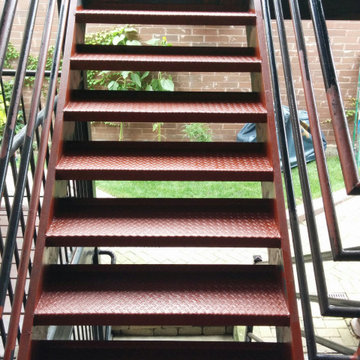
The client's back porch stairs were structurally sound — the diamond-plate steel treads were solid underfoot and the handrails were stable. However, the original paint system had long since failed. Surface rust had spread across the treads and risers. The old coating was peeling at every seam, edge, and weld point. Meanwhile, the black handrails were chalky and beginning to show rust at the bases.
Notably, this is a pattern Windy City Painters sees constantly in Lakeview. The neighborhood's diverse housing stock — ranging from pre-war courtyard buildings to 1990s condo conversions — often features original metal porch work that has never received a proper professional refinish. Homeowners and property managers patch-paint over rust for years, which ultimately accelerates the problem rather than solving it.
The solution isn't more paint. It's a complete system: mechanical rust removal, chemical treatment, primer, and a durable topcoat engineered for exterior metal.
The Windy City Painters Process for Metal Porch Stairs Painting
Windy City Painters approaches every metal porch stairs painting project with the same disciplined sequence. Consequently, our finishes outlast the competition by years.
Step 1 — Mechanical Preparation Our crew wire-brushes all loose rust, flaking paint, and surface contamination from every tread, riser, stringer, and handrail section. For heavier rust accumulation, we use grinding discs to cut down to clean, bare metal. This step is non-negotiable. Additionally, we pay particular attention to weld seams, bolt plates, and edge returns — the spots where moisture consistently hides and rust reliably starts.
Step 2 — Chemical Rust Treatment After mechanical prep, we apply a rust-converting primer to any remaining rust residue. This chemically neutralizes active rust and converts it into a stable, paintable surface. Moreover, the converter bonds to the metal and creates an additional barrier against future oxidation.
Step 3 — Rust-Inhibiting Primer Windy City Painters then applies a full coat of oil-based, rust-inhibiting primer to all prepared metal surfaces. This primer penetrates bare metal and creates the critical bond layer that everything else depends on. Skipping this step — or substituting a latex primer — is the single biggest reason DIY metal paint jobs fail within one season.
Step 4 — Two Topcoats of Industrial Enamel We apply two full coats of oil-based industrial enamel in the client's chosen color. For this Lakeview project, the stairs received a deep red finish and the handrails received gloss black — a classic combination that reads beautifully against the surrounding brick. Each coat is allowed to cure fully before the next is applied. Furthermore, we back-roll every surface to eliminate lap marks and ensure consistent film build.
Step 5 — Final Inspection and Cleanup Windy City Painters inspects every inch of the completed work before calling a project done. We remove all masking, clean up the work area completely, and walk the client through the finished result. In addition, we advise on a maintenance schedule to maximize the life of the coating system.
Why Metal Porch Stairs Painting Matters for Lakeview Properties
Metal porch stairs are among the most visible exterior features of Chicago residential buildings. Therefore, their condition directly affects curb appeal, property value, and — most importantly — structural safety. Rust that penetrates deeply enough will compromise the structural integrity of stairs and railings. Meanwhile, peeling paint signals to buyers, renters, and neighbors that a property is deferred.
In contrast, freshly refinished metal porch stairs signal exactly the opposite. They say the property is maintained, the owner takes pride in the building, and the structure is safe. For Lakeview landlords and homeowners alike, metal porch stair refinishing delivers an exceptional return on investment.
Professional Advice for Lakeview Homeowners
Before starting a metal porch stairs painting project, Windy City Painters recommends the following:
Don't paint over rust. Any rust left beneath a topcoat will continue to spread and will lift the new paint within months. Mechanical removal is essential.
Choose oil-based products for exterior metal. Latex paints don't adhere to metal as reliably and lack the film hardness needed to withstand foot traffic and freeze-thaw cycles.
Time your project right. Ideal conditions for metal painting are 50°F–90°F with low humidity. Chicago's spring and early fall are perfect windows.
Don't skip the primer. A properly applied rust-inhibiting primer is what separates a seven-year finish from a one-year failure.
Budget for full prep. Preparation typically represents 60–70% of the labor on a metal refinishing project. That's where the money is well spent.
Windy City Painters: Lakeview's Trusted Metal Refinishing Contractor
Windy City Painters has refined the process of exterior metal painting and refinishing across Chicago's North Side and Near West Side. We work in Lakeview regularly — on courtyard buildings, two-flats, coach houses, and commercial properties — and we understand the unique demands that Chicago's climate places on exterior metal. As a result, our coating systems are selected and applied for maximum longevity in this specific environment.
See more of our work and request a free estimate at www.windypainters.com.
Ready to transform your Lakeview home? Contact Windy City Painters for a free estimate — visit www.windypainters.com today. Proudly serving Wicker Park, West Town, Lincoln Park, Roscoe Village, Lakeview, Ukrainian Village, River North, and all of Chicago.

 All Natural Stone
Akdo Tile Signature Glass Stagger Thassos 2 Mosaic
Trendy bathroom photo in San Francisco
Trendy bathroom photo in San Francisco


 Mark Mobley Architecture
Mid-sized arts and crafts front porch idea in Baltimore with decking and a roof extension


 BETWIXTdesign - Landscape & Interior Design
Megan Cronovich
Photo of a mid-sized modern drought-tolerant and full sun front yard concrete paver garden path in Los Angeles for summer.
Photo of a mid-sized modern drought-tolerant and full sun front yard concrete paver garden path in Los Angeles for summer.


 Super Bright LEDs
Need some ideas to brighten up your decor? LED lights add a chic, eye catching appeal that will last! Color changing capabilities allow you to change the look and feel of decorations at the touch of a button. Accentuate pieces in the dining area and kitchen, entryway, bedroom, and anywhere else you choose!

 Tri County Landscape
Different types of tropical landscape flowers.
Inspiration for a large tropical partial sun backyard stone water fountain landscape in Tampa for summer.
Inspiration for a large tropical partial sun backyard stone water fountain landscape in Tampa for summer.

 Hado Photo
Photo: Ryan Hicks, Hado Photo © 2017 Houzz
Design: Liz Fassbender
Example of an eclectic living room design in DC Metro
Example of an eclectic living room design in DC Metro

 Triangle Brick Company
If you're looking for a distinctive commercial exterior cladding option, Triangle Brick Company's Biscayne Bay is the perfect choice. Blue-gray and subtle warm accents in this pearl-colored brick deliver a look that's just the right combination of vintage and modern. This architectural brick is one of only two bricks in the Downtown collection offered under our Select product tier.

 Siciliano Landscape Company
Photo of a mid-sized craftsman partial sun front yard brick garden path in New York.

 Cain Architectural Art Glass
Detail of flameworked leaves over stunning amber glass, mouth-blown in Germany. The bevels create an accent effect on the branches.
Example of a trendy bathroom design in DC Metro
Example of a trendy bathroom design in DC Metro

 Rhodes Architecture + Light
Exterior forms are emphasized with glass and fiber-cement panels at the top level, soaring over and sheltering containers clad in tougher, leathery Corten Steel at the ground level. Exposed concrete walls and rock-filled gabion retaining was selected to anchor the partially day-lighted basement level and garages to the land. Materials were chosen to be low-maintenance, relatively inexpensive, and to contrast the volumes that express the interior spaces.
79