
Search results for "Newspaper" in Home Design Ideas
 Convenience Concepts
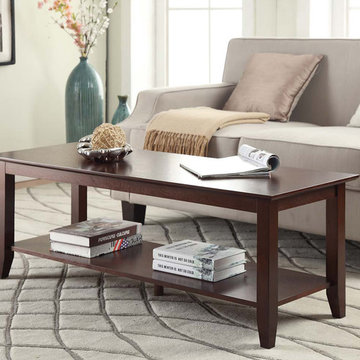
Whether you're in a waiting area, office, or at home enjoying a cup of coffee or two, the smooth generous top of the American Heritage Coffee Table will surely make your coffee break more enjoyable. Featuring an additional spacious bottom shelf where you can easily reach out for reading materials such as magazines or newspapers. With it's simple Classic American Styling it will earn praise in an already well furnished room.


 Morpurgo Architects
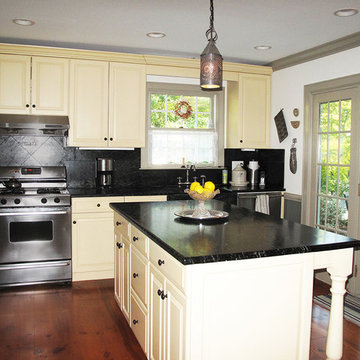
The owners of this former one-story ranch house had clipped a newspaper article featuring Morpurgo Architects’ receipt of the coveted State and County Historic Preservation Awards. As they read the article, they knew that they had found the firm with the expertise to turn their ranch into a Dutch Colonial two-story home with sweeping roof lines. It was their family’s opportunity to return to their roots that lie in the early history of the Dutch settlements in Bergen County.
We designed renovations that reconfigured and expanded the first floor. The relocated entrance, centered on the new stone masonry front facade that replicates the rope grouting of the 1800’s, opens onto a vestibule that provides access to the new kitchen, dining, living, and family rooms. The new second floor roof sweeps and dormers add interior visual interest to the bedroom and bathroom.
Our clients tell us that neighbors frequently stop by to admire their distinctive home, unique among the nearby ranch houses. They feel that they have the best of both worlds, living in a house that has the look of a historic home and includes authentic features such as wide plank floors, square-cut nails, bulls-eye glass, Dutch doors, strap hinges and latches, while enjoying all the modern amenities of today’s homes.
Find the right local pro for your project
 Designer Appliances
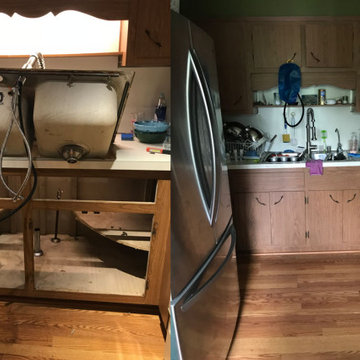
This beautiful 1940s remodeled kitchen took 7 months to reconstruct, starting with a complete gut and tear down of the whole interior. Many cool things were found in the walls such as war gas masks, old newspaper clippings with cartoons and appliance ads. The owners love hosting friends and family so the large island and built in sink with faucet was important. This kitchen also includes a Wolf range, SubZero refrigerator and Sharp microwave drawer.
 Regency Builders Inc.
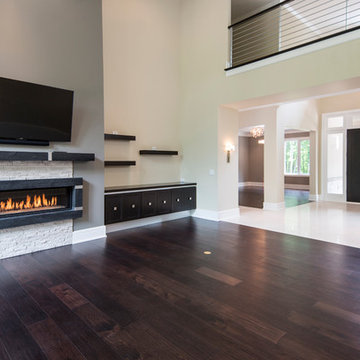
This magnificent one-of-a-kind home has much to offer a busy family. A bright and airy contemporary design, complimented by warm wood, embraces both formal and casual living and dining spaces. Two levels are accessible by separate staircases. Three master suites on the second floor connect by an open walkway overlooking the great room below to the main master suite with two walk-in closets, an office center and spa retreat bathroom. The master bedroom balcony allows a wonderful retreat to relax, sip a cup of coffee, and read the daily newspaper.
 IB Crazy Coops
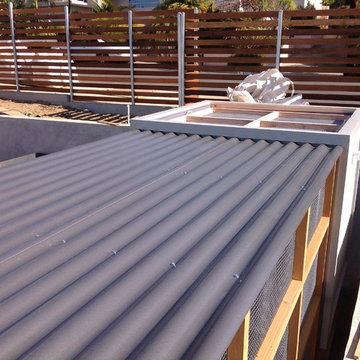
This beautiful modern/rustic coop we buiilt is featured in the San Diego Union Tribune newspaper at a lovely featured home in Pacific Beach, CA. It is a match to their modern landscape design and complimentary to their house style.
Measures 12' long x 4' wide x 6' tall for full walk in access.
It is home to 4 beautiful rare and exotic chickens that we provided as well as all the necessary implements.
Features a roof-top succulent garden on top of the coop section with piped in drainage, a fold down door that doubles as a coop-to-run ramp, modern/rustic paint scheme combo, thermal corrugated roofing over run area and more!
 Fabrica, LLC
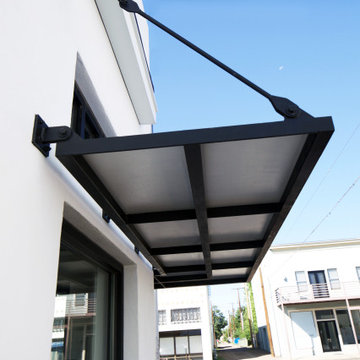
Detail view of custom awning connections
Inspiration for a modern white one-story stucco exterior home remodel in Austin with a shed roof
Inspiration for a modern white one-story stucco exterior home remodel in Austin with a shed roof
 HouseHome
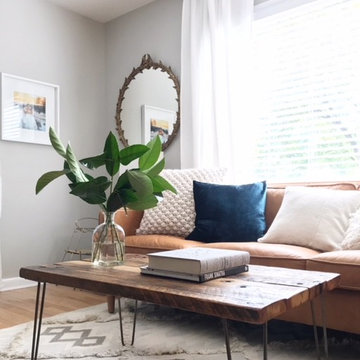
These are photos from my 1950 home in historic downtown Littleton, Colorado. It is full of years of collecting Mid-Century, antique & vintage finds, with modern touches added from Restoration Hardware, West Elm, Pottery Barn, etc.
 Envision Web
Stuart Wade, Envision Virtual Tours
Envision Virtual Tours and High Resolution Photography is your best choice to find just what you are looking for in the Ellijay, Ga. area .Ellijay, Georgia, known as the “Apple Capital” of Georgia, is located between the Ellijay and Cartecay Rivers where they join to make the Coosawattee River and is the county seat of Gilmer County, Georgia. The origin of the city’s name is not certain but thought to be the English derivative of an Indian word(s) meaning “many waters”, “place of green things” or “new ground”. Some histories say it may have been named for an Indian chief.
Inhabited for countless years by the Cherokee people indigenous to the North Georgia, the area was first mentioned as a village and trade center before the onslaught of white settlers inhabited the region. During the 1830’s both white settlers and Indians occupied Ellijay. During the original land lottery in 1832, Martin Scalf acquired the 160 acre lot where the town now stands. In 1833, Clemonds Quinland bought 10 acres from Scalf, retained one acre for himself and donated the rest of the purchase to the County. A plan for twenty town lots, streets and a public square was created and the streets were oriented to allow maximum sunlight exposure to the buildings.
Proceeds from lot sales were used to build a jail and courthouse and pay other city expenses. During this same year, Gilmer County was appropriated $800.00 from the State to build a school, and a three-acre lot was donated for the city cemetery. On December 29, l834, Ellijay was incorporated and designated as the County seat of Gilmer County. By 1837, the town had twenty dwellings, three stores and one attorney. Most of these early buildings were of log construction.
Many roads led to Ellijay by 1849. The population had grown to 150 by 1850 and the town at five stores. Some wood-frame buildings were being constructed at this time and in 1854, a new courthouse was built in the center of the square, replacing the earlier building. The County’s first newspaper was the Ellijay Courier, started in 1875, and during this time period, Ellijay was a stop on the stagecoach line. The railroad bridge over the Cartecay River was completed in 1884 and the town now had rail service.
With the arrival of the railroad and subsequent tracks to White Path, Ellijay began to grow much faster. Many hotels were constructed and land was donated for a depot east of town. More industries, such as a cheese factory and the Shippen Brothers Lumber Mill, located in Ellijay. By 1898, the city had expanded its limits in every direction and now included the depot.
By 1900, all the buildings on the town square were brick. This included the recently completed Hyatt Hotel. Most of the other buildings in town were still of log construction, but new wood-frame buildings were being built. The Shippen Brothers Lumber Company production was expanding and exporting their lumber to Europe. Within the next few decades, this company grew to be one of the largest employers in Ellijay, often with five to six million feet of lumber in the yard at one time.
The population of Ellijay grew to 659 by 1910, and began to acquire many new modern conveniences such as electric lights and power, a telephone company and many new businesses.
Then in 1912, a fire ravaged the city, destroying 23 buildings. As a result, many new buildings were constructed under new and stricter fire and safety guidelines. The population, however, decreased slightly at this time to 632 in 1920.
During the 1920’s the town’s population began to grow again and, by this time, apples were being shipped out of the county and new storage facilities were built. Chickens were also shipped to markets outside of Ellijay and Gilmer County.
From the mid 1930’s to 1950, Ellijay received much assistance from the Federal WPA Programs. The old courthouse was removed from the center of town square and the Hyatt Hotel was remodeled to be the new courthouse. A park was created on the site of the old courthouse and the streets around the square were paved. A new street was built at this time entering town from the northeast. Other new roads, bridges, sidewalks and gutters were constructed to improve the city. A school and gymnasium were also built and other structures improved.
This growth began to impact the city’s infrastructure and in the l950’s and l960’s, a period of upgrading water systems, roads, and power supplies began. New low-rent housing appeared in l960 and a new hospital was built in l957. Georgia Highway 5 was widened in l962, new buildings around the square replaced old ones and some were remodeled. In 1974, the hospital was enlarged.
Currently, Ellijay attracts tourists who love the small-town feel and friendly atmosphere. Hotels and restaurants, unique shops, antiques and art galleries lend their charms to those who visit. A new courthouse constructed to resemble the old one, new streetscaping, family-oriented downtown events and the beautification of the square have stepped up the social and economic activity and have made Ellijay a popular destination.
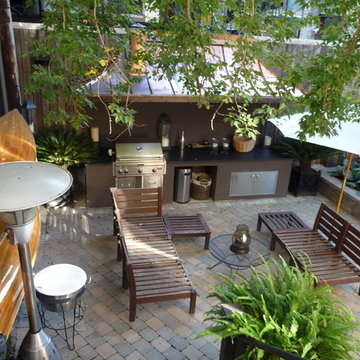
 Chicago Roof Deck & Garden
This is an example of a mid-sized craftsman shade backyard concrete paver landscaping in Chicago with a fire pit for spring.
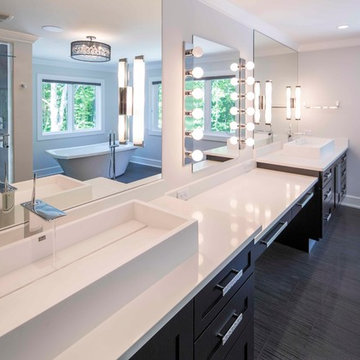 Regency Builders Inc.
This magnificent one-of-a-kind home has much to offer a busy family. A bright and airy contemporary design, complimented by warm wood, embraces both formal and casual living and dining spaces. Two levels are accessible by separate staircases. Three master suites on the second floor connect by an open walkway overlooking the great room below to the main master suite with two walk-in closets, an office center and spa retreat bathroom. The master bedroom balcony allows a wonderful retreat to relax, sip a cup of coffee, and read the daily newspaper.
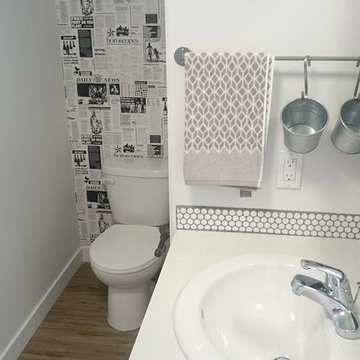
 STONE & TIMBER Tile & Woodworking Ltd.
Inspiration for a craftsman porcelain tile bathroom remodel in Calgary with dark wood cabinets, gray walls, an undermount sink and quartzite countertops
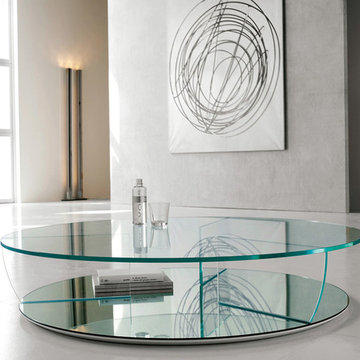
 Valentini Kids Furniture Brooklyn NY
Modern Glass Coffee Table Kadir by Cattelan Italia
Made in Italy
The Kadir by Cattelan Italia is a modern italian coffee table. The coffee table is made entirely of glass. The base is in a mirrored glass and the top is made of extra clear glass. The coffee table features free space between the tabletop and base that can be used as an internal shelf for storing books, newspapers or magazines. The Kadir coffee table is available in three versions of different shapes: round, square and rectangular.
Features:
Designed by Paolo Cattelan
Mirrored glass base
Top in extra clear glass
Available in three versions: round, square and rectangular
The starting price is for the Kadir Rectangular Coffee Table.
Dimensions:
Rectangular Coffee Table: W59" x D31" x H9.5"
Square Coffee Table: W47" x D47" x H9.5"
Round Coffee Table: D47" x H9.5"
 Horizon Interior Design
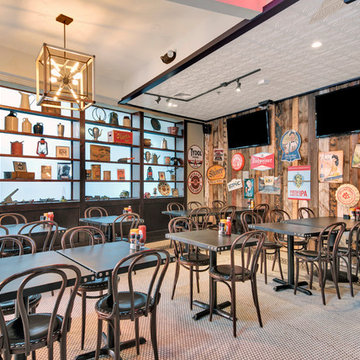
A two-story restaurant and bar in the heart of Rochester Hills approached Horizon Interior Design with an exciting design brief to pay homage to the American-style food they served with a 1940's retro redesign.
The new tenants had some great ideas for fresh paint, décor, a mural of a vintage plane, and a female pilot in a pinup style reminiscent of the 1940s. They wanted to keep their flooring and furnishings as is, challenging us to create a harmonious design while incorporating what they already had.
Using vintage magazines, newspapers, and posters from the 1940s, as well as replicas of old décor and wall art, we brought the 40's back to this commercial restaurant's interior design! Adding deep red and white accents to the navy blue walls created a patriotic feel, while a hand-painted distressed American flag hung over the bar for that extra touch of 40's magic.
We painted a magnificent wall mural of a jet and pilot, applied shiplap to the front of the bar and an accent wall, and then decorated it with vintage tin signs from the 1940's. We installed luxurious vintage-style chandeliers on both floors, illuminated with Edison bulbs to warm up the dining areas and bring a sense of grandeur to the space. Upon completion, walking into the restaurant felt like being transported back to this beautiful decade, attracting clientele to experience something special.
Gugel Photography

 Envision Web
Stuart Wade, Envision Virtual Tours
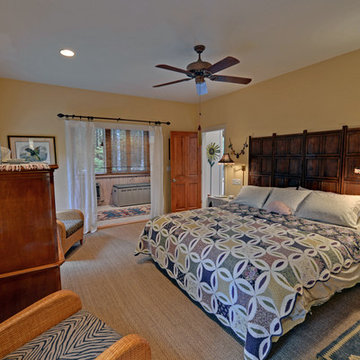
Envision Virtual Tours and High Resolution Photography is your best choice to find just what you are looking for in the Ellijay, Ga. area .Ellijay, Georgia, known as the “Apple Capital” of Georgia, is located between the Ellijay and Cartecay Rivers where they join to make the Coosawattee River and is the county seat of Gilmer County, Georgia. The origin of the city’s name is not certain but thought to be the English derivative of an Indian word(s) meaning “many waters”, “place of green things” or “new ground”. Some histories say it may have been named for an Indian chief.
Inhabited for countless years by the Cherokee people indigenous to the North Georgia, the area was first mentioned as a village and trade center before the onslaught of white settlers inhabited the region. During the 1830’s both white settlers and Indians occupied Ellijay. During the original land lottery in 1832, Martin Scalf acquired the 160 acre lot where the town now stands. In 1833, Clemonds Quinland bought 10 acres from Scalf, retained one acre for himself and donated the rest of the purchase to the County. A plan for twenty town lots, streets and a public square was created and the streets were oriented to allow maximum sunlight exposure to the buildings.
Proceeds from lot sales were used to build a jail and courthouse and pay other city expenses. During this same year, Gilmer County was appropriated $800.00 from the State to build a school, and a three-acre lot was donated for the city cemetery. On December 29, l834, Ellijay was incorporated and designated as the County seat of Gilmer County. By 1837, the town had twenty dwellings, three stores and one attorney. Most of these early buildings were of log construction.
Many roads led to Ellijay by 1849. The population had grown to 150 by 1850 and the town at five stores. Some wood-frame buildings were being constructed at this time and in 1854, a new courthouse was built in the center of the square, replacing the earlier building. The County’s first newspaper was the Ellijay Courier, started in 1875, and during this time period, Ellijay was a stop on the stagecoach line. The railroad bridge over the Cartecay River was completed in 1884 and the town now had rail service.
With the arrival of the railroad and subsequent tracks to White Path, Ellijay began to grow much faster. Many hotels were constructed and land was donated for a depot east of town. More industries, such as a cheese factory and the Shippen Brothers Lumber Mill, located in Ellijay. By 1898, the city had expanded its limits in every direction and now included the depot.
By 1900, all the buildings on the town square were brick. This included the recently completed Hyatt Hotel. Most of the other buildings in town were still of log construction, but new wood-frame buildings were being built. The Shippen Brothers Lumber Company production was expanding and exporting their lumber to Europe. Within the next few decades, this company grew to be one of the largest employers in Ellijay, often with five to six million feet of lumber in the yard at one time.
The population of Ellijay grew to 659 by 1910, and began to acquire many new modern conveniences such as electric lights and power, a telephone company and many new businesses.
Then in 1912, a fire ravaged the city, destroying 23 buildings. As a result, many new buildings were constructed under new and stricter fire and safety guidelines. The population, however, decreased slightly at this time to 632 in 1920.
During the 1920’s the town’s population began to grow again and, by this time, apples were being shipped out of the county and new storage facilities were built. Chickens were also shipped to markets outside of Ellijay and Gilmer County.
From the mid 1930’s to 1950, Ellijay received much assistance from the Federal WPA Programs. The old courthouse was removed from the center of town square and the Hyatt Hotel was remodeled to be the new courthouse. A park was created on the site of the old courthouse and the streets around the square were paved. A new street was built at this time entering town from the northeast. Other new roads, bridges, sidewalks and gutters were constructed to improve the city. A school and gymnasium were also built and other structures improved.
This growth began to impact the city’s infrastructure and in the l950’s and l960’s, a period of upgrading water systems, roads, and power supplies began. New low-rent housing appeared in l960 and a new hospital was built in l957. Georgia Highway 5 was widened in l962, new buildings around the square replaced old ones and some were remodeled. In 1974, the hospital was enlarged.
Currently, Ellijay attracts tourists who love the small-town feel and friendly atmosphere. Hotels and restaurants, unique shops, antiques and art galleries lend their charms to those who visit. A new courthouse constructed to resemble the old one, new streetscaping, family-oriented downtown events and the beautification of the square have stepped up the social and economic activity and have made Ellijay a popular destination.
 Perfect Piece Interiors
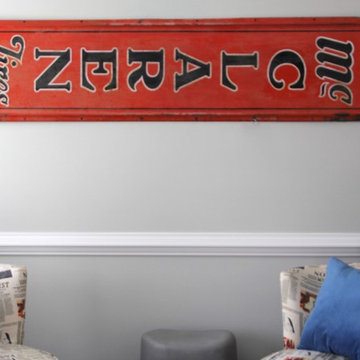
We were lucky to find this old tire shop sign that included the name of the distant family line! 2 newspaper chairs frame the bold, unique sign turned artwork!!
 MAC Reno Design Build LTD ( MAC Renovations)
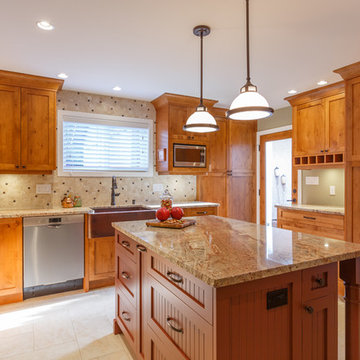
An eclectic mix of materials was the request for this kitchen. Following an inspirational picture that the clients had clipped from a newspaper, we made this kitchen come to life. Herringbone laid floor tile, rough knotty alder cabinetry, with a vintage finish on the island and touches of metal in the copper hood and sink.
17