
Search results for "Pattern report" in Home Design Ideas



 Studio NOO Design
Example of a small trendy master gray tile and porcelain tile porcelain tile drop-in bathtub design in Montreal with flat-panel cabinets, dark wood cabinets, a one-piece toilet, gray walls and an integrated sink
Find the right local pro for your project

 LG Designs LLC
Jeffrey M. Olsen Photography
http://www.jeffreymolsen.com/
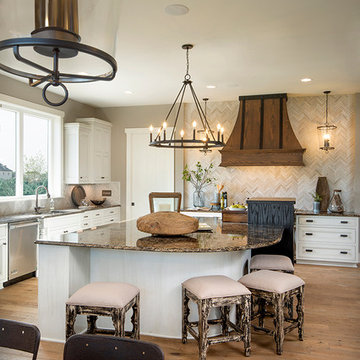
Inspiration for an eclectic dining room remodel in Phoenix
Inspiration for an eclectic dining room remodel in Phoenix








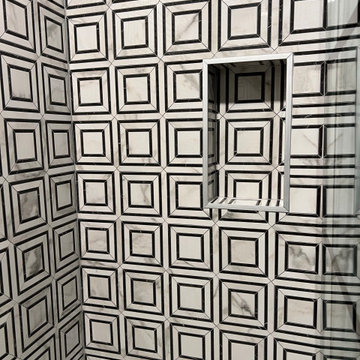


 BLANKwalls Design
Inspiration for a large contemporary wooden u-shaped metal railing staircase remodel in San Francisco with wooden risers

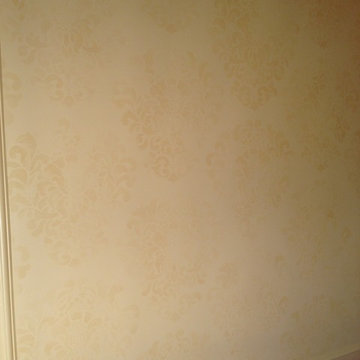
 Murals and Decorative Painting by Shannon Geis
Subtle touches of color for this stenciled wall. This would work with almost any stencil and is pretty easy if you've got a light color and subtle touch. I love how it fades in and out. This would look great in any room with almost any stencil. I'd love to do a few more of these.
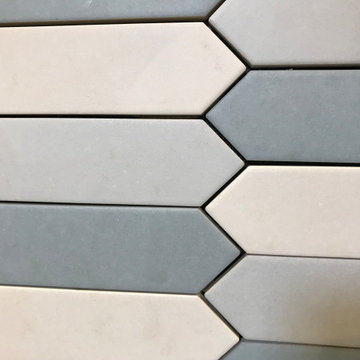


 Ollin Stone
Other than diamonds, rubies, and sapphires, granite is the hardest natural stone. Granite is the preferred stone for exterior or interior as it is known for its strength and resistance to the elements.

Sponsored
Plain City, OH

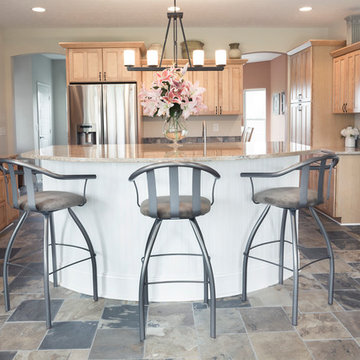
The Creative Kitchen Company
Columbus Area Kitchen Remodeling and Refacing Professional

 Presidio Tile, LLC
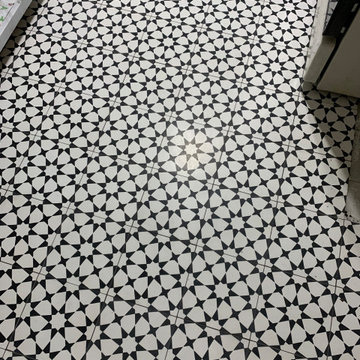
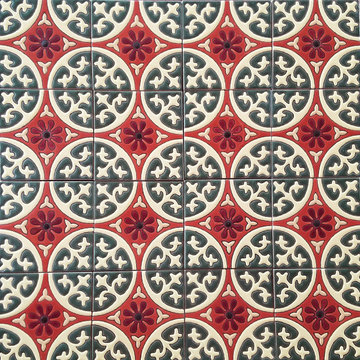
Floor: Presidio Tiles encaustic cement tile Torreon Pattern in antique white and charcoal
Bathroom - transitional bathroom idea in Dallas
Bathroom - transitional bathroom idea in Dallas

 Tile Doctor Ltd
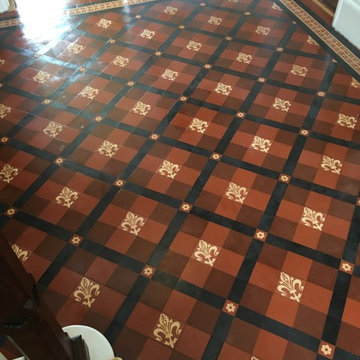
It’s always a great surprise to find old tiled flooring hidden underneath carpet or linoleum which appears especially common with 19th century properties where it’s not unusual for the owners to uncover fantastically patterned, original Victorian tiled floors and, naturally, they want to restore them to their former glory. If you have a property of this type you might want to look under the carpets.
The majority of the time, however, these tiles have been covered up for decades, allowing for thick layers of muck to build-up and are invariably damaged carpet grippers, surface glue and adhesive tape.
This was pretty much the case with this customer who lives in the town of Warminster and was keen to have her own newly discovered Victorian hallway brought back to life, and called me down to see what could be done. Upon arrival at the property, I determined that the tiles would definitely require a very deep clean, including the remove of numerous glue stains, followed by the application of a new seal.
Before I could begin the deep cleaning process, I needed to remove the carpet grippers and surface glue, attempting to remove as much as possible by hand using a scraper.
For the particularly stubborn areas, I applied Tile Doctor Remove & Go, a powerful stripper specially designed to break down adhesives and solvents, and left it to dwell for 20 minutes to eat through the glue deposits. I then attached a black pad to a rotary machine and scrubbed the area thoroughly to clean the affected areas, before removing the resulting slurry using a wet vacuum and rinsed with clean water.
Once I was satisfied that all of the glue had been removed, I proceeded to soak the floor using a solution of the high alkaline cleaner known as Tile Doctor Pro Clean. This is a versatile product that can be used on a wide range of natural stone floors to deal with heavy soil build-up.
I left the Pro-Clean to dwell for ten minutes, and then scrubbed it into the tiles to remove the ingrained dirt and also to break down any old and ineffectual seals. The floor was then once again rinsed thoroughly with clean water which was then extracted using a wet vacuum before being left to dry for a couple of days.
Upon our return to the property I immediately tested the floor for damp using a damp meter. This is an extremely important test to carry out before sealing any kind of tiled flooring, due to the fact that excess moisture left over from cleaning can cloud the sealer and damage its ability to protect against dirt and stains.
Thankfully, the damp test revealed no excess moisture, and I was able to proceed with sealing the tiles. My choice of sealer was Tile Doctor Seal and Go, a water-based topical sealer that simultaneously provides both a stain resistant surface seal and a durable and aesthetically pleasing low sheen finish, also being water based it doesn’t give off a smell as it dries.
This is a very cost effective product that is highly suitable for use on Victorian and Quarry tiles, I applied five costs to achieve the desired finish.
The customer was very pleased with the final results. It’s always satisfying to restore original Victorian tiled floors to looking their best once again – and this one was no exception.
Stuart Ford
Wiltshire Tile Doctor
48