
Search results for "Producing considerable" in Home Design Ideas
 Home Improvement
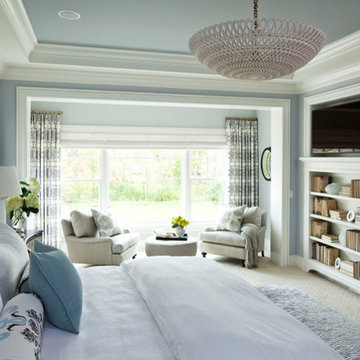
West or east, home is the best. Happy, warm, harmonious home is the dream and target of people. How to decorate our home is very important. We have the experience that the bedding we saw in emporium is beautiful, but the effect does not good when we bring it home. This is because we do not choose bedding according to the color collocation of our dream bedrooms. Here are some classic color collocation methods for you:
Color collocation of light with dark: when the main color of your dream bedroom is light, such as white, light color bedding will make your bedroom feel pale, ordinary and have no sense of color. On the contrary, dark or bright color bedding such as chocolate, purple, green, yellow will make your space full of vitality. The collocation of light and dark color gives people strong visual impact. So when your dream bedroom have dark color as its main tone, light or bright color like white, pink, red and yellow goes well with it. The space will feel depressing if you use dark color bedding.
Color collocation method of similar color: it means choose bedding with similar color to the main color of bedroom. For example, when the main color of your dream bedroom is purple, white bedding with few purple decoration patterns is good choice. There would be no layering if you use bedding in large area purple.
Collocation method of matching complex with simple: if the decoration style of bedroom is complex, concise and elegant bedding goes well with it, or the space will be disorderly and unsystematic.
The intensity of lighting: light intensity is the factor that people often neglect. Avoid using dark color bedding in bedroom with dark light.
The relationship of whole and part: the main color of bedroom is whole, bedding color is part. A guest cannot usurp the host's role. So does the bedding. There should be primary and secondary in bedroom color collocation. Bedding color only plays the role of embellishing.
Take all the elements in bedroom into consideration: all the elements in dream bedroom – wall, furniture, floor, and bedding – should be considered. They should be in consistent.
We all know that color has the function of mood adjustment. We should choose color according to our actually needs.
Green and purple is good to soothe the nerves and relax people. Patient with phobia and schizophrenia can choose the two colors.
Light saffron yellow, blue and pink can make people exciting, happy and full of hope. Depression and anxiety disorder patient can choose them.
Cyan is good to produce sleepiness. It suit for those insomniac.
Besides, warm color bedding with thicker fabric suit to use in winter and autumn for the decrease of temperature.
 Super Bright LEDs
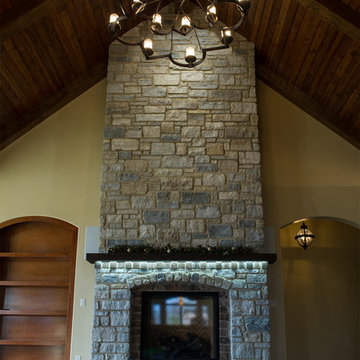
Add dramatic accent light to your living room with LED bulbs and strips. Not only do LED's look great, but they also save money by producing more light with less power, run considerably cooler, and last longer than their incandescent counterparts!
 Hogue Landscape Services
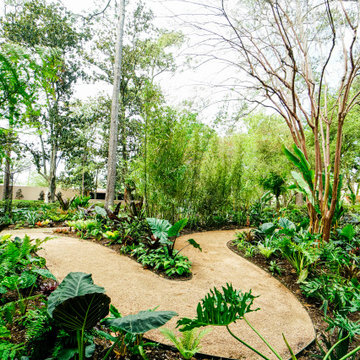
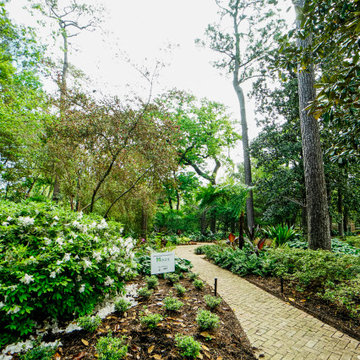
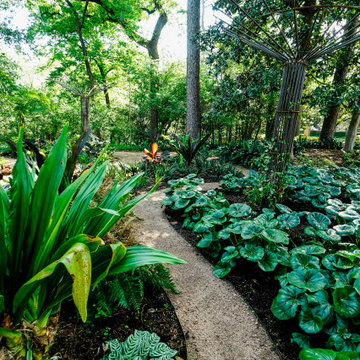
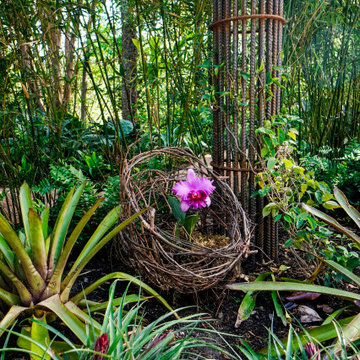
The concept of the garden was based on, “Brazilian Hummingbirds II”, a painting the MFAH has in its collection by the artist, Martin Johnson Heade. Heade travelled to the rainforest in Brazil between 1863 and 1864 and painted a
series of small paintings depicting hummingbirds in the lush foliage of the Brazilian rainforests. His painting, Brazilian
Hummingbirds, II, evokes the sultry atmosphere of the Brazilian rainforest with its misty quality and subtle lighting. His interest in ornithology can be seen in his detailed depictions of the hummingbirds. The garden location is adjacent to one of Buffalo Bayou’s steep, wooded ravines. The ravine, with its native plant communities and topography, is a perfect back-
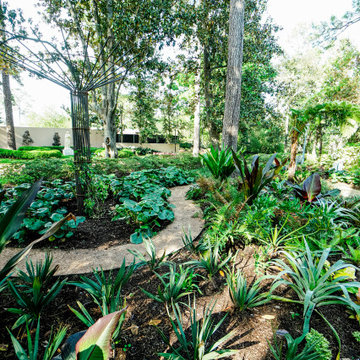
drop for a garden with a rainforest theme. Because the date for the garden opening coincides with the spring migration of hummingbirds into our region, the hummingbird theme seemed appropriate for this garden competition. The garden will include a variety of tropical plants native to the rainforests such as bromeliads, orchids, heliconia, and passion fruit flowers. In addition, native plants to our region such as the Sabal Minor and Southern Wood Fern will be included to integrate
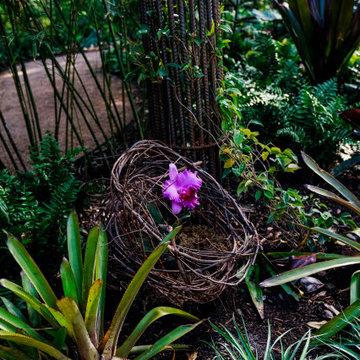
plants that are found nearby in the ravine. The Heliconia flowers produce considerable amounts of nectar, a high energy food essential for hummingbirds who are known to consume three times their bodyweight in a single day. In addition to nectar producing plants, there will be hummingbird nest materials dispersed throughout the garden. A misty quality to the garden will be provided by a misting system, and tropical colored lights will be lit at night for special events. Visitors to the garden will have a unique sensory experience reminiscent to that of Heade’s travels to Brazil’s rainforests.
Find the right local pro for your project
 Smart-Solutiions
The Science of Light and Learning
To understand the relationship between lighting and learning, it’s critical to grasp the concept of correlated colour temperature (CCT). CCT refers to the warmth or coolness of light, measured in Kelvin (K). Lower CCTs (around 3000K) provide a warm, cosy atmosphere, while higher CCTs (5000K or above) emit a cool, daylight-like glow. Studies have shown that cool white light, which mimics natural daylight, can increase alertness and mood, contributing to improved cognitive performance. LED lighting, with its ability to produce this desired CCT, makes an ideal choice for educational settings.
LED Lighting: Brightening the Future of Education
Energy Efficiency and Cost Effectiveness
One of the main advantages of LED lighting is its energy efficiency. Traditional lighting solutions like fluorescent and incandescent bulbs consume much more energy to produce the same amount of light as LEDs, which is not only environmentally harmful but also financially costly. Switching to LED lights can result in substantial cost savings for schools, enabling them to redirect funds to other critical areas of education.
Durability and Longevity
LED lights are renowned for their durability and longevity. They have a significantly longer lifespan compared to conventional lights, which means less frequent replacement and reduced maintenance costs. This durability also minimises disruptions caused by light failure, providing a consistent, well-lit learning environment.
Improved Visibility and Reduced Eye Strain
With their superior colour rendering index (CRI), LED lights render colours more accurately, leading to improved visibility. This is particularly beneficial in educational settings, where activities often require distinguishing fine details and colours. LED lights also emit less glare than traditional lighting solutions, reducing eye strain and fatigue. This can lead to better concentration and increased comfort for both students and teachers.
Incorporating LED Lighting in Classrooms: Practical Considerations
When transitioning to LED lighting in classrooms, a few key factors need to be taken into account. Firstly, the lighting design should ensure an even distribution of light, preventing shadowy or overly bright spots that could distract or discomfort students. Secondly, the integration of dimming capabilities can provide flexibility, allowing educators to adjust the lighting level based on the task at hand. Finally, lighting controls can be used to take advantage of natural light, automatically dimming or turning off the LEDs when sufficient daylight is present.
Conclusion: The Bright Promise of LED Lighting in Education
As education systems continue to evolve, it’s imperative to keep sight of the physical factors that significantly impact learning, one of which is lighting. LED technology, with its myriad benefits, offers an innovative and effective way to enhance the quality of lighting in classrooms. By prioritising investments in such improvements, we can take a significant step towards creating an optimised learning environment that nurtures the educational success of future generations.
 Hogue Landscape Services
The concept of the garden was based on, “Brazilian Hummingbirds II”, a painting the MFAH has in its collection by the artist, Martin Johnson Heade. Heade travelled to the rainforest in Brazil between 1863 and 1864 and painted a
series of small paintings depicting hummingbirds in the lush foliage of the Brazilian rainforests. His painting, Brazilian
Hummingbirds, II, evokes the sultry atmosphere of the Brazilian rainforest with its misty quality and subtle lighting. His interest in ornithology can be seen in his detailed depictions of the hummingbirds. The garden location is adjacent to one of Buffalo Bayou’s steep, wooded ravines. The ravine, with its native plant communities and topography, is a perfect back-
drop for a garden with a rainforest theme. Because the date for the garden opening coincides with the spring migration of hummingbirds into our region, the hummingbird theme seemed appropriate for this garden competition. The garden will include a variety of tropical plants native to the rainforests such as bromeliads, orchids, heliconia, and passion fruit flowers. In addition, native plants to our region such as the Sabal Minor and Southern Wood Fern will be included to integrate
plants that are found nearby in the ravine. The Heliconia flowers produce considerable amounts of nectar, a high energy food essential for hummingbirds who are known to consume three times their bodyweight in a single day. In addition to nectar producing plants, there will be hummingbird nest materials dispersed throughout the garden. A misty quality to the garden will be provided by a misting system, and tropical colored lights will be lit at night for special events. Visitors to the garden will have a unique sensory experience reminiscent to that of Heade’s travels to Brazil’s rainforests.
 Hogue Landscape Services
The concept of the garden was based on, “Brazilian Hummingbirds II”, a painting the MFAH has in its collection by the artist, Martin Johnson Heade. Heade travelled to the rainforest in Brazil between 1863 and 1864 and painted a
series of small paintings depicting hummingbirds in the lush foliage of the Brazilian rainforests. His painting, Brazilian
Hummingbirds, II, evokes the sultry atmosphere of the Brazilian rainforest with its misty quality and subtle lighting. His interest in ornithology can be seen in his detailed depictions of the hummingbirds. The garden location is adjacent to one of Buffalo Bayou’s steep, wooded ravines. The ravine, with its native plant communities and topography, is a perfect back-
drop for a garden with a rainforest theme. Because the date for the garden opening coincides with the spring migration of hummingbirds into our region, the hummingbird theme seemed appropriate for this garden competition. The garden will include a variety of tropical plants native to the rainforests such as bromeliads, orchids, heliconia, and passion fruit flowers. In addition, native plants to our region such as the Sabal Minor and Southern Wood Fern will be included to integrate
plants that are found nearby in the ravine. The Heliconia flowers produce considerable amounts of nectar, a high energy food essential for hummingbirds who are known to consume three times their bodyweight in a single day. In addition to nectar producing plants, there will be hummingbird nest materials dispersed throughout the garden. A misty quality to the garden will be provided by a misting system, and tropical colored lights will be lit at night for special events. Visitors to the garden will have a unique sensory experience reminiscent to that of Heade’s travels to Brazil’s rainforests.
 Cabinet Genies, Inc.
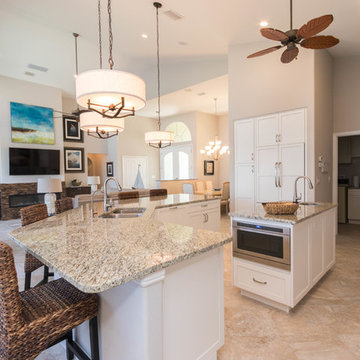
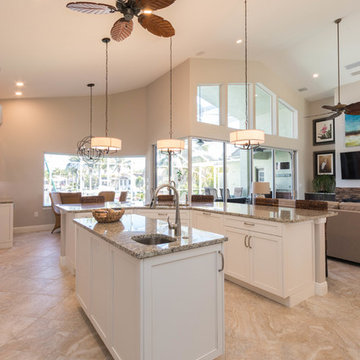
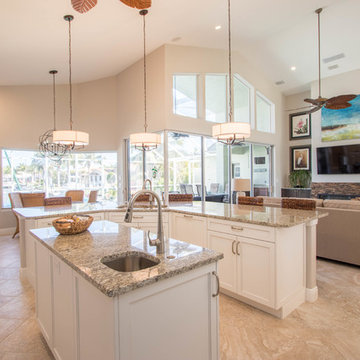
Take a gander at this beauty! An outstanding remodel performed in conjunction with Jesse at Majestic Enterprises. This Florida style home enjoys fantastic waterfront views provided by the large panoramic windows and high ceilings which opens up the space considerably and provides abundant lighting.
The brand new expansive kitchen, boasts glass stacked uppers, on top of all white cabinetry, adorned by natural stone granite in Venetian Gold coloring. The color combo compliments the natural, coastal style that resides throughout the home, and produces a delightful airy and open feeling that all of us can relish.
Cabinetry:
Kitchen/Laundry - R.D. Henry & Company - Winter White w/ Pewter Glaze
Guest Bath - Kith Kitchens - Charcoal w/ Chocolate line glaze
Outdoor Kitchen - NatureKast Weatherproof Cabinetry - Walnut
Countertops: Kitchen - Granite - Venetian Gold
Bathrooom - Granite - Corteccia
Accessories - Rev-A-Shelf
Grill - Delta Heat
 Hogue Landscape Services
The concept of the garden was based on, “Brazilian Hummingbirds II”, a painting the MFAH has in its collection by the artist, Martin Johnson Heade. Heade travelled to the rainforest in Brazil between 1863 and 1864 and painted a
series of small paintings depicting hummingbirds in the lush foliage of the Brazilian rainforests. His painting, Brazilian
Hummingbirds, II, evokes the sultry atmosphere of the Brazilian rainforest with its misty quality and subtle lighting. His interest in ornithology can be seen in his detailed depictions of the hummingbirds. The garden location is adjacent to one of Buffalo Bayou’s steep, wooded ravines. The ravine, with its native plant communities and topography, is a perfect back-
drop for a garden with a rainforest theme. Because the date for the garden opening coincides with the spring migration of hummingbirds into our region, the hummingbird theme seemed appropriate for this garden competition. The garden will include a variety of tropical plants native to the rainforests such as bromeliads, orchids, heliconia, and passion fruit flowers. In addition, native plants to our region such as the Sabal Minor and Southern Wood Fern will be included to integrate
plants that are found nearby in the ravine. The Heliconia flowers produce considerable amounts of nectar, a high energy food essential for hummingbirds who are known to consume three times their bodyweight in a single day. In addition to nectar producing plants, there will be hummingbird nest materials dispersed throughout the garden. A misty quality to the garden will be provided by a misting system, and tropical colored lights will be lit at night for special events. Visitors to the garden will have a unique sensory experience reminiscent to that of Heade’s travels to Brazil’s rainforests.
 Hogue Landscape Services
The concept of the garden was based on, “Brazilian Hummingbirds II”, a painting the MFAH has in its collection by the artist, Martin Johnson Heade. Heade travelled to the rainforest in Brazil between 1863 and 1864 and painted a
series of small paintings depicting hummingbirds in the lush foliage of the Brazilian rainforests. His painting, Brazilian
Hummingbirds, II, evokes the sultry atmosphere of the Brazilian rainforest with its misty quality and subtle lighting. His interest in ornithology can be seen in his detailed depictions of the hummingbirds. The garden location is adjacent to one of Buffalo Bayou’s steep, wooded ravines. The ravine, with its native plant communities and topography, is a perfect back-
drop for a garden with a rainforest theme. Because the date for the garden opening coincides with the spring migration of hummingbirds into our region, the hummingbird theme seemed appropriate for this garden competition. The garden will include a variety of tropical plants native to the rainforests such as bromeliads, orchids, heliconia, and passion fruit flowers. In addition, native plants to our region such as the Sabal Minor and Southern Wood Fern will be included to integrate
plants that are found nearby in the ravine. The Heliconia flowers produce considerable amounts of nectar, a high energy food essential for hummingbirds who are known to consume three times their bodyweight in a single day. In addition to nectar producing plants, there will be hummingbird nest materials dispersed throughout the garden. A misty quality to the garden will be provided by a misting system, and tropical colored lights will be lit at night for special events. Visitors to the garden will have a unique sensory experience reminiscent to that of Heade’s travels to Brazil’s rainforests.
 Hogue Landscape Services
The concept of the garden was based on, “Brazilian Hummingbirds II”, a painting the MFAH has in its collection by the artist, Martin Johnson Heade. Heade travelled to the rainforest in Brazil between 1863 and 1864 and painted a
series of small paintings depicting hummingbirds in the lush foliage of the Brazilian rainforests. His painting, Brazilian
Hummingbirds, II, evokes the sultry atmosphere of the Brazilian rainforest with its misty quality and subtle lighting. His interest in ornithology can be seen in his detailed depictions of the hummingbirds. The garden location is adjacent to one of Buffalo Bayou’s steep, wooded ravines. The ravine, with its native plant communities and topography, is a perfect back-
drop for a garden with a rainforest theme. Because the date for the garden opening coincides with the spring migration of hummingbirds into our region, the hummingbird theme seemed appropriate for this garden competition. The garden will include a variety of tropical plants native to the rainforests such as bromeliads, orchids, heliconia, and passion fruit flowers. In addition, native plants to our region such as the Sabal Minor and Southern Wood Fern will be included to integrate
plants that are found nearby in the ravine. The Heliconia flowers produce considerable amounts of nectar, a high energy food essential for hummingbirds who are known to consume three times their bodyweight in a single day. In addition to nectar producing plants, there will be hummingbird nest materials dispersed throughout the garden. A misty quality to the garden will be provided by a misting system, and tropical colored lights will be lit at night for special events. Visitors to the garden will have a unique sensory experience reminiscent to that of Heade’s travels to Brazil’s rainforests.
 Cabinet Genies, Inc.
Take a gander at this beauty! An outstanding remodel performed in conjunction with Jesse at Majestic Enterprises. This Florida style home enjoys fantastic waterfront views provided by the large panoramic windows and high ceilings which opens up the space considerably and provides abundant lighting.
The brand new expansive kitchen, boasts glass stacked uppers, on top of all white cabinetry, adorned by natural stone granite in Venetian Gold coloring. The color combo compliments the natural, coastal style that resides throughout the home, and produces a delightful airy and open feeling that all of us can relish.
Cabinetry:
Kitchen/Laundry - R.D. Henry & Company - Winter White w/ Pewter Glaze
Guest Bath - Kith Kitchens - Charcoal w/ Chocolate line glaze
Outdoor Kitchen - NatureKast Weatherproof Cabinetry - Walnut
Countertops: Kitchen - Granite - Venetian Gold
Bathrooom - Granite - Corteccia
Accessories - Rev-A-Shelf
Grill - Delta Heat
 Cabinet Genies, Inc.
Take a gander at this beauty! An outstanding remodel performed in conjunction with Jesse at Majestic Enterprises. This Florida style home enjoys fantastic waterfront views provided by the large panoramic windows and high ceilings which opens up the space considerably and provides abundant lighting.
The brand new expansive kitchen, boasts glass stacked uppers, on top of all white cabinetry, adorned by natural stone granite in Venetian Gold coloring. The color combo compliments the natural, coastal style that resides throughout the home, and produces a delightful airy and open feeling that all of us can relish.
Cabinetry:
Kitchen/Laundry - R.D. Henry & Company - Winter White w/ Pewter Glaze
Guest Bath - Kith Kitchens - Charcoal w/ Chocolate line glaze
Outdoor Kitchen - NatureKast Weatherproof Cabinetry - Walnut
Countertops: Kitchen - Granite - Venetian Gold
Bathrooom - Granite - Corteccia
Accessories - Rev-A-Shelf
Grill - Delta Heat
 Garner Homes
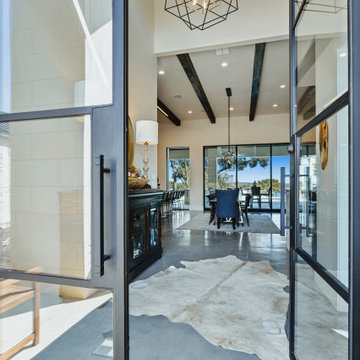
Ideal for extensive entertaining and comfortable everyday living, we designed an open floor plan that offered easy flow between the living room, bar, dining space and kitchen. Multiple horizontal and vertical offsets created visual interest on all four elevations while custom-built light fixtures produced sleek task lighting in work areas without sacrificing style. To create additional texture and character, we utilized transitional architecture by uses massing, materials, and lines found in the Hill Country in new ways with architectural limestone blocks, rough chopped Texas limestone, and stucco with metal reveals. Particular consideration was given to the views visible from bedrooms as well as always achieving cross-lighting to capture as much natural light as possible, as seen in the master bath where both windows in the wet room light the space throughout the day. We also featured aluminum clad wood window package, an anodized aluminum window wall in the living room, and a custom design steel and glass entry door.
 Hogue Landscape Services
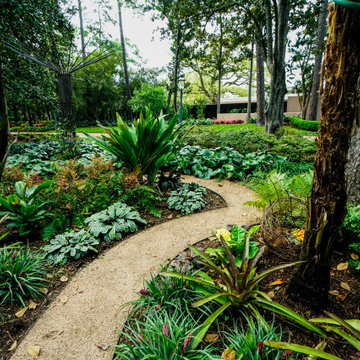
The concept of the garden was based on, “Brazilian Hummingbirds II”, a painting the MFAH has in its collection by the artist, Martin Johnson Heade. Heade travelled to the rainforest in Brazil between 1863 and 1864 and painted a
series of small paintings depicting hummingbirds in the lush foliage of the Brazilian rainforests. His painting, Brazilian
Hummingbirds, II, evokes the sultry atmosphere of the Brazilian rainforest with its misty quality and subtle lighting. His interest in ornithology can be seen in his detailed depictions of the hummingbirds. The garden location is adjacent to one of Buffalo Bayou’s steep, wooded ravines. The ravine, with its native plant communities and topography, is a perfect back-
drop for a garden with a rainforest theme. Because the date for the garden opening coincides with the spring migration of hummingbirds into our region, the hummingbird theme seemed appropriate for this garden competition. The garden will include a variety of tropical plants native to the rainforests such as bromeliads, orchids, heliconia, and passion fruit flowers. In addition, native plants to our region such as the Sabal Minor and Southern Wood Fern will be included to integrate
plants that are found nearby in the ravine. The Heliconia flowers produce considerable amounts of nectar, a high energy food essential for hummingbirds who are known to consume three times their bodyweight in a single day. In addition to nectar producing plants, there will be hummingbird nest materials dispersed throughout the garden. A misty quality to the garden will be provided by a misting system, and tropical colored lights will be lit at night for special events. Visitors to the garden will have a unique sensory experience reminiscent to that of Heade’s travels to Brazil’s rainforests.
 Garner Homes
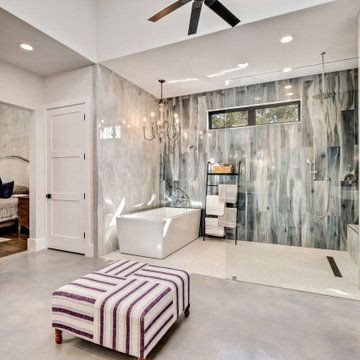
Ideal for extensive entertaining and comfortable everyday living, we designed an open floor plan that offered easy flow between the living room, bar, dining space and kitchen. Multiple horizontal and vertical offsets created visual interest on all four elevations while custom-built light fixtures produced sleek task lighting in work areas without sacrificing style. To create additional texture and character, we utilized transitional architecture by uses massing, materials, and lines found in the Hill Country in new ways with architectural limestone blocks, rough chopped Texas limestone, and stucco with metal reveals. Particular consideration was given to the views visible from bedrooms as well as always achieving cross-lighting to capture as much natural light as possible, as seen in the master bath where both windows in the wet room light the space throughout the day. We also featured aluminum clad wood window package, an anodized aluminum window wall in the living room, and a custom design steel and glass entry door.
 CSW Studio Interior Design
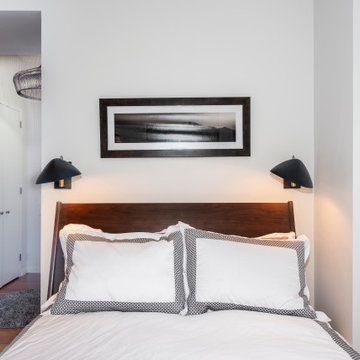
This bedroom was designed to accommodate a teenager boy who will be pursuing in the music industry. We took in consideration the need to have a additional queen size bed for guests. This space can be used for gatherings to listen him playing tracks or just to have friends over to play video game.
The use of this space is endless! The rare picture of Basquiat in the desk area and a very interesting table lamp, vintage, and made of clay welcomes everyone who walks in, without forget to mentioned, we incorporated the hall entrance with the rest of the room, adding the ceiling pendant that reflects an abstract interesting pattern in the ceiling, making even more artsy and fun!
 Hogue Landscape Services
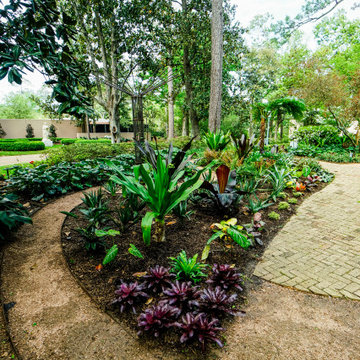
The concept of the garden was based on, “Brazilian Hummingbirds II”, a painting the MFAH has in its collection by the artist, Martin Johnson Heade. Heade travelled to the rainforest in Brazil between 1863 and 1864 and painted a
series of small paintings depicting hummingbirds in the lush foliage of the Brazilian rainforests. His painting, Brazilian
Hummingbirds, II, evokes the sultry atmosphere of the Brazilian rainforest with its misty quality and subtle lighting. His interest in ornithology can be seen in his detailed depictions of the hummingbirds. The garden location is adjacent to one of Buffalo Bayou’s steep, wooded ravines. The ravine, with its native plant communities and topography, is a perfect back-
drop for a garden with a rainforest theme. Because the date for the garden opening coincides with the spring migration of hummingbirds into our region, the hummingbird theme seemed appropriate for this garden competition. The garden will include a variety of tropical plants native to the rainforests such as bromeliads, orchids, heliconia, and passion fruit flowers. In addition, native plants to our region such as the Sabal Minor and Southern Wood Fern will be included to integrate
plants that are found nearby in the ravine. The Heliconia flowers produce considerable amounts of nectar, a high energy food essential for hummingbirds who are known to consume three times their bodyweight in a single day. In addition to nectar producing plants, there will be hummingbird nest materials dispersed throughout the garden. A misty quality to the garden will be provided by a misting system, and tropical colored lights will be lit at night for special events. Visitors to the garden will have a unique sensory experience reminiscent to that of Heade’s travels to Brazil’s rainforests.
 Cabinet Genies, Inc.
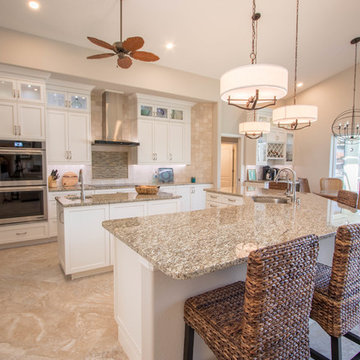
Take a gander at this beauty! An outstanding remodel performed in conjunction with Jesse at Majestic Enterprises. This Florida style home enjoys fantastic waterfront views provided by the large panoramic windows and high ceilings which opens up the space considerably and provides abundant lighting.
The brand new expansive kitchen, boasts glass stacked uppers, on top of all white cabinetry, adorned by natural stone granite in Venetian Gold coloring. The color combo compliments the natural, coastal style that resides throughout the home, and produces a delightful airy and open feeling that all of us can relish.
Cabinetry:
Kitchen/Laundry - R.D. Henry & Company - Winter White w/ Pewter Glaze
Guest Bath - Kith Kitchens - Charcoal w/ Chocolate line glaze
Outdoor Kitchen - NatureKast Weatherproof Cabinetry - Walnut
Countertops: Kitchen - Granite - Venetian Gold
Bathrooom - Granite - Corteccia
Accessories - Rev-A-Shelf
Grill - Delta Heat
 Cabinet Genies, Inc.
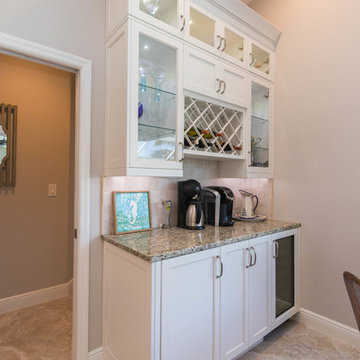
Take a gander at this beauty! An outstanding remodel performed in conjunction with Jesse at Majestic Enterprises. This Florida style home enjoys fantastic waterfront views provided by the large panoramic windows and high ceilings which opens up the space considerably and provides abundant lighting.
The brand new expansive kitchen, boasts glass stacked uppers, on top of all white cabinetry, adorned by natural stone granite in Venetian Gold coloring. The color combo compliments the natural, coastal style that resides throughout the home, and produces a delightful airy and open feeling that all of us can relish.
Cabinetry:
Kitchen/Laundry - R.D. Henry & Company - Winter White w/ Pewter Glaze
Guest Bath - Kith Kitchens - Charcoal w/ Chocolate line glaze
Outdoor Kitchen - NatureKast Weatherproof Cabinetry - Walnut
Countertops: Kitchen - Granite - Venetian Gold
Bathrooom - Granite - Corteccia
Accessories - Rev-A-Shelf
Grill - Delta Heat
 The Masons Co and Dionysian Artificers Landscape
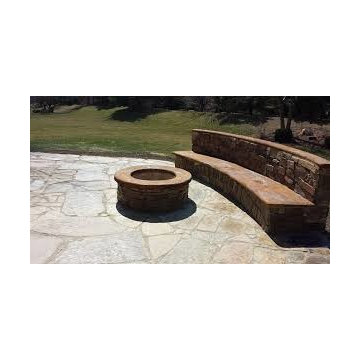
Kansas City Brick & Masonry is the craft of shaping rough pieces of rock into accurate geometrical shapes, at times simple, but some of considerable complexity, and then arranging the resulting stones, often together with mortar, to form structures.
Quarrymen split veins, or sheets of rock, and extract the resulting blocks of stone from the ground.
Sawyers cut these rough blocks into cuboids, to required size with diamond-tipped saws. The resulting block if ordered for a specific component is known as sawn six sides (SSS).
Banker masons are workshop based, and specialize in working the stones into the shapes required by a building's design, this set out on templets and a bed mould. They can produce anything from stones with simple chamfers to tracery windows, detailed mouldings and the more classical architectural building masonry. When working a stone from a sawn block, the mason ensures that the stone is bedded in the right way, so the finished work sits in the building in the same orientation as it was formed on the ground. Occasionally though some stones need to be orientated correctly for the application; this includes voussoirs, jambs, coping sand cornice.
The basic tools, methods and skills of the banker mason have existed as a trade for thousands of years.
Carvers cross the line from craft to art, and use their artistic ability to carve stone into foliage, figures, animals or abstract designs.
Fixer masons specialize in the fixing of stones onto buildings, using lifting tackle, and traditional lime mortars and grouts. Sometimes modern cements, mastics and epoxy resins are used, usually on specialist applications such as stone cladding. Metal fixings, from simple dowels and cramps to specialised single application fixings, are also used. The precise tolerances necessary make this a highly skilled job.
Memorial masons or monumental masons carve gravestones and inscriptions.
The modern stonemason undergoes comprehensive training, both in the classroom and in the working environment. Hands-on skill is complemented by intimate knowledge of each stone type, its application and best uses, and how to work and fix each stone in place. The mason may be skilled and competent to carry out one or all of the various branches of stonemasonry. In some areas the trend is towards specialization, in other areas towards adaptability.
5