
Search results for "Quality health" in Home Design Ideas
 User
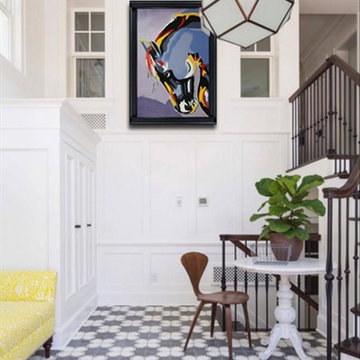
UserThe quality of oil paint used can make a difference in how the painting looks over the years. As with canvas, it is important that the artist used only high quality, authentically environmental friendly (Formaldehyde-free) paints in the painting process, which ensure the paints durability without fading over years and no harm to human health in the room environment.
We guarantee our artists only use high quality, authentically environmental friendly (Formaldehyde-free) paints in their 100% handmade paintings. Our warranty covers no color fading for 5 years although it actually can last for life time. We have the best warranty in the handmade oil painting industry.
 EcoCraft Homes
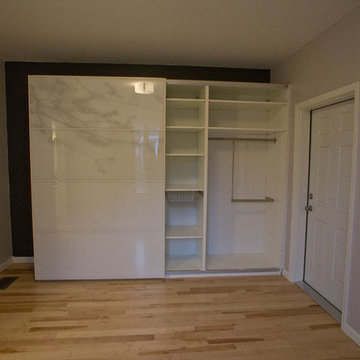
coCraft homes are built with precision manufacturing tools and techniques including: laser leveled jigs, overhead cranes, and elevated framing tables. Skilled craftsmen working in a climate controlled specially designed facility build every one of our homes, providing an unparalleled quality of construction.
All EcoCraft new homes feature an airtight and continuously insulated building enclosure which maximizes energy efficiency, health, comfort, and durability.
 Architect
Why Mattress Thickness Is One of the Most Misunderstood Specs
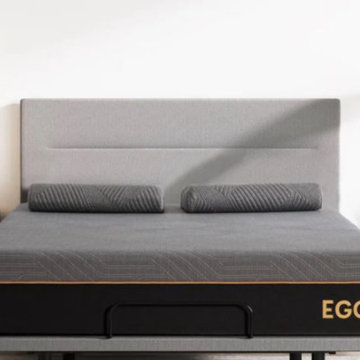
When most people shop for a memory foam mattress, they focus on firmness, materials, and brand. Thickness tends to be an afterthought — or worse, treated as a proxy for quality. The assumption goes: thicker equals better. That assumption is wrong in a meaningful number of cases, and getting it wrong means waking up with exactly the kind of stiffness, pressure pain, or lower back ache you bought a new mattress to avoid.
The right thickness for a memory foam mattress is not a single number. It is a combination of your body weight, your sleep position, and any specific health conditions you are managing. A 14-inch mattress that provides ideal support for a 250-pound side sleeper may cause a 115-pound stomach sleeper to experience spinal misalignment all night. A 10-inch mattress that works perfectly for a back sleeper of average build offers inadequate pressure relief for a heavier side sleeper whose hips need to sink further into the comfort layer before the support base engages.
This guide maps thickness to the factors that actually determine whether a mattress works for your body. It covers the science of mattress layers, the three primary variables (weight, position, condition), and a complete decision table so you can find your ideal thickness without guesswork.
Understanding Mattress Thickness: Layers, Not Just Height
A memory foam mattress’s total thickness is the sum of its individual layers, and those layers serve entirely different functions. Two mattresses that are both 12 inches thick may feel radically different because their comfort layer depths and support core thicknesses are distributed differently.
The Two Parts That Matter
Every memory foam mattress has two functional zones: the comfort layer at the top and the support core at the bottom. The comfort layer — which in quality mattresses consists of gel-infused viscoelastic foam, transition foam, and a cooling cover — is the zone that contours to your body, relieves pressure, and cushions the joints. The support core — high-density foam or pocketed springs in a hybrid — is the zone that keeps the spine aligned and prevents the entire body from sinking into the mattress.
The key relationship is this: the comfort layer must be deep enough for your body’s heaviest pressure points to sink in fully before the firmer support core pushes back. If it is too shallow, those pressure points press against a firm surface and cause localised pain. If the support core is too thin, the whole mattress sags under body weight and the spine loses alignment regardless of how comfortable the top feels.
Here is how EGOHOME’s Black series layers map to these functions:
Layer
Material
Function
EGOHOME Technology
Cover (0.5–1")
Fabric + cooling tech
Temperature regulation, hygiene
Anti-heat™ Graphene Cooling Cover
Comfort layer (2–6")
Gel foam, AeroFusion™
Pressure relief, contouring
Copper Gel AeroFusion™ Foam
Transition layer (1–2")
Mid-density foam
Prevents sinkage past comfort zone
BraceSleeper™ Support Foam (upper)
Support core (6–12")
High-density foam or coils
Spinal alignment, edge support
BraceSleeper™ Support Foam (core)
Thickness alone does not tell you how a mattress will perform. A 14-inch mattress with a 2-inch comfort layer and a 12-inch support core will feel firm and supportive. A 14-inch mattress with a 6-inch comfort layer and an 8-inch support core will feel plush and contouring. Always check the comfort layer depth, not just the total inches.
Memory Foam Mattress Thickness Ranges: What Each Category Delivers
Here is a complete breakdown of what to expect from each thickness range and who each suits best:
Thickness
Profile
Best Use Case
Body Weight
Best Sleep Position
6–8"
Low profile
Children, bunk beds, guest rooms, adjustable bases
Under 130 lbs
Kids, lightweight, occasional use
8–10"
Standard-thin
Stomach sleepers, lightweight adults, budget setups
Under 130 lbs
Stomach, lightweight back sleepers
10–12"
Standard
Most adults, back sleepers, back pain relief
130–230 lbs
Back, stomach, combo sleepers
12–14"
High-profile
Side sleepers, plus-size, pressure relief
130–230 lbs+
Side sleepers, hip/shoulder pain
14"+
Premium
Plus-size sleepers, heavy duos, luxury setups
230 lbs+
Plus-size, side sleepers, chronic pain
6–8 Inches: Low-Profile (Specific Use Cases Only)
Low-profile mattresses in the 6 to 8 inch range are designed for specific applications rather than general adult use. They work well on bunk beds and trundle beds where height clearance is limited, for children’s beds where a lower sleep surface is safer, on adjustable bases where the mattress needs to flex significantly, and for lightweight individuals under 130 pounds who need minimal depth to reach the support core. For a standard adult of average build, a mattress under 8 inches is unlikely to provide adequate comfort layer depth for sustained pressure relief.
8–10 Inches: Standard-Thin (Stomach Sleepers and Lightweight Adults)
The 8 to 10 inch range is the practical starting point for most adult use. At this thickness, there is enough comfort layer to provide basic pressure relief without the excessive depth that allows heavier body sections to sink past the support zone. Stomach sleepers in particular benefit from this range: when sleeping face down, the goal is to keep the hips from sinking lower than the shoulders and chest, which would create a downward bow in the lumbar spine. A thinner mattress with a firmer feel prevents this hyperextension more reliably than a thicker, softer model. EGOHOME offers 8-inch memory foam options suited to this profile.
10–12 Inches: Standard (The Sweet Spot for Most Adults)
The 10 to 12 inch range is the most broadly appropriate thickness for adults of standard build. At this depth, a quality memory foam mattress contains enough comfort layer material to contour genuinely around the hips and shoulders without allowing the body to bottom out into the support core. It also contains enough support core depth to maintain spinal alignment under continuous body weight across seven or eight hours. Back sleepers of standard weight (130 to 230 pounds) typically find this range the most supportive, as the lumbar region receives adequate underlying resistance without the excessive softness that taller mattresses can develop under consistent pressure.
12–14 Inches: High-Profile (Side Sleepers and Plus-Size Sleepers)
The 12 to 14 inch range addresses two specific needs: side sleepers who require a deep enough comfort layer to allow the shoulder and hip to sink in while the waist remains supported, and heavier individuals whose body weight requires more foam depth before reaching full support core engagement. For a side sleeper of standard or higher body weight, a comfort layer of less than 4 to 6 inches is often not deep enough for the shoulder to sink fully into an aligned position. The result is an upward lateral bow in the thoracic spine that causes shoulder and upper back pain upon waking. The EGOHOME Black 14-inch Pro and Hybrid models are built specifically for this thickness range.
14 Inches and Above: Premium and Plus-Size
Mattresses at 14 inches or more are appropriate for plus-size sleepers over 230 pounds and for couples where one partner is significantly heavier. At higher body weights, a greater depth of both comfort material and support foam is required because the heavier load compresses the foam more aggressively. A support core that adequately resists a 160-pound sleeper may allow excessive sinkage under a 280-pound sleeper, causing the hips to drop past the point of lumbar support. EGOHOME’s Black 14-inch Firm model includes a 12-inch BraceSleeper™ Support Foam core specifically designed to resist this deep compression under higher body weights.
Thickness by Body Weight: The Primary Determining Factor
Body weight is the single most important variable in thickness selection because it directly determines how far the body sinks into the foam. The same mattress will feel completely different to a 120-pound sleeper versus a 240-pound sleeper, because the heavier person compresses the foam significantly more deeply.
Lightweight Sleepers (Under 130 lbs)
Lightweight sleepers do not need and often cannot benefit from thick mattresses. Because they exert less pressure on the foam, they may not compress a 14-inch mattress deeply enough to feel the support core at all, resulting in a floating sensation with insufficient underlying resistance. For lightweight sleepers, 8 to 10 inches provides adequate comfort layer depth for full pressure relief. The EGOHOME Black 10-inch Classic (medium feel) is the appropriate starting point for this weight category.
Standard-Weight Sleepers (130–230 lbs)
Standard-weight adults represent the broadest population of mattress buyers, and the 10 to 12 inch range was designed specifically for this group. At this weight range, the body compresses the comfort layer meaningfully enough for the foam to contour around pressure points, while the support core remains thick enough to prevent excessive sinkage. The EGOHOME Black 12-inch and the Black 10-inch ranges both address this category, with the 12-inch models being more appropriate for side sleepers who need the extra comfort layer depth.
Plus-Size Sleepers (Over 230 lbs)
Heavier sleepers require 12 to 14 inches at minimum to prevent bottoming out — the point at which body weight compresses through the comfort layer entirely and the sleeper feels the firm support core directly. Bottoming out eliminates pressure relief completely and can significantly worsen joint pain and lower back stiffness. EGOHOME recommends a suggested maximum of 300 pounds per person across their mattress range, and the 14-inch Hybrid and 14-inch Firm models are engineered with the deeper support cores required to handle higher body weights without performance degradation over time.
Thickness by Sleep Position: Matching Depth to Alignment Needs
Side Sleepers: 12 Inches or More
Side sleeping places the body’s heaviest pressure points — the shoulder and hip — in direct contact with the mattress. These points need to sink into the comfort layer deeply enough that the spine remains horizontal from head to toe. If the comfort layer is too thin or too firm, the shoulder cannot descend fully into the mattress, and the spine develops an upward lateral curve between the shoulder and the head. This causes the neck, shoulder, and upper back tension that many side sleepers report upon waking.
Side sleepers of standard weight need at least 12 inches, with a soft to medium-soft comfort layer. EGOHOME’s Black 12-inch Pro (soft feel, 7.5 out of 10 cooling score) is specifically recommended for side sleepers managing back, shoulder, or joint pain. The Black 14-inch Pro (medium-soft, 8 out of 10 cooling) adds additional comfort layer depth for those who need greater pressure relief.
Back Sleepers: 10–12 Inches
Back sleeping is the most spinal-alignment-friendly position because the body’s weight is distributed relatively evenly across the mattress. The primary challenge for back sleepers is lumbar support: the natural inward curve of the lower back creates a gap between the lumbar spine and the mattress surface that must be filled by the foam contouring upward into it. A mattress that is too soft allows the pelvis to sink excessively, flattening this curve and creating lower back compression. A mattress that is too firm cannot conform into the lumbar curve at all.
For back sleepers, 10 to 12 inches with a medium or medium-firm feel provides the optimal combination. EGOHOME’s Black 12-inch Hybrid (medium-firm, 6.5 out of 10 cooling) is specifically noted as ideal for back sleepers, combining pocketed spring zoned support with gel foam contouring for precise lumbar engagement.
Stomach Sleepers: 8–10 Inches
Stomach sleepers face the opposite alignment challenge from side sleepers. Rather than needing the mattress to yield deeply at the joints, they need the mattress to maintain a flat, firm surface that prevents the hips from sinking below the chest. If the hips drop lower than the upper body, the lumbar spine hyperextends into an arched position that compresses the posterior vertebral joints and causes significant lower back pain.
Stomach sleepers need a thinner mattress with a firmer feel. The EGOHOME Black 14-inch Firm is specifically recommended for stomach sleepers and heavier sleepers who need maximum surface resistance. Its 12-inch BraceSleeper™ Support Foam core provides the deep, unyielding base that prevents hip sinkage without requiring a thin mattress that compromises comfort.
Best Thickness for Back Pain: The Medium-Firm 10–12 Inch Principle
For people managing chronic lower back pain, herniated discs, sciatica, or general spinal stiffness, mattress thickness interacts with back health in a specific way that differs from general sleep comfort recommendations.
The key principle for back pain is controlled contouring. You need enough foam depth to relieve pressure at the hips and shoulders, but not so much depth that the foam develops a sag under the heavier sections of the body over time. Excessive thickness combined with a soft comfort layer is one of the most common causes of mattress-induced back pain — the sleeper sinks into a gentle hammock shape that feels comfortable initially but compresses the lumbar discs continuously throughout the night.
10–12 Inches: The Optimal Back Pain Range
A medium-firm mattress of 10 to 12 inches addresses both needs simultaneously. It provides adequate foam depth for genuine pressure relief at the hips and shoulders without the risk of comfort layer collapse that taller, softer mattresses can develop. The support core at this thickness is deep enough to maintain consistent lumbar support from the first night through years of regular use.
For side sleepers with lower back pain, the recommendation extends to 12 inches with a soft feel to ensure the hip can sink into full alignment. For back sleepers with lower back pain, 10 to 12 inches with a medium-firm feel is the target. For stomach sleepers with lower back pain, a firmer feel at any thickness is more important than depth — preventing hip sinkage is the priority.
⚠️ Mattresses over 14 inches with very soft comfort layers are a common hidden cause of lower back pain. The deep softness feels luxurious initially but allows the lumbar region to sag into misalignment through the night. If you sleep on a thick, very soft mattress and wake with lower back stiffness, the mattress — not your position — may be the cause.
Complete Thickness Decision Table: Your Position × Your Weight
Use this table to find your recommended thickness and the matching EGOHOME model:
Sleep Position
Body Weight
Ideal Thickness
EGOHOME Recommendation
Side sleeper
Under 130 lbs
12"
EGOHOME Black 12” Pro (soft, 7.5/10 cool)
Side sleeper
130–230 lbs
12–14"
EGOHOME Black 14” Pro (medium-soft, 8/10 cool)
Side sleeper
Over 230 lbs
14"
EGOHOME Black 14” Hybrid (medium-firm, 8.5/10 cool)
Back sleeper
Under 130 lbs
10"
EGOHOME Black 10” Classic (medium, 6/10 cool)
Back sleeper
130–230 lbs
10–12"
EGOHOME Black 12” Hybrid (medium-firm, 6.5/10 cool)
Back sleeper
Over 230 lbs
12–14"
EGOHOME Black 14” Hybrid (medium-firm, 8.5/10 cool)
Stomach sleeper
Under 130 lbs
8–10"
EGOHOME 8" Memory Foam (firm, standard support)
Stomach sleeper
130–230 lbs
10–12"
EGOHOME Black 10” Hybrid (medium-firm, 6.5/10 cool)
Stomach sleeper
Over 230 lbs
12–14"
EGOHOME Black 14” Firm (firm, 7/10 cool)
Combination
Any weight
10–14"
EGOHOME Black 14” Pro or 14” Hybrid
? If you are between two categories — for example, a 220-pound back sleeper with occasional side sleeping — choose the model suited to your heavier variable. A 12” hybrid model handles the heavier weight and still adapts to position changes. When in doubt, go medium-firm over soft.
EGOHOME Memory Foam Mattresses by Thickness
EGOHOME’s range spans 6 to 14 inches across memory foam and hybrid constructions, with every model carrying CertiPUR-US® and OEKO-TEX® Standard 100 certification, a 10-year warranty, a 100-night home trial, and free shipping and returns across the contiguous U.S.
For 8–10 Inch Needs
The EGOHOME 8-inch memory foam and Black 10-inch Classic and Hybrid models cover the lightweight and stomach sleeper range. The 10-inch Classic offers a medium feel suited to back and side sleepers under 130 pounds. The 10-inch Hybrid adds pocketed spring support for better lumbar engagement and airflow.
For 10–12 Inch Needs
The EGOHOME Black 12-inch range — Classic, Pro, and Hybrid — is the most widely applicable thickness tier. The 12-inch Classic (soft, cool 6/10) suits side sleepers and those with joint pain. The 12-inch Hybrid (medium-firm, cool 6.5/10) is specifically recommended for back sleepers and standard-weight adults across positions. The 12-inch Pro (soft, cool 7.5/10) is the top choice for side sleepers dealing with shoulder or hip pain.
For 12–14 Inch Needs
The EGOHOME Black 14-inch series is the flagship range. The 14-inch Pro (medium-soft, cool 8/10) is designed for side sleepers and pressure-relief-first buyers. The 14-inch Hybrid (medium-firm, cool 8.5/10) handles all sleep positions and is the strongest all-rounder in the range. The 14-inch Firm is built for stomach sleepers and heavier individuals, with a 12-inch BraceSleeper™ Support Foam core that resists sinkage under higher body weights.
Frequently Asked Questions
Is a thicker memory foam mattress always better?
No. Thickness should match your body weight and sleep position, not simply be maximised. A 14-inch mattress with a very soft comfort layer can cause back pain in lightweight sleepers or stomach sleepers by allowing excessive sinkage. A well-calibrated 10-inch mattress will consistently outperform an oversized 14-inch model for the wrong body type.
What thickness of memory foam is good for back pain?
A medium-firm mattress of 10 to 12 inches is the most widely recommended range for lower back pain. It provides enough foam depth for genuine pressure relief without the risk of comfort layer collapse that causes lumbar sagging. Side sleepers with back pain may benefit from 12 inches with a softer feel to ensure hip and shoulder alignment.
What is the minimum thickness for a memory foam mattress for adults?
For most adults, 8 inches is the practical minimum for sustained comfort. Below 8 inches, there is often insufficient comfort layer depth for pressure relief across a full night of sleep. The exception is stomach sleepers who may intentionally choose 8 inches for a firmer surface that prevents hip sinkage.
Does mattress thickness affect how long it lasts?
Yes, indirectly. A mattress that is too thin for the body weight it supports will experience faster comfort layer compression and develop sags and pressure indentations earlier than one appropriately sized for that load. Choosing the correct thickness for your weight extends the usable lifespan of the mattress. EGOHOME mattresses are expected to last 6 to 8 years with proper care, with regular rotation every 3 to 6 months recommended.
Can I use a thick mattress on an adjustable base?
Memory foam mattresses up to 14 inches are generally compatible with adjustable bases, though the mattress should be flexible enough to bend at the head and foot sections without cracking or deforming. EGOHOME mattresses are confirmed compatible with adjustable bases. For very thick or firm mattresses, check the specific flex requirements of your adjustable base before purchasing.
Final Thoughts
The best thickness for a memory foam mattress is not the thickest you can find or the most expensive number on the specification sheet. It is the thickness that aligns precisely with your body weight, your sleep position, and any specific conditions you are managing — then pairs that depth with a comfort layer and support core calibrated to work
Find the right local pro for your project

 Five Star Tree Care
One frustrating thing about tree infections and diseases is that they are virtually completely unpredictable. It is essential to understand all the different types of risks and causes that can contribute to these issues in an attempt to understand how you can try and prevent and manage these things when they happen. Five Star Tree Services is going to go over the reasons as to how and why your trees can develop these certain issues.
Since there are so many different causes behind why a tree’s development might be interrupted, first think of them as two different categories you can split them into; non-living factors or abiotic, and living factors or biotic. We also want to note that it is possible for more than one factor to affect a tree’s health and development at any given time.
You can also make a distinction between primary pests and secondary pests. The primary pests exert a serious influence on the tree’s immediate survival. Whereas secondary pests have a less significant influence on the survival of the tree. The only time they will jeopardize a tree’s survival is if the tree has a previous debilitating issue from another risk factor.
For an individual tree’s circumstances, this will distinct the chances of an infestation, especially if it has any past debilitating issues. Which can be seen from any compromising management practices or pre-existing issues which affect the tree’s development as well as lower its resistance to infections.
Poor management in planting is a very common predisposed factor that compromises a tree’s infection defense. For instance, any saplings that are pot-bound will not get to develop solid root systems which doesn’t allow them to develop properly when they eventually get planted. Another example is when a tree gets stressed, along with other outer factors, will have significant effects on the overall wellbeing of the tree and its condition. Other factors to consider are bad soil quality as well as bad drainage.
Abiotic Non-Living Influences
The overall health of a tree can be linked to impacts such as bad growing conditions and bad soil quality. These things will put trees at a higher risk for catching a number of different biotic issues. Sickness, infections, and infestation can all be linked to ineffective nutrient absorption when a tree has insufficiently developed its natural resistances and defenses. One of the worst factors for this is fire damage. It is so debilitating that it makes trees hopeless at defending themselves against biotic attacks.
To uncover what circumstantial predispositions your tree might have due to poor developmental conditions, arborists can use the growth rings as a means of assessment for the long-term effects, wellbeing, and growth of a tree.
There are many outer and non-living variables that will influence the health of a tree and if it will be predisposed to biotic infestations. Such variables can include things like extensive cold winters and long dry spells.
Abiotic Common Influences Include:
-Water
-Chemicals
-Soil Conditions
-Weather
-Mechanical Agents
Biotic Living Influences
Sometimes, you are able to notice certain infestations easily, while others can be hard to tell. For instance, seeing an insect on a tree is no cause for alarm. A lot of them are harmless to the tree and do not cause harm while they regularly feed. However, some insects are actually harmful to a tree’s survival and knowing the difference between harmless and harmful ones is what you need to notice.
You might also see fungi on rotting matter or a dead tree. Fungi are not usually the immediate influence of a negative manifestation found in a tree’s development. There are other growths that can be seen living on trees. These include saprobic and pathogenic organisms. Saprobic growths are mostly found on rotting or dead tissues and pathogenic growths are less common. Some other living infestations include lichens, epiphytes, and mosses. But these don’t usually have any effect on a tree’s wellbeing. They live symbiotically together.
Biotic Common Influences Include:
-Mites
-Deer and Rodents
-Fungi
-Weeds
-Viruses
-Parasitic Plants
-Bacteria
-Phytoplasmas
-Insects
How Five Star Tree Service Can Help
It is important to know the basics to look out for when trying to prevent developmental issues or help a tree that is developing. There are a lot of factors to take into consideration when helping a tree grow, flourish, and live a healthy long life. If you have any questions or concerns about your trees, contact us at Five Star Tree Services today at (416) 990-3355. We will be able to help you with all your tree related needs. Check out our website for a full list of our Tree Services in Toronto!
 Pine Valley Turf Management
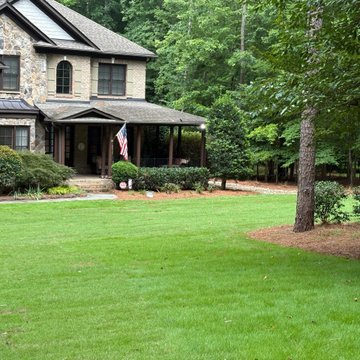
For this complete yard renovation in the Weddington/Matthews area, our team executed a total lawn transformation featuring top-tier Zeon Zoysia sod—a premium, fine-bladed grass variety chosen for its exceptional shade tolerance and carpet-like density. To ensure long-term health and flawless root establishment, we first tackled proper site preparation by excavating and hauling away roughly 7 cubic yards of poor, sandy soil left behind by a previous installer. Once the sub-base was correctly graded, enriched, and prepped, we installed 36 pallets of fresh sod to create a vibrant, seamless lawn.
To guarantee the new lawn would thrive, our technicians carefully calibrated the property's irrigation system, setting zone run-times and coverage angles for optimal moisture distribution without overwatering. The before-and-after contrast highlights the value of proper site prep and high-quality materials, taking a bare, uneven dirt lot and turning it into a plush, golf-course-quality front lawn. At Pine Valley Turf Management, we pride ourselves on delivering detailed turf transformations that elevate property value and leave our clients thrilled with the results.
 Art Fireplace Technology Limited
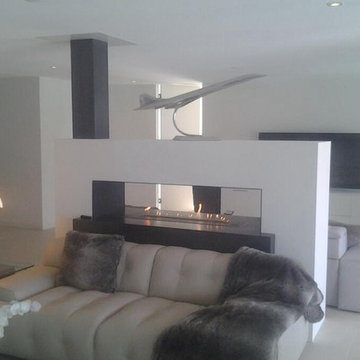
As a prefessional automatic bio ethanol fireplace system leader From China,we are obliged to supply high-tech and high-quality alcohol ethanol burners with remote control.All our burners come ready to use and we assure to you 3 year long warranty tome with 100% satisfactiton after sale services.
 EcoCraft Homes
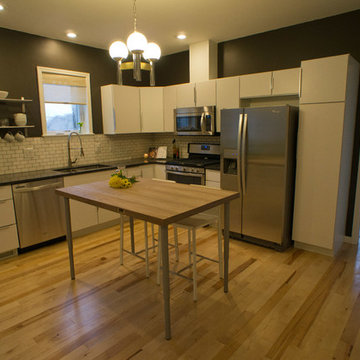
coCraft homes are built with precision manufacturing tools and techniques including: laser leveled jigs, overhead cranes, and elevated framing tables. Skilled craftsmen working in a climate controlled specially designed facility build every one of our homes, providing an unparalleled quality of construction.
All EcoCraft new homes feature an airtight and continuously insulated building enclosure which maximizes energy efficiency, health, comfort, and durability.
Sponsored
Fredericksburg, OH

High Point Cabinets
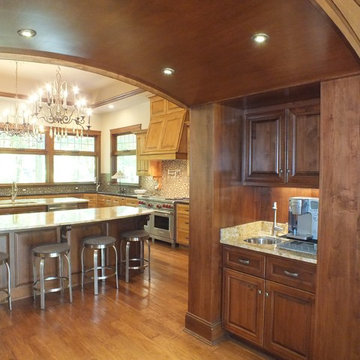
Columbus' Experienced Custom Cabinet Builder | 4x Best of Houzz Winner
 EcoCraft Homes
coCraft homes are built with precision manufacturing tools and techniques including: laser leveled jigs, overhead cranes, and elevated framing tables. Skilled craftsmen working in a climate controlled specially designed facility build every one of our homes, providing an unparalleled quality of construction.
All EcoCraft new homes feature an airtight and continuously insulated building enclosure which maximizes energy efficiency, health, comfort, and durability.

 Brenda Motter Interiors LTD
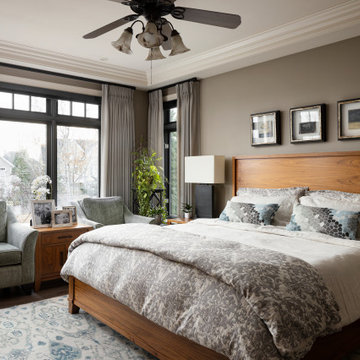
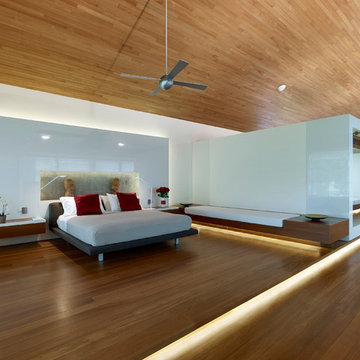
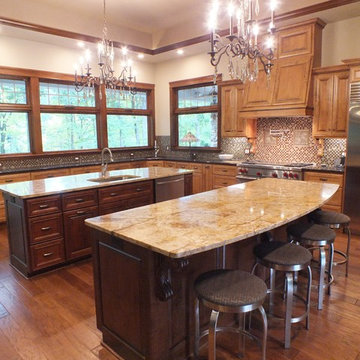
Transitional master medium tone wood floor, brown floor and coffered ceiling bedroom photo in Calgary with brown walls


Sponsored
Fredericksburg, OH
High Point Cabinets
Columbus' Experienced Custom Cabinet Builder | 4x Best of Houzz Winner
 Senergy360, LLC.
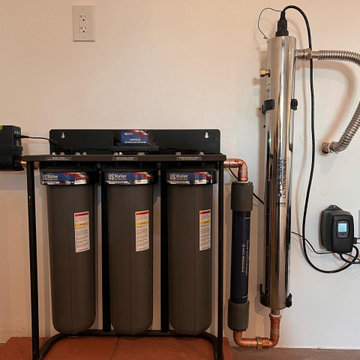
The structured water system installed in this beautiful Jacksonville, Florida, residence represents the pinnacle of health and sustainability technology. This cutting-edge system optimizes the molecular structure of water, ensuring residents experience superior hydration and absorption. Enhancing water quality promotes overall wellness and health, making every sip more beneficial and revitalizing. This revolutionary technology provides the highest quality water and contributes to environmental sustainability by reducing the need for bottled water. The sleek design integrates into the home, reflecting a commitment to innovation, health, and ecological balance.
 uniquehomestays
Unique Home Stays
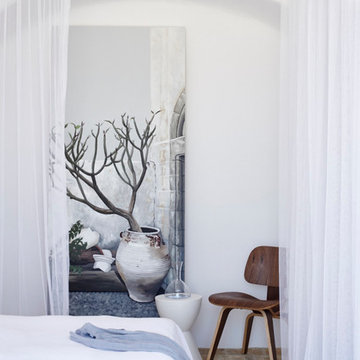
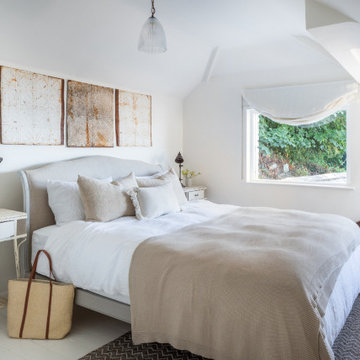
Example of a large beach style master painted wood floor and white floor bedroom design in Devon with white walls
Example of a large beach style master painted wood floor and white floor bedroom design in Devon with white walls
 Øesch Environmental Design
Energy Efficiency:
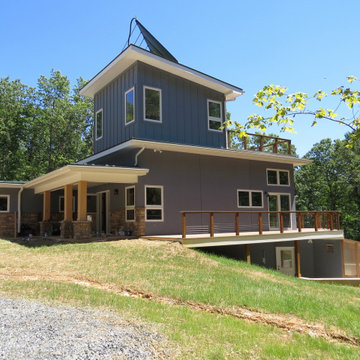
Every effort has been utilized to reduce and minimize energy use through an effective strategy of both passive heating and cooling, as well as state-of-the-art active solar thermal and photovoltaic on site off-grid energy production. Optimal solar orientation with an attached thermal mass food production greenhouse on the Lower Floor enables hot air to be introduced into the house during the winter, and rise via. a thermal chimney “stack effect” and distributed throughout the house. In the summer the same thermal chimney is used to channel hot air to rise up to the Upper Loft vegetated Roof Terrace, where it is exhausted. This condition provides a positive air pressure in the Winter, and a negative pressure in the summer, drawing in cooler outside air from every open window. In addition carefully proportioned roof eave overhangs provide deep passive solar gain and additional day lighting in the winter, and cooling shade in the summer.
Active mechanical systems include solar thermal which produces domestic hot water and is integrated into hydronic radiant heated floors. This is supplemented with a multi-split heatpump, on demand backup hot water, and an ERV, which collectively provide active heating, cooling, dehumidification, and healthful indoor air quality. The entire house and detached Barn are off-grid with a 14.4 kW solar array, whole-house batteries, and backup generator. Further, the home is super insulated and extremely tight with high energy performing windows and doors and LED lighting throughout, and even a high efficiency woodstove.
Integrated Design:
From the beginning and throughout construction, this home demonstrates a close collaboration between the Architect, Contractor, and Owners. Healthful materials and finishes standards, autonomy and energy efficiency, and environmental impact and sustainability were primary goals and stressed throughout. Careful attention was paid to finishes which will require minimal long term maintenance such as the galvalume metal roof (which also provides for rainwater harvesting) and fiber cement siding for longevity.
Resource Efficiency / Conservation:
Resource conservation began with Schematic Design which utilizes a 2 ft. grid of modular components, thereby optimizing construction efficiency and minimizing on site waste. The site was cleared with the trees stockpiled for future lumber harvesting and firewood. The foundation walls are “Ideal Walls” which use less than half the concrete of a conventional poured wall or block, and do not require extensive concrete footings, exterior insulation, or waterproofing. These panels are prefabricated off site and set in only a few days, which further reduces on site impact and construction lead time.
Resiliency:
Respect for climate change and mitigating its impact were primary considerations in the design and selection of materials and systems. The home is sited high on a south facing slope as protection from high water or flood and to optimize both passive and active solar opportunity. With remarkably tight construction and super insulation the interior is buffered from both outdoor heat and cold extremes. The metal roof and fiber cement siding are fireproof and resistant to the impact of high winds. And these materials are specified for minimal maintenance and longevity. Further, the attached Greenhouse and Upper Roof Terrace is landscaped and suitable for a vegetable garden with abundant sunshine, easy to water, and with no need for fencing to keep deer at bay. All this being a notable case study for Regenerative Design.
Innovation:
This home exemplifies Biophilic Design principles to facilitate symbiotic living in harmony with Nature. This incorporates careful attention to natural day lighting, indoor air quality, rainwater catchment and wastewater reclamation, garden food production with vegetated roofs, the home hearth and fire, and connected interaction with the weather and the surrounding natural ecosystems.
Community Impact:
This EcoHome project has already been presented at several Sustainable Building lectures as a model case study for “Green Building”, including USGBC at Brock Environmental Center in Virginia Beach, VA. Plans are underway for an Open House tour for area Architects and students.
 Leslie Goodwin Photography
© Leslie Goodwin Photography
Design + Architecture by Strickland Mateljan, http://smda.ca
Interior Design by One Three Design, http://www.onethreedesign.ca
Sponsored
Fredericksburg, OH
High Point Cabinets
Columbus' Experienced Custom Cabinet Builder | 4x Best of Houzz Winner
 Øesch Environmental Design
Energy Efficiency:
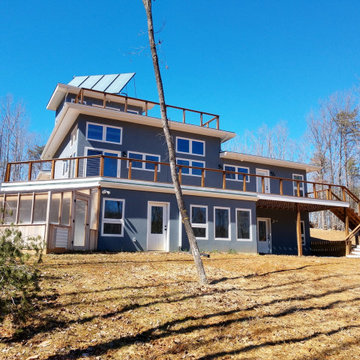
Every effort has been utilized to reduce and minimize energy use through an effective strategy of both passive heating and cooling, as well as state-of-the-art active solar thermal and photovoltaic on site off-grid energy production. Optimal solar orientation with an attached thermal mass food production greenhouse on the Lower Floor enables hot air to be introduced into the house during the winter, and rise via. a thermal chimney “stack effect” and distributed throughout the house. In the summer the same thermal chimney is used to channel hot air to rise up to the Upper Loft vegetated Roof Terrace, where it is exhausted. This condition provides a positive air pressure in the Winter, and a negative pressure in the summer, drawing in cooler outside air from every open window. In addition carefully proportioned roof eave overhangs provide deep passive solar gain and additional day lighting in the winter, and cooling shade in the summer.
Active mechanical systems include solar thermal which produces domestic hot water and is integrated into hydronic radiant heated floors. This is supplemented with a multi-split heatpump, on demand backup hot water, and an ERV, which collectively provide active heating, cooling, dehumidification, and healthful indoor air quality. The entire house and detached Barn are off-grid with a 14.4 kW solar array, whole-house batteries, and backup generator. Further, the home is super insulated and extremely tight with high energy performing windows and doors and LED lighting throughout, and even a high efficiency woodstove.
Integrated Design:
From the beginning and throughout construction, this home demonstrates a close collaboration between the Architect, Contractor, and Owners. Healthful materials and finishes standards, autonomy and energy efficiency, and environmental impact and sustainability were primary goals and stressed throughout. Careful attention was paid to finishes which will require minimal long term maintenance such as the galvalume metal roof (which also provides for rainwater harvesting) and fiber cement siding for longevity.
Resource Efficiency / Conservation:
Resource conservation began with Schematic Design which utilizes a 2 ft. grid of modular components, thereby optimizing construction efficiency and minimizing on site waste. The site was cleared with the trees stockpiled for future lumber harvesting and firewood. The foundation walls are “Ideal Walls” which use less than half the concrete of a conventional poured wall or block, and do not require extensive concrete footings, exterior insulation, or waterproofing. These panels are prefabricated off site and set in only a few days, which further reduces on site impact and construction lead time.
Resiliency:
Respect for climate change and mitigating its impact were primary considerations in the design and selection of materials and systems. The home is sited high on a south facing slope as protection from high water or flood and to optimize both passive and active solar opportunity. With remarkably tight construction and super insulation the interior is buffered from both outdoor heat and cold extremes. The metal roof and fiber cement siding are fireproof and resistant to the impact of high winds. And these materials are specified for minimal maintenance and longevity. Further, the attached Greenhouse and Upper Roof Terrace is landscaped and suitable for a vegetable garden with abundant sunshine, easy to water, and with no need for fencing to keep deer at bay. All this being a notable case study for Regenerative Design.
Innovation:
This home exemplifies Biophilic Design principles to facilitate symbiotic living in harmony with Nature. This incorporates careful attention to natural day lighting, indoor air quality, rainwater catchment and wastewater reclamation, garden food production with vegetated roofs, the home hearth and fire, and connected interaction with the weather and the surrounding natural ecosystems.
Community Impact:
This EcoHome project has already been presented at several Sustainable Building lectures as a model case study for “Green Building”, including USGBC at Brock Environmental Center in Virginia Beach, VA. Plans are underway for an Open House tour for area Architects and students.
 Tom Bassett-Dilley Architect, Ltd.
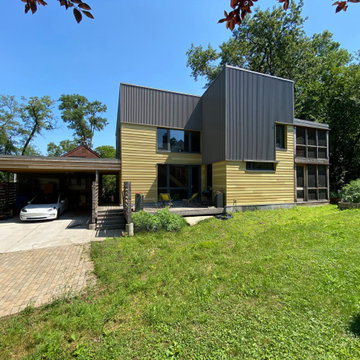
This 1,800s.f. Passive House is designed to harmonize with its peaceful, wooded site. The interior is organized around a large south opening to a courtyard-like patio space; as a backdrop to this opening is a wall featuring walnut from trees harvested on site. As a Passive House, it uses about a tenth the heating energy of a built-to-code home. As a Source Zero house, monitored results show it uses 86% less energy overall including all household energy use and electric car charging. Indoor air quality and occupant health are a primary objective as well, so no-added-formaldehyde panel materials, no-VOC, non-toxic paints, and Greenguard certified sealants, caulks, and adhesives were used along with a continuous demand-controlled ventilation system to provide superior air quality.
 RMW Team
Designing a Health-Focused Home Living Space
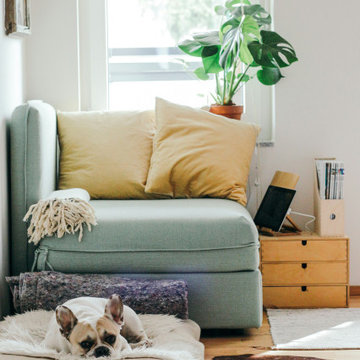
Designing a health-focused home living space is more than just arranging furniture and choosing colors; it's about creating an environment that promotes physical well-being, mental clarity, and overall wellness. As we spend more time at home, especially in the wake of recent global shifts towards remote work and lifestyle changes, the importance of our living spaces in supporting our health has never been greater. Here are some key considerations when designing a health-oriented home.
Natural Light and Air Quality
Natural light plays a crucial role in our health, affecting everything from our sleep patterns to our mood. When designing your home, prioritize spaces that allow for ample sunlight. Large windows, skylights, and strategically placed mirrors can help maximize natural light. In rooms where natural light is limited, consider using full-spectrum lighting that mimics daylight to support your circadian rhythms.
Air quality is another critical factor in a health-focused home. Indoor air can be more polluted than outdoor air due to various factors like off-gassing from furniture, household cleaners, and poor ventilation. Incorporating plants that are known to purify air, such as spider plants, snake plants, and peace lilies, can help improve indoor air quality. Additionally, ensure your home is well-ventilated by using exhaust fans in kitchens and bathrooms, and consider investing in air purifiers, especially if you live in an area with high pollution levels.
Ergonomic Furniture and Movement Spaces
The furniture you choose and how you arrange it can significantly impact your physical health. Ergonomic furniture, especially in workspaces, can help prevent strain and injury. Adjustable desks, supportive chairs, and monitor stands can contribute to better posture and reduced risk of musculoskeletal issues.
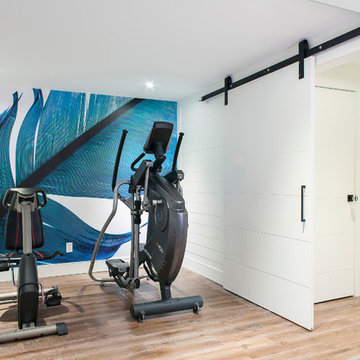
Incorporating spaces that encourage movement is also important. For example, a small home gym or a yoga corner can serve as a dedicated area for physical activity. Even in smaller spaces, you can create movement opportunities by ensuring there’s enough room to stretch or do simple exercises. Open floor plans or multipurpose spaces that can be easily reconfigured for different activities can help integrate movement into daily life.
Mindful and Minimalist Design
A clutter-free environment is conducive to mental clarity and relaxation. Mindful and minimalist design principles focus on creating spaces that are both functional and aesthetically pleasing without being overwhelming. Start by decluttering and organizing your belongings, keeping only what you need and what brings you joy.
Choose furniture and decor that are simple, natural, and calming. Materials like wood, stone, and natural fibers not only add a touch of nature to your home but also tend to have fewer chemicals than synthetic materials. Neutral color palettes with accents of soothing colors like blues and greens can help create a tranquil atmosphere.
Sleep and Restful Areas
A significant part of health-focused design is creating spaces that promote restful sleep. Your bedroom should be a sanctuary that encourages relaxation. Invest in a good-quality mattress and pillows that support your body. Blackout curtains, soundproofing, and maintaining a cool room temperature can also contribute to better sleep quality.
In addition to the bedroom, consider creating other restful areas in your home where you can unwind, meditate, or practice mindfulness. A cozy reading nook, a meditation space, or even a comfortable chair by a window can serve as your personal retreat.
Incorporating Nature and Green Spaces
Finally, integrating elements of nature into your living space can have a profound impact on your health. Biophilic design, which connects indoor environments with nature, has been shown to reduce stress and increase feelings of well-being. This can be as simple as adding more houseplants, incorporating natural materials, or even installing a small indoor water feature.
If you have outdoor space, create a garden or a patio where you can relax and enjoy fresh air. Even a small balcony can be transformed into a green oasis with the right plants and seating.
By thoughtfully designing your living space with health in mind, you create an environment that not only looks beautiful but also supports your physical and mental well-being.
9