
Search results for "Running efficiently" in Home Design Ideas
 David Coleman / Architecture
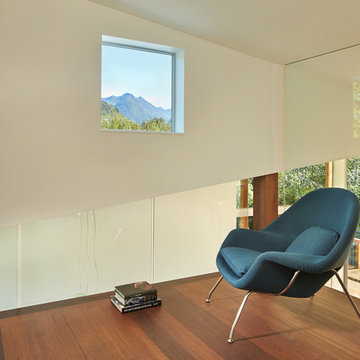
Sleeping loft with framed view of mountain peak beyond - photo: Ben Benschneider
Example of a trendy bedroom design in Seattle
Example of a trendy bedroom design in Seattle

 DIGSdesign
mountain road view. dogtrot design. black on black.
Minimalist home design photo in Charlotte
Minimalist home design photo in Charlotte
 David Coleman / Architecture
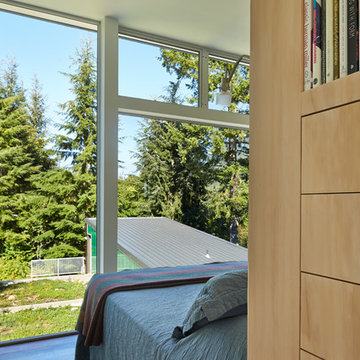
The sleeping loft looks out over the terraced garden to surrounding trees - photo: Ben Benschneider
Bedroom - contemporary bedroom idea in Seattle
Bedroom - contemporary bedroom idea in Seattle
Find the right local pro for your project

 Mark DeJong Builders
“The River District Cottage”, a neglected and run down 1930s home. Despite its unique challenges, our team created a beautifully renewed home and preserved its historic River District charm. As we studied the design of the cottage, we realized the need to start from the street inward, updating all of the utilities and mechanical systems in addition to preserving the original personality of this home. The interior traffic flow was considered, resulting in the decision to create additional square footage, as well as reorganize the existing space. Once the floor plan was set, the design details had to be worked through. A lot of attention was given to the exterior as well as the interior. We did not want to simply discard the old, but restore and complement it wherever possible.
The home had a hint of the classic Florida Art Deco feel and we continued that theme, from custom baseboard and casing, clean line Italian cabinetry, and the strategic use of glass tile. In order to match the existing wood floors, heart pine flooring was brought in from Georgia, resulting in a richness flowing throughout the home. Energy efficient Kitchen Aid and Bosch appliances in the kitchen were set off by the stylish granite tops. Careful attention was given to delivering efficient air quality throughout this renovated home. In keeping consistent with the original design, plenty of energy efficient windows and doors were used to allow the blending of indoor and outside space, making the home light and airy feeling.
We believe the unique challenges of giving new life to this classic home have been met, including “art walls” to encourage a new set of memories for the owner of this beautifully restored home.



 Shenton Architects LLP
Located in the Midtown East neighborhood of Turtle Bay, this project involved combining two separate units to create a duplex three bedroom apartment.
The upper unit required a gut renovation to provide a new Master Bedroom suite, including the replacement of an existing Kitchen with a Master Bathroom, remodeling a second bathroom, and adding new closets and cabinetry throughout. An opening was made in the steel floor structure between the units to install a new stair. The lower unit had been renovated recently and only needed work in the Living/Dining area to accommodate the new staircase.
Given the long and narrow proportion of the apartment footprint, it was important that the stair be spatially efficient while creating a focal element to unify the apartment. The stair structure takes the concept of a spine beam and splits it into two thin steel plates, which support horizontal plates recessed into the underside of the treads. The wall adjacent to the stair was clad with vertical wood slats to physically connect the two levels and define a double height space.
Whitewashed oak flooring runs through both floors, with solid white oak for the stair treads and window countertops. The blackened steel stair structure contrasts with white satin lacquer finishes to the slat wall and built-in cabinetry. On the upper floor, full height electrolytic glass panels bring natural light into the stair hall from the Master Bedroom, while providing privacy when needed.
archphoto.com

 Hutch Design Build
After — the heart of the remodel. A custom walnut hood surround, green glazed herringbone backsplash, and a warm walnut island take the place of heavy cherry cabinetry.


 Shimrit Mishan_Abramovich
Shai Epstein
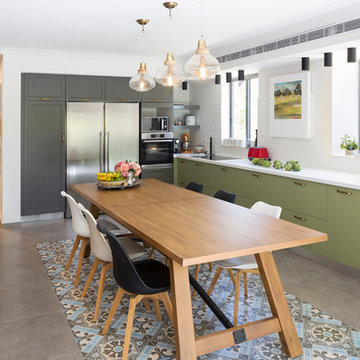
Inspiration for a farmhouse l-shaped kitchen remodel in Other with flat-panel cabinets, green cabinets, white backsplash, subway tile backsplash and an island
Inspiration for a farmhouse l-shaped kitchen remodel in Other with flat-panel cabinets, green cabinets, white backsplash, subway tile backsplash and an island
 Embers Fireplaces and Grills
FullView Modern
Perfectly refined, thoroughly Mendota
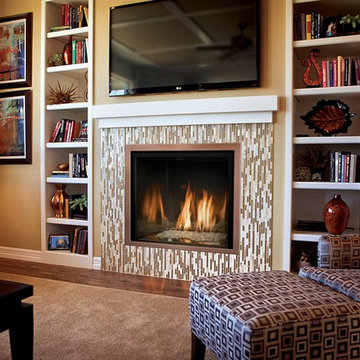
Designed for those who are ready for the next level of fireplace enjoyment, the Mendota Modern transcends traditional fireplace design and elevates it to a new level of elegance and sophistication. The fact that the passion and beauty is fueled by efficient Mendota BurnGreen™ technology adds to its refined, contemporary appeal.
FullView Modern
Blending contemporary elements with the primal, instinctive allure of fire, this simple yet stunning fireplace makes a confident statement in any room.
An elegant, contemporary fireplace that’s smarter, too
Flames leap from a base of natural river rock or glass fire stones
A choice of interior linings that intensify the nuances of the fire
Combines today’s high-efficiency green technology with century-old Mendota craftsmanship
Easily customized with a choice of fronts, doors, fire base and interior linings
Remote controlled variable flames: 18,000 to 29,000 BTUH


 Chandler Construction
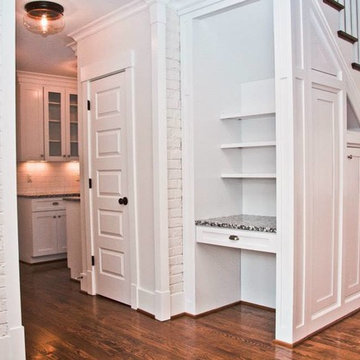
Custom pantry cabinets and the desk both beneath the stairs allowed for efficient use of normally dead space.
Mid-sized arts and crafts wooden straight staircase photo in Richmond with wooden risers
Mid-sized arts and crafts wooden straight staircase photo in Richmond with wooden risers
 Art and Cement Construction LLC
Photos By Dave Roe
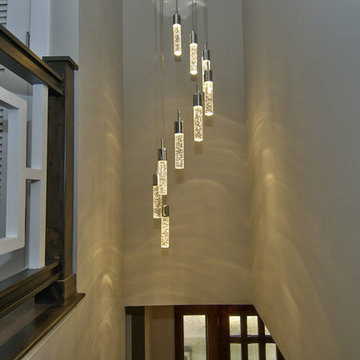
Mid-sized transitional wooden straight staircase photo in DC Metro with painted risers
Mid-sized transitional wooden straight staircase photo in DC Metro with painted risers
 Meritage Homes
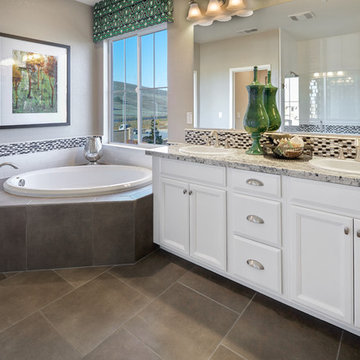
Cabinet Manufacturer: Timberlake
Color: Painted Linen
Granite countertops: Arizona Tile, Species: white ice, square edge
Tab deck and floor tile Manu.: Emser
Pamplona, Color: Fidelio, 20”x20” running bond, grout: natural gray
Accent tile: Emser
Confetti, Color: Gelido Blend, 12” oval mesh, grout: natural gray
Classica, color: white, 3”x6” running bond, grout: white dove
Plumbing fixtures: Moen
Eva, satin nickel
Drawer Pulls & Door Knobs Manufacturer: Timberlake
Pulls – Cup 3105SN, Satin Nickel
Door Knobs – Toggle 3239SN, Satin Nickel
Wall Paint Manufacturer: Frazee
Color: Glutted CL2853M
Trim Paint Manufacturer: Frazee
Color: Forgetmeknot CLW1033W
Sponsored
Columbus, OH

Trish Takacs Design
Award Winning & Highly Skilled Kitchen & Bath Designer in Columbus

 safe ZOnea
Every year, the same thing happens. The first real snowfall arrives, demand for de-icing materials spikes overnight, and the businesses that waited too long find themselves scrambling for supply at the worst possible moment. Facility managers, property owners, contractors, and municipalities all depend on a steady supply of salt and ice melt to keep their properties safe and operational through winter. The ones who plan ahead sail through. The ones who don't pay more, wait longer, and take on real risk.
Sourcing de-icing materials well is not complicated, but it does require thinking ahead and understanding the options. The choices you make about what to buy, how to buy it, and who to buy it from have a direct effect on your costs, your reliability, and your ability to keep people safe when conditions turn dangerous. This article lays out what matters.
Why Your Choice of Supplier Matters More Than You Think
It is easy to treat de-icing material as a commodity, something you grab whenever you need it without much thought about where it comes from. That works fine until the moment it doesn't, usually in the middle of a storm when everyone needs supply at once and the casual sources have run dry. At that point, the relationships you built before the season become the difference between staying stocked and being stuck.
Reliable supply is the whole game in winter operations. A property that runs out of ice melt during a storm faces safety hazards, liability exposure, and disruption, none of which can wait for a back-ordered shipment. This is why establishing relationships with dependable rock salt suppliers before the season starts is one of the smartest moves a facility manager or contractor can make. It locks in supply, often locks in better pricing, and removes a major source of mid-winter stress.
The lesson here is to treat sourcing as a planning decision rather than a last-minute errand. The businesses that come through winter smoothly are almost always the ones that secured their supply chain early, chose suppliers who could actually deliver when it counted, and never had to gamble on finding material during a shortage. Reliability bought in advance is far cheaper than scarcity paid for in a crisis.
Bagged or Bulk: Matching the Material to the Job
One of the first practical decisions is whether to buy de-icing material in bags or in bulk, and the right answer depends entirely on the operation. Each format has clear advantages, and many operations end up using both for different purposes.
Bagged material offers convenience, control, and easy storage. It is simple to handle, easy to distribute to different locations or crews, straightforward to store without special equipment, and convenient for spot application by hand. It suits smaller properties, businesses without bulk storage, and situations where portion control and tidiness matter. Bulk material, on the other hand, tends to make sense for large operations that go through high volumes, where buying in quantity lowers the per-unit cost and the operation has the equipment and space to store and handle it. The tradeoff is between the convenience and flexibility of bags and the volume economics of bulk.
For many operations, the right approach is a mix: bulk for the high-volume core of the work and bags for flexibility, spot treatment, and locations where bulk handling is impractical. The key is to match the format to how the material will actually be stored, moved, and applied, rather than defaulting to one or the other out of habit. Thinking this through in advance avoids both the waste of over-buying bulk you can't handle and the expense of relying entirely on bags for a large operation.
Rock Salt Is Not Your Only Option
Rock salt, or sodium chloride, is the workhorse of winter de-icing for good reason. It is effective, widely available, and cost-efficient, which makes it the default choice for most operations most of the time. But it has limits, and understanding the alternatives helps you choose the right material for the conditions you actually face.
The most important limitation is temperature. Rock salt becomes less effective as temperatures drop, and in genuinely cold conditions it can struggle to do the job at all. This is where alternatives come in. Calcium chloride, for instance, works at much lower temperatures than rock salt and acts quickly, which makes it valuable when conditions are severe or when fast melting matters. Operations that face hard freezes or need dependable performance in extreme cold often keep calcium chloride for sale on hand for exactly those situations, using it alongside rock salt rather than instead of it.
The practical approach is to understand the conditions your property faces and stock accordingly. For many operations, rock salt handles the bulk of the work while a faster, colder-rated material like calcium chloride covers the extreme days when ordinary salt falls short. Matching the material to the temperature and the urgency of the situation is what separates an operation that stays ahead of winter from one that is constantly reacting to it.
Securing Your Supply Before the Season
Knowing what to buy is only half the equation. The other half is making sure you can actually get it when you need it, which means securing your supply before winter arrives rather than after it has already started. Timing is one of the most underrated factors in winter operations.
The logic is simple. Demand for de-icing materials is highly seasonal and spikes sharply during storms, when everyone needs supply simultaneously. Prices and availability both move against the buyer at exactly those moments. By contrast, planning ahead, estimating your needs and arranging supply before the season, puts you in a far stronger position. Working with established rock salt suppliers ahead of time means your material is accounted for before the rush, often at better pricing and with the confidence that it will be there when the first storm hits.
This kind of planning also lets you think clearly rather than react under pressure. You can estimate your seasonal needs based on your property and past winters, decide on the right mix of materials and formats, and arrange storage in advance. Operations that do this consistently spend less, worry less, and never find themselves making frantic calls during a storm. The effort of planning ahead is modest, and the payoff in reliability and cost savings is substantial.
Storing and Handling What You Buy
Securing supply is not much use if the material degrades before you can use it, which makes proper storage and handling an important and often overlooked part of the equation. De-icing materials are sensitive to moisture, and poor storage can turn a good supply into a clumped, hardened mess that is difficult to apply.
The fundamentals are straightforward. Keep material dry and protected from moisture, since salt and ice melt readily absorb water and can harden if exposed. Store it in a way that suits the format, whether that means a proper bulk storage area or a dry space for stacked bags. Keep it accessible, so crews can get to it quickly when a storm hits and time is short. And handle it with the right equipment for the format and volume, which protects both the material and the people working with it. None of this is complicated, but neglecting it can undermine even a well-planned supply.
Good storage practices protect the investment you made in securing supply early. There is little point in arranging your materials ahead of the season only to have them degrade before use. Treating storage and handling as part of the overall plan, rather than an afterthought, ensures that the material you secured is actually usable when the moment comes. It is the final link in a supply chain built to perform under winter conditions.
Estimating How Much You Actually Need
One question trips up operations of every size: how much de-icing material to buy. Order too little and you risk running short during a storm. Order too much and you tie up money and storage space in material you may not use. Getting the estimate reasonably right is a meaningful part of sourcing well.
Several factors shape the answer. The size and type of the areas you treat, sidewalks, lots, entrances, and drive lanes, set the baseline for how much material each application consumes. The local climate matters too, since colder regions and those with frequent snowfall go through far more material than milder ones. Application frequency depends on how often storms hit and how quickly surfaces need to be cleared, which varies with the kind of property and the expectations of the people who use it. And the type of material plays a role, since different products are applied at different rates.
Past experience is often the best guide. Operations that track what they used in previous winters, adjusted for the size of the property and the severity of the season, can estimate their needs with reasonable confidence. For newer operations without that history, it helps to plan conservatively and to work with a supplier who can replenish stock reliably, so that a low estimate does not turn into a mid-storm shortage.
The goal is not perfect precision but a sound, slightly cautious estimate paired with a dependable supply relationship. That combination lets an operation keep enough material on hand to handle the season without over-committing to volume it cannot store or use. Thinking this through before winter, rather than guessing during it, is one more way that planning ahead pays off when the snow starts to fall.
The Bottom Line
Sourcing de-icing materials well comes down to a few straightforward principles: plan ahead, choose reliable suppliers before the season, match your materials and formats to your actual needs and conditions, and store what you buy properly. The operations that follow these principles move through winter with confidence, while those that improvise pay more and take on needless risk.
Winter is predictable in one respect: it arrives every year, and demand for de-icing material spikes the moment it does. The businesses that prepare for that reality, rather than being surprised by it, are the ones that keep their properties safe, their costs controlled, and their operations running no matter what the season throws at them. A little foresight before the first snowfall pays off through every storm that follows.

 Zola European Windows
Essential, contemporary, and inviting defines this extremely energy efficient, Energy Star certified, Passive House design-inspired home in the Pacific Northwest. Designed for an active family of four, the one-story 3 bedroom, 2 bath floor plan offers tasteful aging in place features, a strong sense of privacy, and a low profile that doesn’t impinge on the natural landscape. This house will heat itself in the dead of winter with less energy than it takes to run a hair dryer, and be sensual to live in while it does it. The forms throughout the home are simple and neutral, allowing for ample natural light, rich warm materials, and of course, room for the Guinea pigs makes this a great example of artful architecture applied to a genuine family lifestyle.
This ultra energy efficient home relies on extremely high levels of insulation, air-tight detailing and construction, and the implementation of high performance, custom made European windows and doors by Zola Windows. Zola’s ThermoPlus Clad line, which boasts R-11 triple glazing and is thermally broken with a layer of patented German Purenit®, was selected for the project. Natural daylight enters both from the tilt & turn and fixed windows in the living and dining areas, and through the terrace door that leads seamlessly outside to the natural landscape.
Project Designed & Built by: artisansgroup
Certifications: Energy Star & Built Green Lvl 4
Photography: Art Gray of Art Gray Photography

 Cusimano Architect
Example of a large transitional formal gray floor, coffered ceiling, wood ceiling and brick wall living room design in Houston with red walls, a standard fireplace, a concrete fireplace and no tv
 David Coleman / Architecture
View of the monumental exterior stair leading to the southeastern porch - photo: Ben Benschneider
Trendy exterior home photo in Seattle
Trendy exterior home photo in Seattle
Sponsored
Columbus, OH
Trish Takacs Design
Award Winning & Highly Skilled Kitchen & Bath Designer in Columbus
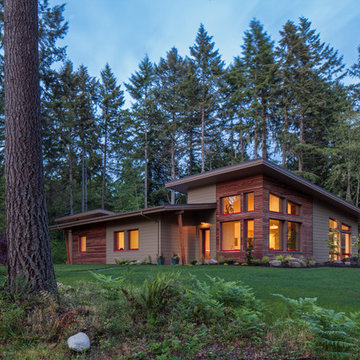
 The Artisans Group, Inc.
Essential, contemporary, and inviting defines this extremely energy efficient, Energy Star certified, Passive House design-inspired home in the Pacific Northwest. Designed for an active family of four, the one-story 3 bedroom, 2 bath floor plan offers tasteful aging in place features, a strong sense of privacy for both kids and parents, and a low profile that doesn’t impinge on the natural landscape. This house will heat itself in the dead of winter with less energy than it takes to run a hair dryer, and be sensual to live in while it does it. The forms throughout the home are simple and neutral, allowing for ample natural light, rich warm materials, and of course, room for the Guinea pigs makes this a great example of artful architecture applied to a genuine family lifestyle.
This ultra energy efficient home relies on extremely high levels of insulation, air-tight detailing and construction, and the implementation of high performance, custom made European windows and doors by Zola Windows. Zola’s ThermoPlus Clad line, which boasts R-11 triple glazing and is thermally broken with a layer of patented German Purenit®, was selected for the project. Natural daylight enters both from the tilt & turn and fixed windows in the living and dining areas, and through the terrace door that leads seamlessly outside to the natural landscape.
Designed and constructed by The Artisans Group out of Olympia, Washington - a small but mighty firm co-owned by Randy Foster and Tessa Smith. Fun, funky and innovative, The Artisans Group has designed and built more Passive Houses than any other firm on the West Coast. Known for their striking, award winning, and sensible work, they provide solutions for projects of any size and budget.
Photography: Art Gray of Art Gray Photography

 EcoArmor Coatings
We applied thermal corkshield to this 1960's brick ranch home to give them an updated modern look plus add an insulating layer since they had no insulation in the walls. Now they have lower heating aned cooling bills and their house looks great.

 JRP Design & Remodel
Opting for an efficient design that allowed for openness and functionality while still reflecting spa-like and sustainable choices, these homeowners created a soothing primary retreat within a small space.
Photographer: Clarified Studios
17