
Search results for "Slow result" in Home Design Ideas
 Walczak Design And Build
What once felt dark, segmented, and inefficient is now a bright, connected, and highly functional first floor designed for real family living.
Our clients, Terry and Lou, came to us with a home that simply wasn’t keeping up with their growing family. The kitchen was cramped, with tight working lanes and limited light. The laundry room doubled as a powder room—yet functioned poorly as both. Sightlines between spaces were cut off, making it difficult to stay connected to their young children throughout the day. Across the board, the home felt dated and disconnected.
Through thoughtful planning and strategic structural changes, we reimagined the entire first floor to better support how this family truly lives.
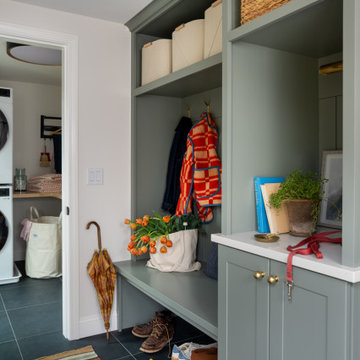
We began by redefining the entry experience—creating a true foyer complete with a dedicated drop zone and custom cubby storage. This space now acts as a natural landing point, bringing order and intention to everyday comings and goings.
Adjacent to the new entry, we relocated and redesigned the laundry room. Now positioned exactly where it needs to be, it functions as a hardworking utility space with countertops for folding, a utility sink for immediate stain treatment, and the ability to be closed off—keeping daily life contained when needed.
Separating the previous shared function allowed us to carve out a distinct, personality-filled powder room. Wrapped in a bold wave-patterned wallpaper and grounded by a custom reeded oak vanity with warm brass accents, this space delivers a moment of delight and individuality within the home.
The kitchen transformation is where the impact is felt most deeply.
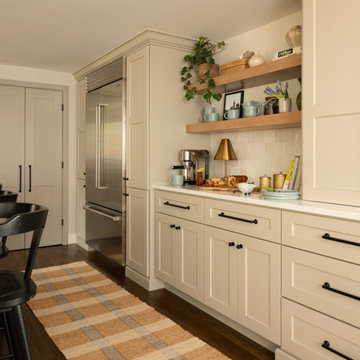
What was once a dark, restrictive layout has been opened into a spacious, highly efficient U-shaped kitchen with generous clearances and an oversized island for gathering. A thoughtful mix of painted cabinetry and rift white oak introduces warmth and balance, while the custom reeded hood becomes a sculptural focal point. Open shelving, integrated pantry storage, and layered lighting ensure the space is as functional as it is beautiful.
Beyond aesthetics, the redesign prioritizes flow—both in movement and in connection. Sightlines between the kitchen, dining, and living areas were intentionally opened, allowing for ease of interaction and visibility throughout the main living spaces.
To unify the home, existing hardwood floors were refinished and extended, creating continuity and a seamless visual experience from one space to the next.
The result is a home that feels lighter, more open, and deeply aligned with how this family lives day to day—designed not just to look beautiful, but to support everything from busy mornings to slow, shared evenings.
 Walczak Design And Build
What once felt dark, segmented, and inefficient is now a bright, connected, and highly functional first floor designed for real family living.
Our clients, Terry and Lou, came to us with a home that simply wasn’t keeping up with their growing family. The kitchen was cramped, with tight working lanes and limited light. The laundry room doubled as a powder room—yet functioned poorly as both. Sightlines between spaces were cut off, making it difficult to stay connected to their young children throughout the day. Across the board, the home felt dated and disconnected.
Through thoughtful planning and strategic structural changes, we reimagined the entire first floor to better support how this family truly lives.
We began by redefining the entry experience—creating a true foyer complete with a dedicated drop zone and custom cubby storage. This space now acts as a natural landing point, bringing order and intention to everyday comings and goings.
Adjacent to the new entry, we relocated and redesigned the laundry room. Now positioned exactly where it needs to be, it functions as a hardworking utility space with countertops for folding, a utility sink for immediate stain treatment, and the ability to be closed off—keeping daily life contained when needed.
Separating the previous shared function allowed us to carve out a distinct, personality-filled powder room. Wrapped in a bold wave-patterned wallpaper and grounded by a custom reeded oak vanity with warm brass accents, this space delivers a moment of delight and individuality within the home.
The kitchen transformation is where the impact is felt most deeply.
What was once a dark, restrictive layout has been opened into a spacious, highly efficient U-shaped kitchen with generous clearances and an oversized island for gathering. A thoughtful mix of painted cabinetry and rift white oak introduces warmth and balance, while the custom reeded hood becomes a sculptural focal point. Open shelving, integrated pantry storage, and layered lighting ensure the space is as functional as it is beautiful.
Beyond aesthetics, the redesign prioritizes flow—both in movement and in connection. Sightlines between the kitchen, dining, and living areas were intentionally opened, allowing for ease of interaction and visibility throughout the main living spaces.
To unify the home, existing hardwood floors were refinished and extended, creating continuity and a seamless visual experience from one space to the next.
The result is a home that feels lighter, more open, and deeply aligned with how this family lives day to day—designed not just to look beautiful, but to support everything from busy mornings to slow, shared evenings.
 Whitespace
This 3-bedroom residence in Bangalore was designed for a family of three who wanted a home rooted in Indian warmth, craft and character, while still feeling refined, functional and contemporary.
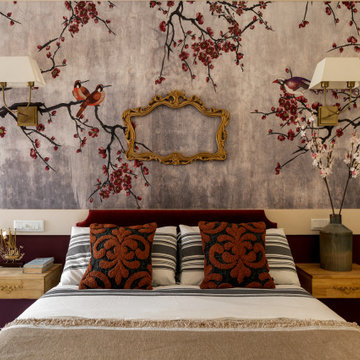
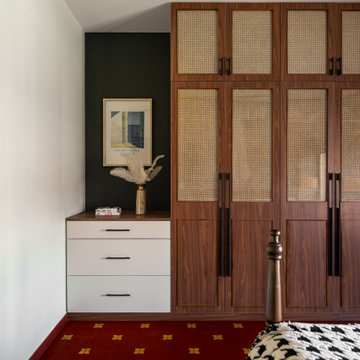
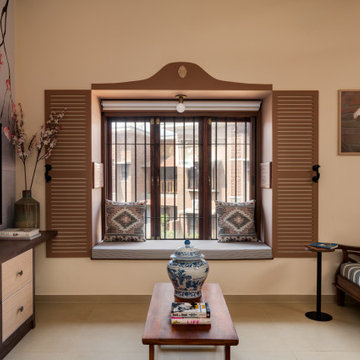
The design language draws deeply from traditional Indian aesthetics, expressed through earthy materials, handcrafted details and a rich but calming palette. Raw brick, natural wood, stone, cane, rattan, textured fabrics and earthy hues come together to create a home that feels grounded, tactile and lived-in. Traditional furniture forms are thoughtfully balanced with contemporary lines, giving the space a timeless yet fresh identity.
A strong emphasis was placed on craft. Every element in the home was 100% customised and handcrafted on site by skilled carpenters, allowing each room to carry a distinct sense of personality. Antique wooden pillars and curated props sourced from Kerala add depth, nostalgia and authenticity, while handmade lighting elements bring warmth and artisanal charm.
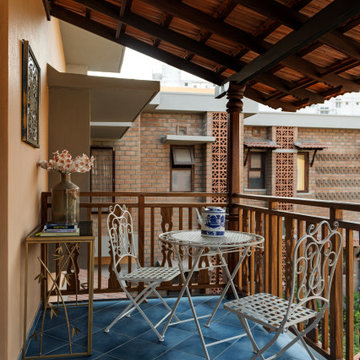
Biophilic-inspired wallpapers, natural textures and carefully layered materials connect the interiors to nature. Athangudi tiles have been used in key areas to introduce colour, pattern and a sense of regional heritage, creating memorable design moments without overwhelming the overall calmness of the home.
The result is a deeply personal residence that celebrates Indian craftsmanship, natural materials and slow design — a home that is traditional in spirit, contemporary in comfort, and entirely bespoke in execution.
Find the right local pro for your project
 Tile Doctor Ltd
Not too long ago, I was called up to the harbour town and seaside resort of Ilfracombe, situated on the North Devon coast. Ilfracombe is a historic area within Devon, with the Celts having first settled on its hilly plains during the Iron Age.
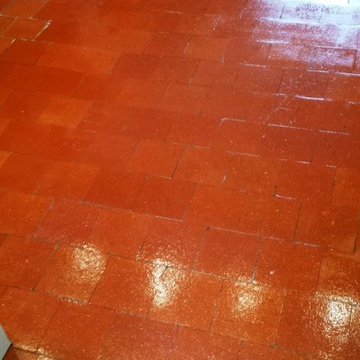
My client asked me to take a look at a Quarry tiled floor which was in need of a serious amount of cleaning. This largely due to the fact that there were dozens of layers of old sealer on the floor which had been left untouched from many years previously, as well as a significant build-up of general dirt and muck.
In order to give this floor a thorough cleaning, I needed to use a strong combination of products, namely NanoTech HBU Remover mixed with Tile Doctor Remove & Go. Nanotech HBU is a heavy build-up remover which uses nano-sized particles to penetrate below tough stains, and lift them out of the stone, whilst Remove & Go is a multi-purpose stripper that provided additional help in removing the many layers of sealer left on the floor. I applied the solution to the floor and left it to dwell for 40 minutes, before using a Polybrush to work it into the Quarry tiles.
Since the floor really was in dire need of a deep clean after years of neglect, I also used a black buffing pad attached to a buffing machine, as well as a steam machine to make sure I removed as much of the old sealer and dirt as possible. This was slow and painstaking work, but it was worth it to get the Quarry tiles back to looking their best again. Once this was complete, I rinsed the floor several times before leaving it for a few days to dry before sealing.
On my return visit, the floor was dry enough to commence sealing. It was important that the floor was dry and any excess moisture had evaporated because it has the potential to compromise the sealer as it cures leading to unexpected results. My sealer of choice was Tile Doctor Seal & Go, a sealer which is suitable for use on internal unsealed, porous surfaces including textured Quarry, Slate, Victorian tile and several others. I carefully applied several coats allowing each coat to dry before applying the next to provide a subtle low-sheen finish that will help protect the surface from stains in the future.
The results were excellent, especially considering that the floor had evidently not been treated to a proper clean for many years.
 Tile Doctor Ltd
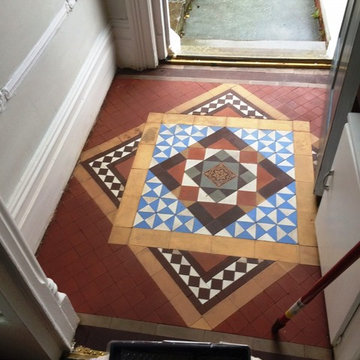
I was asked to take a look at restoring a Victorian Tiled Floor in the Cumbrian town of Barrow in Furness where the floor had been covered in black bitumen; the bitumen was so thick it was difficult to gauge the condition of the floor underneath. I did a test clean which came out well but I had to explain there could be tile damage and other hidden problems so very difficult to quote for however we agreed a date and price and I came back a couple of weeks later to do the job.
Removing Bitumen form Victorian Tiles
Removing the bitumen from the floor without damaging the tiles underneath was a slow process involving spraying on a strong solution of Tile Doctor Remove and Go, letting it soak in, applying steam and then carefully scraping off the bitumen. The floor was treated in this manner a small area at a time and a wet vacuum was used to rinse and remove the resulting slurry. This process took up the whole day and was completely successful at removing the bitumen, before finishing I gave the floor a thorough rinse with clean water and used the wet vacuum to dry the floor was much as possible before leaving.
Sealing a Victorian Tiled Floor
I had used a lot of water cleaning the floor so I agreed with the owner to leave the floor for a few days before sealing it so it could thoroughly dry out. When I did return I used Tile Doctor Colour Grow to seal the tiles, the customer had wanted a satin finish but having weighed up the options including the fact that there was a damp problem in the house I felt Colour Grow which is a penetrating and breathable sealer would have the best longevity.
The customers were very happy with the results and before leaving we discussed aftercare cleaning, with sealed surfaces you have to be careful not to use acidic products as this can reduce the life of the sealer.
 Whitespace
This 3-bedroom residence in Bangalore was designed for a family of three who wanted a home rooted in Indian warmth, craft and character, while still feeling refined, functional and contemporary.
The design language draws deeply from traditional Indian aesthetics, expressed through earthy materials, handcrafted details and a rich but calming palette. Raw brick, natural wood, stone, cane, rattan, textured fabrics and earthy hues come together to create a home that feels grounded, tactile and lived-in. Traditional furniture forms are thoughtfully balanced with contemporary lines, giving the space a timeless yet fresh identity.
A strong emphasis was placed on craft. Every element in the home was 100% customised and handcrafted on site by skilled carpenters, allowing each room to carry a distinct sense of personality. Antique wooden pillars and curated props sourced from Kerala add depth, nostalgia and authenticity, while handmade lighting elements bring warmth and artisanal charm.
Biophilic-inspired wallpapers, natural textures and carefully layered materials connect the interiors to nature. Athangudi tiles have been used in key areas to introduce colour, pattern and a sense of regional heritage, creating memorable design moments without overwhelming the overall calmness of the home.
The result is a deeply personal residence that celebrates Indian craftsmanship, natural materials and slow design — a home that is traditional in spirit, contemporary in comfort, and entirely bespoke in execution.
 Whitespace
This 3-bedroom residence in Bangalore was designed for a family of three who wanted a home rooted in Indian warmth, craft and character, while still feeling refined, functional and contemporary.
The design language draws deeply from traditional Indian aesthetics, expressed through earthy materials, handcrafted details and a rich but calming palette. Raw brick, natural wood, stone, cane, rattan, textured fabrics and earthy hues come together to create a home that feels grounded, tactile and lived-in. Traditional furniture forms are thoughtfully balanced with contemporary lines, giving the space a timeless yet fresh identity.
A strong emphasis was placed on craft. Every element in the home was 100% customised and handcrafted on site by skilled carpenters, allowing each room to carry a distinct sense of personality. Antique wooden pillars and curated props sourced from Kerala add depth, nostalgia and authenticity, while handmade lighting elements bring warmth and artisanal charm.
Biophilic-inspired wallpapers, natural textures and carefully layered materials connect the interiors to nature. Athangudi tiles have been used in key areas to introduce colour, pattern and a sense of regional heritage, creating memorable design moments without overwhelming the overall calmness of the home.
The result is a deeply personal residence that celebrates Indian craftsmanship, natural materials and slow design — a home that is traditional in spirit, contemporary in comfort, and entirely bespoke in execution.
 Whitespace
This 3-bedroom residence in Bangalore was designed for a family of three who wanted a home rooted in Indian warmth, craft and character, while still feeling refined, functional and contemporary.
The design language draws deeply from traditional Indian aesthetics, expressed through earthy materials, handcrafted details and a rich but calming palette. Raw brick, natural wood, stone, cane, rattan, textured fabrics and earthy hues come together to create a home that feels grounded, tactile and lived-in. Traditional furniture forms are thoughtfully balanced with contemporary lines, giving the space a timeless yet fresh identity.
A strong emphasis was placed on craft. Every element in the home was 100% customised and handcrafted on site by skilled carpenters, allowing each room to carry a distinct sense of personality. Antique wooden pillars and curated props sourced from Kerala add depth, nostalgia and authenticity, while handmade lighting elements bring warmth and artisanal charm.
Biophilic-inspired wallpapers, natural textures and carefully layered materials connect the interiors to nature. Athangudi tiles have been used in key areas to introduce colour, pattern and a sense of regional heritage, creating memorable design moments without overwhelming the overall calmness of the home.
The result is a deeply personal residence that celebrates Indian craftsmanship, natural materials and slow design — a home that is traditional in spirit, contemporary in comfort, and entirely bespoke in execution.
 Whitespace
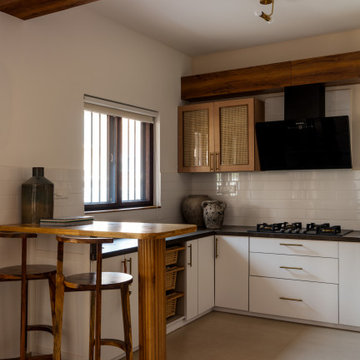
This 3-bedroom residence in Bangalore was designed for a family of three who wanted a home rooted in Indian warmth, craft and character, while still feeling refined, functional and contemporary.
The design language draws deeply from traditional Indian aesthetics, expressed through earthy materials, handcrafted details and a rich but calming palette. Raw brick, natural wood, stone, cane, rattan, textured fabrics and earthy hues come together to create a home that feels grounded, tactile and lived-in. Traditional furniture forms are thoughtfully balanced with contemporary lines, giving the space a timeless yet fresh identity.
A strong emphasis was placed on craft. Every element in the home was 100% customised and handcrafted on site by skilled carpenters, allowing each room to carry a distinct sense of personality. Antique wooden pillars and curated props sourced from Kerala add depth, nostalgia and authenticity, while handmade lighting elements bring warmth and artisanal charm.
Biophilic-inspired wallpapers, natural textures and carefully layered materials connect the interiors to nature. Athangudi tiles have been used in key areas to introduce colour, pattern and a sense of regional heritage, creating memorable design moments without overwhelming the overall calmness of the home.
The result is a deeply personal residence that celebrates Indian craftsmanship, natural materials and slow design — a home that is traditional in spirit, contemporary in comfort, and entirely bespoke in execution.
 Tile Doctor Ltd
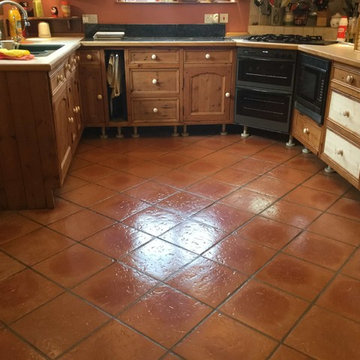
This Terracotta tiled floor was installed in the kitchen of a cottage in the small village of Maidford near Towcester. The tiles were not looking their best and the owner of the property realised it was time to do something about it and contacted Tile Doctor to have the floor stripped and resealed. Stripping and Sealing tile and stone floors is our bread and butter so I was more than happy to pop round and survey the floor which was approximately 9m2.
The grout had darkened with dirt and the previous tile sealer was failing so dirt was now getting ingrained in the Terracotta making it difficult to clean in places and leading to a patchy appearance. We discussed the work involved, my quote was accepted, and a date agreed for me to return and complete the work which would take two days, one to clean and one to seal.
After tidying up the Kitchen and removing the kickboards from underneath the kitchen units I set about working on cleaning and stripping the Terracotta floor of old sealers. To start I tested a small area with a strong dilution of Tile Doctor Wax Away. Wax was quite often used on Terracotta so I figured this product would be a good place to start. My suspicions were proved correct, and I found this to be the best product for removing the many layers of sealant on the floor. Wax Away is a new alkaline product by Tile Doctor and ideal for cleaning clay-based tiles such as Terracotta.
With my sights set on the rest of the floor Wax Away was scrubbed into the tile using a 17” rotary floor scrubbing machine and a black scrubbing pad running on a slow speed which helps to reduce splashing. This activity soon brought the dirt off the floor and the soiled cleaning solution was removed using a wet vacuum and the floor was rinsed down with clean water. The cleaning process was repeated a couple of times until I was happy with the floor, a stiff hand brush was then used along the grout lines with a dilution of Tile Doctor Pro-Clean to clean up the grout.
After rinsing and extracting the floor again the floor was inspected, and I noticed there were a few stubborn paint splashes on the tiles. I managed to remove these and these by spot treating the affected area with Tile Doctor Remove and Go and a steamer to lift the stain out of the clay tile. Once happy the floor was clean it was given a thorough rinse to neutralise it and remove any trace of cleaning products and then left it to dry.
I allowed the floor to dry for several days before returning to seal the Terracotta using numerous coats of Tile Doctor Seal and Go which is an ideal sealer for Terracotta and provides durable stain protection together with a low sheen finish. Terracotta is by its nature very porous and so it’s not unknown for it to take up to nine coats of sealer, which can take some time to apply as like paint you have to wait until it’s dry before it will take the next coat.
The customer was so impressed by the results I achieved in their kitchen they decided to go ahead and book me in to carry out this process throughout the whole of the ground floor which included lounge, study and hallway.
Phil Vissian
Northamptonshire Tile Doctor
 Whitespace
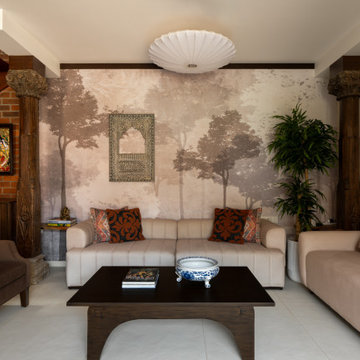
This 3-bedroom residence in Bangalore was designed for a family of three who wanted a home rooted in Indian warmth, craft and character, while still feeling refined, functional and contemporary.
The design language draws deeply from traditional Indian aesthetics, expressed through earthy materials, handcrafted details and a rich but calming palette. Raw brick, natural wood, stone, cane, rattan, textured fabrics and earthy hues come together to create a home that feels grounded, tactile and lived-in. Traditional furniture forms are thoughtfully balanced with contemporary lines, giving the space a timeless yet fresh identity.
A strong emphasis was placed on craft. Every element in the home was 100% customised and handcrafted on site by skilled carpenters, allowing each room to carry a distinct sense of personality. Antique wooden pillars and curated props sourced from Kerala add depth, nostalgia and authenticity, while handmade lighting elements bring warmth and artisanal charm.
Biophilic-inspired wallpapers, natural textures and carefully layered materials connect the interiors to nature. Athangudi tiles have been used in key areas to introduce colour, pattern and a sense of regional heritage, creating memorable design moments without overwhelming the overall calmness of the home.
The result is a deeply personal residence that celebrates Indian craftsmanship, natural materials and slow design — a home that is traditional in spirit, contemporary in comfort, and entirely bespoke in execution.
 Whitespace
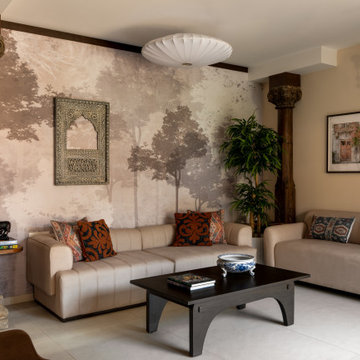
This 3-bedroom residence in Bangalore was designed for a family of three who wanted a home rooted in Indian warmth, craft and character, while still feeling refined, functional and contemporary.
The design language draws deeply from traditional Indian aesthetics, expressed through earthy materials, handcrafted details and a rich but calming palette. Raw brick, natural wood, stone, cane, rattan, textured fabrics and earthy hues come together to create a home that feels grounded, tactile and lived-in. Traditional furniture forms are thoughtfully balanced with contemporary lines, giving the space a timeless yet fresh identity.
A strong emphasis was placed on craft. Every element in the home was 100% customised and handcrafted on site by skilled carpenters, allowing each room to carry a distinct sense of personality. Antique wooden pillars and curated props sourced from Kerala add depth, nostalgia and authenticity, while handmade lighting elements bring warmth and artisanal charm.
Biophilic-inspired wallpapers, natural textures and carefully layered materials connect the interiors to nature. Athangudi tiles have been used in key areas to introduce colour, pattern and a sense of regional heritage, creating memorable design moments without overwhelming the overall calmness of the home.
The result is a deeply personal residence that celebrates Indian craftsmanship, natural materials and slow design — a home that is traditional in spirit, contemporary in comfort, and entirely bespoke in execution.
 Whitespace
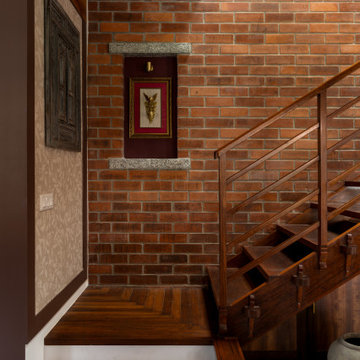
This 3-bedroom residence in Bangalore was designed for a family of three who wanted a home rooted in Indian warmth, craft and character, while still feeling refined, functional and contemporary.
The design language draws deeply from traditional Indian aesthetics, expressed through earthy materials, handcrafted details and a rich but calming palette. Raw brick, natural wood, stone, cane, rattan, textured fabrics and earthy hues come together to create a home that feels grounded, tactile and lived-in. Traditional furniture forms are thoughtfully balanced with contemporary lines, giving the space a timeless yet fresh identity.
A strong emphasis was placed on craft. Every element in the home was 100% customised and handcrafted on site by skilled carpenters, allowing each room to carry a distinct sense of personality. Antique wooden pillars and curated props sourced from Kerala add depth, nostalgia and authenticity, while handmade lighting elements bring warmth and artisanal charm.
Biophilic-inspired wallpapers, natural textures and carefully layered materials connect the interiors to nature. Athangudi tiles have been used in key areas to introduce colour, pattern and a sense of regional heritage, creating memorable design moments without overwhelming the overall calmness of the home.
The result is a deeply personal residence that celebrates Indian craftsmanship, natural materials and slow design — a home that is traditional in spirit, contemporary in comfort, and entirely bespoke in execution.
 Tile Doctor Ltd
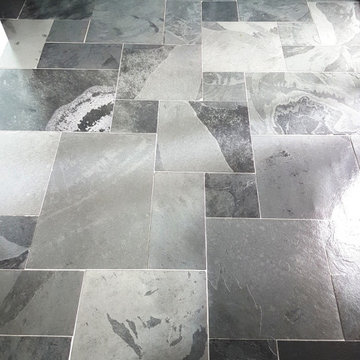
The pictures below are of a Riven Slate floor at a house in in the Leeds suburb of Horsforth which had been laid ten years prior. It’s probably difficult to appreciate from the images but the sealer on this floor was well worn through in the high traffic areas making it patchy in places. Without the protection of the sealer dirt was now ingrained in the pores of the stone leaving it looking dull. Riven slate is always tricky to clean thoroughly due to the rough surface and that combined with the ingrained dirt was making it very difficult to keep clean.
The floor now needed to be stripped of old sealer and then resealed and although I can provide a price for this over the phone my preference is to visit the property and survey the floor. In the case the owner had sent me some photographs via email however they were not too clear and so I felt it would be best if I paid the customer a visit to ensure I could give them an accurate price.
The floor was indeed overdue a clean and seal, as suspected dirt was ingrained into the areas where the seal had worn off. The house was home to a very busy family, so the area was subject to the significant traffic. I carried out a test clean on a small area and they were surprised by the results, when you live with a floor for so long you don’t notice the very slow decline in its appearance. They agreed to my quote and we arranged a time to return and carry the deep clean out.
When I arrived, I started off by protecting the skirting and surrounding woodwork. Given the rough surface of the floor I first applied Tile Doctor Wax Away which is a very effective coatings remover that is designed for removing wax but works very well in these situations. The product was left to dwell for a round ten minutes so it could get to work breaking down the old sealer and then scrubbed in using a black scrubbing pad fitted to a rotary machine.
This process removed most of the dirt and old sealer, but some stubborn patches remained. To treat these, I replaced the black pad with a coarse 200-grit burnishing pad and finally some handheld diamond burnishing blocks for the edges and corners where more intricate work was required, and the circular pads struggle to reach.
I gave the floor a rinse, and extracted the soil with a wet vacuum, the floor was then left to dry off overnight.
The next day I returned, first the slate floor was checked for moisture using the moisture meter. Once I was happy it was within the correct parameters, I then sealed with four coats of Tile Doctor Seal and Go. This is a modern water-based blend of acrylic polymers that provides both a stain resistant surface seal and a durable low-sheen finish also being water based there’s no smell as it dries.
The sealer really brought the stone to back to life and the lovely colours in the natural stones were now evident. The patchy appearance of the floor was gone, and the customer was happy.
I discussed with them how they should maintain the floor and advised them to use Tile Doctor Neutral Tile Cleaner. This is pH neutral cleaner that won’t prematurely erode the new sealer like the stronger products you find in Supermarkets which are only for use on Vinyl and Ceramic floors.
Nigel Stoker
North West Yorkshire Tile Doctor
 Whitespace
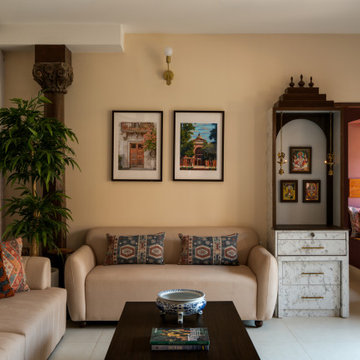
This 3-bedroom residence in Bangalore was designed for a family of three who wanted a home rooted in Indian warmth, craft and character, while still feeling refined, functional and contemporary.
The design language draws deeply from traditional Indian aesthetics, expressed through earthy materials, handcrafted details and a rich but calming palette. Raw brick, natural wood, stone, cane, rattan, textured fabrics and earthy hues come together to create a home that feels grounded, tactile and lived-in. Traditional furniture forms are thoughtfully balanced with contemporary lines, giving the space a timeless yet fresh identity.
A strong emphasis was placed on craft. Every element in the home was 100% customised and handcrafted on site by skilled carpenters, allowing each room to carry a distinct sense of personality. Antique wooden pillars and curated props sourced from Kerala add depth, nostalgia and authenticity, while handmade lighting elements bring warmth and artisanal charm.
Biophilic-inspired wallpapers, natural textures and carefully layered materials connect the interiors to nature. Athangudi tiles have been used in key areas to introduce colour, pattern and a sense of regional heritage, creating memorable design moments without overwhelming the overall calmness of the home.
The result is a deeply personal residence that celebrates Indian craftsmanship, natural materials and slow design — a home that is traditional in spirit, contemporary in comfort, and entirely bespoke in execution.
 Settle Architects
The Vision:
The #settle project was born from a singular goal: to strip away the "noise" of modern construction and focus on the quiet power of intentional detail. In an era of rapid builds, we chose to slow down, focusing on how a structure can truly "settle" into its landscape and how an inhabitant can find stillness within its walls.
Design Philosophy: The "Settle" Approach
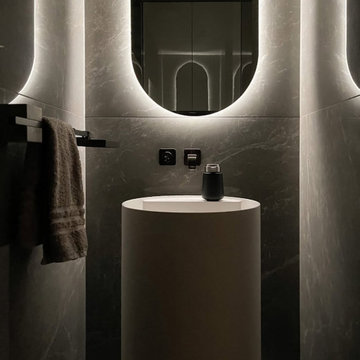
Material Honesty: We utilized a palette of [Insert Materials, e.g., raw concrete, sustainable oak, and burnished steel] to create a tactile experience that evolves with the light.
Precision Joinery: Every transition—from floor to wall, and interior to exterior—was engineered with flush thresholds to eliminate visual clutter.
Atmospheric Lighting: Rather than standard overhead lighting, we integrated hidden linear sources and strategic apertures to harness the natural solar path.
The Result:
A dwelling that doesn't just occupy space but enhances it. The #settle project is a testament to the fact that when you pay attention to the smallest details, the "big picture" takes care of itself.
 Tile Doctor Ltd
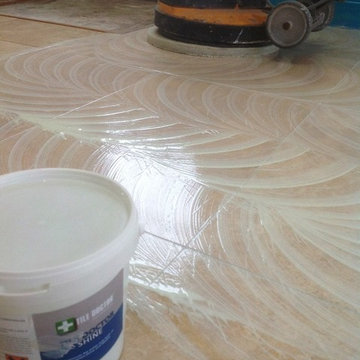
If you want a polished stone floor to keep its appearance, then it will need a regular maintenance plan in place, without it the stone will lose its polish and start to look dull and un-inviting which was the story with this Travertine tiled floor installed throughout much of the grout floor of this house in the village of Great Wilbraham near Cambridge.
I was able to find out from the owner that the floor was last treated six years ago with Lithofin Stain Stop which is a solvent based impregnating sealer which like all sealers will wear off after a few years. Naturally this depends on the amount of wear the floor receives and what tends to happen is this process occurs more rapidly in the high traffic areas leading to an uneven appearance.
The best course of action now would be to remove what was left of the sealer and re-polish and seal the floor.
During my inspection of the floor I had noticed a number of irregular holes in one of the Travertine tiles which needed filling with a colour matching filler; this worked out quite well and as you can see from the photographs below the result looked entirely natural.
After protecting the clients skirting boards with protective film we proceeded to burnish the floor through with a set of Tile Doctor Diamond encrusted honing pads.
During the application of the first coarse pad we also added a strong dilution of Tile Doctor Pro-Clean combined with NanoTech Ultra-Clean to aid the removal of sealer residues from the pores of the Travertine. The floor was then rinsed and the soiled solution extracted using a wet vacuum.
With the sealer remove we were now able to concentrate on building up the polish on the stone by applying the remaining pads from Medium, Fine through to Very Fine, each lubricated with a little water and ensuring to rinse in-between the application of each pad.
With the floor now clean and the polish restored the last step was to protect it so it would keep its appearance for as long as possible. There are a number of solutions for this but for a long durable shine I opted to work Tile Doctor Shine Powder into the Travertine.
The powder is applied liberally to the floor and then ground in using a slow speed floor rotary machine fitted with a white or tan buffing pad lubricated with water.
The shine on the floor has now been restored and the client has a beautiful and durable finish to their Travertine tiles.
Mick Conlon
Cambridge Tile Doctor
 Whitespace
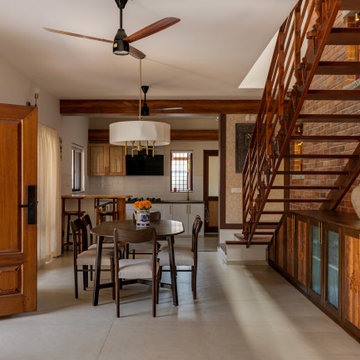
This 3-bedroom residence in Bangalore was designed for a family of three who wanted a home rooted in Indian warmth, craft and character, while still feeling refined, functional and contemporary.
The design language draws deeply from traditional Indian aesthetics, expressed through earthy materials, handcrafted details and a rich but calming palette. Raw brick, natural wood, stone, cane, rattan, textured fabrics and earthy hues come together to create a home that feels grounded, tactile and lived-in. Traditional furniture forms are thoughtfully balanced with contemporary lines, giving the space a timeless yet fresh identity.
A strong emphasis was placed on craft. Every element in the home was 100% customised and handcrafted on site by skilled carpenters, allowing each room to carry a distinct sense of personality. Antique wooden pillars and curated props sourced from Kerala add depth, nostalgia and authenticity, while handmade lighting elements bring warmth and artisanal charm.
Biophilic-inspired wallpapers, natural textures and carefully layered materials connect the interiors to nature. Athangudi tiles have been used in key areas to introduce colour, pattern and a sense of regional heritage, creating memorable design moments without overwhelming the overall calmness of the home.
The result is a deeply personal residence that celebrates Indian craftsmanship, natural materials and slow design — a home that is traditional in spirit, contemporary in comfort, and entirely bespoke in execution.
 Tile Doctor Ltd
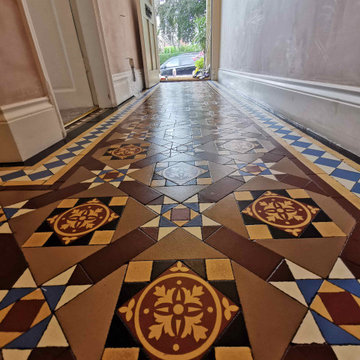
A young couple recently bought a house in Barnsley and were renovating it from top to bottom, included in the plan was the desire to have the previously unloved Victorian floor made beautiful again. The house stands in an area of Barnsley famous for its’ big Victorian villas and quite rightly they felt it was important to ensure period features like this original floor were correctly maintained.
Due to the floor being covered up for many years the floor had developed damp staining, it also had a lot of paint splattered on it. There were also some loose tiles that needed fixing back in place and the layer of old floor polish was present which would need removing.
I started by protecting all the skirting boards, doors and carpets bordering the tiles from splashing. The loose tiles were then cleaned up and then secured back in place using a fast-setting adhesive.
Once the adhesive was set, I turned my attention to stripping and cleaning the floor starting with the application of a coarse 200-grit diamond pad fitted to a weighted rotary buffing machine. The pad was lubricated using a dilution of Tile Doctor Remove & Go which was applied to small sections of the floor and left to soak in for ten minutes first. I run the buffing machine at a slow speed to minimise splashing. Remove & Go is amazing at removing old floor coatings (i.e. sealers), dirt and grime from the floor. When the diamond pad had been used on each section of the floor for five minutes the slurry was vacuumed up using a wet vac machine and I moved onto the next section. Once the whole floor had been cleaned in this way it was time to start the next step.
Old floors like this which don’t have the benefit of a damp proof membrane, and have been covered up for a long time, can suffer from efflorescence issues due to moisture being trapped in the tile. This will result in white salt staining appearing on the tiles for days, weeks and sometimes months afterwards. To counter this the alkaline salts are neutralised by giving the floor an acid rinse using Tile Doctor Acid Gel and leaving it to dwell for five minutes before going over the floor again with the coarse diamond pad. The slurry was again removed with a wet vacuum and the floor was scrubbed clean with damp cloths.
I returned a few days later once the floor had dried to seal the floor. The client wanted a satin finish so knowing the floor had damp and efflorescence issues I opted for Tile Doctor Seal and Go Extra. This is a topical sealer which leaves a lovely satin finish but also allows for the floor to breathe. six coats were required to make the floor look perfect, allowing the lovely colours to come through.
Once complete the floor looked much brighter and the colours really shone through. The owners were really happy with the renovation we carried out and before leaving I took time to discuss how best to maintain the tiles going forward including the use of Neutral Tile cleaner.
Matthew Lovett
South Yorkshire Tile Doctor
 Whitespace
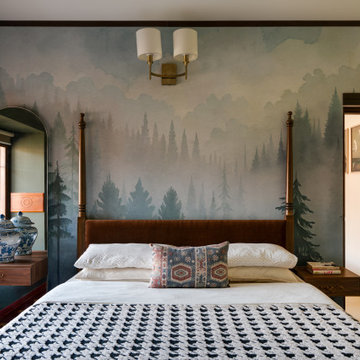
This 3-bedroom residence in Bangalore was designed for a family of three who wanted a home rooted in Indian warmth, craft and character, while still feeling refined, functional and contemporary.
The design language draws deeply from traditional Indian aesthetics, expressed through earthy materials, handcrafted details and a rich but calming palette. Raw brick, natural wood, stone, cane, rattan, textured fabrics and earthy hues come together to create a home that feels grounded, tactile and lived-in. Traditional furniture forms are thoughtfully balanced with contemporary lines, giving the space a timeless yet fresh identity.
A strong emphasis was placed on craft. Every element in the home was 100% customised and handcrafted on site by skilled carpenters, allowing each room to carry a distinct sense of personality. Antique wooden pillars and curated props sourced from Kerala add depth, nostalgia and authenticity, while handmade lighting elements bring warmth and artisanal charm.
Biophilic-inspired wallpapers, natural textures and carefully layered materials connect the interiors to nature. Athangudi tiles have been used in key areas to introduce colour, pattern and a sense of regional heritage, creating memorable design moments without overwhelming the overall calmness of the home.
The result is a deeply personal residence that celebrates Indian craftsmanship, natural materials and slow design — a home that is traditional in spirit, contemporary in comfort, and entirely bespoke in execution.
7