
Search results for "Specialized dating" in Home Design Ideas
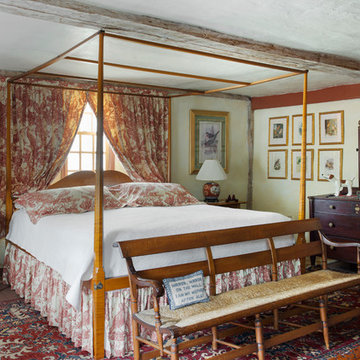
 Cummings Architecture + Interiors
The historic restoration of this First Period Ipswich, Massachusetts home (c. 1686) was an eighteen-month project that combined exterior and interior architectural work to preserve and revitalize this beautiful home. Structurally, work included restoring the summer beam, straightening the timber frame, and adding a lean-to section. The living space was expanded with the addition of a spacious gourmet kitchen featuring countertops made of reclaimed barn wood. As is always the case with our historic renovations, we took special care to maintain the beauty and integrity of the historic elements while bringing in the comfort and convenience of modern amenities. We were even able to uncover and restore much of the original fabric of the house (the chimney, fireplaces, paneling, trim, doors, hinges, etc.), which had been hidden for years under a renovation dating back to 1746.
Winner, 2012 Mary P. Conley Award for historic home restoration and preservation
You can read more about this restoration in the Boston Globe article by Regina Cole, “A First Period home gets a second life.” http://www.bostonglobe.com/magazine/2013/10/26/couple-rebuild-their-century-home-ipswich/r2yXE5yiKWYcamoFGmKVyL/story.html
Photo Credit: Eric Roth
 SHELTERWERK
David Livingston (Photography)
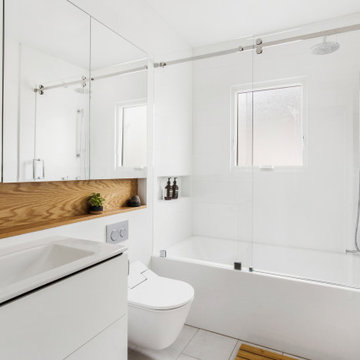
Bathroom - contemporary white tile white floor and single-sink bathroom idea in Other with flat-panel cabinets, white cabinets, a console sink, white countertops and a floating vanity
Bathroom - contemporary white tile white floor and single-sink bathroom idea in Other with flat-panel cabinets, white cabinets, a console sink, white countertops and a floating vanity
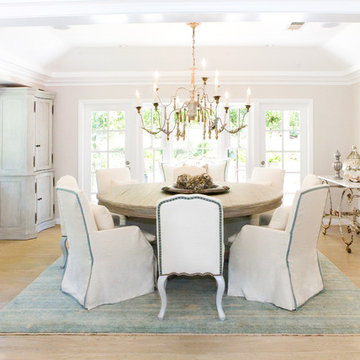
Example of a beach style light wood floor and beige floor enclosed dining room design in Orange County with beige walls
Find the right local pro for your project
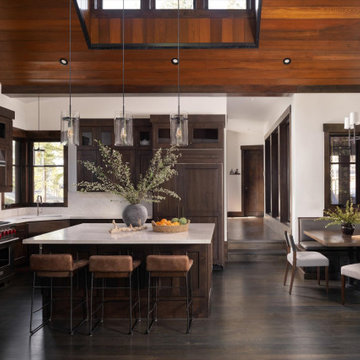

 Newschool Builders LLC
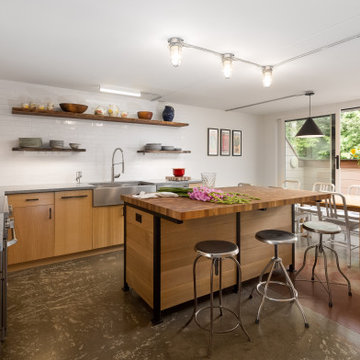
Embracing the natural elements of this circa 1960’s Condo development in Stowe Vermont was a priority for our clients. We worked closely with a great design team and our clients to create this simple, but beautiful minimalist retreat. Our clients, both authors, wanted a place to withdraw from the endless distractions and fast pace rhythms of the city. Custom made cabinets, bookshelves and built ins helped off set the sandblasted CMU block walls and ground concrete floors. A beautiful handcrafted stairwell was a center piece connecting the three floors. A handcrafted integrated concrete sink in the master is was another testament to the mixed mediums used to create this space. We embraced exposed conduit and commercial grade light fixtures throughout which helped add to the overall minimalist feel of the space. There is a beautiful rawness to this project which everyone came to admire.

 User
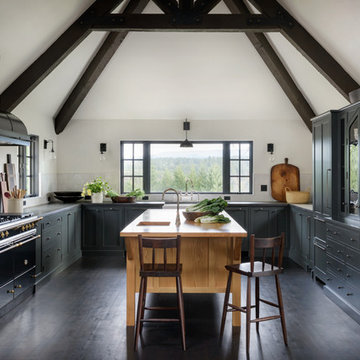
UserKitchen - mediterranean u-shaped dark wood floor and brown floor kitchen idea in Portland with a farmhouse sink, shaker cabinets, gray cabinets, white backsplash, black appliances, an island and gray countertops
 lavish
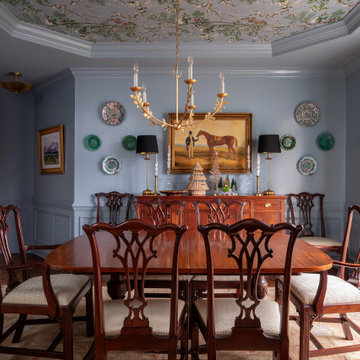
This dining room design in Raleigh, NC proves that traditional style is anything but dated.
Our team at Lavish transformed the formal dining room with a showstopping detail overhead: a chinoiserie botanical wallpaper applied to the tray ceiling, framed by layered crown molding and soft blue walls with classic wainscoting.
The clients' mahogany Chippendale dining set and antique sideboard were honored rather than replaced — refreshed with Greek key upholstered seats, a gilded leaf chandelier, black-shaded buffet lamps, an equestrian oil painting, and a collected arrangement of majolica and porcelain plates on the walls. Floral drapery and a soft antique-style rug complete this elegant space for entertaining.
Across the hall, the sitting room design leans into the same collected, heirloom sensibility. A tufted leather Chesterfield sofa sits beneath a floor-to-ceiling gallery wall of gold-framed art, vintage posters, and family treasures, while an antique secretary desk, brass bamboo nesting tables, and playful patterned pillows keep the room personal and warm. A sculptural gold leaf pendant adds just enough sparkle overhead.
As a full-service interior design firm in Raleigh, NC, Lavish specializes in working with what clients love — blending inherited antiques and personal collections with new wallpaper, lighting, drapery, and styling to create interiors that feel layered, storied, and completely their own.
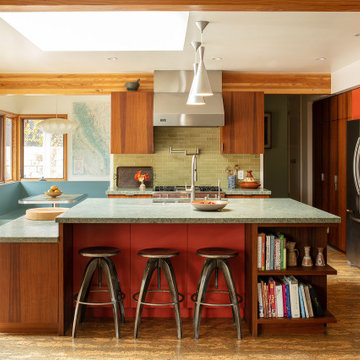
 Catherine Garrison Architect, Inc
Example of a large mid-century modern l-shaped cork floor, beige floor and exposed beam eat-in kitchen design in Los Angeles with a double-bowl sink, flat-panel cabinets, dark wood cabinets, quartzite countertops, green backsplash, subway tile backsplash, stainless steel appliances, an island and gray countertops
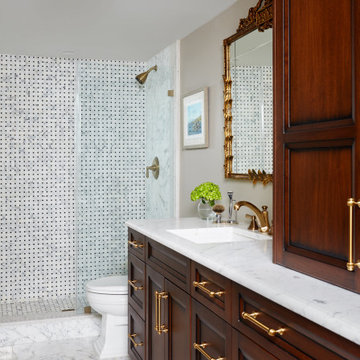
 Laura Fox Interior Design, LLC
Luxurious master bathroom featuring marble tile and countertop, custom vanity with additional built-in storage, antique gilded mirror,and antique brass accents
Photo by Stacy Zarin Goldberg Photography
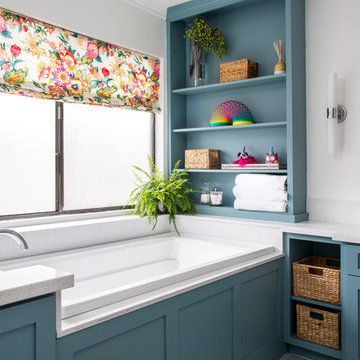
 Joy Street Design
A colorful makeover for a little girl’s bathroom. The goal was to make bathtime more fun and enjoyable, so we opted for striking teal accents on the vanity and built-in. Balanced out by soft whites, grays, and woods, the space is bright and cheery yet still feels clean, spacious, and calming. Unique cabinets wrap around the room to maximize storage and save space for the tub and shower.
Cabinet color is Hemlock by Benjamin Moore.
Designed by Joy Street Design serving Oakland, Berkeley, San Francisco, and the whole of the East Bay.
For more about Joy Street Design, click here: https://www.joystreetdesign.com/
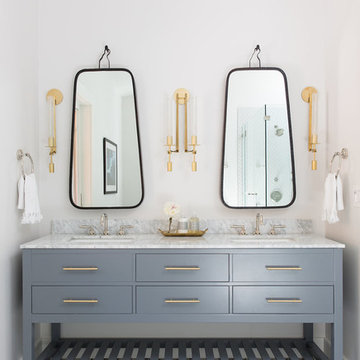
 Melanie Love
Photo by Megan Caudill
Inspiration for a transitional master porcelain tile and multicolored floor bathroom remodel in San Francisco with flat-panel cabinets, white walls, an undermount sink, marble countertops, gray cabinets and gray countertops
Inspiration for a transitional master porcelain tile and multicolored floor bathroom remodel in San Francisco with flat-panel cabinets, white walls, an undermount sink, marble countertops, gray cabinets and gray countertops
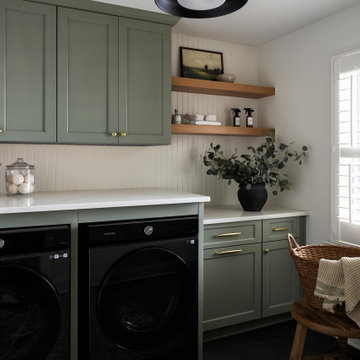
 House of Maevie
Raleigh remodel featuring a transitional kitchen, laundry room, and bathrooms. Custom cabinetry, timeless finishes, and thoughtful layouts create spaces that are both beautiful and functional. Designed by House of Maevie, each room blends modern comfort with classic style for lasting appeal.
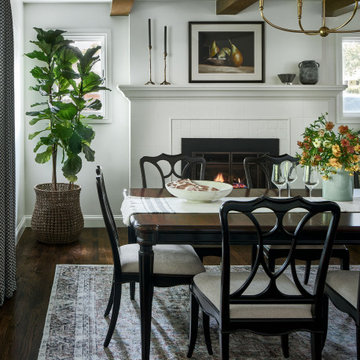

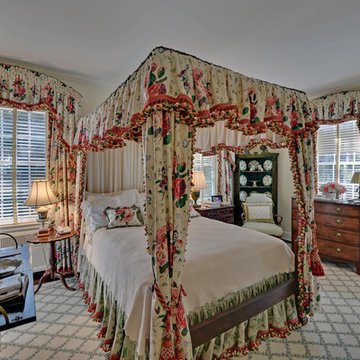
 Envision Web
Stuart Wade, Envision Virtual Tours
The second-largest and most developed of Georgia's barrier islands, St. Simons is approximately twelve miles long and nearly three miles wide at its widest stretch (roughly the size of Manhattan Island in New York). The island is located in Glynn County on Georgia's coast and lies east of Brunswick (the seat of Glynn County), south of Little St. Simons Island and the Hampton River, and north of Jekyll Island. The resort community of Sea Island is separated from St. Simons on the east by the Black Banks River. Known for its oak tree canopies and historic landmarks, St. Simons is both a tourist destination and, according to the 2010 U.S. census, home to 12,743 residents.
Early History
The earliest
St. Simons Island Village
record of human habitation on the island dates to the Late Archaic Period, about 5,000 to 3,000 years ago. Remnants of shell rings left behind by Native Americans from this era survive on many of the barrier islands, including St. Simons. Centuries later, during the period known by historians as the chiefdom era, the Guale Indians established a chiefdom centered on St. Catherines Island and used St. Simons as their hunting and fishing grounds. By 1500 the Guale had established a permanent village of about 200 people on St. Simons, which they called Guadalquini.
Beginning in 1568, the Spanish attempted to create missions along the Georgia coast. Catholic missions were the primary means by which Georgia's indigenous Native American chiefdoms were assimilated into the Spanish colonial system along the northern frontier of greater Spanish Florida. In the 1600s St. Simons became home to two Spanish missions: San Buenaventura de Guadalquini, on the southern tip of the island, and Santo Domingo de Asao (or Asajo), on the northern tip. Located on the inland side of the island were the pagan refugee villages of San Simón, the island's namesake, and Ocotonico. In 1684 pirate raids left the missions and villages largely abandoned.
Colonial History
As
Fort Frederica
early as 1670, with Great Britain's establishment of the colony of Carolina and its expansion into Georgia territory, Spanish rule was threatened by the English. The Georgia coast was considered "debatable land" by England and Spain, even though Spain had fully retreated from St. Simons by 1702. Thirty-one years later General James Edward Oglethorpe founded the English settlement of Savannah. In 1736 he established Fort Frederica, named after the heir to the British throne, Frederick Louis, prince of Wales, on the west side of St. Simons Island to protect Savannah and the Carolinas from the Spanish threat.
Between 1736 and 1749 Fort Frederica was the hub of British military operations along the Georgia frontier. A town of the same name grew up around the fort and was of great importance to the new colony. By 1740 Frederica's population was 1,000. In 1736 the congregation of what would become Christ Church was organized within Fort Frederica as a mission of the Church of England. Charles Wesley led the first services. In 1742 Britain's decisive victory over Spain in the Battle of Bloody Marsh, during the War of Jenkins' Ear, ended the Spanish threat to the Georgia coast. When the British regimen disbanded in 1749, most of the townspeople relocated to the mainland. Fort Frederica went into decline and, except for a short time of prosperity during the 1760s and 1770s under the leadership of merchant James Spalding, never fully recovered. Today the historic citadel's tabby ruins are maintained by the National Park Service.
Plantation Era
By the start of the American Revolution (1775-83), Fort Frederica was obsolete, and St. Simons was left largely uninhabited as most of its residents joined the patriot army. Besides hosting a small Georgia naval victory on the Fort Frederica River, providing guns from its famous fort for use at Fort Morris in Sunbury, and serving as an arena for pillaging by privateers and British soldiers, the island played almost no role in the war.
Following the war, many of the townspeople, their businesses destroyed, turned to agriculture. The island was transformed into fourteen cotton plantations after acres of live oak trees were cleared for farm land and used for building American warships, including the famous USS Constitution, or "Old Ironsides." Although rice was the predominant crop along the neighboring Altamaha River, St. Simons was known for its production of long-staple cotton, which soon came to be known as Sea Island cotton.
Between
Ebos Landing
the 1780s and the outbreak of the Civil War (1861-65), St. Simons's plantation culture flourished. The saline atmosphere and the availability of cheap slave labor proved an ideal combination for the cultivation of Sea Island cotton. In 1803 a group of Ebo slaves who survived the Middle Passage and arrived on the west side of St. Simons staged a rebellion and drowned themselves. The sacred site is known today as Ebos Landing.
One of the largest owners of land and slaves on St. Simons was Pierce Butler, master of Hampton Point Plantation, located on the northern end of the island. By 1793 Butler owned more than 500 slaves, who cultivated 800 acres of cotton on St. Simons and 300 acres of rice on Butler's Island in the Altamaha River delta. Butler's grandson, Pierce Mease Butler, who at the age of sixteen inherited a share of his grandfather's estate in 1826, was responsible for the largest sale of human beings in the history of the United States: in 1859, to restore his squandered fortune, he sold 429 slaves in Savannah for more than $300,000. The British actress and writer Fanny Kemble, whose tumultuous marriage to Pierce ended in divorce in 1849, published an eyewitness account of the evils of slavery on St. Simons in her book Journal of a Residence on a Georgian Plantation in 1838-1839 (1863).
Another
Retreat Plantation
large owner of land and slaves on St. Simons was Major William Page, a friend and employee of Pierce Butler Sr. Before purchasing Retreat Plantation on the southwestern tip of the island in 1804, Page managed the Hampton plantation and Butler's Island. Upon Page's death in 1827, Thomas Butler King inherited the land together with his wife, Page's daughter, Anna Matilda Page King. King expanded his father-in-law's planting empire on St. Simons as well as on the mainland, and by 1835 Retreat Plantation alone was home to as many as 355 slaves.
The center of life during the island's plantation era was Christ Church, Frederica. Organized in 1807 by a group of island planters, the Episcopal church is the second oldest in the Diocese of Georgia. Embargoes imposed by the War of 1812 (1812-15) prevented the parishioners from building a church structure, so they worshiped in the home of John Beck, which stood on the site of Oglethorpe's only St. Simons residence, Orange Hall.
The first Christ Church building, finished on the present site in 1820, was ruined by occupying Union troops during the Civil War. In 1884 the Reverend Anson Dodge Jr. rebuilt the church as a memorial to his first wife, Ellen. The cruciform building with a trussed gothic roof and stained-glass windows remains active today as Christ Church.
Civil War and Beyond
The
St. Simons Island Lighthouse
outbreak of the Civil War in 1861 put a sudden end to St. Simons's lucrative plantation era. In January of that year, Confederate troops were stationed at the south end of the island to guard the entrance to Brunswick Harbor. Slaves from Retreat Plantation, owned by Thomas Butler King, built earthworks and batteries. Plantation residents were scattered—the men joined the Confederate army and their families moved to the mainland. Cannon fire was heard on the island in December 1861, and Confederate troops retreated in February 1862, after dynamiting the lighthouse to keep its beacon from aiding Union troops. Soon thereafter, Union troops occupied the island, which was used as a camp for freed slaves. By August 1862 more than 500 former slaves lived on St. Simons, including Susie King Taylor, who organized a school for freed slave children. But in November the ex-slaves were taken to Hilton Head, South Carolina, and Fernandina, Florida, leaving the island abandoned.
After the Civil War the island never returned to its status as an agricultural community. The plantations lay dormant because there were no slaves to work the fields. After Union general William T. Sherman's January 1865 Special Field Order No. 15 —a demand that former plantations be divided and distributed to former slaves—was overturned by U.S. president Andrew Johnson less than a year later, freedmen and women were forced to work as sharecroppers on the small farms that dotted the land previously occupied by the sprawling plantations.
By
St. Simons Lumber Mills
1870 real economic recovery began with the reestablishment of the timber industry. Norman Dodge and Titus G. Meigs of New York set up lumber mill operations at Gascoigne Bluff, formerly Hamilton Plantation. The lumber mills provided welcome employment for both blacks and whites and also provided mail and passenger boats to the mainland. Such water traffic, together with the construction of a new lighthouse in 1872, designed by architect Charles B. Cluskey, marked the beginning of St. Simons's tourism industry. The keeper of the lighthouse created a small amusement park, which drew many visitors, as did the seemingly miraculous light that traveled from the top of the lighthouse tower to the bottom. The island became a summer retreat for families from the mainland, particularly from Baxley, Brunswick, and Waycross.
The island's resort industry was thriving by the 1880s. Beachfront structures, such as a new pier and grand hotel, were built on the southeastern end of the island and could be accessed by ferry. Around this time wealthy northerners began vacationing on the island.
Twentieth Century
The
St. Simons Island Pier and Village
opening in 1924 of the Brunswick–St. Simons Highway, today known as the Torras Causeway, was a milestone in the development of resorts in the area. St. Simons's beaches were now easily accessible to locals and tourists alike. More than 5,000 automobiles took the short drive from Brunswick to St. Simons via the causeway on its opening day, paving the way for convenient residential and resort development.
In 1926 automotive pioneer Howard Coffin of Detroit, Michigan, bought large tracts of land on St. Simons, including the former Retreat Plantation, and constructed a golf course, yacht club, paved roads, and a residential subdivision. Although the causeway had brought large numbers of summer people to the island, St. Simons remained a small community with only a few hundred permanent residents until the 1940s.
The
St. Simons Island
outbreak of World War II (1941-45) brought more visitors and residents to St. Simons. Troops stationed at Jacksonville, Florida; Savannah; and nearby Camp Stewart took weekend vacations on the island, and a new naval air base and radar school became home to even more officers and soldiers. The increased wartime population brought the island its first public school. With a major shipyard for the production of Liberty ships in nearby Brunswick, the waters of St. Simons became active with German U-boats. In April 1942, just off the coast, the Texas Company oil tanker S. S. Oklahoma and the S. S. Esso Baton Rouge were torpedoed by the Germans, bringing the war very close to home for island residents.
Due in large part to the military's improvement of the island's infrastructure during the war, development on the island boomed in the 1950s and 1960s. More permanent homes and subdivisions were built, and the island was no longer just a summer resort but also a thriving community. In 1950 the Methodist conference and retreat center Epworth by the Sea opened on Gascoigne Bluff. In 1961 novelist Eugenia Price visited St. Simons and began work on her first works of fiction, known as the St. Simons Trilogy. Inspired by real events on the island, Price's trilogy renewed interest in the history of Georgia's coast, and the novelist herself relocated to the island in 1965 and lived there for thirty-one years. St. Simons is also home to contemporary Georgia writer Tina McElroy Ansa.
Since
Epworth by the Sea
1980 St. Simons's population has doubled. The island's continued status as a vacation destination and its ongoing development boom have put historic landmarks and natural areas at risk. While such landmarks as the Fort Frederica ruins and the Battle of Bloody Marsh site are preserved and maintained by the National Park Service, and while the historic lighthouse is maintained by the Coastal Georgia Historical Society, historic Ebos Landing has been taken over by a sewage treatment plant.
Several coastal organizations have formed in recent years to save natural areas on the island. The St. Simons Land Trust, for example, has received donations of large tracts of land and plans to protect property in the island's three traditional African American neighborhoods. Despite its rapid growth and development, St. Simons remains one of the most beautiful and important islands on the Georgia coast.
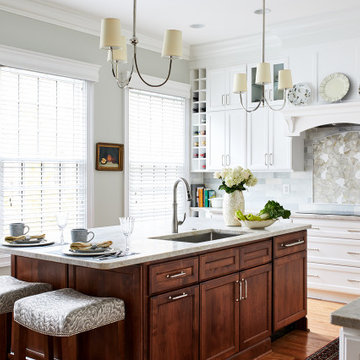
 Elena Eskandari - Case Design/Remodeling Inc.
Inspiration for a large timeless l-shaped beige floor enclosed kitchen remodel in DC Metro with an undermount sink, recessed-panel cabinets, white cabinets, gray backsplash, an island and white countertops
 Breeze Giannasio Interiors
Stacy Zarin Goldberg
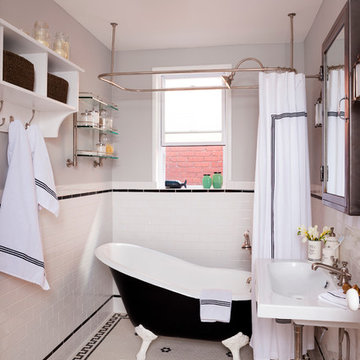
Bathroom - mid-sized eclectic porcelain tile and black and white tile porcelain tile bathroom idea in DC Metro with a wall-mount sink, white cabinets, a one-piece toilet and gray walls
Bathroom - mid-sized eclectic porcelain tile and black and white tile porcelain tile bathroom idea in DC Metro with a wall-mount sink, white cabinets, a one-piece toilet and gray walls
 tahir mahmood Khan
Personalization is no longer just a design trend—it has become an essential part of creating spaces that truly feel like home. Our homes are much more than places where we live; they are reflections of our personalities, our values, and the memories we hold dear. Personalization allows homeowners to go beyond surface-level aesthetics and bring their unique stories to life through thoughtful design choices.
From one-of-a-kind decor to custom furniture, there are countless ways to make a space uniquely yours. This article explores the transformative power of personalization in home design, offering creative ideas and strategies to ensure your home feels as special as the people who live in it. By incorporating meaningful elements, sentimental keepsakes, and designs tailored to your lifestyle, you can create a home that speaks to your heart while remaining both functional and beautiful.
Why Personalization Is Transforming Home Design
Personalization in home design is a powerful trend that’s shaping how we live. It’s about more than just creating a stylish space—it’s about creating an emotional connection to your environment. Here’s why it matters:
Emotional Resonance: Personal touches make your home feel like a sanctuary. Items that carry sentimental value, such as family heirlooms or custom-made pieces, evoke memories and create a sense of belonging.
Individuality: Your home is a reflection of your personality. Personalization allows you to infuse your style into every corner, ensuring your space doesn’t look like a copy of someone else’s.
Functionality with Meaning: Customized furniture or decor isn’t just beautiful—it’s practical. Personalized design ensures every piece serves your specific needs while adding character to your home.
How to Add Personal Touches to Your Home Design
1. Customized Furniture and Decor
Investing in bespoke pieces is one of the best ways to personalize your home. Whether it’s a hand-carved coffee table or custom shelving designed to fit your space, tailored furniture adds both functionality and uniqueness.
Ideas for Customized Furniture:
A dining table engraved with a special date or family name.
Built-in bookshelves designed to fit your exact collection of novels and treasures.
Upholstered chairs or couches in fabrics that reflect your style and preferences.
For decor, consider smaller but impactful personalized items. For instance, displaying a meaningful keepsake, like a shadow box featuring a personalized necklace, can add an intimate touch to any room.
2. Symbolic Design Elements
Incorporating symbols that resonate with you is a thoughtful way to personalize your space. Items inspired by spiritual or cultural symbols, such as angel numbers, can serve as both decor and a reminder of values or goals that matter to you.
Examples of Symbolic Decor:
Wall art or prints featuring numbers, quotes, or patterns that hold personal significance.
Sculptures or figurines that represent qualities like protection, growth, or harmony.
Patterned rugs or textiles that subtly include symbols tied to your family’s history or beliefs.
3. Displaying Sentimental Items
A personalized home thrives on nostalgia and sentimentality. Displaying cherished keepsakes and mementos is a wonderful way to bring life and meaning into your space.
Ideas for Sentimental Displays:
Memory Galleries:
Create a gallery wall filled with family photos, travel souvenirs, and sentimental artwork.
Mix and match frames to add visual interest while showcasing your memories.
Functional Keepsakes:
Repurpose sentimental items into practical decor. For example, a gift for dad, such as a custom clock or framed photo, can double as both a functional and meaningful addition to your space.
Incorporate small family treasures, like vintage jewelry or heirlooms, into your decor.
Feature Pieces:
Highlight unique items in shadow boxes, such as wedding keepsakes, old letters, or jewelry. These displays turn your memories into a focal point of the room.
4. Personalized Artwork and Accessories
Custom artwork is one of the easiest ways to add a personal touch to your home. Whether it’s commissioning a piece or creating something yourself, personalized art instantly elevates a space.
Custom Art Ideas:
A commissioned painting of your family home, wedding venue, or favorite landscape.
Abstract art featuring colors or symbols that are meaningful to you.
Name plaques, monograms, or custom wall hangings.
Incorporating personalized accessories like cushions, throws, or coasters featuring family names or initials is another subtle yet effective way to customize your decor.
5. Seasonal Personalization
Switching up decor seasonally offers a great opportunity to incorporate personal touches. For example:
Display holiday-themed photos, such as a family portrait from last year’s festivities.
Rotate sentimental items based on the time of year, such as a fall centerpiece with family heirloom candlesticks.
Incorporate handmade seasonal crafts created with family members, making the decor feel both personal and festive.
Incorporating Personalization Into Outdoor Spaces
Personalization doesn’t stop at your front door. Outdoor spaces, like patios, gardens, and porches, offer plenty of opportunities for customization.
Ideas for Personalizing Outdoor Areas:
Custom Signs: Add a handmade welcome sign or a plaque with your family name to the front of your house.
Engraved Furniture: Outdoor benches or tables engraved with meaningful quotes or dates can create an intimate touch.
Garden Markers: Personalized garden markers or stepping stones with family names or inspirational words can make your garden truly yours.
Personalizing your home is not just about aesthetics; it’s about creating an environment that feels deeply connected to you and your loved ones. Every item, color, and design element can carry a piece of your story. In this section, we’ll dive deeper into actionable ideas for personalizing your living spaces, transforming them into meaningful reflections of your life.
6. Layering Sentimental Textiles and Accessories
Textiles such as rugs, curtains, and throw pillows are an excellent way to infuse personality into your home without a full-scale renovation. Opt for customized or sentimental fabrics that tie in your personal story.
Ideas for Textiles That Add Meaning
Custom Monogrammed Pillows
Add initials, family names, or even special dates to throw pillows for your living room or bedroom.
Memory Quilts
Use pieces of fabric from meaningful items, like old clothes or wedding attire, to create a quilt that tells a story.
Personalized Rugs
Consider a custom rug with patterns or symbols that resonate with your family’s heritage or values.
Incorporating textiles that tell a story not only makes your home feel cozier but also serves as a subtle reminder of cherished memories.
7. Meaningful Gifts as Decor
Some of the most cherished items in a home are gifts from loved ones. These pieces carry stories and emotional weight, making them perfect for display as decor.
For example, a gift for dad, such as a custom leather-bound journal or engraved keepsake, can be displayed in a home office or study. These items become part of the space’s character while celebrating the bond shared with a loved one.
Tips for Displaying Gifted Items:
Use bookshelves or mantels to showcase sentimental gifts alongside other decor elements.
Pair gifted items with complementary pieces, such as family photos or artwork, to create cohesive displays.
8. Personalized Storage Solutions
Functional spaces can also benefit from personalization. Custom storage solutions allow you to stay organized while reflecting your style and needs.
Ideas for Personalized Storage
Engraved Wooden Crates: Use crates with engraved names or labels for stylish, functional storage in living rooms or children’s play areas.
Custom Closet Systems: Design closets with features like jewelry drawers, tie racks, or shoe compartments tailored to your specific collection.
Sentimental Storage Bins: Store seasonal decorations, keepsakes, or family mementos in decorative bins labeled with meaningful phrases or designs.
By blending practicality and personalization, you can create spaces that are as functional as they are beautiful.
9. Creative Personalization for Kids’ Rooms
Children’s rooms are ideal spaces for playful and meaningful personalization. From custom artwork to interactive elements, you can design a room that reflects their personality while creating an inspiring space for them to grow.
Ideas for Kids’ Room Personalization
Name Signs and Wall Art: Incorporate their name in decorative signage or framed artwork to make their space uniquely theirs.
Growth Charts with Memories: Add personalized growth charts where you can mark milestones and attach small mementos.
Interactive Decor: Create activity walls featuring chalkboards, corkboards, or magnetic surfaces where kids can express their creativity.
These personal touches turn their rooms into a space that grows with them, capturing memories along the way.
10. Blending Modern Trends with Personalized Touches
If you’re drawn to modern design trends, you can still incorporate personalization without losing that sleek, contemporary feel. Here’s how:
Tips for a Modern Yet Personalized Space
Minimalist Monograms: Add subtle, elegant initials or symbols to decor pieces like vases, linens, or art prints.
Statement Lighting: Choose pendant lights or chandeliers with a customized design or engraving to reflect your style.
Neutral Colors with Personal Accents: Keep the base color palette neutral, but incorporate personal elements like family photos in modern frames or sentimental objects displayed in chic shadow boxes.
This approach ensures your home stays trendy while retaining meaningful personal elements.
11. Technology Meets Personalization
Technology can also play a role in making your home feel more personal. Smart home systems and digital tools can be customized to fit your preferences and lifestyle.
Ideas for Personalized Tech
Customized Smart Displays: Use smart screens to display rotating family photos or personal artwork.
Smart Lighting Scenes: Set up lighting presets for different moods, such as a cozy evening scene that highlights your favorite decor.
Voice-Activated Reminders: Program smart assistants to remind you of family birthdays, anniversaries, or even daily affirmations.
By integrating personalized technology, your home becomes both functional and deeply connected to your needs.
12. Seasonal Rotations with a Personal Touch
Personalization doesn’t have to be permanent. Changing up your decor with the seasons is a wonderful way to keep your home feeling fresh while adding meaningful elements.
Ideas for Seasonal Personalization
Holiday Decor with Family Themes: Create personalized ornaments, stockings, or wreaths that highlight your family’s story.
Seasonal Photo Swaps: Rotate family photos to reflect seasonal activities or vacations.
Custom Table Settings: Design table linens, centerpieces, or napkin rings featuring symbols or colors that are meaningful to your family.
Seasonal personalization allows you to constantly renew the look and feel of your space while keeping it tied to your personal story.
Turning a House Into Your Sanctuary
Personalization in home design is about more than creating a visually appealing space—it’s about creating a home that reflects your life, values, and memories. Every detail, from the textiles you choose to the sentimental items you display, adds a layer of meaning that makes your house truly yours.
By incorporating elements like customized decor, thoughtful gifts, and symbolic designs, you can craft a home that not only looks beautiful but also feels deeply personal. Take inspiration from these ideas to make your space a reflection of everything that matters most to you and your loved ones.
 FineLine Kitchens, Inc.
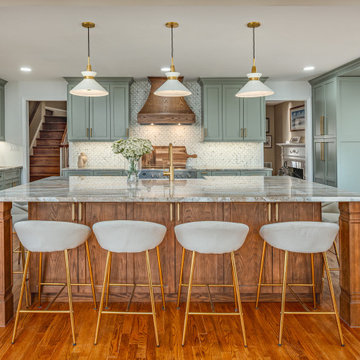
Hi everyone, I'm Sarah and Ogun we are here with fine line kitchens. So we are a couple working together. I do the interior design and remodeling of the space material selection meeting with the clients. And I handled operations outside, you know meaning all the construction work that is taking place the inside. The houses that we work in. I handle all the aspects of the construction, so today's project is very special. We're in Vienna and the client had a very big family. It's a family of seven that lives here. So we had a few aspects that we needed to keep in mind while designing this one. Having everybody be able to sit on the island. So we wanted plenty of seating all the way around. We didn't want anybody standing or anything like that. So what we did is we maximize the space. The center island is the biggest part of the kitchen. We use a natural stone to kind of give it a beautiful texture versus quartz. It's kind of standard white or kind of fabricated, so I wanted something very natural. We did this because I took my inspiration from the outside, so the inspiration if you look at the view right in front of me is there are so many greens there's a lot of brass accents and I wanted to bring this. Into this kitchen while designing it for my clients. She is very warm very. She wanted a very homey, comfy kind of look for the kitchen. So that's what we did today. As you can see, the cabinets are sage green, very light, so I still think it's a neutral, but it's a lighter color that again brings the outside in and we combine that with the oak right behind me so it's a slightly warm oak. It's not very dark. It's not very light. It's a medium brown and the same color went on the island. To kind of tie these two in and the backsplash, my favorite part is where you can see a little bit of design. It is, in my opinion still classic, but includes a pattern so the outside part is as we said in the beginning, is handled by my husband. I'd like him to speak a little bit about that. Thanks, Sarah, I want to talk to you guys a little bit about the construction part of this project. Originally this kitchen was located mostly in this area. They had their stove there sing. It was more of a peninsula layout in Sarah's and the customer vision they wanted. They wanted to get rid of the peninsula and they want to be able to have a huge island that can at least sit seven people because they're familiar with seven. So we wanted to make sure that we can achieve this design and bring it to life so that they can be happy with this layout. Some of the challenges we had, the house, the home being, you know, old home. There were a lot of you know the older electrical and plumbing that had to be replaced. We had to relocate the stove from here to this area. Over here we had put a nice foot fan that we had to relocate all the ductwork and the plumbing. Was being on the peninsula area. We had to relocate it to the center islands. So we achieved all this and kind of like bring it to bring in this kitchen up to date it looks beautiful. That's true, so yes, the old layout did not function for my clients because everything was kind of gathered on one side of the kitchen. So there was like a peninsula right there. So the end of this island kind of continued straight. And that was just the L shape. Kind of where everything was and there used to be another big table here, so they were using only kind of half of the space. So like I said at the beginning, our vision was to kind of feed everybody at the island, create some symmetry. 'cause I love that. So as you can see behind me, this is kind of the focal point symmetrical. Everything is kind of even we wanted to also panel the fridge here so it mimics the pantry and another size. So when you're looking at it, it is bringing again that symmetry back again. I hope you enjoyed this kitchen and this video and I'll see you soon. So how do you think this project turned out? It's nice. I like the color. I think it turned out nice. It's kind of like a little bit different color than what we always do. So I realize. Are you giving me a little bit of credit here that I did something different? Are you proud? I'm so proud of you. Other than that I like it. That they have kind of like a two sink. So if this was our kitchen, if we ever like you can have your own. I can have mine if we ever get into a fight then this can be like my own kitchen. Why are we gonna bring in a fight right now? So I'm cooking anyway. You're grilling most of the time, So what are you even talking about? My kitchen? That's my kitchen. You can just take the small sink. That's fine. It's always good to have your own space right there, so anyways. Thank you guys for watching. We hope to see you soon and if you have any questions please click the link below. It'll lead you to our website, house, YouTube and all of the social media is so nice to have you guys. We'll see you soon. Thanks bye bye-bye.

4