
Search results for "Start saving" in Home Design Ideas

 Lighting EVER
PAR30 12W Dimmable E26 LED Bulb, 75W Halogen Bulbs Equivalent, 900lm, Daylight White, 5000K, 40° Beam Angle, Spotlights, Recessed Lights, Track Lights
Save electricity bill. Replace 75W halogen bulb by 12W LED. Save over 80% on electricity bill of lighting.
Dimmable.
Easy Installation. Standard PAR30 shape with E26 base, can be easily fitted to replace regular PAR30 halogen bulbs.
Spot beam. 40 degree beam angle, ideal for accent lighting.
Maintenance Free. Extremely long life LED bulbs in it, save cost to replace bulbs with short lifespan.
Instant full light. The starting time is less than 0.5 s, no need to wait for warming up the lamp.
Eco-Friendly. No lead or mercury.
Solid State. Shockproof and vibration proof.
No Hazardous Emissions. No UV or IR Radiation.
Input Voltage: 120 V AC .
 Green Home Systems
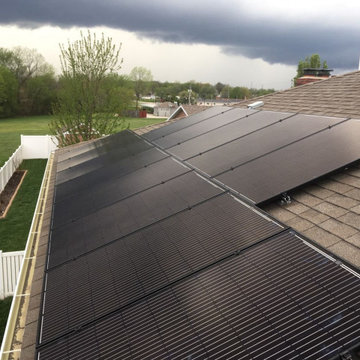
It was our pleasure at Green Solar Technologies to install solar for Calvin of Savannah, MO. His 4.64 kW PV system consisted of 16 SolarWorld modules and a SolarEdge inverter system with 24/7 monitoring access. GST assisted with the solar consultation and was able to engineer just the right system to help Calvin become energy independent. We even equipped Calvin with all of the applicable rebates and incentives to help him save more on his electricity costs.
With a solar energy system and all the freely flowing solar energy available, you can save hundreds, if not thousands over the course of the year without having to do anything differently. It’s a simple and effective way to give back to the planet, reduce your carbon footprint, and start building a nest egg for the future. Once you experience the benefits of your solar power system, you won’t go back to utility company dependency again.

 SabaRehman Abdulrehman
Phoenix's food scene is vibrant and thriving, but also one of the most closely watched in the country. Health inspectors in Maricopa County are strict, and customers expect spotless dining spaces.
To stay competitive, restaurant owners and food vendors must stay on top of evolving health codes, sanitation protocols, and food safety benchmarks. That starts with a firm grip on restaurant cleaning safety standards. Ignoring sanitation rules risks more than bad reviews. It invites citations, customer complaints, and operational shutdowns.
Whether you're operating a food truck or a restaurant, following these Phoenix cleaning standards helps you stay compliant, pass health inspections, and build customer trust.
Importance of a Clean Phoenix Restaurant that Follows Food Health and Safety Standards
The restaurant industry in Phoenix operates under strict oversight. The Maricopa County Environmental Services Department conducts regular inspections, and violations can result in fines or closures. In this climate, restaurant cleaning is not just a hygiene standard. It is a business-critical measure.
Proper food handling and establishment cleaning protocols reduce the risk of foodborne illnesses, control pests, protect equipment, and keep your staff safe. Inconsistent practices, on the other hand, can quickly become liabilities.
Start With the Food Code
Phoenix food vendors must comply with the 2017 FDA Food Code as adopted by Maricopa County. This includes rules on:
- Sanitizing food-contact surfaces after each use
- Maintaining proper water temperatures for dishwashing
- Cleaning restrooms frequently and keeping them stocked
- Storing cleaning chemicals away from prep areas
- Daily: Wipe prep tables, mop floors, clean grills, sanitize cutting boards
- Weekly: Deep clean kitchen hoods, polish cooking equipment, disinfect drains
- Monthly: Check pest control measures, clean freezer coils, and inspect HVAC filters
- Using the right sanitizers and PPE
- Logging cleaning times and who performed the task
- Identifying signs of mold, grease buildup, or rodent activity
- Conducting thorough surface cleaning to ensure all food-contact surfaces are sanitized regularly
- Food-safe and non-corrosive
- Effective against norovirus, salmonella, and E. coli
- Clearly labeled and stored in original containers
- Seal gaps around doors and pipes
- Store dry goods in sealed, elevated containers
- Keep outdoor waste bins locked and distanced from entry points
- Record cleaning completion in real time
- Alert managers when tasks are missed
- Keep a historical record for inspections
- Is certified and understands the Arizona food codes
- Provides documented service reports
- Offers customized cleaning plans
- Offers flexible scheduling around your operating hours
- Cross-contamination prevention: Regularly clean food prep surfaces and tools, and use separate equipment for raw meats, vegetables, and ready-to-eat foods. Proper cleaning prevents any contact with food that could lead to cross-contamination and affects food quality.
- Temperature monitoring: While not directly related to cleaning, maintaining proper food temperature is essential. Hot foods should be stored above 140°F, and cold foods below 40°F. Regularly monitor temperatures and clean temperature gauges to ensure accuracy.
- Proper storage: Use clean storage containers and shelving for food storage, keeping items off the floor. Ensure all food is sealed and labeled to avoid contamination risks and comply with food safety standards.
Find the right local pro for your project

 Five Star Tree Care
Most trees have leaves that will change colours every time the seasons change. This means that you may see changes three to four times a year depending on where you live. However, they will typically retain some measure of green colouring on their leaves until fall rolls around.
During the fall season, trees explode with bright reds, oranges, and vibrant yellows. This is a natural part of their growth and hibernation process. However, if you see these colours in the offseason, it may be a sign that there is a problem. Below, Five Star Tree Services discusses why your leaves may be yellow during the summer and what you can do about it.
Should Leaves Turn Yellow in the Summer?
If your trees have yellow leaves in the summer, it is a sign that it is suffering from disease, or having a problem with its growth cycle. Having your trees inspected periodically by a trained professional will help you catch problems early. If your trees already have yellow leaves in the offseason, they can identify the cause and suggest a solution. When diagnosed early, suggested treatments can help save the tree. Keep reading for some common causes of yellowing leaves.
Improper Watering
One of the most common reasons trees start to develop yellow leaves in the summer is due to dehydration. Checking the soil moisture levels will help determine if your trees are getting enough water. Hydration is important all year long, but especially crucial during the hot summer months. If there are dry areas around your tree trunk, it is a good idea to partake in deep root watering to help keep your trees healthy and well-watered. Make sure that you don’t overwater your trees because flooding their roots can also be unhealthy.
Lacking Nutrition
Just like people, trees need to get the right blend of nutrients in order to remain healthy. If your tree has yellow leaves in the summer and is also getting enough water, chances are it is not getting the nutrients it needs from the soil. If soil testing shows low levels of nutrients, it is a good idea to schedule a deep root fertilization treatment to adjust the levels. In many instances, correcting the soil will help you save the tree.
Insect or Pest Infestation
Yellow summer leaves are also a sign that a tree has been infested with pests. Some pest is only active in the summer. Some of the most common are:
Emerald Ash Borer
Asian Long-Horned Beetle
Yellownecked Caterpillar
Ash Flower Gall
Bronze Birch Borer
Apple-and-Thorn Skeletonizer
Eastern Tent Caterpillar
Birch Leafminer
Fall Webworm
Gypsy Moth
And many others
The first thing you should do is call an arborist to have the tree inspected. They will be able to identify the root of the problem and formulate a solution to treat the pest infestation. This will help you get rid of the bugs once and for all and save your tree in the process.
How We Can Help
If you have noticed that one of your trees have begun to develop yellow leaves, give Five Star Tree Services a call as soon as possible. We have been providing tree care services in Toronto for over 10 years. Our skilled arborist would be more than happy to evaluate your tree and suggest a solution to treat the problem, so don’t wait. Contact us at (416) 990-3355 today!

 Room to Grow Designs
The next step was to figure out what could the client do herself in order to save money. The design already called for four berms in order to transform the flat space into a more interesting landscape, so we ordered 10 yards of dirt and the homeowner wheelbarrowed it all to the back yard creating four big berms. That saved a good $1,500 in labor. The client also decided to do the final mulch, and to lay the top dressing down for the paths … saving another $1,000 or so.
After that decision, we looked at the available budget for the first phase and decided what would be the best bang for the buck. In consultation, we choose to look at what takes the longest to mature over the greatest amount of time and get started there, first. In other words, we put the bones of the garden in first.
The bones are those trees and shrubs that will perform the functions of screening, focal points and elevation. Because the budget didn’t call for bringing fully grown plants in by crane, we decided to go with shrubs in five gallon containers and trees in 10 gallon containers. All in all, the first order was roughly 100 plants in that category and these plants will grow to provide different heights, colors, textures, shapes and more.

 FirePit Outfitter
Customer: Jason Kay
Location: Los Angeles, California
Product: 61″ x 31″ Rectangle Custom Stone Gas Fire Pit
"I love that the gas firepit saves time both with a quick start and not having to wait for the fire to extinguish. It turns on with the flip of a switch instead of having to start a fire each time. By being a natural gas fire pit, there are no embers to damage the synthetic lawn or furniture. Best of all there are no odors on your clothes afterward, so it is great for entertaining guests.
I purchased a custom stone fire pit because I wanted a unique electric start fire pit. I also wanted to be able to choose the stone to match my outdoor decor. Before reaching out to Fire Pit Outfitter, I considered different shapes, sizes, gas types, and burner shapes."
 Kitchen Refresh
CAN YOU BOOK YOUR OWN APPOINTMENT?
Yes! It's our most popular appointment option! Our Book Your Own Appointment feature gets you started on your FREE no-pressure consultation and moving toward your kitchen transformation.



 Ameriside
This is how the home looked before we started.Jeremy Sharrock
Example of a classic gray one-story wood gable roof design in Los Angeles
Example of a classic gray one-story wood gable roof design in Los Angeles
 FirePit Outfitter
Customer: Jason Kay
Location: Los Angeles, California
Product: 61″ x 31″ Rectangle Custom Stone Gas Fire Pit
"I love that the gas firepit saves time both with a quick start and not having to wait for the fire to extinguish. It turns on with the flip of a switch instead of having to start a fire each time. By being a natural gas fire pit, there are no embers to damage the synthetic lawn or furniture. Best of all there are no odors on your clothes afterward, so it is great for entertaining guests.
I purchased a custom stone fire pit because I wanted a unique electric start fire pit. I also wanted to be able to choose the stone to match my outdoor decor. Before reaching out to Fire Pit Outfitter, I considered different shapes, sizes, gas types, and burner shapes."
 Five Star Tree Care
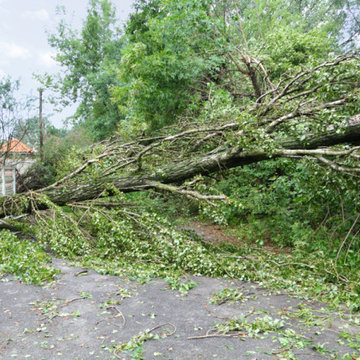
Storms are nature’s way of cleaning out the atmosphere and showing off her awesome power. As essential as this process may be, it can also cause tree damage. If your trees suffer damage during a storm, there are a few things you should do to set things back to their proper order, such as hire a tree removal service. Before you start cleaning up the mess, however, take a look at our suggestions to ensure you are doing what’s best for your trees and your property.
Check the Damage
Before you do anything, you should take the time to check the damage on your property and to the trees themselves. Sometimes broken branches and fallen leaves can hide serious damage that may require special attention. Check to ensure that there is no damage to your property, home, cars, and electrical lines. Next, after you confirm that there is no immediate danger, you can start assessing the tree itself. If you find serious damage to your trees such as splitting, leaning, or even burns from a lightning strike, it is best to call in professionals for help. If the tree is leaning on your home or vehicle, it is also a good idea to have a professional tree care service move forward with the cleanup.
Clean Up Minor Damage and Debris
After the storm has calmed down, and you have assessed the fallout, you can start your yard cleanup. Stick to cleaning up small branches and twigs in addition to leaves and other debris. Avoid large branches, any trees that may be leaning or heavily damaged. Even if your tree is upright, but showing signs of damage you should steer clear until the professionals can assess the situation. Pay close attention to any branches or trees that may be leaning near overhead power lines and also avoid damaged trees that are planted near underground utilities such as gas or power mains.
Call the Professionals at Five Star Tree Services
Anytime a storm damages your landscape, plants, or trees, a professional team of arborists can help. Not only are they trained in the proper methods of cleaning up storm debris in a safe manner, but they can also help decide the best course of action to save or remove your damaged trees. As tree care professionals, every team from Five Star Tree Services will arrive with the proper equipment needed to get the job done safely.
Five Star is fully certified and will also work with your insurance company to assess the damage and coordinate extended cleanup services if needed. For trees that are damaged but still have a chance of surviving, our experienced arborists will create a customized treatment plant and pruning plant to give your tree the best chance of survival. If other treatments are needed, we will also support your tree during its recovery until it is back to its healthy state. For more information regarding our storm tree services in Richmond Hill or our regular tree care services, give us a call at (416) 990-3355 today.
 Room to Grow Designs
The next step was to figure out what could the client do herself in order to save money. The design already called for four berms in order to transform the flat space into a more interesting landscape, so we ordered 10 yards of dirt and the homeowner wheelbarrowed it all to the back yard creating four big berms. That saved a good $1,500 in labor. The client also decided to do the final mulch, and to lay the top dressing down for the paths … saving another $1,000 or so.
After that decision, we looked at the available budget for the first phase and decided what would be the best bang for the buck. In consultation, we choose to look at what takes the longest to mature over the greatest amount of time and get started there, first. In other words, we put the bones of the garden in first.
The bones are those trees and shrubs that will perform the functions of screening, focal points and elevation. Because the budget didn’t call for bringing fully grown plants in by crane, we decided to go with shrubs in five gallon containers and trees in 10 gallon containers. All in all, the first order was roughly 100 plants in that category and these plants will grow to provide different heights, colors, textures, shapes and more.

 Renewal by Andersen Long Island
Charming bathroom with new double hung window we installed. This gorgeous older home with warm and welcoming style looks wonderful and has improved energy efficiency with all new windows installed. Find out more about replacing the windows in your house with Renewal by Andersen of Long Island, serving Suffolk, Nassau, Queens and Brooklyn.
Get started replacing your home windows -- Contact Us Today! 844-245-2799
 Lighting EVER
Ideal for general lighting in office, meeting rooms, shops, restaurants, hospitals, schools, etc.
Energy-saving Bright Light
2700lm brightness. Daylight white panel.
Replace 80W fluorescent lamp by 36W Slim LED panel light. Save over 55% energy, drastically reduce your lighting bills
Two Installation Methods
Pendant/suspended or recessed/built-in mounting installation are all available.
Exact cut out is 295*1195mm to allow it to fit or slot into existing ceiling grids.
Key Data
- CRI: over 80.
- Dimension: 295*1195*9mm (ultra slim design)
- Voltage: 100-240V AC Input, 30-48V DC Output
- Components Saving. Come complete with the LED driver. No ballast and starter required,
- Instant full light. The starting time is less than 0.5 s, no need to wait for warming up the lamp
- Extremely long life. lowers maintenance costs by reducing re-lamp frequency
- Solid State. Shockproof and vibration proof
- Eco-Friendly. No lead or mercury
- No Hazardous Emissions. No UV or IR Radiation
Application
It offers a uniform and extremely harmonious lighting, suitable for hospitals, schools, hallways and lobbies, meeting rooms, shops, restaurants and offices.
Package Includes:
1 x 36W Slim Flat Rectangle LED Panel Light
1 x Power Driver
1 x Stainless steel hanging wire
3 x Screws
3 x Plastic Screw Anchors

Sponsored
Columbus, OH

Hope Restoration & General Contracting
Columbus Design-Build, Kitchen & Bath Remodeling, Historic Renovations
 Lighting EVER
High CRI.
CRI is over 95, R9>85. More vivid and natural lighting.
Save electricity bill. Replace 100W halogen bulb by 15W LED track light. Save over 85% on electricity bill of lighting.
Ideal for accent lighting applications.
Beam angle is 30 degrees. Narrow spot beam.
Flexible to use. Adjustable spot head.
Reduce re-lamp frequency.
Life expectancy is over 50000 hrs.
Save effort and maintenance costs on changing lights frequently.
Instant full light.
The starting time is less than 0.5 s, no need to wait for warming up the lamp.
Eco-Friendly. No lead or mercury.
Solid State. Shockproof and vibration proof.
No Hazardous Emissions. No UV or IR Radiation.
Accessories optional (not included)
3 Wire Track Lighting. Please search '5000061'.

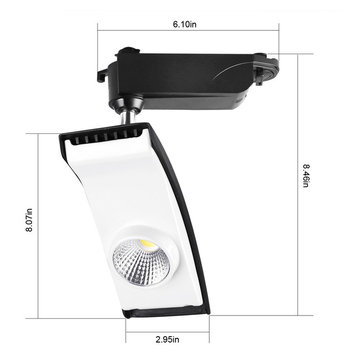 Lighting EVER
High CRI. CRI is over 95, R9>85.
More vivid and natural lighting.
Save electricity bill.
Replace 100W halogen bulb by 15W LED track light. Save over 85% on electricity bill of lighting.
Ideal for accent lighting applications.
Beam angle is 30 degrees. Narrow spot beam.
Flexible to use. Adjustable spot head.
Reduce re-lamp frequency.
Life expectancy is over 50000 hrs. Save effort and maintenance costs on changing lights frequently.
Instant full light. The starting time is less than 0.5 s, no need to wait for warming up the lamp.
Eco-Friendly. No lead or mercury.
Solid State. Shockproof and vibration proof.
No Hazardous Emissions. No UV or IR Radiation.
Accessories optional (not included)
3 Wire Track Lighting. Please search '5000061'.

 Rotator Rod
These Rotator Rod customers wanted to expand the shower space in their master bathroom without knocking down walls or losing any of their already small bathroom space.
The Rotator Rod is the original curved shower rod that rotates. It's curved design instantly gives you a luxuriously large shower like in all the major hotels. After showering, simply flip the Rotator Rod shower rod into the tub -- and out of your way -- while you use the rest of the bathroom! The Rotator Rod is the only bathroom invention that expands shower space by 33% without forfeiting any bathroom space.
Here, the Rotator Rod is flipped into the shower so they don't bump into the shower curtain while they're using the bathroom.
Their bathroom maybe small but the light blue walls, trendy subway tile, and white wainscoting create a luxurious and tranquil atmosphere. Pair that with the flexible space the Rotator Rod provides and I bet they start the day feeling relaxed and unstoppable!

Sponsored
Columbus, OH
Hope Restoration & General Contracting
Columbus Design-Build, Kitchen & Bath Remodeling, Historic Renovations
 FirePit Outfitter
Customer: Jason Kay
Location: Los Angeles, California
Product: 61″ x 31″ Rectangle Custom Stone Gas Fire Pit
"I love that the gas firepit saves time both with a quick start and not having to wait for the fire to extinguish. It turns on with the flip of a switch instead of having to start a fire each time. By being a natural gas fire pit, there are no embers to damage the synthetic lawn or furniture. Best of all there are no odors on your clothes afterward, so it is great for entertaining guests.
I purchased a custom stone fire pit because I wanted a unique electric start fire pit. I also wanted to be able to choose the stone to match my outdoor decor. Before reaching out to Fire Pit Outfitter, I considered different shapes, sizes, gas types, and burner shapes."
 Rotator Rod
These Rotator Rod customers wanted to expand the shower space in their master bathroom without knocking down walls or losing any of their already small bathroom space.
The Rotator Rod is the original curved shower rod that rotates. It's curved design instantly gives you a luxuriously large shower like in all the major hotels. After showering, simply flip the Rotator Rod shower rod into the tub -- and out of your way -- while you use the rest of the bathroom! The Rotator Rod is the only bathroom invention that expands shower space by 33% without forfeiting any bathroom space.
In this photograph, the Rotator Rod flipped out, like a traditional curved shower rod.
Their bathroom maybe small but the light blue walls, trendy subway tile, and white wainscoting create a luxurious and tranquil atmosphere. Pair that with the flexible space the Rotator Rod provides and I bet they start the day feeling relaxed and unstoppable!

 safe ZOnea
Every year, the same thing happens. The first real snowfall arrives, demand for de-icing materials spikes overnight, and the businesses that waited too long find themselves scrambling for supply at the worst possible moment. Facility managers, property owners, contractors, and municipalities all depend on a steady supply of salt and ice melt to keep their properties safe and operational through winter. The ones who plan ahead sail through. The ones who don't pay more, wait longer, and take on real risk.
Sourcing de-icing materials well is not complicated, but it does require thinking ahead and understanding the options. The choices you make about what to buy, how to buy it, and who to buy it from have a direct effect on your costs, your reliability, and your ability to keep people safe when conditions turn dangerous. This article lays out what matters.
Why Your Choice of Supplier Matters More Than You Think
It is easy to treat de-icing material as a commodity, something you grab whenever you need it without much thought about where it comes from. That works fine until the moment it doesn't, usually in the middle of a storm when everyone needs supply at once and the casual sources have run dry. At that point, the relationships you built before the season become the difference between staying stocked and being stuck.
Reliable supply is the whole game in winter operations. A property that runs out of ice melt during a storm faces safety hazards, liability exposure, and disruption, none of which can wait for a back-ordered shipment. This is why establishing relationships with dependable rock salt suppliers before the season starts is one of the smartest moves a facility manager or contractor can make. It locks in supply, often locks in better pricing, and removes a major source of mid-winter stress.
The lesson here is to treat sourcing as a planning decision rather than a last-minute errand. The businesses that come through winter smoothly are almost always the ones that secured their supply chain early, chose suppliers who could actually deliver when it counted, and never had to gamble on finding material during a shortage. Reliability bought in advance is far cheaper than scarcity paid for in a crisis.
Bagged or Bulk: Matching the Material to the Job
One of the first practical decisions is whether to buy de-icing material in bags or in bulk, and the right answer depends entirely on the operation. Each format has clear advantages, and many operations end up using both for different purposes.
Bagged material offers convenience, control, and easy storage. It is simple to handle, easy to distribute to different locations or crews, straightforward to store without special equipment, and convenient for spot application by hand. It suits smaller properties, businesses without bulk storage, and situations where portion control and tidiness matter. Bulk material, on the other hand, tends to make sense for large operations that go through high volumes, where buying in quantity lowers the per-unit cost and the operation has the equipment and space to store and handle it. The tradeoff is between the convenience and flexibility of bags and the volume economics of bulk.
For many operations, the right approach is a mix: bulk for the high-volume core of the work and bags for flexibility, spot treatment, and locations where bulk handling is impractical. The key is to match the format to how the material will actually be stored, moved, and applied, rather than defaulting to one or the other out of habit. Thinking this through in advance avoids both the waste of over-buying bulk you can't handle and the expense of relying entirely on bags for a large operation.
Rock Salt Is Not Your Only Option
Rock salt, or sodium chloride, is the workhorse of winter de-icing for good reason. It is effective, widely available, and cost-efficient, which makes it the default choice for most operations most of the time. But it has limits, and understanding the alternatives helps you choose the right material for the conditions you actually face.
The most important limitation is temperature. Rock salt becomes less effective as temperatures drop, and in genuinely cold conditions it can struggle to do the job at all. This is where alternatives come in. Calcium chloride, for instance, works at much lower temperatures than rock salt and acts quickly, which makes it valuable when conditions are severe or when fast melting matters. Operations that face hard freezes or need dependable performance in extreme cold often keep calcium chloride for sale on hand for exactly those situations, using it alongside rock salt rather than instead of it.
The practical approach is to understand the conditions your property faces and stock accordingly. For many operations, rock salt handles the bulk of the work while a faster, colder-rated material like calcium chloride covers the extreme days when ordinary salt falls short. Matching the material to the temperature and the urgency of the situation is what separates an operation that stays ahead of winter from one that is constantly reacting to it.
Securing Your Supply Before the Season
Knowing what to buy is only half the equation. The other half is making sure you can actually get it when you need it, which means securing your supply before winter arrives rather than after it has already started. Timing is one of the most underrated factors in winter operations.
The logic is simple. Demand for de-icing materials is highly seasonal and spikes sharply during storms, when everyone needs supply simultaneously. Prices and availability both move against the buyer at exactly those moments. By contrast, planning ahead, estimating your needs and arranging supply before the season, puts you in a far stronger position. Working with established rock salt suppliers ahead of time means your material is accounted for before the rush, often at better pricing and with the confidence that it will be there when the first storm hits.
This kind of planning also lets you think clearly rather than react under pressure. You can estimate your seasonal needs based on your property and past winters, decide on the right mix of materials and formats, and arrange storage in advance. Operations that do this consistently spend less, worry less, and never find themselves making frantic calls during a storm. The effort of planning ahead is modest, and the payoff in reliability and cost savings is substantial.
Storing and Handling What You Buy
Securing supply is not much use if the material degrades before you can use it, which makes proper storage and handling an important and often overlooked part of the equation. De-icing materials are sensitive to moisture, and poor storage can turn a good supply into a clumped, hardened mess that is difficult to apply.
The fundamentals are straightforward. Keep material dry and protected from moisture, since salt and ice melt readily absorb water and can harden if exposed. Store it in a way that suits the format, whether that means a proper bulk storage area or a dry space for stacked bags. Keep it accessible, so crews can get to it quickly when a storm hits and time is short. And handle it with the right equipment for the format and volume, which protects both the material and the people working with it. None of this is complicated, but neglecting it can undermine even a well-planned supply.
Good storage practices protect the investment you made in securing supply early. There is little point in arranging your materials ahead of the season only to have them degrade before use. Treating storage and handling as part of the overall plan, rather than an afterthought, ensures that the material you secured is actually usable when the moment comes. It is the final link in a supply chain built to perform under winter conditions.
Estimating How Much You Actually Need
One question trips up operations of every size: how much de-icing material to buy. Order too little and you risk running short during a storm. Order too much and you tie up money and storage space in material you may not use. Getting the estimate reasonably right is a meaningful part of sourcing well.
Several factors shape the answer. The size and type of the areas you treat, sidewalks, lots, entrances, and drive lanes, set the baseline for how much material each application consumes. The local climate matters too, since colder regions and those with frequent snowfall go through far more material than milder ones. Application frequency depends on how often storms hit and how quickly surfaces need to be cleared, which varies with the kind of property and the expectations of the people who use it. And the type of material plays a role, since different products are applied at different rates.
Past experience is often the best guide. Operations that track what they used in previous winters, adjusted for the size of the property and the severity of the season, can estimate their needs with reasonable confidence. For newer operations without that history, it helps to plan conservatively and to work with a supplier who can replenish stock reliably, so that a low estimate does not turn into a mid-storm shortage.
The goal is not perfect precision but a sound, slightly cautious estimate paired with a dependable supply relationship. That combination lets an operation keep enough material on hand to handle the season without over-committing to volume it cannot store or use. Thinking this through before winter, rather than guessing during it, is one more way that planning ahead pays off when the snow starts to fall.
The Bottom Line
Sourcing de-icing materials well comes down to a few straightforward principles: plan ahead, choose reliable suppliers before the season, match your materials and formats to your actual needs and conditions, and store what you buy properly. The operations that follow these principles move through winter with confidence, while those that improvise pay more and take on needless risk.
Winter is predictable in one respect: it arrives every year, and demand for de-icing material spikes the moment it does. The businesses that prepare for that reality, rather than being surprised by it, are the ones that keep their properties safe, their costs controlled, and their operations running no matter what the season throws at them. A little foresight before the first snowfall pays off through every storm that follows.
21