
Search results for "Stress caused" in Home Design Ideas
 Five Star Tree Care
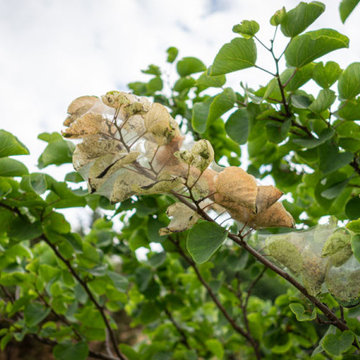
During the summer, certain tree pests are particularly active and bent on the destruction of your beloved trees. Spider mites are one of these pests that like to make themselves at home all over your plants. Their only goal in life is to eat plant leaves. A great way to stop their destruction is being able to recognize the warning signs of their infestation. Once you have identified them, you can take care of them and put in precautions in order to keep them away and stop any future problems from them. We here at Five Star Tree Services have come up with ways that you can identify this pest and get rid of it before it’s too late for your precious plants.
Some Info on Spider Mites
You might have seen these little pests before but didn’t know what they were. They are these tiny creatures that are related to ticks and spiders.
What They Look Like
In order to see them properly, you will need to look at them through a magnifying glass. These little bugs come in a number of different patterns and colours. Being so incredibly small, they are roughly a millimeter at the most. For reverence, that’s about as thick as your credit card. Trying to look at them without a magnifying glass, all you might see are these tiny moving dots that might be brown, red, black, or yellow.
Causes of Spider Mites
Due to their shier tininess, these little invaders can waltz right into your gardens undetected. It’s even possible that you have bought a plant for a nursery or garden center that has had spider mites on them. They can even be brought into your garden by the wind. These little pests have the ability to spread very quickly due to their ability to eat a number of different plants. They are not very picky when it comes to eating your plants. They like outdoor and indoor plants, deciduous and evergreen, virtually nothing is safe from them.
How To Tell You Have Spider Mites
Spider mites prefer to cut and feed on the bottoms of tree leaves, however, the damage they do can be seen at the top of the leaf. Three key things to look for that indicate you have a spider mite infestations are:
Yellowing or bronze look to your tree in one or many different areas (common with a big infestation)
Silky webs that are woven around the leaves and stems
Little yellow or white spots appearing at the top of the leaves/needles
If you are suspicious that your plant has spider mites, one way to know for sure is holding a sheet of paper under an infected branch and shaking it. You will be able to see the little mites on the paper.
Rid Your Plants of Spider Mites
Whether it’s the summer or winter, follow these tips for treating spider mites.
Summer:
You can use a forceful water spray to knock them off of your tree. Once they are gone, periodically use your hose to rinse your trees for the season. Make sure to get the bottom of the leaves because this is where the mites like to live.
Winter:
This also includes any time before the buds come out in the spring. If your tree has spider mites, during this time, you will only see the eggs settled on the branches of your tree. Apply dormant oil to all the eggs before they hatch.
It is also handy to know what natural predators eat spider mites. Certain rival insects such as lacewings and predator beetles will aid in getting rid of your pesky mites.
Preventing Spider Mites
Spider mites are most active during drought season. When trees are stressed, this is when they attack. If you are experiencing extended hot days and long dry periods, it is important to keep your trees hydrated. This means giving them at least an inch of water a week and making sure you have enough mulch around them.
How Five Star Tree Service Can Help
Spider mites are a pest. Catching them before they do any permanent damage is important. If using the dormant oil or spraying your tree with water doesn’t seem to be working, you can give us at Five Star Tree Services a call at (416) 990-3355 and we will come and help take care of them. Visit our website to see a full list of our available tree care services in Toronto!
 Jeff Boehm
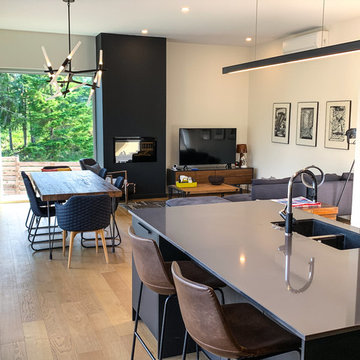
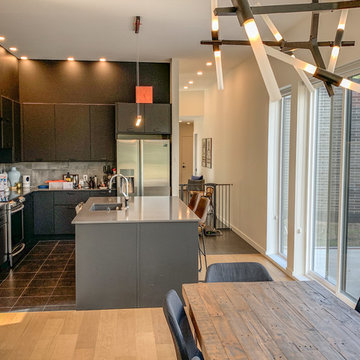
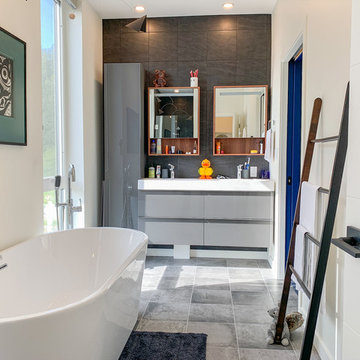
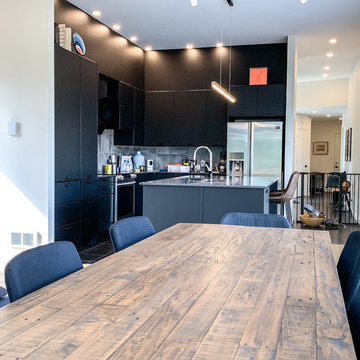
This is a brand new custom home we built for some clients at Cowichan Lake. It has been built with SIPS panels (Structurally Insulated Panel System) from Insulspan. This is an alternative to traditional stick framing that is a prefabricated wall system that is a six inch wall made of wood and filled with styrofoam. The exterior of the home uses a combination of brick, stucco, tile, and an amazing vertical charred cedar exterior cladding. With the help of Chris Wiebe from Energy Experts who is our energy advisor the home has achieved level 4 in the step code which means it is super energy efficient and super air tight. The home has a great flow and has ikea kitchens, quartz countertops, and some incredible lighting solutions the client had imported from China. These clients have a wonderful modern sense of style and were very patient with us through the building process. Building a home like this is a trying process. Getting out of the ground was a challenge and the unconventional exterior cladding choices caused some stress along the way.
 Jeff Boehm
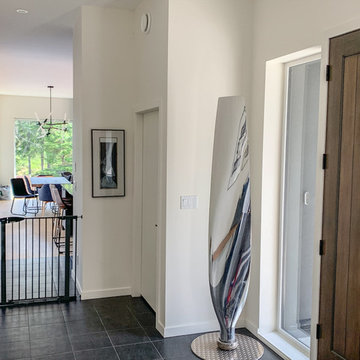
This is a brand new custom home we built for some clients at Cowichan Lake. It has been built with SIPS panels (Structurally Insulated Panel System) from Insulspan. This is an alternative to traditional stick framing that is a prefabricated wall system that is a six inch wall made of wood and filled with styrofoam. The exterior of the home uses a combination of brick, stucco, tile, and an amazing vertical charred cedar exterior cladding. With the help of Chris Wiebe from Energy Experts who is our energy advisor the home has achieved level 4 in the step code which means it is super energy efficient and super air tight. The home has a great flow and has ikea kitchens, quartz countertops, and some incredible lighting solutions the client had imported from China. These clients have a wonderful modern sense of style and were very patient with us through the building process. Building a home like this is a trying process. Getting out of the ground was a challenge and the unconventional exterior cladding choices caused some stress along the way.
Find the right local pro for your project
 Jeff Boehm
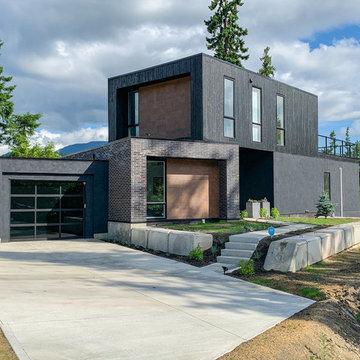
This is a brand new custom home we built for some clients at Cowichan Lake. It has been built with SIPS panels (Structurally Insulated Panel System) from Insulspan. This is an alternative to traditional stick framing that is a prefabricated wall system that is a six inch wall made of wood and filled with styrofoam. The exterior of the home uses a combination of brick, stucco, tile, and an amazing vertical charred cedar exterior cladding. With the help of Chris Wiebe from Energy Experts who is our energy advisor the home has achieved level 4 in the step code which means it is super energy efficient and super air tight. The home has a great flow and has ikea kitchens, quartz countertops, and some incredible lighting solutions the client had imported from China. These clients have a wonderful modern sense of style and were very patient with us through the building process. Building a home like this is a trying process. Getting out of the ground was a challenge and the unconventional exterior cladding choices caused some stress along the way.
 Jeff Boehm
This is a brand new custom home we built for some clients at Cowichan Lake. It has been built with SIPS panels (Structurally Insulated Panel System) from Insulspan. This is an alternative to traditional stick framing that is a prefabricated wall system that is a six inch wall made of wood and filled with styrofoam. The exterior of the home uses a combination of brick, stucco, tile, and an amazing vertical charred cedar exterior cladding. With the help of Chris Wiebe from Energy Experts who is our energy advisor the home has achieved level 4 in the step code which means it is super energy efficient and super air tight. The home has a great flow and has ikea kitchens, quartz countertops, and some incredible lighting solutions the client had imported from China. These clients have a wonderful modern sense of style and were very patient with us through the building process. Building a home like this is a trying process. Getting out of the ground was a challenge and the unconventional exterior cladding choices caused some stress along the way.
 Jeff Boehm
This is a brand new custom home we built for some clients at Cowichan Lake. It has been built with SIPS panels (Structurally Insulated Panel System) from Insulspan. This is an alternative to traditional stick framing that is a prefabricated wall system that is a six inch wall made of wood and filled with styrofoam. The exterior of the home uses a combination of brick, stucco, tile, and an amazing vertical charred cedar exterior cladding. With the help of Chris Wiebe from Energy Experts who is our energy advisor the home has achieved level 4 in the step code which means it is super energy efficient and super air tight. The home has a great flow and has ikea kitchens, quartz countertops, and some incredible lighting solutions the client had imported from China. These clients have a wonderful modern sense of style and were very patient with us through the building process. Building a home like this is a trying process. Getting out of the ground was a challenge and the unconventional exterior cladding choices caused some stress along the way.
 Jeff Boehm
This is a brand new custom home we built for some clients at Cowichan Lake. It has been built with SIPS panels (Structurally Insulated Panel System) from Insulspan. This is an alternative to traditional stick framing that is a prefabricated wall system that is a six inch wall made of wood and filled with styrofoam. The exterior of the home uses a combination of brick, stucco, tile, and an amazing vertical charred cedar exterior cladding. With the help of Chris Wiebe from Energy Experts who is our energy advisor the home has achieved level 4 in the step code which means it is super energy efficient and super air tight. The home has a great flow and has ikea kitchens, quartz countertops, and some incredible lighting solutions the client had imported from China. These clients have a wonderful modern sense of style and were very patient with us through the building process. Building a home like this is a trying process. Getting out of the ground was a challenge and the unconventional exterior cladding choices caused some stress along the way.
 EK ARCHITECTURE, PLLC
Today’s skyscrapers do not accommodate ever-changing uses, health, and energy crisis.
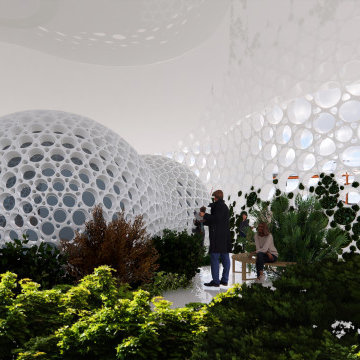
onE.GLobe proposes organically grown, flexible, and scalable live-work-play structures which can adapt to any condition.
Stress increases the risk of chronic diseases, the leading cause of death and disability with around 75% (Source 1a, 1b).
Improving human health through a thoughtfully designed environment is as important as energy conservation and carbon sequestration. We can also address all three goals with similar solutions, such as allocating large green areas, water features, and diverse uses in proximity. Nature makes people happier and healthier, and it also absorbs stormwater and can be used for renewable energy production. Therefore, we can achieve resiliency for both environment and society easily together.
Amoeba Fusion aims to empower societies by providing a space for decentralized, innovative start-up communities. onE.GLobe considers the built environment a living, breathing, multiplying organism, evolving in nature with harmony. The structure can grow horizontally and vertically by adding new cores in different directions per each site condition. It creates public plazas shaded and shielded by the building as it grows. Fully self-sufficient structure houses flexible 3D printed dwellings and workspaces surrounded by semi-open garden spaces and atrium. Thirty feet deep floor plates receive daylight from the exterior and atrium and can conveniently be used as open-plan office space. Electrical, plumbing, and HVAC systems are distributed through modular floor plates, on which 3D printed modules are flexibly plugged in. 3D printed inflatable shells with indoor air cleaning plants house a plug-in kitchen, bedroom, workspace, and bathroom modules. The bridge-connected clusters have decentralized systems with the off-grid micro-grid integrating renewable energy sources and excess energy storage.
Compact layouts provide space for an increasing number of entrepreneurs, making them socialize and inspire near their accommodation. Eliminating corridors in dwelling units with an efficient design and replacing them with the garden space surrounding units achieve this endeavor.
Amoeba Fusion New York is located at a General Commercial Zoning district in NYC with residential and commercial uses. The site currently accommodates six towers. This project explores a more resilient design solution for an innovative, diverse community for the post-pandemic world. Located in the Lincoln Square neighborhood in Manhattan, bordering Hell’s Kitchen with countless restaurants, the site is close to various public transportation, universities, cultural spaces, and businesses, making it ideal for an innovative, creative crowd. Mixed-use commercial and residential buildings are allowed with a floor area bonus of 20% with a public plaza. With tower regulation, there is no minimum lot coverage requirement, and no rule regarding the distribution of floor area allows the tallest buildings in the city.
There are plenty of luxury residential buildings in New York City, but they don’t serve innovative young people and entrepreneurs. Co-living buildings do not provide proper workspaces within the facility. For these reasons, onE.GLobe aims to investigate ways to design long-term live-work-play environments for innovative young people and ease the effects of the future pandemics with its efficient, flexible dwelling units and workspaces surrounded by semi-open garden spaces, atrium, rooftops, public plazas, and wet ponds.

 Two Men And A Truck Santa Ana
At TWO MEN AND A TRUCK® we love moving your entire family, including your four-legged family members.
While our teams are specially trained to handle moving day with pets, there are several ways you can help minimize stress for everyone involved.
Consider letting your pet get to know your drivers before they start moving your items. Animals are very territorial and may be hesitant to welcome strangers into their home. Have treats handy for the movers to give your pet as a way to introduce themselves — this is a surefire way to get fast acquainted with any cat or dog.
Has a family member been assigned to caring for the family pet on moving day? This could be one of your children, a friend, or family member. To ensure their safety, put animals in a blocked off area (using a baby gate or boxes) so they become a spectator of the action yet safely out of the fray. Putting them in an isolated room could cause them further stress since they know something is happening yet can’t see it. Make sure they have food, water and, of course, their favorite toys to keep them occupied.
When packing up the car, leave plenty of room for your animals. By giving them ample space, they will be more comfortable and relaxed during the drive to their new home.
 SUPERIOR CHIMNEY SERVICES CORPORATION
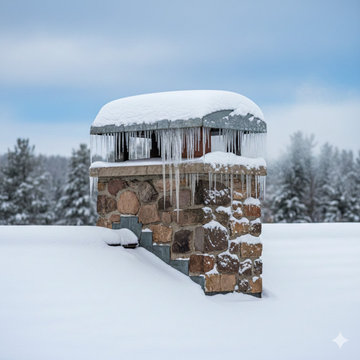
The impact of temperature drop on the chimney can impact the structure and functionality of the chimney. As we have been experiencing in Chicago winters, temperatures have gone from 50 degrees down to 21 degrees during the day, with temperatures falling even further at night. What can you do as a homeowner to watch for, and when to bring in a certified technician from Superior Chimney.
External: Impact of Temperature Drop on the Chimney
Anytime there is a rapid temperature change, it causes the bricks, stones and mortar to expand and contract. These durable materials are still susceptible to thermal shock, especially when it gets wet from ice, rain or melting snow. Because of the drastic change in temperatures, this can cause hairline cracks to begin, and if it goes unnoticed, larger cracks in the masonry will form.
External: Freeze-Thaw Damage
Mortar, bricks and stones are porous materials, meaning that air and water enter the materials. Sometimes, it leaves or dries out, and other times it stays longer. When the temperatures drop below 32 degrees, any of the trapped water freezes and then expands. This can cause small cracks to start, deterioration of the mortar or spalling which is the flaking of the bricks to occur.
External: Ice Build Up on the Chimney Cap or Chimney Crown
When temperatures are 50 degrees and it rains, water accumulates everywhere, including the highest point on your house, the chimney. The chimney cap and chimney crown are always exposed to the harshest elements. When it rains and temperatures drop during the day or night, freezing occurs and can create ice buildup. This can cause the chimney crown to crack or the chimney cap to loosen.
Internal: Chimney Flue Lining
The temperature swing also affects the chimney flue liner. Some chimney flue liners are made from clay. These are especially susceptible to crack forming from the swing in temperatures. But what also happens whether you have a gas or wood burning fireplace is the formation of condensation which can occur when there is fast cooling after the fire in the fireplace is put out or turned off.
Bring out the Sun!
Well, yes, the sunshine melts the ice and snow, but when temperatures go down at night, what remains wet, will refreeze again. The repeated process places stress on the masonry, bricks and stone.
Chimney Inspections Work
A chimney inspection can help with both safety and preserving the structure of the chimney. When a chimney technician conducts an inspection, they will search for cracks in the bricks and mortar, any spalling or deterioration from the thermal shock and freeze thaw cycle. These areas will be marked for repairs if it gets any worse and before it becomes too expensive to repair.
We can’t forget the biggest intruder in the home: water. The chimney technician will also be checking for water leaks from the chimney flashing, the chimney crown, chimney cap or the efflorescence which is the white material that shows up on the chimney or fireplace.
These are just a couple of key areas that a chimney inspection completes. There are numerous other areas, and this can be found on Superior Chimney’s 14-point inspection guide.
Contact us today, and we’ll set you up for a chimney inspection with photo evidence so you have peace of mind with the safety and security of your home.
 McAdams Remodeling & Design
The kitchen was dark overall and the cherry cabinets had darkened over time and paired with a black granite countertop, left them wanting. Avid coffee drinkers, a morning espresso for the pair was a must have. Their favorite coffee machine was important in their kitchen; however they didn’t love that it was visible on the counter even when not in use. A large peninsula separated the eat-in dining area, putting a barrier between the cook and guests. The island, while large, was two levels, and limited the work area because of the raised area. Finally, a nearby business center ended up being a catch-all, causing stress for this organized duo. After living in the home for a bit, they wanted to take the kitchen and make it theirs.
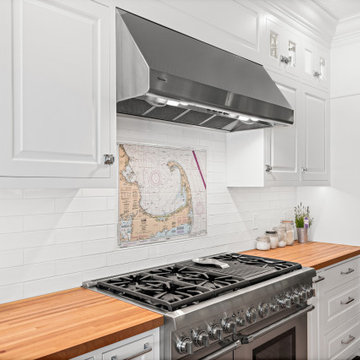
The new kitchen design features white maple cabinets with a quartzite countertop in the color Taj Mahal. The slightly larger island eliminates the peninsula so that it feels open and cohesive, while butcher block countertops on either side of the range provide a beautiful and functional option. Additional cabinets, hidden behind the chairs on the back of the island provide additional storage options for specialty dishes. Large matte black pendant lights with brass interiors hang over the island and dining area. Wooden and wire pot racks enclose the island pendants for a fun and attractive way to store cooking pans. Overall, the kitchen color profile is much lighter than before with white subway tiles on the backsplash. A touch of whimsy in the design can be found in the form of a small nod to New England’s Cape Cod with a custom tile map over the range that they picked up in their travels. A creamy beadboard ceiling gives the room a beautiful custom look while staying on theme. A favorite feature is the appliance garage that holds their ever-important espresso machine but hides it away when not in use. Little details like their pop-up outlets make a big splash with everyday use, while the built-in cabinets in the hallway offer additional kitchen storage, book storage and display cabinets at the top complete with special lighting.


 Pro-Land Landscape Construction Inc.
With a lengthy list of ideas about how to transform their backyard, the clients were excited to see what we could do. Existing features on site needed to be updated and in-cooperated within the design. The view from each angle of the property was already outstanding and we didn't want the design to feel out of place. We had to make the grade changes work to our advantage, each separate space had to have a purpose. The client wanted to use the property for charity events, so a large flat turf area was constructed at the back of the property, perfect for setting up tables, chairs and a stage if needed. It also created the perfect look out point into the back of the property, dropping off into a ravine. A lot of focus throughout the project was the plant selection. With a large amount of garden beds, we wanted to maintain a clean and formal look, while still offering seasonal interest. We did this by edging the beds with boxwoods, adding white hydrangeas throughout the beds for constant colour, and subtle pops of purple and yellow. This along with the already breathtaking natural backdrop of the space, is more than enough to make this project stand out.
Photographer: Jason Hartog Photography
 GP
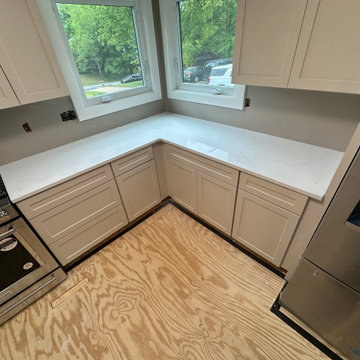
Since 2016, Granite Palace has mastered the art of delivering "well-done" renovations. We offer expert guidance on material selection and impeccable execution, all within a schedule you can trust. You deserve a space that reflects your lifestyle—without the stress caused by delays.

 highland
Ever been out in a park, forest, or even just in your backyard and wanted to see just a small side of the picture? Beauty is in the midst of us, but we are not doing enough to see it—we see only at a superficial level. The reality is that there is an entire universe on a scale that is so miniscule yet all around us, waiting to be discovered.
Put the digital microscope camera on the scope, and that little quantum universe you never knew was there awaits your gaze. Makes everyday outdoor activities exciting adventures and learning experiences with leaves, rocks, and bugs that are all interesting. It used to look just the same, and now it's vibrant with patterns, textures, and stories you didn't know before!
What is a Digital Microscope Camera?
A digital microscope camera is a compact device that magnifies very small objects and can display its real-time image on the screen. This new type of microscope can be taken outside and is much easier to transport than a conventional microscope. It is based on three important technologies: the magnification lenses, digital imaging, and As the name implies, snapping up shots of the objects when you bring them close and displaying them clearly on your smartphone, tablet, or its built-in display. This gives you the power to see details of a microworld anywhere you go, with no special equipment.
How a Digital Microscope Camera Works in Real Life
It is easy and yet powerful to operate a digital microscope camera. It brings very small objects closer by employing a system of lenses, and through a digital sensor, it turns the image into a compelling display. After focusing, the image becomes so big that it displays details that the human eye isn't able to see. Whereas, in an actual setting, an individual can simply place the gadget over an object, such as a leaf, insect, or soil surface. This is then performed to get a focus on the details, clear and sharp. In the blink of an eye, you will be exploring a hidden reality with patterns and structures.
Why Nature Looks Completely Different at the Micro Level
If you watch nature with an unbiased eye, it's all straightforward. Leaves are green; insects are tiny and land on a mere brown earth. However, things look so different through the microscope camera's zoom-in. A leaf is more than a leaf: it is a complex system of veins and cells! However, the insect is not merely a tiny insect anymore, but it gradually turns into an object with wings, eyes, and patterns, all of which seem almost like art. From soils a combination of small particles of rock, organic material, and unseen creatures.
Gaining appreciation for the details in leaves and plants.
Plant life is one of the most interesting objects to be examined under the microscope. The details on the leaves, stems, and petals are amazing and would get lost in the details otherwise. By using a digital microscope camera, the vein network that transports water and nutrients can be readily observed. These veins are naturally occurring and run in patterns that resemble roads and/or rivers in the landscape. Every leaf grows differently and is as individual as a fingerprint.
Discovering the Hidden World of Insects
There is no better thing to see under the microscope than one of the many interesting insects. They may appear at first glance to be quite unassuming and tiny, but magnified, they let one in on the whole other universe. They feature fine patterns in their wings – like those found on glass artworks – that are often difficult to see. They have eyes comprised of multiple repeating units. Even their legs and segments of their bodies have special textures.
The Secret Life Inside Soil and Sand
A microscope camera reveals a soil in which activity is taking place in a lively world in the seemingly lifeless soil. The very small particles of rock, decayed plant material, and micro-living organisms are interacting. Sand grains look similar to miniature crystals; all of them are distinctively shaped and structured. As organic matter decomposes, it forms patterns that illustrate how nature continually recycles itself.
Tree Bark: A Natural Storybook
Another interesting area of interest for micro-focusing is the bark of trees. Apparently, this appears to be rough and simple, but under magnification, it is seen as a highly detailed landscape of cracks, lines, and textures. The bark patterns that can be observed on each branch offer a glimpse of the branch's years of growth, weather, and environmental stresses. It's as if someone wrote the history of a tree on its trunk!
Tips for Getting the Best Microscopic Results Outdoors
A few simple techniques can make a big difference in the variety of images you get before getting clear and detailed images. Always make sure that the hands are stable or have a resting surface so that there is no shaking. Moving, even slightly, can cause the picture to become blurry. Lighting is one of the other important ones. This is because natural soft lighting is best suited, as it doesn't create strong reflections and it does show detail. Minimize exposure to strong sunlight/deep shade when possible.
Conclusion:
The digital microscope camera isn't just a camera; it's a new way of viewing life. Makes routine walks outdoors into thrilling explorations of the scientific world and how minute details make a difference. It can teach us something about living by the rules of nature! It is something that we can contemplate, clarify, and enjoy more.
5