
Search results for "Textile" in Home Design Ideas
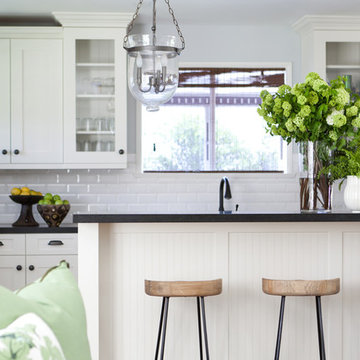
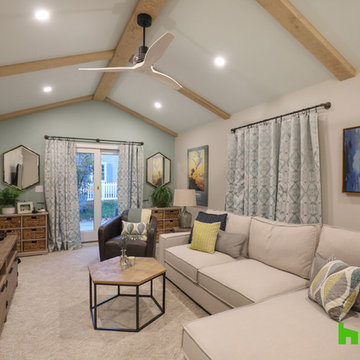
![Design Fixation [Faith Provencher]](https://st.hzcdn.com/fimgs/07a3fbf7003fc8b3_6655-w32-h32-b0-p0--.jpg) Design Fixation [Faith Provencher]
Design Fixation [Faith Provencher]Photo: Faith Towers © 2018 Houzz
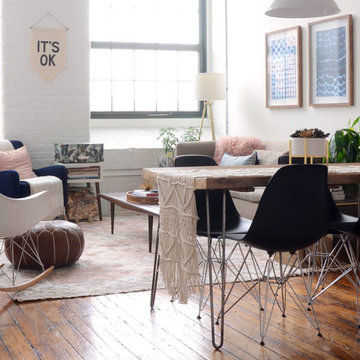
Example of an eclectic living room design in Providence
Example of an eclectic living room design in Providence
Find the right local pro for your project
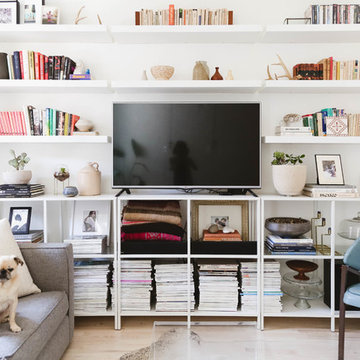
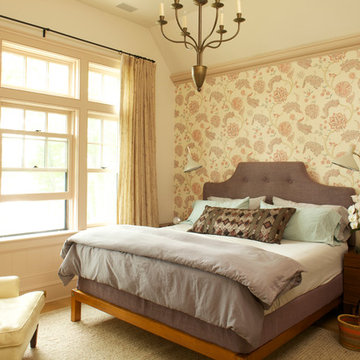
 Rachel Loewen Photography
Photo: Rachel Loewen © 2018 Houzz
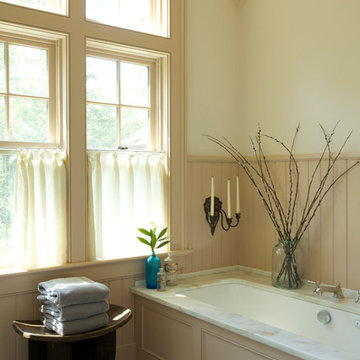
Living room - eclectic living room idea in Chicago
Living room - eclectic living room idea in Chicago
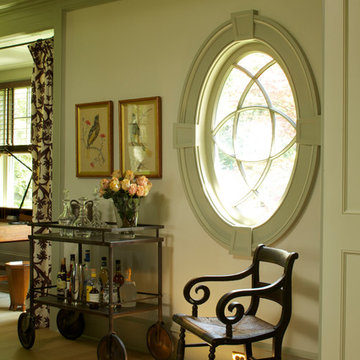
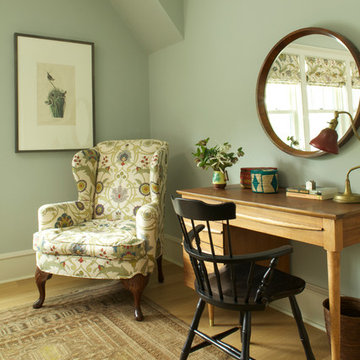
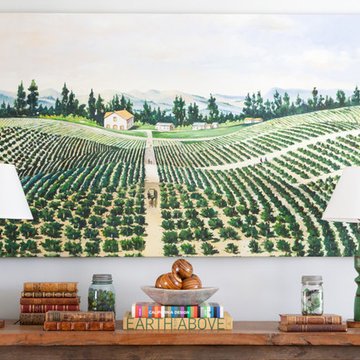
 Julie Holloway
Jennifer Kesler
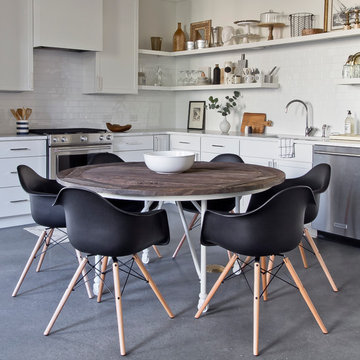
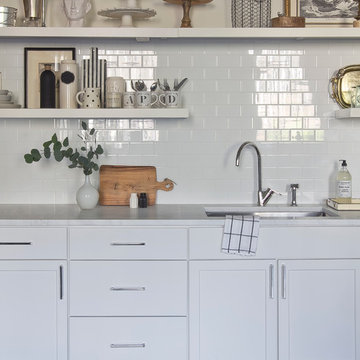
Small danish l-shaped concrete floor eat-in kitchen photo in Atlanta with an undermount sink, flat-panel cabinets, white cabinets, marble countertops, white backsplash, ceramic backsplash, stainless steel appliances and no island
Small danish l-shaped concrete floor eat-in kitchen photo in Atlanta with an undermount sink, flat-panel cabinets, white cabinets, marble countertops, white backsplash, ceramic backsplash, stainless steel appliances and no island
 Tileshop
Photo Credit: Marca Corona Ceramiche
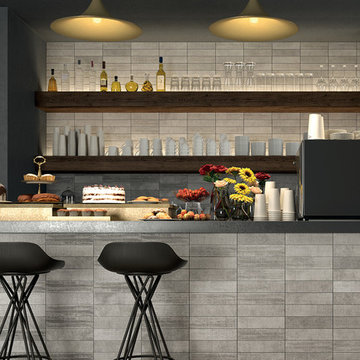
Textile is a collection that skillfully blends fabric textures with geometric shapes. The two sizes, a 3x12 rectangle and a 8½” hexagon, have the look of a handwoven fabric dyed with natural pigments which give the colors a beautiful depth and rich variation. The Hexagon has a soft fabric texture while the 3 x 12 has multiple different structural surfaces that create a sculptural patchwork, almost a 3D element, making this a field tile that will add another dimension to any project.
Tileshop
1005 Harrison Street
Berkeley, CA 94710
(510) 525-4312
Other California Locations: San Jose and Van Nuys (Los Angeles)
 Angela Flournoy
Photo: Angela Flournoy © 2017 Houzz
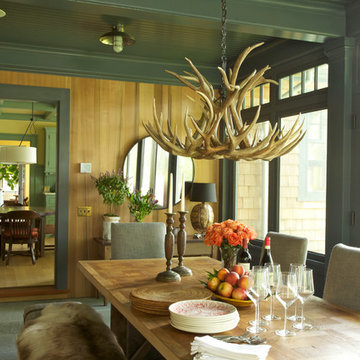
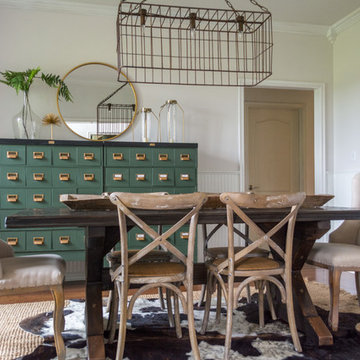
Inspiration for an eclectic dining room remodel in Dallas
Inspiration for an eclectic dining room remodel in Dallas


 Julie Holloway
Jennifer Kesler
Inspiration for a small scandinavian l-shaped concrete floor eat-in kitchen remodel in Atlanta with an undermount sink, flat-panel cabinets, white cabinets, marble countertops, white backsplash, ceramic backsplash, stainless steel appliances and no island
Inspiration for a small scandinavian l-shaped concrete floor eat-in kitchen remodel in Atlanta with an undermount sink, flat-panel cabinets, white cabinets, marble countertops, white backsplash, ceramic backsplash, stainless steel appliances and no island
 Brahms Mount
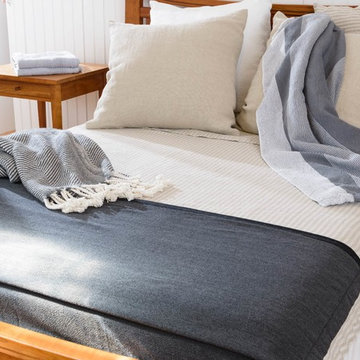
The blanket is a striped natural and pearl linen blanket and at the foot is a flint merino wool washable blanket. The folded throw is a slate alpaca and the thrown throw is our pemaquid cotton and linen day blanket
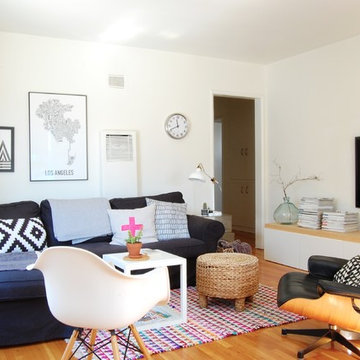
 Corynne Pless
Photo: Corynne Pless Photography © 2015 Houzz
Living room - eclectic living room idea in Los Angeles
Living room - eclectic living room idea in Los Angeles
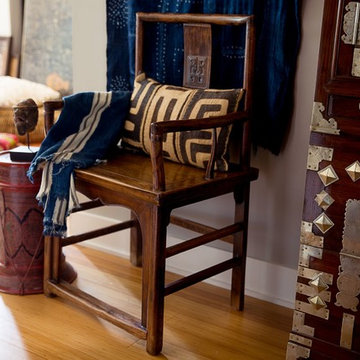
 The Loaded Trunk
A fresh take on classic African style, modern global is a meeting place for natural materials, worldly finds and exotic textiles.
®Sharon Gottula Photography
 Langhorne Carpet Company
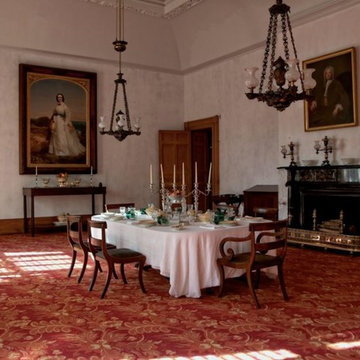
Langhorne Carpet Company proudly announces its latest collaboration with Vermont Custom Rug Company’s David Hunt on an elegant reproduction of the early 19th century worsted wool carpet for the dining room of historic Hyde Hall.
A National Historic Landmark and New York State Historic Site in Springfield, NY, eight miles north of Cooperstown, Hyde Hall is considered “one of the finest examples of the neoclassical country houses in the United States.” The agricultural estate was the project and prize of wealthy British-born landowner George Clarke (1768-1835). Clarke owned 120,000 acres in New York’s Leatherstocking Region and designed Hyde Hall on the bank of Otsego Lake with Albany architect Philip Hooker. The mansion, the estate’s centerpiece, was constructed from 1817 to 1835. Today, Hyde Hall resides within Glimmerglass State Park.
Recent years have brought Hyde Hall a meticulous, history-driven, artisan-fueled restoration to recreate Clarke’s precise original vision.
David Hunt chose Langhorne Carpet Company to recreate the Brussels looped pile carpet for the property’s dining room. Made from the finest worsted wool, a yarn used today almost exclusively in apparel, Brussels carpets were a 19th-century status symbol among America’s wealthiest citizens, including presidents and major landowners. According to Clarke’s scrupulously kept ledgers, in 1831 he purchased “122 linear yards of Brussels body carpet, along with 24 yards of Brussels border carpet from the showroom of Lowe & Connah in New York City for the sum of $308.00. A hefty amount for the period,” said Hunt.
The carpet—which, Hunt said, may well be one of the first examples Wilton carpet woven in the United States—remained in the dining room through the end of the 19th century. As for the two tuffets? They not only survive—they also remain covered in the original textile.
This existence of these original tuffets for nearly two centuries, said Hunt, is both incredibly rare and fortuitous. “Having a documented portion of the original carpet, intact 186 years after manufacture, is, for the textile historian, a gold mine of information. Although the border portion of the design remains most visible, having the ability to document and verify the yarn quality, sett (pattern) of the weave and most importantly the original colors is huge.”
Hunt “dissected” the tuffets to reveal the yarn that, like in all Wilton weaves, is buried beneath the textile’s back, unexposed to sunlight, air, or cleaning agents. When he did, he found the carpet’s original colors and pattern. From there, he and Langhorne used a black-and-white photograph of the original carpet to create a botanical pattern for the field that would, he said, “honor the style of the border.”
He then turned over the work to Langhorne, to create the patterns, match the dye colors, and weave the carpets on narrow looms much like the ones used 200 years ago. Langhorne, he added, is the only mill in the United States—and one of very few in the entire world—capable of doing such a job.
“Langhorne has this wonderful capability to do all sorts of different things. I don’t think a lot of people understand that option is out there, and it’s a lot easier than you think to do it,” he said. What’s more, “They’re real people, working people—the folks on the loom, the weavers, the folks in the office: Except for the clothing, they’re the same type of people you would have found in a mill 200 years ago. It takes special people to do this, and that’s Langhorne.”
 WOVENSOULS
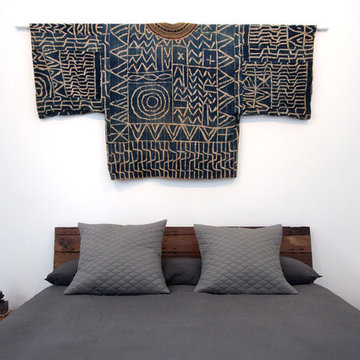
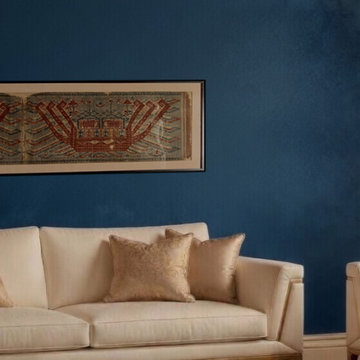
Antique Sumatran shipcloth as Wall Art.
These textiles are extinct in the sense that the weaving craft is no longer practiced. Long shipcloths - the palepais are rare and a double-ship is even rarer.
13