
Search results for "Tolerance test" in Home Design Ideas


 Pennsylvania Landscape & Nursery Association
u2014 ALE: Wayne Rain Garden
Pennsylvania Landscape & Nursery Association
u2014 ALE: Wayne Rain Garden
Terren Landscapes http://www.terrenlandscapes.com
2014 PLNA Awards for Landscape Excellence winner
Category: Residential Up to $15,000
Award Level: Gold
Project Description:
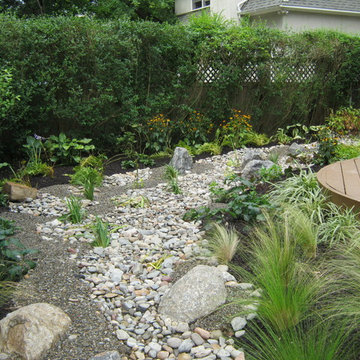
Our company was contracted by the client to provide a creative solution to an ongoing drainage problem. Their property is located within 30 feet of a local stream that collects storm water from the surrounding area. The nearby stream and high water table caused the lawn area at the side of their home to flood and to remain waterlogged for a few days after each storm. The client not only had difficulty growing plants in the existing conditions, but also had a problem with mosquitoes due to standing water.
Our goal was to design a self-contained, naturalistic rain garden that slowed storm water runoff, allowed for percolation, and promoted infiltration while permitting excess clean water to enter the nearby stream with diminished force. As designed, the rain garden allows the earth to slowly and more naturally
absorb excess storm water while filtering out toxins such as excess nitrogen and phosphorous which are frequently found in the landscape, therefore reducing the contaminants entering the stream.
A percolation test was conducted with criteria of absorbing a one-inch rainstorm within four hours without overflow. The one-inch storm calculation included an existing downspout from the home, which would be piped into the rain garden to reduce roof runoff. The first test failed due to a deep layer of high clay-content soil. Excavation continued until a layer of sandy loam was reached, the percolation test was repeated, and a successful test result was achieved. Next, the entire rain garden basin was excavated to the sandy loam layer and the soil amended with compost and sand to create a highly porous planting media.
Geotextile fabric was placed to help reduce migration of the surface stone into the soil and allow for minimal maintenance. Gravel, river stone and small boulders were carefully placed to achieve the look of a natural streambed.
A palette of mostly native plants with a few non-invasive ornamentals were chosen for their ability to survive in extreme conditions ranging from floods to drought and were placed according to their specific preferences.
Wetland plants were chosen for the lowest portion of the rain garden as that area remains saturated for longer periods of time, with a Chionanthus virginicus as a focal point surrounded by irises and ferns at the lowest depth.
Plants tolerant of drier conditions were chosen for the upper edges of the garden. The beautiful colors of Monarda, Ligularia, Eupatorium, Solidago, Chelone, and Rudbeckia were scattered within the upper edge, while movement and softness were incorporated by use of the graceful Nassella that lines the border. Finally, winter interest was provided with a backdrop of Cornus sericea.
As built, this small rain garden creates tremendous impact by decreasing the amount of storm water runoff not only on our client's property, but also in the neighboring stream. It serves as a means of slowing the water and providing an area for infiltration back into the earth. The plants provide a habitat for birds, butterflies, and insects, working in harmony with nature and providing beautiful visual interest year-round.
Photo Credit:
Lisa C. Falls
 Pennsylvania Landscape & Nursery Association
u2014 ALE: Wayne Rain Garden
Pennsylvania Landscape & Nursery Association
u2014 ALE: Wayne Rain Garden
Terren Landscapes http://www.terrenlandscapes.com
2014 PLNA Awards for Landscape Excellence winner
Category: Residential Up to $15,000
Award Level: Gold
Project Description:
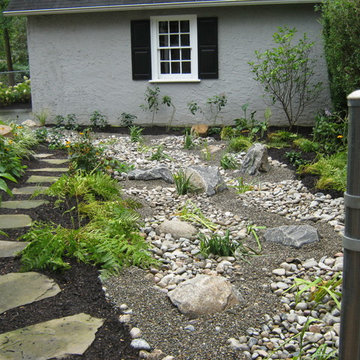
Our company was contracted by the client to provide a creative solution to an ongoing drainage problem. Their property is located within 30 feet of a local stream that collects storm water from the surrounding area. The nearby stream and high water table caused the lawn area at the side of their home to flood and to remain waterlogged for a few days after each storm. The client not only had difficulty growing plants in the existing conditions, but also had a problem with mosquitoes due to standing water.
Our goal was to design a self-contained, naturalistic rain garden that slowed storm water runoff, allowed for percolation, and promoted infiltration while permitting excess clean water to enter the nearby stream with diminished force. As designed, the rain garden allows the earth to slowly and more naturally
absorb excess storm water while filtering out toxins such as excess nitrogen and phosphorous which are frequently found in the landscape, therefore reducing the contaminants entering the stream.
A percolation test was conducted with criteria of absorbing a one-inch rainstorm within four hours without overflow. The one-inch storm calculation included an existing downspout from the home, which would be piped into the rain garden to reduce roof runoff. The first test failed due to a deep layer of high clay-content soil. Excavation continued until a layer of sandy loam was reached, the percolation test was repeated, and a successful test result was achieved. Next, the entire rain garden basin was excavated to the sandy loam layer and the soil amended with compost and sand to create a highly porous planting media.
Geotextile fabric was placed to help reduce migration of the surface stone into the soil and allow for minimal maintenance. Gravel, river stone and small boulders were carefully placed to achieve the look of a natural streambed.
A palette of mostly native plants with a few non-invasive ornamentals were chosen for their ability to survive in extreme conditions ranging from floods to drought and were placed according to their specific preferences.
Wetland plants were chosen for the lowest portion of the rain garden as that area remains saturated for longer periods of time, with a Chionanthus virginicus as a focal point surrounded by irises and ferns at the lowest depth.
Plants tolerant of drier conditions were chosen for the upper edges of the garden. The beautiful colors of Monarda, Ligularia, Eupatorium, Solidago, Chelone, and Rudbeckia were scattered within the upper edge, while movement and softness were incorporated by use of the graceful Nassella that lines the border. Finally, winter interest was provided with a backdrop of Cornus sericea.
As built, this small rain garden creates tremendous impact by decreasing the amount of storm water runoff not only on our client's property, but also in the neighboring stream. It serves as a means of slowing the water and providing an area for infiltration back into the earth. The plants provide a habitat for birds, butterflies, and insects, working in harmony with nature and providing beautiful visual interest year-round.
Photo Credit:
Lisa C. Falls
Find the right local pro for your project
 Glandon Landscape Architecture and Planning
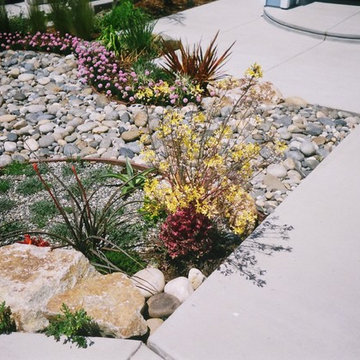
This is a test
This is an example of a mid-sized mediterranean partial sun front yard stone landscaping in San Luis Obispo.
This is an example of a mid-sized mediterranean partial sun front yard stone landscaping in San Luis Obispo.
 Urban Oasis Landscape Design
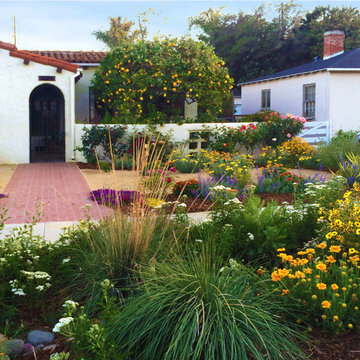
The city installed a rain garden in the parkway which feeds stormwater runoff in a pilot test program.
Photo of a mid-sized mediterranean full sun front yard concrete paver landscaping in Los Angeles for spring.
Photo of a mid-sized mediterranean full sun front yard concrete paver landscaping in Los Angeles for spring.
 Parson Architecture
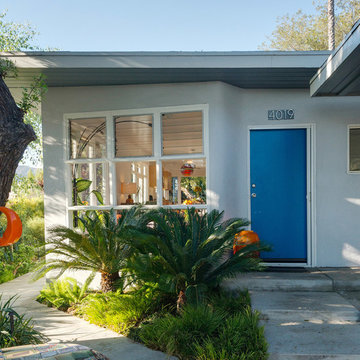
Inspiration for a mid-sized modern gray one-story stucco flat roof remodel in Phoenix
 Becky Bourdeau Designs Inc
Shirak Agresta; Sidney Michael; Annette Gutierrez; Becky Bourdeau
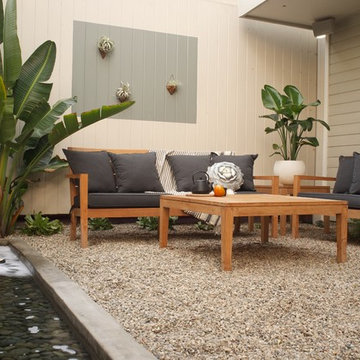
This is an example of a small modern drought-tolerant and full sun backyard gravel water fountain landscape in Los Angeles.
This is an example of a small modern drought-tolerant and full sun backyard gravel water fountain landscape in Los Angeles.
 Bosler Earth Design
Daniel Bosler Photography
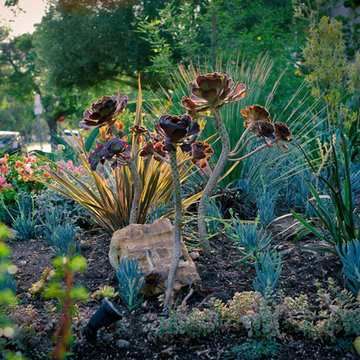
Design ideas for an eclectic drought-tolerant front yard landscaping in Los Angeles.
Design ideas for an eclectic drought-tolerant front yard landscaping in Los Angeles.
 Pennsylvania Landscape & Nursery Association
u2014 ALE: Wayne Rain Garden
Pennsylvania Landscape & Nursery Association
u2014 ALE: Wayne Rain Garden
Terren Landscapes http://www.terrenlandscapes.com
2014 PLNA Awards for Landscape Excellence winner
Category: Residential Up to $15,000
Award Level: Gold
Project Description:
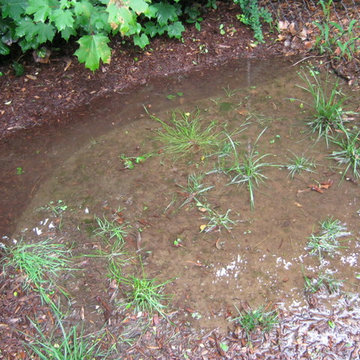
Our company was contracted by the client to provide a creative solution to an ongoing drainage problem. Their property is located within 30 feet of a local stream that collects storm water from the surrounding area. The nearby stream and high water table caused the lawn area at the side of their home to flood and to remain waterlogged for a few days after each storm. The client not only had difficulty growing plants in the existing conditions, but also had a problem with mosquitoes due to standing water.
Our goal was to design a self-contained, naturalistic rain garden that slowed storm water runoff, allowed for percolation, and promoted infiltration while permitting excess clean water to enter the nearby stream with diminished force. As designed, the rain garden allows the earth to slowly and more naturally
absorb excess storm water while filtering out toxins such as excess nitrogen and phosphorous which are frequently found in the landscape, therefore reducing the contaminants entering the stream.
A percolation test was conducted with criteria of absorbing a one-inch rainstorm within four hours without overflow. The one-inch storm calculation included an existing downspout from the home, which would be piped into the rain garden to reduce roof runoff. The first test failed due to a deep layer of high clay-content soil. Excavation continued until a layer of sandy loam was reached, the percolation test was repeated, and a successful test result was achieved. Next, the entire rain garden basin was excavated to the sandy loam layer and the soil amended with compost and sand to create a highly porous planting media.
Geotextile fabric was placed to help reduce migration of the surface stone into the soil and allow for minimal maintenance. Gravel, river stone and small boulders were carefully placed to achieve the look of a natural streambed.
A palette of mostly native plants with a few non-invasive ornamentals were chosen for their ability to survive in extreme conditions ranging from floods to drought and were placed according to their specific preferences.
Wetland plants were chosen for the lowest portion of the rain garden as that area remains saturated for longer periods of time, with a Chionanthus virginicus as a focal point surrounded by irises and ferns at the lowest depth.
Plants tolerant of drier conditions were chosen for the upper edges of the garden. The beautiful colors of Monarda, Ligularia, Eupatorium, Solidago, Chelone, and Rudbeckia were scattered within the upper edge, while movement and softness were incorporated by use of the graceful Nassella that lines the border. Finally, winter interest was provided with a backdrop of Cornus sericea.
As built, this small rain garden creates tremendous impact by decreasing the amount of storm water runoff not only on our client's property, but also in the neighboring stream. It serves as a means of slowing the water and providing an area for infiltration back into the earth. The plants provide a habitat for birds, butterflies, and insects, working in harmony with nature and providing beautiful visual interest year-round.
Photo Credit:
Lisa C. Falls
 Jeff Wortham & Associates
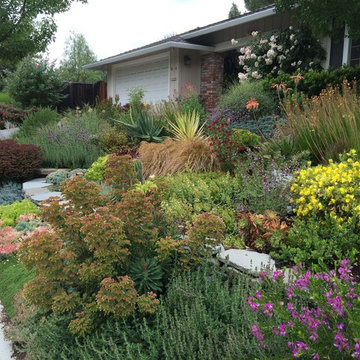
This is my front yard and test garden at one year old. It is a combination of grasses, succulents and drought tolerant perennials and shrubs. I'm testing plants that will deliver low water use without looking dry, which is what most clients want. This is busier than most people like but its because I'm testing so many plants out.
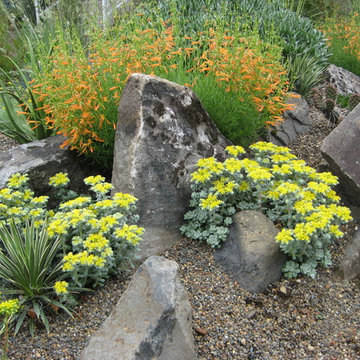

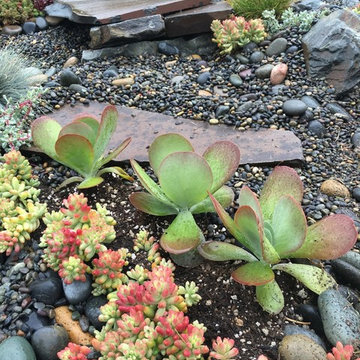
 Table2Garden
Our goal with all of these designs was to creatively exceed customers expectations while reducing water usage, keeping costs down and delivering a beautiful garden that would stand the test of time. Wherever possible our hardscape elements are permeable, and existing healthy plantings and trees remain. All of our landscape designs focus on bringing seasonal color, texture and scent to your garden spaces.
 Bella Dura Architectural Stone
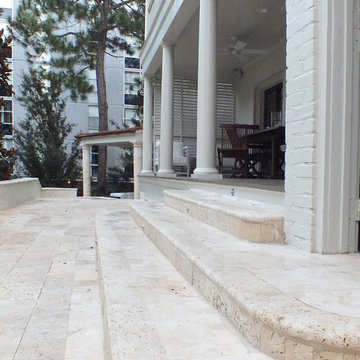
The steps traversing up to the veranda are custom designed and made from Macedonia and Ostra shell-stone limestone (Limestone of the Yucatan). These stones have been laboratory tested and exceed the national ASTM standards and are frost resistant. The combination of these stones for the stair treads provide an aesthetic enhancement in design and double as an anti-slip surface.
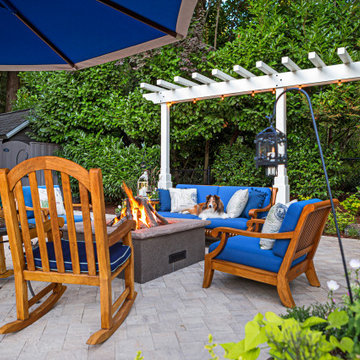
 Casa Smith Designs, LLC
This fire pit has been dog tested and dog approved!
Photo of a large traditional drought-tolerant and full sun front yard concrete paver and metal fence landscaping in Portland with a fire pit.
Photo of a large traditional drought-tolerant and full sun front yard concrete paver and metal fence landscaping in Portland with a fire pit.
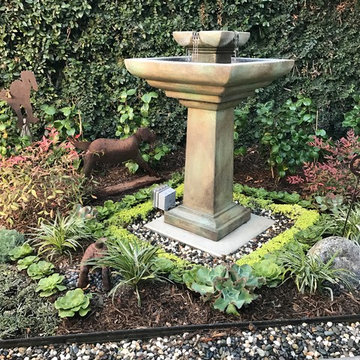 Table2Garden
Our goal with all of these designs was to creatively exceed customers expectations while reducing water usage, keeping costs down and delivering a beautiful garden that would stand the test of time. Wherever possible our hardscape elements are permeable, and existing healthy plantings and trees remain. All of our landscape designs focus on bringing seasonal color, texture and scent to your garden spaces.
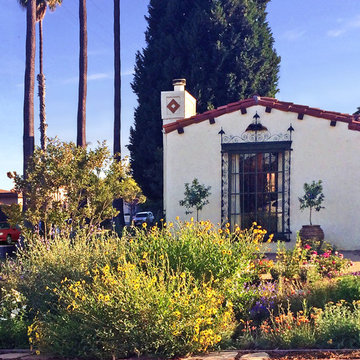 Urban Oasis Landscape Design
The city installed a rain garden in the parkway which feeds stormwater runoff in a pilot test program.
Design ideas for a mid-sized mediterranean full sun front yard concrete paver landscaping in Los Angeles for spring.
Design ideas for a mid-sized mediterranean full sun front yard concrete paver landscaping in Los Angeles for spring.
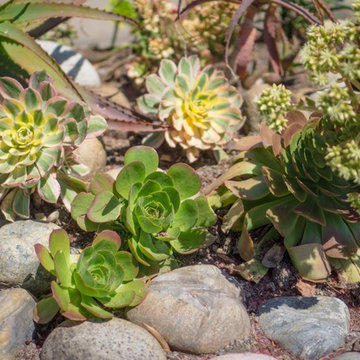
 Professional Outdoor Perspective
Inspiration for a mid-sized transitional full sun front yard concrete paver garden path in Orange County.

 FormLA Landscaping
Tested by drought, California's trees provide ready tinder. Native trees have an advantage in adapting to drought and provide needed habitat. Emerald green, shade loving Red Fescue allows water to reach roots and gives tree roots room to grow.
 Buchanan Construction
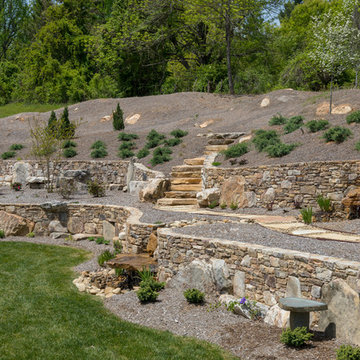
Up on a Hillside, stands a strong and handsome home with many facets and gables. Built to withstand the test of time, the exquisite stone and stylish shakes siding surrounds the exterior and protects the beauty within. The distinguished front door entry with side lights and a transom window stands tall and opens up to high coffered ceilings, a floor to ceiling stone fireplace, stunning glass doors & windows, custom built-ins and an open concept floor plan. The expansive kitchen is graced with a striking leathered granite island, butlers pantry, stainless-steel appliances, fine cabinetry and dining area. Just off the kitchen is an inviting sunroom with a stone fire place and a fantastic EZE Breeze Window System. There is a custom drop-zone built by our team of master carpenters that offers a beautiful point of interest as well as functionality. En suite bathrooms add a sense of luxury to guest bedrooms. The master bedroom has a private sunroom perfect for curling up and reading a book. The luxurious Master Bath exudes tranquility with a large garden tub, custom tile shower, barrel vault ceiling and his & hers granite vanities. The extensively landscaped back yard features tiered rock walls, two gorgeous water features and several spacious outdoor living areas perfect for entertaining friends and enjoying the four seasons of North Carolina.
 AirField Systems, LLC
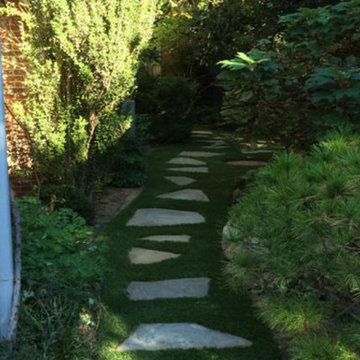
NexGen Lawns installed artificial grass in those hard to maintain smaller landscaped areas with specialized air panels through AirField Systems. The AirDrain panels provide an extra one inch of air which allows for a vertical and horizontal drainage unmatched in the industry.
Infill migration is a thing of the past!
AirDrain is perfect around trees and landscape, instead of a gravel base. Allowing the trees surroundings to remain untouched.
And what if you decide to remove the artificial turf, no digging out a gravel base of any kind. Just remove the grid, you’re done!
The AirDrain panel is able to tolerate the harsh heat and bitter cold which classifies it as a “NoBreak” plastic. The specialized air panels install into place faster than gravel giving you that synthetic grass to enjoy sooner and year round.
AirDrain Drainage ASTM D 4716 Synthetic Grass and Natural Grass Testing
2