
Search results for "Vegetable oils" in Home Design Ideas
 Designs Dell'Ario Interiors
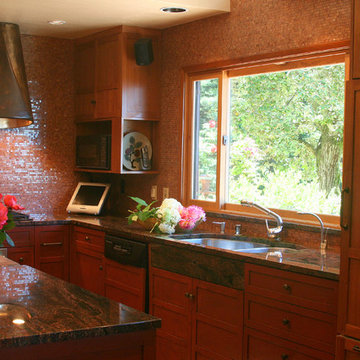
This cooks' kitchen includes back-to-back cutting boards--one savory and one baking--two pop-up appliance trays in cabinets, one for the Cuisinart and one for the mixer, an open air basket drawer for root vegetables. Specialty cabinets include a warming drawer, pull-out oil pantry near the cooktop, baking center, tray pantry, teapot collection display, and recycling center. Custom cabinetry by Trumblewood in Berkeley was designed to mimic antique red lacquer tansu furniture. Upper cabinets and refrigerator panels were fashioned from cherry wood harvested from the Aldo Leopold forest preserve in Wisconsin. The biomorphic custom hood was inspired by the Guggenheim Bilbao. Roja marble mosaic tile spans from the countertop to ceiling. Verde Fire granite countertops and sink apron and custom light fixture add to the personalized details.
 Robbins Contracting
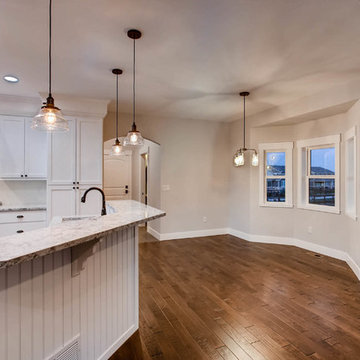
Open concept kitchen - large cottage l-shaped dark wood floor and brown floor open concept kitchen idea in Denver with a farmhouse sink, shaker cabinets, white cabinets, quartzite countertops, white backsplash, subway tile backsplash, black appliances and an island

Find the right local pro for your project
 Robbins Contracting
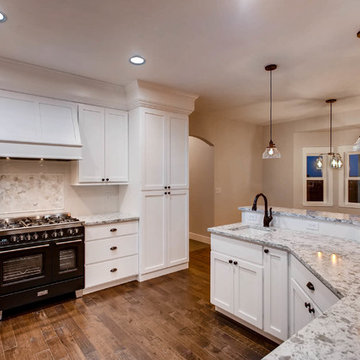
Open concept kitchen - large cottage l-shaped dark wood floor and brown floor open concept kitchen idea in Denver with a farmhouse sink, shaker cabinets, white cabinets, quartzite countertops, white backsplash, subway tile backsplash, black appliances and an island
 Kelly Smiar Interior Design
Silke Laqua
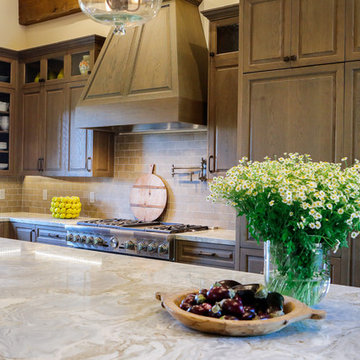
Open concept kitchen - large transitional l-shaped medium tone wood floor and brown floor open concept kitchen idea in San Diego with a single-bowl sink, raised-panel cabinets, distressed cabinets, granite countertops, gray backsplash, limestone backsplash, paneled appliances and an island
Open concept kitchen - large transitional l-shaped medium tone wood floor and brown floor open concept kitchen idea in San Diego with a single-bowl sink, raised-panel cabinets, distressed cabinets, granite countertops, gray backsplash, limestone backsplash, paneled appliances and an island
 Scott Simpson Design + Build
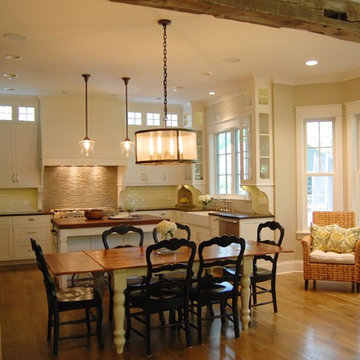
Natural elements are the centerpiece of this new construction’s thoughtful design and unique details.
Set on a standard Northbrook, IL lot, this 4-bedroom house makes the most out of its 2,900 square feet by working with beautiful, natural materials.
Thoughtful details include high windows that allow for both natural light and privacy, 9-foot ceilings in the basement, and a reclaimed wood beam arch separating the family room from the kitchen. The house’s exterior is noteworthy as well, with copper gutters, wide-planked white siding, and a welcoming front porch.
But the true star is in the backyard.
We were able to make this house very special (and very green) by adding the first village-approved rain garden in Northbrook. Rain gardens use vegetation, soils, and other elements to restore some of the natural processes required to manage water and create a healthier environment. We installed a 5,000 gallon sub-ground retention system to diminish the load of a large rain event on the property and the municipal system, while retaining water for the homeowner that can then be used for irrigation on the property.
 MRF Construction, Inc.
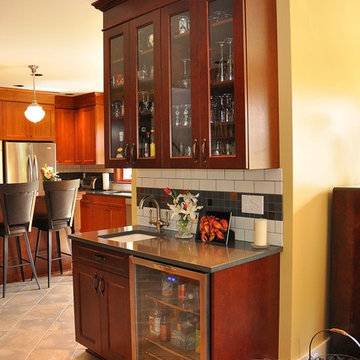
The owners desired an open kitchen for entertaining with views of their garden, and a home that was more environmentally responsible. A small addition on the kitchen allowed for an open design and a powder bath. The kitchen has custom cherry cabinets and mahogany wood countertops finished with a vegetable oil and wax finish. All appliances were selected both for looks and energy-efficiency, and period style lighting was selected as accent lighting. After researching concerns about radon in some granite, Caesarstone quartz and stainless steel countertops were selected for durability.

 Mette's Cabinet Corner
Sarah M.
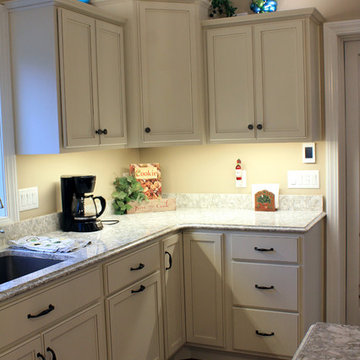
Large transitional u-shaped medium tone wood floor eat-in kitchen photo in Chicago with an undermount sink, shaker cabinets, white cabinets, quartzite countertops, stone slab backsplash, stainless steel appliances and an island
Large transitional u-shaped medium tone wood floor eat-in kitchen photo in Chicago with an undermount sink, shaker cabinets, white cabinets, quartzite countertops, stone slab backsplash, stainless steel appliances and an island
 Mette's Cabinet Corner
Sarah M.
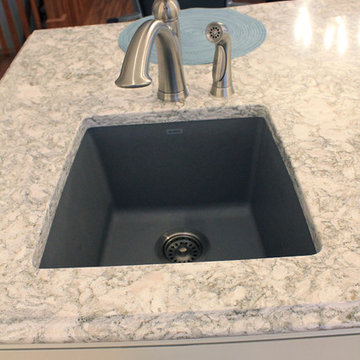
Example of a large transitional u-shaped medium tone wood floor eat-in kitchen design in Chicago with an undermount sink, shaker cabinets, white cabinets, quartzite countertops, stone slab backsplash, stainless steel appliances and an island
Example of a large transitional u-shaped medium tone wood floor eat-in kitchen design in Chicago with an undermount sink, shaker cabinets, white cabinets, quartzite countertops, stone slab backsplash, stainless steel appliances and an island
 Robbins Contracting
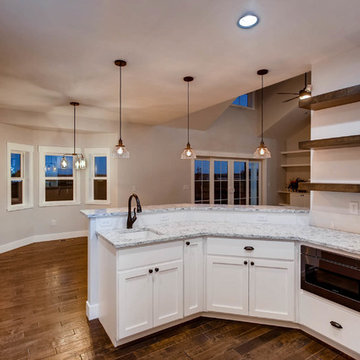
Large cottage l-shaped dark wood floor and brown floor open concept kitchen photo in Denver with a farmhouse sink, shaker cabinets, white cabinets, quartzite countertops, white backsplash, subway tile backsplash, black appliances and an island
 kmjee
kmjeePepper plants are a delightful addition to any garden, offering a vibrant burst of color and spice to your culinary creations. However, even experienced gardeners can encounter challenges when growing pepper plants. In this blog, we'll explore some common issues you might face and provide practical solutions to help your pepper plants thrive.
1. Slow or Stunted Growth
Issue: Slow or stunted growth in pepper plants can be discouraging, but there are specific steps you can take to address this issue effectively.
Solution:
a. Soil Health:
- Well-Draining Soil: Ensure your pepper plants are in well-draining soil to prevent waterlogged roots, which can inhibit growth.
- Organic Matter: Incorporate plenty of organic matter, such as compost or well-rotted manure, into the soil to improve its texture and nutrient content.
- pH Level: Test the soil pH and adjust it to the ideal range between 6.0 and 6.8 using lime or sulfur as needed.
b. Fertilization:
- Balanced Fertilizer: Use a balanced, slow-release fertilizer designed for vegetables to provide essential nutrients steadily throughout the growing season.
- Compost: Amend the soil with compost to enhance nutrient availability and soil structure. This can promote healthier growth.
c. Watering:
- Consistent Moisture: Maintain consistent soil moisture levels by watering your pepper plants regularly but avoid waterlogging. Aim for 1-2 inches of water per week, adjusting based on your local climate and weather conditions.
- Mulching: Apply mulch around the base of the plants to retain soil moisture and regulate temperature.
2. Yellowing Leaves
Issue: Yellowing leaves can be a sign of various underlying problems, but addressing them promptly can restore the vibrancy of your pepper plants.
Solution:
a. Nutrient Deficiencies:
- Balanced Fertilization: Use a well-balanced fertilizer that includes micronutrients to address nutrient deficiencies.
- Specific Nutrients: If you suspect a particular deficiency, such as magnesium, iron, or nitrogen, apply the appropriate nutrient supplement following package instructions.
b. Pest and Disease Control:
- Pest Inspection: Regularly inspect the leaves and stems for common pests like aphids and mites. Remove affected leaves and treat with organic pesticides if necessary.
- Disease Management: Look out for signs of diseases like bacterial leaf spot or fungal issues. Apply organic fungicides or bactericides as recommended.
3. Blossom Drop
Issue: When pepper plants drop their blossoms prematurely, it can hinder fruit development and lead to disappointment.
Solution:
a. Temperature Control:
- Stable Temperatures: Ensure your pepper plants are exposed to consistent temperatures between 70°F and 80°F (21°C to 27°C) during flowering. Avoid sudden temperature fluctuations by providing shelter or using row covers.
b. Pollination:
- Assist with Pollination: If growing peppers indoors or in a greenhouse, help with pollination by gently shaking the plants or using a small brush to transfer pollen between flowers. Outdoor pepper plants are usually pollinated by insects.
4. Wilting Plants
Issue: Wilting or drooping pepper plants can be a sign of various problems, but proper care can revive them.
Solution:
a. Watering:
- Consistent Moisture: Adjust your watering routine to keep the soil consistently moist but not waterlogged. Water early in the day to prevent fungal issues.
- Drainage: Ensure proper soil drainage by amending the soil or using raised beds to prevent waterlogged roots.
b. Pest Control:
- Pest Inspection: Examine the undersides of leaves for signs of pests like aphids, spider mites, or whiteflies. Treat infestations promptly with biological insecticides.
5. Curling Leaves
Issue: Curling or misshapen leaves indicate stress in pepper plants, which can be caused by various factors.
Solution:
a. Environmental Stress:
- Stable Conditions: Ensure your pepper plants are in an environment with stable humidity, temperature, and adequate air circulation. Avoid sudden changes in conditions.
- Proper Ventilation: Adequate air circulation can reduce humidity and prevent fungal issues.
b. Pest and Disease Management:
- Pest Inspection: Regularly inspect your plants for pests and diseases, addressing them promptly with organic remedies as needed.
6. Sunscald
Issue: Sunscald can lead to discolored, leathery patches on pepper fruits when exposed to intense sunlight.
Solution:
a. Shade Cloth:
- Sun Protection: Shield your pepper plants from harsh sunlight during the hottest part of the day using shade cloth or by planting them where they receive some filtered sunlight.
b. Pruning:
- Fruit Shading: Prune excess foliage to allow better fruit shading, reducing the risk of sunscald. Ensure that there's a balance between foliage and fruit.
7. Pepper Plant Pests and Diseases
Issue: Aphids, mites, whiteflies, and various diseases can affect pepper plants, but you can manage them effectively.
Solution:
a. Regular Inspection:
- Vigilant Monitoring: Regularly inspect your pepper plants for signs of pests or diseases, paying close attention to the undersides of leaves and stems.
b. Organic Remedies:
- Pest Control: Use organic remedies like neem oil, insecticidal soap, or diatomaceous earth for pest control.
- Disease Management: Apply organic fungicides or bactericides as recommended to manage diseases like powdery mildew or bacterial spot.
While growing pepper plants can present various challenges, these common issues are manageable with the right knowledge and care. Regular monitoring, proper soil preparation, and timely intervention can help you enjoy a bountiful harvest of vibrant, spicy peppers. Remember that gardening is a learning experience, and each challenge you face is an opportunity to improve your skills and enjoy the rewards of homegrown peppers in your favorite dishes.
 Mette's Cabinet Corner
Sarah M.
Example of a large transitional u-shaped medium tone wood floor eat-in kitchen design in Chicago with an undermount sink, shaker cabinets, white cabinets, quartzite countertops, stone slab backsplash, stainless steel appliances and an island
Example of a large transitional u-shaped medium tone wood floor eat-in kitchen design in Chicago with an undermount sink, shaker cabinets, white cabinets, quartzite countertops, stone slab backsplash, stainless steel appliances and an island
 MRF Construction, Inc.
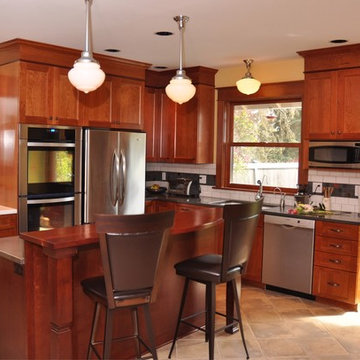
The owners desired an open kitchen for entertaining with views of their garden, and a home that was more environmentally responsible. A small addition on the kitchen allowed for an open design and a powder bath. The kitchen has custom cherry cabinets and mahogany wood countertops finished with a vegetable oil and wax finish. All appliances were selected both for looks and energy-efficiency, and period style lighting was selected as accent lighting. After researching concerns about radon in some granite, Caesarstone quartz and stainless steel countertops were selected for durability.
 Potomac River Interiors
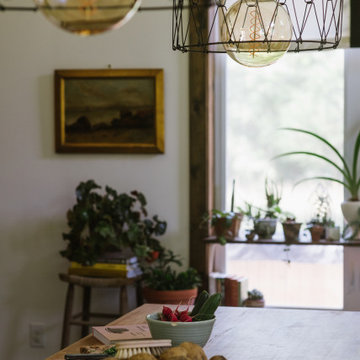
Repurposed Upcycled Hanging Pendant Lamps over Kitchen Island
Vintage Art Oil Landscape
Green Plants
Vintage Stool
Garden Vegetables
Butcherblock Countertops by Lumber Liquidators


 Kelly Johnson
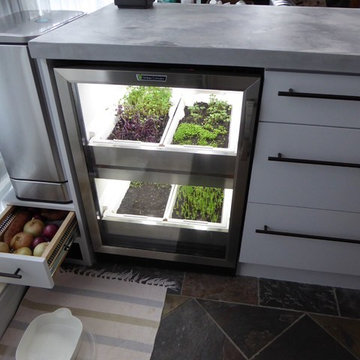
Custom-made vegetable storage drawer with venting and indoor spice garden
Kitchen - industrial kitchen idea in Toronto
Kitchen - industrial kitchen idea in Toronto
 Cuibul de Design
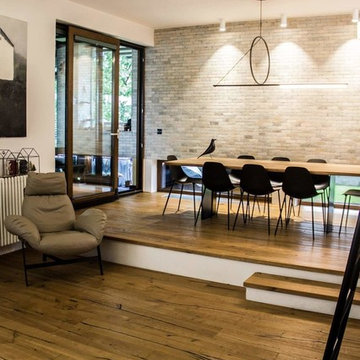
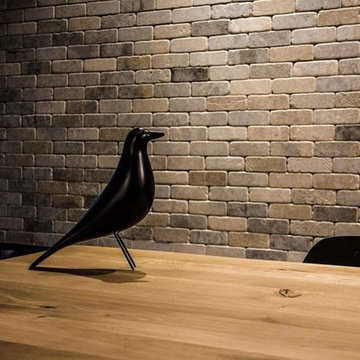
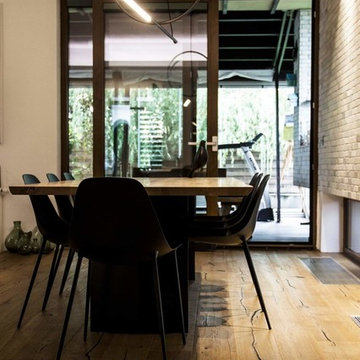
SKY-NATURA NATURAL SIDES C.R. & S. RIVA1920 Table made with a solid wood top having glued boards, with squared or natural edges in combination with iron legs characterised by double sheet metal semi-folded in the shape of a rhombus.Finish: base of oil / natural wax of vegetable origin with pine extracts.
 Cuibul de Design
SKY-NATURA NATURAL SIDES C.R. & S. RIVA1920 Table made with a solid wood top having glued boards, with squared or natural edges in combination with iron legs characterised by double sheet metal semi-folded in the shape of a rhombus.Finish: base of oil / natural wax of vegetable origin with pine extracts.
 Cuibul de Design
SKY-NATURA NATURAL SIDES C.R. & S. RIVA1920 Table made with a solid wood top having glued boards, with squared or natural edges in combination with iron legs characterised by double sheet metal semi-folded in the shape of a rhombus.Finish: base of oil / natural wax of vegetable origin with pine extracts.
6