
Search results for "Virtual assistants" in Home Design Ideas

 Gibson Greenwood Inc.
Home office desk. Clear lacquered plywood.
Example of a minimalist home office design in Toronto
Example of a minimalist home office design in Toronto


Find the right local pro for your project

 Globe Electric
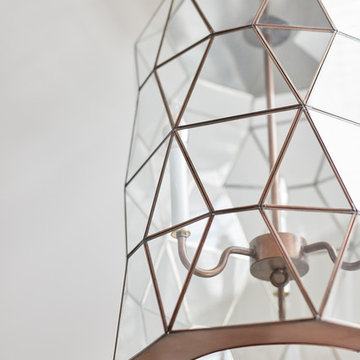
Fashioned after vintage inspired lighting Globe Electric’s Mercer 1-Light Vintage Industrial Hanging Pendant adds a rustic industrial feel to any room. Hanging from a fully adjustable cord you can customize this fixture to your desired look and lighting needs. Fully compatible with dimmable LED bulbs and dimmer switch, the clear glass shade and exposed bulb easily creates lighting ambiance and different moods. Ideal for use in kitchens, restaurants, bars, and dining rooms. Includes all mounting hardware for quick and easy installation and requires one standard medium base 60W bulb (sold separately). Check out Globe Electric's selection of designer vintage Edison bulbs to create a truly unique design.

 ABD STUDIO
Bess Friday
Home design - transitional freestanding desk medium tone wood floor home design idea in San Francisco with green walls
Home design - transitional freestanding desk medium tone wood floor home design idea in San Francisco with green walls
 Electronic Design & Consulting, Inc.
This article is posted here with the consent of the author. The views and opinions expressed in this article are those of the author and do not necessarily reflect the official policy, position, view, or opinion of Crestron Electronics, Inc., or of any of its employees. Crestron Electronics is not responsible for, and does not verify the accuracy of, any of the information contained in this article.
By Jeff Singer
The “smart” revolution began several years ago with smartphones (a.k.a phones) and has extended in recent years to thermostats, doorbells, alarm systems, and kitchen appliances. Smart devices are so ubiquitous that the term “smart” is overused to the point that it is almost meaningless. Companies are eager to jump on the bandwagon and claim their products are “smart,” and consumers proudly claim they have a smart home because they have lighting control. Misconceptions about smart homes are prevalent and create confusion in the marketplace. This can have deleterious effects on businesses and underserve consumers. Here are seven of the most popular misconceptions about smart homes:
1. Apps are smart
Apps are convenient and easy to use. Yes, it seems there’s an app for everything. People expect to be able to download an app and do just about anything. App developers and many companies do not disavow consumers of this myth. On the contrary, they promote this idea with carefully worded descriptions. The promise of having the world at your fingertips for $1.99 is very enticing. Although it sounds too good to be true, it is also too good to pass up for many people. This leads to undervaluing home control and disappointment when the apps don’t work, which undermines confidence in our industry. The fact is that apps are not smart. They do not control anything. They must connect to and communicate with a control system or cloud service that processes, prioritizes, and executes commands. That’s the real magic and what most people do not understand.
2. Smart devices work together
With so many smart appliances and devices on the market today, it’s understandable that the average consumer might think that they actually communicate and work together. This is simply not the case. Smart devices are not that smart. They are designed and manufactured by different, often competing, companies. There are no national or industry standards governing these products. Even if they all operate using Wi-Fi® communications, that doesn’t mean they work together. Some companies promote a home control platform, which unites different devices from different companies – in theory. The platform is yet another third-party software totally dependent on other companies developing APIs and writing control modules for their hardware to run on that piece of software. The devices are not independently compatible. Also, when updates are made to either the hardware or the software, functionality may be affected for some period. That’s a nice way of saying the device or system won’t work and there’s no way of knowing for how long.
3. It’s a DIY project
Which brings us to the next myth, which is that the average person can do it themselves. Unless you are a skilled professional, I would not advise taking on a smart home project. You want to make a light turn on and off with your Alexa® or Google Assistant™ virtual assistant software, go for it. A smart home takes much more planning and expertise. I have no problem changing a light bulb or hanging a light fixture in my dining room; however, I am not going to rewire my house. I may change the flush valve in my toilet, but I’m not going to replace the pipes in my house. You get it. Integrating devices and systems, establishing different zones, creating scenes, designing the UI with a balance between control, feedback, and simplicity – all takes experience and skill.
4. Need a programmer to make changes
Early adopters may have experienced the pain of trying to make a simple change or update to their home control system. Years ago, if the cable provider changed the channel line-up, the homeowner would have to call the dealer or programmer to make an appointment for them to come out to the house to reprogram the system. The system wouldn’t work as expected until it was updated, which often took several days and beaucoup bucks. Not anymore. Technology has evolved so now it’s easy for system owners to change favorite channels, create scenes, rename buttons, update images, and more. While a professional is needed for the initial installation and setup, the system is easy to manage once it’s up and running. This makes life so much easier for both dealer and customer.
5. Tech becomes obsolete quickly
Similar to updating the UI, updating firmware or hardware used to be a stressful process. A smart home should be intelligent enough to update itself. Apps don’t become obsolete. Updates are constantly pushed out from the cloud, making them better all the time. The same is true for a good smart home system. New features, functions, and device support gets added in the background consistently, so the system you installed (or purchased) yesterday gets better over time. Swapping out decorative elements, such as keypads, dimmers, and touch screens is also seamless. When a new device is added, all the settings are pulled down from the cloud and it just works. No system interruptions. No sunk costs. No imposing house calls. No surprise bills.
6. Lighting control saves energy and money
Lighting control is one of the most popular smart systems, but it takes more than just one system to make a home smart. On the surface, it makes sense that if you dim the lights ten percent, then you save ten percent of energy costs. If the shades are raised during the day to take advantage of sunlight so the lights don’t need to be on (or at least not 100%), but that causes the room temperature to rise a few degrees, which triggers the air conditioner to run longer and more often, was energy usage (or cost) reduced? A smart home integrates all the various systems and technology to optimize comfort, convenience, safety, and sometimes energy.
7. Home technology is easy to hack
Security is at the forefront of people’s minds these days. Personal identities are stolen; email accounts hacked; private photos publicized; and more. A smart home must outsmart those who don’t respect privacy. Crestron control systems adhere to the strictest security standards. The same Crestron control system that goes into a home is also installed in secure government and military facilities, global banking institutions, hospitals, and other mission critical applications. When installed correctly by a trained professional, a Crestron smart home is the gold standard for security, comfort, and convenience.

 Blinds.com
Alison suffers from terrible migraines and wanted a room in her home that was dark enough to help her recover naturally. She found that our Ultimate Blackout Cellular Shades and Movable Arch Blackout Shades were the perfect fit for her unique shaped windows. These shades have vinyl channels that block all light coming in from the sides of the shades for a complete blackout.
To learn more about Alison of How She Does, check out here blog post, here: http://www.howdoesshe.com/migraines-blinds-com/


 Haus Interior Design
We used a lot of cool texture for this boy's bedroom! Stikwood on the walls, hand-fabricated iron bed with metal buckle, soft furry blanket and deep red corduroy.
Photography: Helen John



 User
Mid-sized urban loft-style medium tone wood floor and brown floor living room photo in Vancouver with white walls, a standard fireplace and a metal fireplace

 DHD Architecture and Interior Design
2 Bedrooms / 2,200 Square Feet
This pied-à-terre loft with soaring fourteen foot ceilings, sits within a classic cast iron building in the heart of Noho, NYC. It is home to a couple who are serious about their art. DHD worked on this project from the onset of design and construction, allowing for a clear harmony between the architecture and design. The wide plank grey oak floors and white gallery walls set the palette for an art filled environment. A custom designed silk rug fills the main space, while the large-scale Lindsey Adelman light installation hangs above. The furniture, a mix of vintage and classic contemporary, were carefully curated to create a home that is elegant and subtle yet eclectic. The use of cowhide, mohair, woven leather and velvet create subtle textures against the painted brick and wood planked walls.
Artists: Burning plane photo: Richard Mosse
Sculpture coffee table: Roy Gussow
Drawings in the wall unit: Louise Bourgeois and Tracey Emin
Custom Metal Artist: Todd Fouser of Face Design & Fabrication
http://facedesign.com
Photography by: Rick Lew
www.ricklew.com
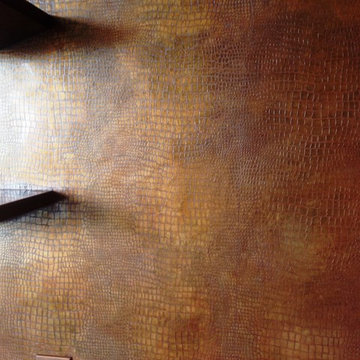
 Faux You Designs, Inc.
This finish was created for a designer who wanted the look of an alligator wall paper print w/out the seam lines of wall paper. We embossed the alligator stencil w/ different types of European textures & glazes
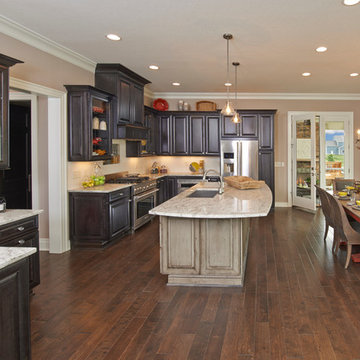


 Michal & Company, Inc.
Natural Blue Lapis Lazuli carved free form
Example of a trendy living room design in Los Angeles
Example of a trendy living room design in Los Angeles

 Jenny Madden Design
Example of a mid-sized trendy dark wood floor hallway design in New York with multicolored walls


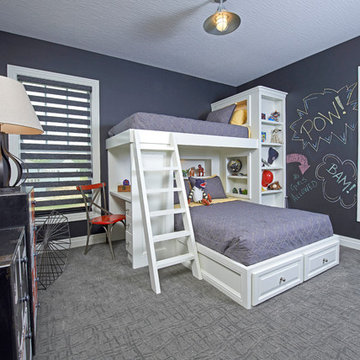
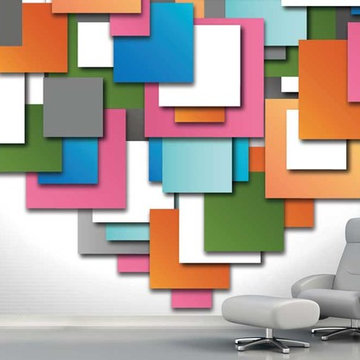
 wallsandmurals
"3D wallpaper ideas and 3d wall coverings are modern wallpaper ideas that create a unique perspective on the interior wall they are installed upon. A pattern wallpaper creator can use 3d wallpaper for wallsto create illusion of space in any home decor. Black and white wallpaper pattern and black wallpaper for walls are the most common color applications you would find a 3D wall paper in. You can order 3d wallpaper from our wallpaper warehouse and create custom wallpaper for walls using the wallpaper creator option. All our wallpapers are easy to install and can be ordered as a diy wallpaper online. Walls and murals offers free shipping of the wallpaper designs."
https://www.wallsandmurals.com/3d-wallpaper


 Simply Stunning Spaces
A comfortable, modern home to return to is essential for a busy, active, professional and philanthropic bachelor like Kiptyn.
Example of a small trendy freestanding desk dark wood floor study room design in San Diego with blue walls and no fireplace
Example of a small trendy freestanding desk dark wood floor study room design in San Diego with blue walls and no fireplace
19