
Search results for "Vulnerable" in Home Design Ideas
 abarnai
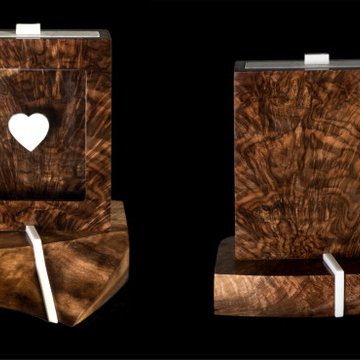
A Sand Ceremony is a symbol of the union of two individuals, their unique strength, vulnerabilities, histories and families. This sand ceremony box, named Homok Sabbia, was a very special wedding gift for a Hungarian woman and her Italian fiancé. It represents the uniting of their origins, cultures and languages as they combined sand (Homok) from her home garden in Hungary and sand (Sabbia) from the seaside in Italy, during their wedding ceremony.
The most beautiful and striking section of the heart wood was selected to create the box; an area with a grain structure that radiated up and out from the bottom, similar to a bouquet of vibrant flowers. The base was created with the natural edge of the walnut sap wood, or new growth, which has a different color and grain structure than the heart wood, the oldest growth. While cut from the same slap of Claro walnut, the two different sections, the base and the box, have their own unique beauty and striking features.
The richness of the dark wood and intricate grain patterns were balanced with the addition of pure and striking white Carrara marble from Italy. The central marble heart was hand cut, sanded, polished and then secured in the heart shaped space that had been gently carved out of the glass front. A marble vein was inserted in the base and the narrow lid was also carved out of marble to harmoniously bring the whole piece together.
When it arrived in Hungary, the bride to-be wrote us ““It’s sooooo beautiful! Perfect! I’m so happy, I like it more than I imagined!”
 abarnai
A Sand Ceremony is a symbol of the union of two individuals, their unique strength, vulnerabilities, histories and families. This sand ceremony box, named Homok Sabbia, was a very special wedding gift for a Hungarian woman and her Italian fiancé. It represents the uniting of their origins, cultures and languages as they combined sand (Homok) from her home garden in Hungary and sand (Sabbia) from the seaside in Italy, during their wedding ceremony.
The most beautiful and striking section of the heart wood was selected to create the box; an area with a grain structure that radiated up and out from the bottom, similar to a bouquet of vibrant flowers. The base was created with the natural edge of the walnut sap wood, or new growth, which has a different color and grain structure than the heart wood, the oldest growth. While cut from the same slap of Claro walnut, the two different sections, the base and the box, have their own unique beauty and striking features.
The richness of the dark wood and intricate grain patterns were balanced with the addition of pure and striking white Carrara marble from Italy. The central marble heart was hand cut, sanded, polished and then secured in the heart shaped space that had been gently carved out of the glass front. A marble vein was inserted in the base and the narrow lid was also carved out of marble to harmoniously bring the whole piece together.
When it arrived in Hungary, the bride to-be wrote us ““It’s sooooo beautiful! Perfect! I’m so happy, I like it more than I imagined!”
 abarnai
A Sand Ceremony is a symbol of the union of two individuals, their unique strength, vulnerabilities, histories and families. This sand ceremony box, named Homok Sabbia, was a very special wedding gift for a Hungarian woman and her Italian fiancé. It represents the uniting of their origins, cultures and languages as they combined sand (Homok) from her home garden in Hungary and sand (Sabbia) from the seaside in Italy, during their wedding ceremony.
The most beautiful and striking section of the heart wood was selected to create the box; an area with a grain structure that radiated up and out from the bottom, similar to a bouquet of vibrant flowers. The base was created with the natural edge of the walnut sap wood, or new growth, which has a different color and grain structure than the heart wood, the oldest growth. While cut from the same slap of Claro walnut, the two different sections, the base and the box, have their own unique beauty and striking features.
The richness of the dark wood and intricate grain patterns were balanced with the addition of pure and striking white Carrara marble from Italy. The central marble heart was hand cut, sanded, polished and then secured in the heart shaped space that had been gently carved out of the glass front. A marble vein was inserted in the base and the narrow lid was also carved out of marble to harmoniously bring the whole piece together.
When it arrived in Hungary, the bride to-be wrote us ““It’s sooooo beautiful! Perfect! I’m so happy, I like it more than I imagined!”
Find the right local pro for your project
 abarnai
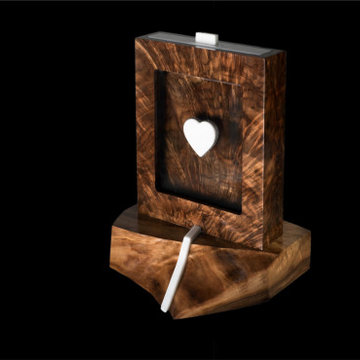
A Sand Ceremony is a symbol of the union of two individuals, their unique strength, vulnerabilities, histories and families. This sand ceremony box, named Homok Sabbia, was a very special wedding gift for a Hungarian woman and her Italian fiancé. It represents the uniting of their origins, cultures and languages as they combined sand (Homok) from her home garden in Hungary and sand (Sabbia) from the seaside in Italy, during their wedding ceremony.
The most beautiful and striking section of the heart wood was selected to create the box; an area with a grain structure that radiated up and out from the bottom, similar to a bouquet of vibrant flowers. The base was created with the natural edge of the walnut sap wood, or new growth, which has a different color and grain structure than the heart wood, the oldest growth. While cut from the same slap of Claro walnut, the two different sections, the base and the box, have their own unique beauty and striking features.
The richness of the dark wood and intricate grain patterns were balanced with the addition of pure and striking white Carrara marble from Italy. The central marble heart was hand cut, sanded, polished and then secured in the heart shaped space that had been gently carved out of the glass front. A marble vein was inserted in the base and the narrow lid was also carved out of marble to harmoniously bring the whole piece together.
When it arrived in Hungary, the bride to-be wrote us ““It’s sooooo beautiful! Perfect! I’m so happy, I like it more than I imagined!”
 abarnai
A Sand Ceremony is a symbol of the union of two individuals, their unique strength, vulnerabilities, histories and families. This sand ceremony box, named Homok Sabbia, was a very special wedding gift for a Hungarian woman and her Italian fiancé. It represents the uniting of their origins, cultures and languages as they combined sand (Homok) from her home garden in Hungary and sand (Sabbia) from the seaside in Italy, during their wedding ceremony.
The most beautiful and striking section of the heart wood was selected to create the box; an area with a grain structure that radiated up and out from the bottom, similar to a bouquet of vibrant flowers. The base was created with the natural edge of the walnut sap wood, or new growth, which has a different color and grain structure than the heart wood, the oldest growth. While cut from the same slap of Claro walnut, the two different sections, the base and the box, have their own unique beauty and striking features.
The richness of the dark wood and intricate grain patterns were balanced with the addition of pure and striking white Carrara marble from Italy. The central marble heart was hand cut, sanded, polished and then secured in the heart shaped space that had been gently carved out of the glass front. A marble vein was inserted in the base and the narrow lid was also carved out of marble to harmoniously bring the whole piece together.
When it arrived in Hungary, the bride to-be wrote us ““It’s sooooo beautiful! Perfect! I’m so happy, I like it more than I imagined!”
 Otani Ninja Deterrent™
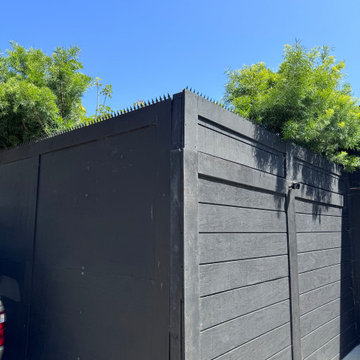
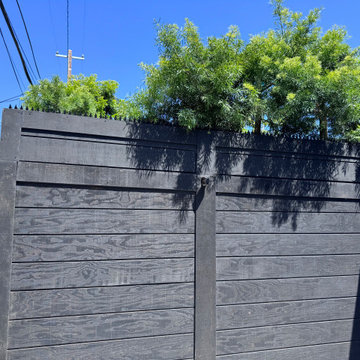
Tucked behind a quiet street in Venice, this home faced a vulnerable alley elevation with several potential footholds. The owner wanted to stop opportunistic access without changing the minimalist black façade. We capped the fence runs with two complementary profiles: the Ninja Deterrent™ GIZAGIZA Heart along the corner spans for a crisp, graphic silhouette, and Classic short Black Dual-bladed along the bamboo side to create secure continuity where foliage meets the wall. The result is a clean, continuous line that reads like a slim architectural cap from a distance—yet removes hand purchase up close. The homeowner loves that security improved without sacrificing curb appeal.
 Otani Ninja Deterrent™
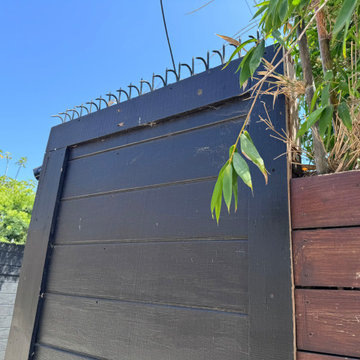
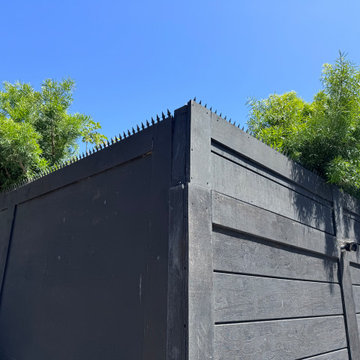
Tucked behind a quiet street in Venice, this home faced a vulnerable alley elevation with several potential footholds. The owner wanted to stop opportunistic access without changing the minimalist black façade. We capped the fence runs with two complementary profiles: the Ninja Deterrent™ GIZAGIZA Heart along the corner spans for a crisp, graphic silhouette, and Classic short Black Dual-bladed along the bamboo side to create secure continuity where foliage meets the wall. The result is a clean, continuous line that reads like a slim architectural cap from a distance—yet removes hand purchase up close. The homeowner loves that security improved without sacrificing curb appeal.
 Otani Ninja Deterrent™
Tucked behind a quiet street in Venice, this home faced a vulnerable alley elevation with several potential footholds. The owner wanted to stop opportunistic access without changing the minimalist black façade. We capped the fence runs with two complementary profiles: the Ninja Deterrent™ GIZAGIZA Heart along the corner spans for a crisp, graphic silhouette, and Classic short Black Dual-bladed along the bamboo side to create secure continuity where foliage meets the wall. The result is a clean, continuous line that reads like a slim architectural cap from a distance—yet removes hand purchase up close. The homeowner loves that security improved without sacrificing curb appeal.
 Otani Ninja Deterrent™
Tucked behind a quiet street in Venice, this home faced a vulnerable alley elevation with several potential footholds. The owner wanted to stop opportunistic access without changing the minimalist black façade. We capped the fence runs with two complementary profiles: the Ninja Deterrent™ GIZAGIZA Heart along the corner spans for a crisp, graphic silhouette, and Classic short Black Dual-bladed along the bamboo side to create secure continuity where foliage meets the wall. The result is a clean, continuous line that reads like a slim architectural cap from a distance—yet removes hand purchase up close. The homeowner loves that security improved without sacrificing curb appeal.
 Fine Floorz
Has your hardwood floors finish worn off in many areas, especially high traffic areas of your home such as hallways, entry ways and kitchens;
These high traffic areas of your home are particularly important to keep maintained. If and when the finish has worn away in areas like entryways or kitchens where the impeding threat of water/moisture is present, the hardwood is then vulnerable to potential damage. You always want to keep a watchful eye on areas of your home that have a lot of foot traffic. If you notice that in your kitchen, where you stand to do dishes, or the entryway, where you first walk into your home, show signs of wear in the finish, this might be a good time to start thinking about refinishing. Even if you choose not to go through the entire sanding and refinishing process, a screening and recoating of polyurethane is a great option. Maintaining the integrity of the finish will ultimately give your hardwood floors the longest lifespan.

 Exteriors by Global Home
For this siding replacement in Langhorne, PA we replaced the existing wood siding. Wood tends to swell and crack when exposed to moisture, making it vulnerable to drafts and rot. Vinyl is a great replacement for wood for it's low maintenance and low cost. Vinyl only takes a quick installation and your home is all set with reliable, new siding. The Tuscan Clay finish pulls a bit from the brick color palette, giving off a gorgeous new look.
 Otani Ninja Deterrent™
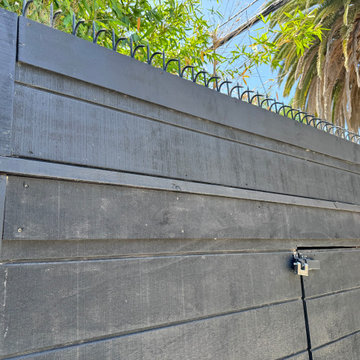
Tucked behind a quiet street in Venice, this home faced a vulnerable alley elevation with several potential footholds. The owner wanted to stop opportunistic access without changing the minimalist black façade. We capped the fence runs with two complementary profiles: the Ninja Deterrent™ GIZAGIZA Heart along the corner spans for a crisp, graphic silhouette, and Classic short Black Dual-bladed along the bamboo side to create secure continuity where foliage meets the wall. The result is a clean, continuous line that reads like a slim architectural cap from a distance—yet removes hand purchase up close. The homeowner loves that security improved without sacrificing curb appeal.
 Otani Ninja Deterrent™
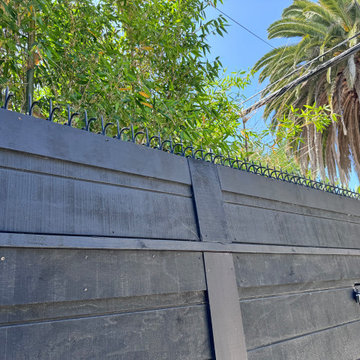
Tucked behind a quiet street in Venice, this home faced a vulnerable alley elevation with several potential footholds. The owner wanted to stop opportunistic access without changing the minimalist black façade. We capped the fence runs with two complementary profiles: the Ninja Deterrent™ GIZAGIZA Heart along the corner spans for a crisp, graphic silhouette, and Classic short Black Dual-bladed along the bamboo side to create secure continuity where foliage meets the wall. The result is a clean, continuous line that reads like a slim architectural cap from a distance—yet removes hand purchase up close. The homeowner loves that security improved without sacrificing curb appeal.
 menakaimai architects
Project Type : Residential
Location : Ethul Kotte
Land Area :3267 sqft ( 12 p )
Architects : Archt. Sameera Dharmasena (menakaimai design studio)
: Archt. Menaka Karunarathna (menakaimai design studio)
Structural Engineering : Eng Sajeewa Edirrisingha
Write-up : Archt. Navoda Rthnayaka
Photographs : Amila Rathnayaka (Amila Rathnayaka photography)
Just as the eyes are the windows to a person’s soul, a house is a window to its architect’s aspirations. The residence for Mr. Alex and family at Ethul Kotte is a perfect example for this, which is an open book with multiple layers. From the entrance to the rooftop, each space creates a specific impression and reveals a little more about the users, as it has been perfectly captured by the architect.
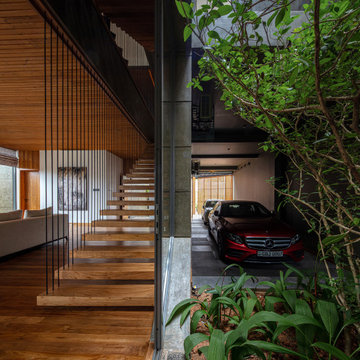
The house is located at the further end of a narrow drive-way, almost hidden from view with its dark façade and greenery, and sits in a compact lot that opens to a marsh at its rear end. With its cladded wall of cement blocks with a unique imprint and the line of bamboo covering the length of the front wall, the boundaries are defined effortlessly while drawing focus to the main entrance. Earthy feeling created at this point heavily dwells on the solidity of the materials and the muted color palette, which is juxtaposed by the lightness of the timber gate, perforated external façade and screen of vines flowing down from the rooftop. Upon entering, the ambiance of the house changes from its somber guarded exterior to a bright and spacious interior that completely opens to its surroundings.
The floating staircase that climbs along the dark titanium wall and the adjoining courtyard run through the full height of the building, merging the solids and the voids at all levels.
Spatial organization in the house is predominantly in three layers and each section of a floor has a clear demarcation between the public and private spaces. Spaciousness is achieved through the simplicity of the spaces, minimalistic furniture and muted tones that are complemented by the complete openness created by the glass facades covering the full height of the spaces. Another noticeable feature is the landscaping where thick low hedges are broken by thin trees to mimic a rampart that characterizes the intermediate space between the interior and boundary of the site, which is demarcated by the alternating solids and voids of the boundary fence.
The ground level creates a warm, welcoming ambiance that is ideal for entertaining guests. From the lines of textures and materials used, to heights and orientations of furniture, each element complements each other to add volume and composure to the space. A peculiar feature is a subtle inspiration from Japanese architecture that is visible in the sharp lines and several decorative features, which enhance the ambiance with splashes of vibrancy created by the simple, yet colorful elements. While the open living-dining space is a subtle fusion between a modern western living space and the Sri Lankan lifestyle that welcomes nature and social interactions, privacy of adjoining spaces such as the kitchen and bedroom is ensured by isolation made pleasant by their private courtyards.
Gradually gracing a visitor at the extended landing of the first floor is the calming sight of the full height cross formed by light filtering through crafted gaps on the wall which becomes a feature and an open shrine. This , seamless flows to the rest of the floor with its vibrant, spacious family living room and TV lobby a that connects all these well as the custom-designed bedrooms
The ambiance of each room voices the unique needs and tastes of its user, while the private balcony screened from the outside by a perforated aluminum façade and a screen of vines, creates an intimate niche. A significant feature is the glazed walls of the master bedroom, which are only screened by thick canvas shades that open to a mesmerizing sunset and a view of the marsh. This makes one question the concepts of privacy traditionally Sri Lankans, whereas the user appears to be embracing the vulnerability in openness and enjoying the soothing beauty in nature through the same.
The second floor is mostly the rooftop garden and bar, which is a multi-functional space ideal for a small gathering. The curtain of creepers covering the full height glass façade separating the bar and open terrace creates a significant change in ambiance by defining the cozy, timber interior of the bar, against the outdoor-, where the monotonous greenery is only broken by a splash of red from the punctured cover of a service staircase running to the upper rooftop level. The uniqueness is in how each space caters for contrast in transition between ambiances spanning from an intimate, mystic bar area ideal for isolation, to a lively social space creates a unique mood compared to the rest of the house. The rooftop thus completes the transition of spaces from open and interactive interior to a mind-palace and a garden that inspires the soul.
“I think that my job is to observe people and the world, and not to judge them; I always hope
To position myself away from so-called conclusions; I would like to leave everything wide open
To all the possibilities in the world.”
-Haruki Murakami-
Layering is a key feature in this design, which is evident in how the façade filters inwards from the curtain of greenery, permeable panel and the external wall, as well as the spatial structure of the interior. The linear form of the building, where the living spaces completely open-out through the glazed facades at the rear end of each floor merges these family-spaces with the neighborhood, which avoids complete isolation of the family. Thus, the design is inspired by the need for a sense of freedom in the residents, while allowing the house to become a place for escape when desired.
 Tile Doctor Ltd
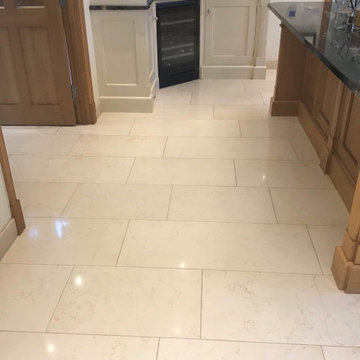
These photos are of a four-year-old Limestone kitchen floor at a property in Boughton that the customer was finding hard to keep clean and maintain a shine. Part of the problem was he owned two dogs and we often warn about the problems of dog urine on sealed tile and stone due to it being high in nitrogen.
On my initial visit I was able to ascertain that the sealer had almost completely worn off, leaving the stone vulnerable to dirt becoming ingrained into the pores of the stone. I come across this problem a lot, in my experience when stone floors are installed by tilers, they generally apply a single coat of sealant which wears off over time, and as discussed earlier can be prematurely degraded by strong chemicals.
My quote to renovate the Limestone floor was accepted and included a deep clean to the stone and grout, stone polish and then re-seal.
I arrived on site on the arranged date and began by scrubbing all the grout lines with Tile Doctor grout brushes and a 3:1 dilution of Tile Doctor Pro-Clean. I then moved on to a small handheld polishing machine to clean around the tile edges using 800 and 1500 grit diamond encrusted burnishing pad to achieve a deep clean.
The process was then repeated throughout the rest of the area using larger 17” burnishing pads fitted to a floor polishing machine. The burnishing pads I used come in a set of four starting with 400-grit and moving up to 800, 1500 and 3000 grit, after each pad is applied the floor is rinsed with water and the soil extracted with a wet vacuum.
It took me much of the day to complete this stage of the renovation and the floor was still damp so once done I left for the day, allowing the floor to dry off overnight.
I returned the following day to complete the final polish using the 3000-grit burnishing pad, this gave a high polished finish which the customer had requested. This last pad is applied dry with only a little water splashed onto the tile, a process we call a spray burnish.
The floor was then sealed with three applications of Tile Doctor Ultra Seal Sealant to protect the newly restored and polished tiles. Ultra-Seal is a penetrating sealer that soaks into those recently cleaned pores in the stone, occupying the space and preventing any dirt from becoming ingrained there. It’s also a natural look sealer so it doesn’t change the colour of the stone in anyway and is almost indetectable once applied.
“Hard work from Philip has left us with a kitchen floor brought back to life – cleaned and sealed in little over 24 hours – brilliant job – Thanks”
Before leaving I gave the customer some tips on maintenance and a complimentary bottle of Tile Doctor Stone Soap to enable him to keep the floor looking its best, this product works well with the sealant we applied and is PH neutral so won’t degrade the new sealer.
Phil Vissian
Northamptonshire Tile Doctor
 Tile Doctor Ltd
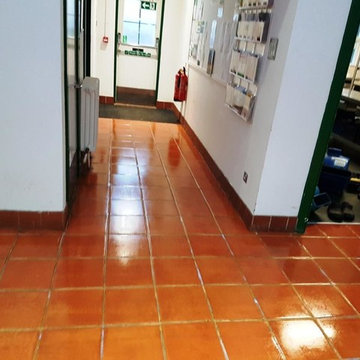
A local cleaning contractor called us in to work on the Terracotta tiled floors at a council building in Amersham. The Terracotta had not been deep cleaned and resealed for about ten years and the sealer had worn off leaving the tile vulnerable to dirt becoming ingrained in the pores of the tile. The grout had also suffered the same fate and had almost gone black in many areas.
This is a common problem with Terracotta which is quite porous and once those pores become ingrained with dirt the tile becomes difficult to clean effectively. The solution is to seal the tile however sealers wear off over time and this was basically the problem.
After discussing the issues we agreed on a plan of action to deep clean the Terracotta tile and grout and then re-seal to protect it. Due to the busy nature of the building we agreed to do the work between Christmas and New Year when we knew the building would be empty.
We started by applying a strong dilution of Tile Doctor Oxy-Gel which is a strong tile cleaning product that being in a gel form ensures it sits on the tile for longer, giving it a longer effective dwell time so it can really eat into and loose the dirt. After approximately twenty minutes the gel was scrubbed into the tile with a black scrubbing pad fitted to a rotary machine. This broke down most of the dirt and removed any remaining sealer. Once the whole floor had been treated in this manner it was rinsed thoroughly with water which was then extracted using a wet vacuum.
With the soiled cleaning solution removed I could see the next step would be to spot clean stubborn staining and clean the grout. For this task I used a strong dilution of Tile Doctor Pro-Clean scrubbing it in by hand using stiff brushes and aided with a hand-held steamer to help treat the stubborn staining. Once done the floor was given a final rinse and then as much moisture as possible removed with the wet vacuum.
We then left the floor to dry off completely and came back a couple of days later to seal the Terracotta tile.
I mentioned earlier that Terracotta is porous; in fact it’s probably the most porous material I deal with, so to fully seal the floor I had to apply eight coats of Tile Doctor Seal and Go which will provide complete and long lasting protection against staining and dirt. Seal and Go also adds an appealing satin sheen to the tile and the new seal will make it much easier to clean in future.
The floor tile and grout now look much healthier and I’m sure the council will be very impressed when they go back to work after the holidays.
Happy New Year…
Andrew Newstead
North Buckinghamshire Tile Doctor
 Betz Pools Limited
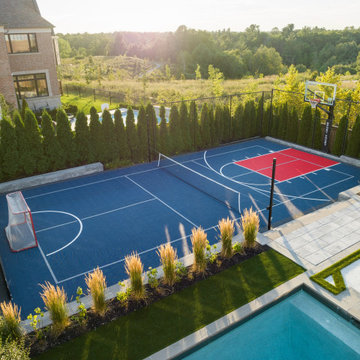
No recreation paradise is complete without a sports court. This 30’ x 56’ court with suspended surface and drainage system from Sport Court Ontario was installed by Salivan Landscape. It’s configured for hockey, basketball and tennis with high panels of screening shielding vulnerable areas.
 CosyCloset Ltd.
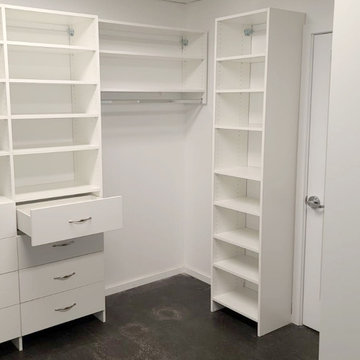
The Vancouver Downtown East Side Women's Centre required a proper space to store and offer clothing and accessories to vulnerable women in need. We were honoured to design and install this full walk-in closet for them.
 Tile Doctor Ltd
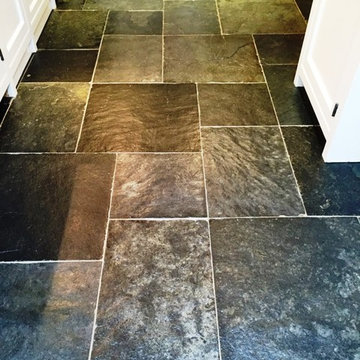
These photographs below are of a Slate Tiled Kitchen floor taken at a customer’s house in Henley-on-Thames which, as its name suggests, sits alongside the River Thames in Oxfordshire. My client’s Slate kitchen floor had recently been cleaned with unsuitable cleaning products which I suspect impacted the sealer leaving it looking dull. Sealers really to improve the look of a stone floor so unsurprisingly once the sealer had been damaged my client had been unable to find a cleaning product that could have any kind of positive effect on the tiles.
It’s fairly well known that many supermarket quality cleaners are only really designed for use on Ceramic or Porcelain tiled floors as they contain acids which strip away at sealers and acid sensitive stone floors, leaving the stone beneath vulnerable. So your select a cleaning product for your floor always read the small print on the back of the label and make sure you avoid anything that mentions not for use on acid sensitive stone; belter still Tile Doctor have a number of products for cleaning tiled floors including Neutral Cleaner and Stone Soap.
To clean the floor and remove any remaining sealer I first made a strong dilution of Tile Doctor Pro Clean which is a strong alkaline cleaner and then spread this over the floor, leaving it to dwell. This allows the cleaner to seep into the slate and get underneath, breakdown sealers and start to lift out ingrained dirt.
Following a dwelling period of roughly ten minutes, I agitated the floor periodically with a rotary machine fitted with a black scrubbing pad and scrubbed along the grout lines with a stiff grout brush. I then used a wet vacuum to extract the resultant slurry away and then followed up by rinsing the floor with clean water, and once again vacuumed up the residue.
Any stubborn areas were retreated until I was happy with the floor and then I left the floor to dry off completely overnight, in preparation for sealing the following day.
Upon my return to the house the following day, I ran some damp tests on different parts of the floor to check for any excess moisture which could potentially damage the performance of the sealer. Once I was satisfied that the floor was completely dry, I proceeded to seal the tiles using Tile Doctor Seal & Go. This will provide a robust surface seal for the future, along with an aesthetically pleasing low-sheen finish.
This sealer works particularly well on Slate tiles and, being a water-based sealant, additionally Seal & Go does not emit an unpleasant smell as it dries. Slate is quite a porous stone so I applied six coats of seal to provide long-lasting protection.
Barry Woodward
Oxfordshire Tile Doctor
 Tile Doctor Ltd
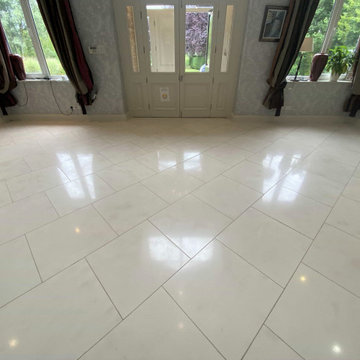
This job was for a repeat client in Toft near Cambridge who had aa stunning large hallway that was tiled in beautiful pale Limestone. My client had asked me back to work on the floor having previously completed the deep clean and seal of a Terracotta floor previously.
The Limestone tiling in the entrance hall had years of some type of topical sealer applied to it. This caused the stone to look slightly discoloured and from certain lights showed up hundreds of scratches and smudges embedded in the seal. I’ve tried to capture this problem in the photographs on this page, but it was very difficult.
A topical sealer sits on the surface of the tile where it is vulnerable to scratching, hallways are generally high traffic areas and so more likely to see this sort of problem. Ideally an impregnating sealer should have been applied, impregnators work by occupying the pores in the stone thus preventing soiling from becoming ingrained in the stone.
Before starting we protected the woodwork against splashing with blue film, I don’t usually make a great deal of mess, but you can never be too careful when working in someone’s property especially one as beautiful as this.
To strip off the old sealer I began by applying a strong dilution of Tile Doctor Remove and Go to the Limestone tiles. I split the floor into sections and used a 400-grit diamond burnishing pad to work the Tile Doctor Remove and Go into the tiles. The floor was then rinsed off using our high-pressure cleaning system that applies pressurised hot water to the floor whilst simultaneously extracting the soil with its built-in vacuum. The system is quite heavy, so it is built into my van, and I run a large flexible hose to a spinner tool that does the cleaning. It is an expensive tool, but it saves a lot of time and leaves the floor fairly dry afterwards.
The 400-grit pad had released a lot of the sealer but there were quite a few layers to get through, so I changed the burnishing pad to a coarse 200-grit pad and repeated the process. After another rinse and extract I would see it had the desired effect and I was able to carry on building up the finish on the Limestone by apply the 400-grit followed by the 800, 1500 grit pads. It was a large floor and so this took up much of the day so once complete I left for the day so it could dry off overnight.
The next day I finished the polishing process with the application of a 3000-grit burnishing pad which is applied with a little water sprayed onto the tile and really brings up the polish on the stone. This process has the added advantage of leaving the floor dry so not long afterwards I was able to move on to sealing.
For this floor two coats of Tile Doctor Ultra-Seal were applied, it is an impregnating sealer that won’t alter the colour of the tiles leaving a natural look.
My client was much happier with the new finish and has asked for another quotation on some more Terracotta flooring that needs attention. For aftercare I recommend using Tile Doctor stone soap, it’s a special formula that builds on the patina which will help maintain the polished appearance of the Limestone.
Tom Conlon
Cambridge Tile Doctor
8