Software
Houzz Logo Print
fly2cast

Front Yard Garden Bed Help - Pics

17 years ago

I need some help designing a flower bed in my front yard. I know I want Larkspur and Poppies like the picture below, but what should I plant in front of them and behind, if anything? The yard is in dappled shade but could probably handle many sun loving plants.

{{gwi:7324}}

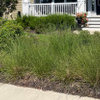
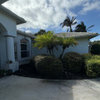
The front of my house looks like this except there is a driveway on the left side.

{{gwi:7325}}

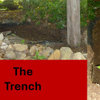
The plan view is this:

{{gwi:7326}}

I like the idea of a cottage garden. I was thinking of planting cream colored nasturtiums and short white flowers in the front and maybe some climbing roses in the back. Your help is very much appreciated because I am having a hard time visualizing how this will all look.

Comments (7)

  • 17 years ago

    Interesting. Your photo is of a field, but in your sketch you greatly limit the depth of the planting. To achieve the effect of the photo, you will need to plant a broader, deeper swath. In fact, you could devote most of the front garden to your flower field, and interplant with more permanent, structural focal points. This presumes you don't mind the seasonal nature of your flower field -- grow, bloom, seed, die, repeat.

  • 17 years ago

    Actually I was just using the photo as an example of the plants and colors that I want to use.

    I plan on making the bed about 6 to 8 feet deep. One of the problems that I am having is that in most flower beds, the plants are in groups and are planted smallest in front to tallest in back. However, I like the look of the two combinations of plants as they are intermingled, not planted in groups and they vary in height. By themselves, I think they look good but I don't know what else to plant with them. What are some structural focal points you were referring to? Where would you place them? Could some conifers be worked into the lanscape?

    Also, I don't mind the nature of the flower field. I enjoy growing them by seed every year.

  • 17 years ago

    Your plan to intermingle the plants should work, and the deeper and less rigid you can make the bed, the more successful it will be. For instance, your sketch suggests a zig-zag shape. Is it possible to fatten that up with curves? Put a dot in the center of the lawn, then as if with a compass, draw a circle. Imagine planting the whole area outside the circle toward the house. Not absolutely literally, just suggesting a larger, curvier approach, might be more cottagey.

    I am completely clueless about plants for your zone, perhaps others can make suggestions. Dwarf conifers perhaps? Have you ever looked at "The Well-Designed Mixed Garden" by Tracy diSabato-Aust? Useful design concepts, maybe some good plant ideas for you, check it out.

    Here is a link that might be useful: The Well-Designed Mixed Garden

  • 17 years ago

    What will you do with the area the rest of the season when the larkspur and poppies finish their bloom?

  • 17 years ago

    catkim, I checked out the book "The Well-Designed Garden" from the library last night. It does look like it will be usefull. The diagram above was suppose to be a bubble diagram. I don't know if it qualifies as that or not. But in any case, I do plan on adding curves and having a nice flow.

    Laceyvail, that is one of my problems. I am having a hard time, in my mind, coming up with a plan that incorporates all seasons. I was hoping to get some ideas on the types of plants to use as a background and to add interest when the flowers aren't up. I like cottage type gardens and the looks of meadows like the picture above and am trying to incorporate the two.

    Thanks so far for everyones help.

  • 17 years ago

    The photo with the wooded hills is pretty, but in your intended application it might take on a wispy patch look without help from plants with some substance - perennials - being incorporated into your plan.

    There are many dwarf and small varieties of conifers - some of those can ultimately get large but take a very long time to get there. Juniperus Squamata "Blue Star" is nice with its steely blue color, manageable size, and easy maintenance. Picea abies "Nidiformis" or Bird's Nest Spruce is another common but attractive conifer. There are many that are less common and come in all kinds of shapes, sizes, textures and colors, but I'm just getting into conifers myself and do some lurking over on the Conifers Forum for pictures and ideas.

    I don't have the right conditions, patience, or results to deal with seeds. And the growing season here in zone 4 is just too late getting started and to early to end compared with other zones. My annuals come in flats from a variety of local venues. Limonium Sinuatum "Statice" has been good for cluster plantings. Dahlias have substantial foliage. The lowly petunia is a good bloomer and mounder. I have direct sown nasturtiums - "Empress of India" being more drawn to the dark foliage and red blooms.

    On the perennial side, peonies do exceptionally well here and is a good foliage plant when not in bloom. Nepetas, Veronicas, and salvias are good performers - nepetas and salvias generally repeat if deadheaded

    Any of the "Northern Lights" series of azaleas might be worth looking into - someone will always add that your soil will need to be on the acidic side.

    The ninebarks Physocarpus might interest you for a deciduous shrub - "Dart's Gold" has a lime color; "Diablo", "Summer Wine", and "Center Glow" maroon to red. The common Spirea "Anthony Waterer" has dusty rose bloom as does Spirea Japonica "Alpina" - a dwarf that can repeat bloom in the fall. Potentilla - "Pink Beauty" was covered in bloom all season and stays pink at temps 80 degrees and under (which was our entire 2008 summer).

    A rose on a trellis under the hexagonal window would break up the empty spot there - as would a clematis. The purple "Jackmanii" is a perennial favorite, but there are different types and colors to choose from.

    Just some thoughts from another zone 4 gardener - no help with arrangements and coordinating things in your spaces since I'm a planner isofar as beginning with a child-like sketch, deciding what I'd like from readily available and space appropriate stock, then moving plants around in their pots until I settle on "the look".

  • 17 years ago

    I'd plant this mixture away from the house and that tree, as the flowers will be sparse and will be leaning desperately for sun.

    I find that perennials mess up the nice formal look of conifers if they are intermingled, and the perennials don't look their best either. I think I would suggest a foundation planting of appropriate conifers, and a bed of flowers in front of them or maybe at the curbside that becomes completely bare/flat in winter.

    I'd also plan for the removal of that tree if it really is that size - it is too big to be that close to the house and will suppress/smother anything else you plant at the foundation - and plant a replacement tree in advance, maybe a deciduous one, further from the house.

    KarinL