Software
Houzz Logo Print
kawaiineko_gardener

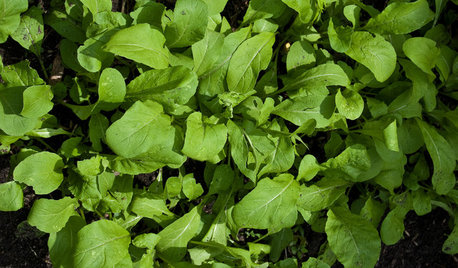
thickly sowing greens

I know that with big greens (such as lettuce, chinese cabbage, swiss chard, collard greens, kale, etc.) that if you thickly sow them and overcrowd them, they will die.

This is due to spacing them too close together.

However with smaller greens, such as mache (which is also known as lamb's lettuce, as well as corn salad) arugula, and sorrel (I don't know know too much about it, just that it has a 'lemony flavor' and has a very strong flavor) since they're so small can you thickly sow them?

I was wondering if it was feasible to do the same thing with Claytonia (which is called miner's lettuce) and Purslane (which is another leafy green thing).

The only reason I ask is in order to get a decent harvest from greens with small leaves, is you have to sow a ton of seed. If you just do one plant like you would with oh say lettuce or chard, then you will get a very small amount that isn't substantial enough for anything, whether it be for a salad, or in soup, etc.

I know this from past experience with growing arugula.

Also with sowing thickly (if this is feasible) I'm wondering if it's feasible only to thickly sow if you're only going to harvest them as baby greens, or if you can sow thickly and harvest them when they're fully mature.

Comments (4)

  • 15 years ago

    I sow leaf lettuces, swiss chard, beta greens, certain Italian chicories, several Asian greens such as mizuna, arrugula, sorrel and many other greens very heavily. If I cut leaves from them they simply return and there is no need to harvest a full head until they are mature. This is a form of French Intensive gardening which basically uses plants as mulch. It requires a higher soil fertility but is not overly taxing on fertilizers in my experience (especially if you are starting with healthy, nourished soil of good consistency.
    There are a variety of ways to accomplish french intensive methods and they vary depending on your climate. An example in my own garden right now is in a 4x6" bed I have a center oblisk with some peas, on either end I planted fava beans (this garden bed needs some nitrogen fixers in it) and on either side, which is narrower there are radishes. The only soil left unplanted will be in the square beneath the oblisk for now, however as the peas grow and the temps warm here it will be a very nice place for a cilantro plant or two. So I will save that spot!
    I have an 8x4 bed plotted out in square feet. Each square closest to the edge has a lettuce/(non heading) chicory. Each square has at least 25 seeds planted, most many more. There is a pea oblisk in the middle, and I will put arugula under it when it warms a bit (and my other arugula wants to bolt). The "center" squares are long strips of dandelion greens (really a chard) which we eat a lot of in season. This will serve as our intense bed for cutting. I have a separate bed that I will plant heading lettuces and heading chicories in. They won't be intensively planted.

    So there are many choices in gardening and many styles. Some people employ certain methods exclusively. During a very long spring like it seems we may have this year, I will employ various strategies to lengthen the times my cool weather crops will stay in the ground and maximize the harvest of each crop.

    French Intensive in the summer is harder for me because of heat - I can't under plant tomatoes with lettuces (too hot for lettuce) or employ other methods of mixing crops that are complimentary. I will do it again in the fall. In the winter when I garden under cover I need to have plants spaced so I can see if there are pests under the tents and take care of them (simply because the tents are a bit awkward to work under).

    I am all for taking advice, reading books and attempting experiments in small areas to see what works best for you and your garden. After a few years, you just sort of get the hang of what you and your garden and the climate will do at any given time (however, nothing is infallible and "stuff" happens some years).

  • 15 years ago

    I often mix random-ish seeds together with similar germination, cultural requirements and uses.
    I pull some and eat as baby greens. Eventually they've basically been thinned and the remainder grow into full-sized veggies.
    Bok choi, gai lan, choi sum, red mustard, coriander and daikon are all packed into a couple of feet's worth of space right now.

  • 15 years ago

    I forgot to say, sorrel is perennial and can be quite invasive, so I'd keep it penned up!
    I love sour things and sorrel's definately that. I've got 'blood-veined sorrel' which is really hardy, and gorgeous looking too.

  • 15 years ago

    I'd either use 1' x 1' square foot boxes (one per root vegetable) or a small greenhouse.

    I've also been thinking about making a poly tunnel (also known as a hoophouse) but how would you go about constructing it?

    With less hardy vegetables for cool weather stuff (such as cauliflower, broccoli, lettuce, cabbage, etc.) could you still grow this stuff in winter, provided it's protected
    or are they just not hardy enough? Would it be feasible to grow root vegetables in winter (carrots, turnip, parsnips, etc.)

    However for root vegetables what would the depth of the boxes need to be (they'd have bottoms on them, and wouldn't just be put on the ground where existing soil already is). They'd also be filled with soil (I make my own soil mixture for container gardening).

    I realize this depends on the length of the vegetable, so here is the information for that:

    carrots-generally about 6" (the maximum length would be 8"; I realize that I have limited depth due to container gardening, so I tend to pick the varieties of root veggies that are as short as possible)

    White Asian Turnip (this is an earlier maturing variety, where I live has a very short growing season, that's why I chose this variety). The diameter of the bulb is about 2".

    Daikon (large asian white radish, takes longer to mature, and is longer) it's about 2-3 feet long.