Software
Houzz Logo Print
minnesotamaggie

weed control

17 years ago

Just wondering if some of you gardeners might share your methods of weed control in your vegetable gardens. Thanks!

Comments (8)

  • 17 years ago

    Mulch, mulch, and more mulch. My favorite is leaves. I collect a mountain of bagged leaves in the fall-- compost some; mulch with the rest. Grass clippings are great too. Till everything in at the end of the season and improve your soil.
    Best of luck,
    Brook

  • 17 years ago

    Agree - naked soil should never be allowed in the garden. ;)

    Once the soil warms enough for planting a heavy layer of mulch needs to be applied. Several inches thick depending on what you use.

    Compost, shredded leaves, dried grass clippings, and my personal favorite lots and lots of old hay or straw @ 6-8 inches thick. And the added benefit is it feeds the plants as it decomposes, improves your soil, and stabilizes the soil moisture levels all at the same time.

    You'll find many past discussions here on using mulch to control weeds in the garden.

    Dave

  • 17 years ago

    Layer news paper, non colored, 4-5 sheets thick and 3-4 layer of grass clipping/leaves/ mulch (recycling at its best). At seasons end, till in.

  • 17 years ago

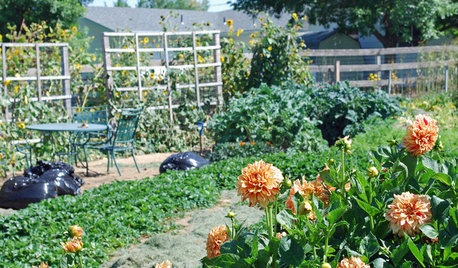
    I have been having pretty good success using the concept of 'living mulch'. Not for everyone (I mean maybe not for every climatic zone), but I will try to post a few pictures of some good examples of this and how it is working in my garden. I use oregano, thyme, marjoram, mint, zatar, parsley, cilantro, sometimes even lettuces and arugula. The greek oregano works particularly well. The herbs displace the weeds and mulch your plants. This living mulch works great for peppers and roses (I treat roses like an edible, they are an edible, many are rugosas and we eat the hips). Dave is right about the bare dirt. Bare dirt will not stay bare for long, and what will you get there? weeds! so I agree, no bare dirt!

    You can also use larger plants as living mulch. The native American 3 sister gardens use the squash as living mulch for the corn. I have used watermelons and cantaloupes as living mulch for okra. That worked really well, no weeds, or very few weeds there!

    Establishing some living mulch perennials takes a while, so I also use regular mulch. We generate lots of it right in the garden from all the fruit trees and we have a mulching machine. Regular mulch is more appropriate for some plants than others, and I use it really thick when I am trying to over winter my solenacea family plants.

    OK, so living mulch and regular mulch. Another thing I do is that I eat my weeds. Many of my weeds are edible, and I strive to make more of them edible. When this fails, we cut them and compost them as long as they do not go to seed. If they seed then I toss them in the green garbage can. Eventually I will have living mulch (edible), insect attracting flowers and edible weeds. No more regular weeds. It might take a few years but we are getting there already.

  • 17 years ago

    In some climates/regions a mulched veg garden will result in a plague of slugs, pill bugs, and wood lice. Pests that might not be a problem in normal populations become very destructive in extreme numbers. If for that reason, or any other reason, you don't want to mulch, there's a reasonable alternative. A sharp, well-designed weeding hoe will make quick work of weeds, and not hard work either. And if you hit them while they're young, keep after them, and keep them from going to seed, they become less and less of a problem as time goes by. Mulching is one way, this is another, I'm not knocking mulching.
    Also, sun hitting your soil isn't really a problem as long as it doesn't bake it into hardpan, which won't happen if you've got compost worked into the surface layers. But if you have clay or something that does bake into cement, then you'd better mulch. Also, if it's brutally hot where you live, mulch may be a benefit to keeping your soil cool, but I don't really know.
    Personally, I consider the top inch of soil a satisfactory mulch for the soil below. It keeps the sun off and retains moisture by preventing wicking of moisture from below. It will, however, grow dandelions where the wind deposits them. That's where the hoe comes in, a little bit of work, which you'll have one way or the other. It's up to you to weigh the tradeoffs.

  • 17 years ago

    I'm mainly a hoe person. Too much mulch around here before late June can be a problem as so many years here it RAINS here so much in mid June.....time and time again! I hope for better this year!

  • 17 years ago

    I do a living mulch as well, but mine's done by planting my plants closer together than recommended. For instance, I broadcast my bush beans across the bed so they land about three inches apart. They grow so thickly that they shade virtually all the weeds out and keep moisture in so well that some of the beans I'd missed in picking were sprouting in their hulls. LOL!

    I do have plans to try interplanting as a living mulch, like Cabrita mentioned. I thought I'd try squash around my tomatoes this year and Little Red Peanut Peas (a field pea) under the okra. Now I think I'll try melons instead thanks to your tip, Cabrita. And I'd lovelovelove to see pictures of your interplantings!

  • 17 years ago

    Santa claus method ..... Hoe,Hoe,Hoe