Software
Houzz Logo Print
latini

Help troubleshooting last year's corn

13 years ago

Hi all,

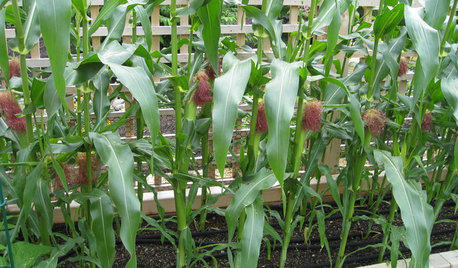
Last year I planted corn in raised bed- 4 rows of three plants. The bed also had a Couple tomato plants which I now know was not the best. Still the corn did really well, sending out ears until they just seemed to stop growing, drying out. Now I know it wasn't for lack of water, as I was vigilant. This year I have a larger, longer bed ready to go-- no tomatoes this year. I will be able to easily plant 15 rows of 3. Opinions why last year's crop failed and tips for this year? BTW the bed is full day sun. thanks!

Comments (9)

  • 13 years ago

    Corn needs a minimum number of plants to do well. It's wind pollinated and when they're sparsely planted, you develop problems with pollination. I think 5x5 or 4x4 minimum (1 per sqft) is what I usually see thrown around. I never plan to plant less than that, although I love corn so I'll probably always end up doing at least twice that.

  • 13 years ago

    I plant in double rows, and help out with pollination to make sure the ears get well filled. When the tassels are full of pollen, I go through twice a day and tap the main stalks to release the grains, and gather some by hand to sprinkle on silks toward the end of the row. If the weather is dry during pollination, I turn on the soaker hose for a few hours in the evening to keep humidity high overnight in the corn patch. These tricks give us beautiful, perfectly filled ears from 25-foot-long double rows.

  • 13 years ago

    I see how others are understanding your question, but when I read it I thought you were asking why the corn stopped forming ears. Is that the question or were you asking about ears that grew but never had corn in them (not filled out)?

  • 13 years ago

    The tassels and ears started to form then just dried and shriveled. I think pollination worked (yes?) but the fruit died on the vine, so to speak.

  • 13 years ago

    Okay, so the ears were small, stunted, and/or failed to develop properly.

    The first thing I would ask is "Where did you get the seed for it?" Did you get it fresh from a vendor, or is it seed that you saved from the previous year?

    The reason I ask is that corn is very prone to something called "inbreeding depression". Basically, corn requires a large number of individual plants to stay healthy (numbers I've seen vary, but they are usually around 100 stalks as the minimum safe number). What happens is that the lack of genetic diversity causes the line to degrade (slowly at first, rapidly towards the end) where the ears will just get smaller, the plants weaker, until eventually the entire line will simply die out completely, no matter how perfect conditions are for it otherwise.

    You mentioned that you had a fairly small amount of corn (only a dozen plants) last year, so did you perhaps use seed corn from that planting for this one?

    Also, to get better ears, you should try to plant in a more square arrangement. Instead of a 15x3, try a 5x9. Corn is pollinated by wind, so you want as many stalks as close together as you can to maximize ear production. If you've got rows 15 plants long, plants 1 and 15 will be so far apart that they basically have no hope of pollinating each other. Move them closer together if at all possible.

    And if you are hitting a problem with inbreeding depression, your best bet will be to simply buy new seed. If that isn't an option (you're planting a rare breed, maybe), then try to get at least some fresh seed to mix in with the old. It will help inject some new vitality that should help out.

  • 13 years ago

    Thanks all for your detailed responses. I did buy seeds from a reputable vendor for last year's crop, haven't bought seeds yet for this year. Gophers and moles are a real problem so that's why I'm relegated to (narrow) beds. I'll have to decide if I'll chance it and plant outside the beds or pass on corn this year. It was a lot of fun watching the corn grow--just disappointing when it failed! Thanks again.

  • 13 years ago

    Until you've debugged your corn growing skills, I'd recommend a normal sweet (SU) early variety. SU's are a bit more forgiving of variable conditions, and an early variety will be a bit less demanding on Nitrogen and other soil nutrients. Once you get good results, then you can try sweeter SE or SH2 types next year.

  • 13 years ago

    Concur. Se's should not be a problem but SH2's are more susceptible to soil borne critters. Here we have corn root worms Diabrotica undecimpunctata howardi, wireworm (Conoderus vespertinus), Corn leaf aphids (Rhopalosiphum maidis), corn flea beetle (Chaetocnema pulicaria) This one vectors bacterial wilt. European corn borers (Ostrinia nubilalis These coul cause the problems you describe, but I don't which if any are in your area.

  • 13 years ago

    If you have trouble with gophers and moles, try castor beans. You can buy them off ebay fairly cheaply.

    While the plant that grows from them is very decorative, and the beans are the source of castor oil, fewer people realize that the beans are also very poisonous. One bean is more than enough to kill a mole or gopher.

    Get some beans, and drop one down every gopher/mole hole you can find. They'll eat the beans, and you won't have to worry about them eating your corn roots ever again. They'll also die underground, so there's virtually no risk of secondary poisoning of anything else.

    And like I said, the large bush that it grows is very ornamental. They grow really big, but die in a freeze so they won't take over anywhere that freezes in the winter. Just be careful to cut the flowers off when you see them if there are kids or other animals/pets around that you want to keep. Poison beans and all that.