Software
Houzz Logo Print
sunnibel7

Preparing for squash bugs

13 years ago

In a fit of optimism I am thinking of summer crops (it is better here than some areas, but still too cold for setting out tomatoes and peppers). I've sort of given up on growing summer squash between the squash bugs and the svb. And the fact that after about two dishes of squash I've had about all I want for a summer. But the husband wants winter squash for the restaurant. To address the svb I chose a C. moschata type that we both like the flavor of. But that leaves the squash bugs and we do get those in great numbers.

I've read that they don't like the moschata varieties as much (except butternuts), so I'm thinking of planting a trap crop of summer squash nearby. If I monitor and maintain those to nip the problem in the bud, will that be enough? I've never used trap crops before, so I'm not sure. I also have buckwheat that I can plant, but the info on that is confusing. Any input is welcome. Cheers!

Comments (14)

  • 13 years ago

    I will say I haven't planted a trap crop for this purpose, so I can only speculate.

    My experience has been that if you have adult squash bugs around, they are laying eggs on EVERY type of squash/pumpkin in the garden. They might congregate in greater numbers on certain plants, but they are on every one. A trap crop would make it easy to spray the life out of the squash bugs on that crop, but surely there would be bugs on the other varieties creating future generations...

    So, is the point to have reduced numbers of adults on your favored crops? I guess that could work. For me, the number of adults that show up from far and wide are so numerous that it seems pointless.

  • 13 years ago

    I've read that they prefer Blue Hubbard over all other varieties. My strategy is to plant the trap crop as early as possible and spray heavily with systemic insecticide.

    Plant the desired crop as late as possible.

    I can't claim that this actually works, but it's what I try.

  • 13 years ago

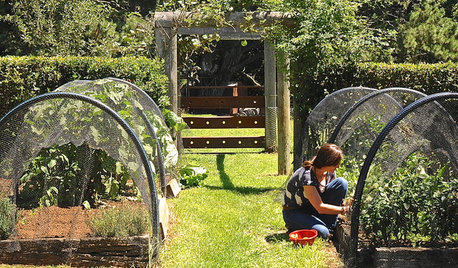
    I too am gearing up for a squash vine borer battle. My strategy is going to be tulle netting, and self pollination. My feeling is that manual pollination, which you need to do if you're keeping bees out) is a lot easier than regular spraying, egg-picking, or vine surgery. Takes a few seconds per female flower. We'll see how well it works. Tulle is pretty cheap, and it remains to be seen how long it will last outside.

    I have to say that I'm skeptical about trap crops in general. You're just attracting the bad bugs to the general area, and encouraging their reproduction. I would consider trap crops to be the last resort.

  • 13 years ago

    Well, the thing with trap crops is that since you plan on growing the plants anyhow, you would be attracting the bugs regardless. Perhaps if they were renamed 'sacrifice crops' it would be better? I was planning on getting the trap crop out soonest, sort of an early bird lunch special for the bugs. I am planning on destroying the trap crop, bugs and all. Anyway, it's all experimental. At worst we'll be out a few bucks for seed if it doesn't work.

    Oh, and I'm not really thinking about the svb, apparently they don't care for the stems on the moschata species.

  • 13 years ago

    I'm growing Tromboncino this year, moschata for summer and winter squash both to foil the evil SVB.

    But that doesn't help with the squash bugs.

  • 13 years ago

    Ltilton, sounds like we are trying similar strategies, maybe we can compare notes at the end of the season? Though that's so far off for winter squash, I don't know how either of us will remember...

  • 13 years ago

    My strategy involves prevention, and it works fairly well. What I do is to diligently smash any remaining squash bugs [with my shoes] at the close of the season. The bugs will congregate on the last remaining green leaves and fruits. This helps eliminate the bugs for next season.

  • 13 years ago

    They have arrived at my garden! I saw them this morning before leaving for work.

    I planted 4 crooknecks early, near the garden. For a possible early harvest.

    They are covered in eggs and I saw one adult.

    It had been to wet to plow, so my others are still young and bug free, I think, for now.

    When I get home I'm firing up my propane torch and cooking them!

    Sacrifice a few for the safety of the others!

    Any suggestions for the others? I've read that sevin doesn't work on the adults.

  • 13 years ago

    I spray Sevin onto the vines after they are well-established about once a week, and maybe more if I see the flying varmints that can lay eggs that become squash vine borers. I also use tin foil around the vines that look susceptible. When I have grown squash, this method is so successful that I hope for a later infestation as squash are growing 20 feet or more over the 4' fence 20 feet away into the neighbor's yard, and my neighbor and I have more squash than we can eat in 3 years out of a little 10' x 20' garden with only two hills devoted to squash; the rest of the garden is devoted to various other vegetables such as corn, beans, tomatoes onions brussel sprouts, et. al.

  • 13 years ago

    I missed Wayne's post way back when. I've also done " the dance of death" on the squash bugs. Too funny.

    It's great this thread resurfaced because 2 days ago when I went to plant out my sacrificial squash I found the very first squash bug of the season here. On the pot of one of the trap squash. I squashed it. I've seen a few others, on my garlic for some reason (squashed them too).

    Wertach, a couple of options spring to mind: if you're sure they are free of bugs, maybe a row cover? Well, my other thought is to fight the big fight- sprays and powders and squishing all summer, nothing new there. Really concentrate on irradicating any adults you see now. My understanding is that only the adults that overwintered will be breeding and laying eggs this year. Getting the breeders early cuts down on all subsequent broods. That's why the trap crop is supposed to work. Though I also read that in the deep south they can have a second generation of breeders form, but I think that's like Florida south, not SC south.

  • 13 years ago

    I spotted the first SVB last week on my Tromboncino squash, but did not find any eggs there. There were eggs on the regular zuccini, but I have only found one bug.

    Seems each day I am taking eggs off the zuccini, but the only place I actually am seeing the SVB is floating in the dish of water and yeast sunk in the soil nearby. I've been meaning to set out more of those 'traps' as they collect many kinds of insects. They were supposed to be for slugs, but have not caught any, so I'm thinking it was something else damaging the plants.

    Bottom line is that the 'trap' has caught more SVB than I have squashed this year, but searching and removing eggs is essential.

  • 13 years ago

    If it is manageable, hand grab and dispose of the adult squash bugs. I found that if you water the plant with a spout can right in the center it will drive the bugs out of hiding making them easy to capture. They can fly but are easy to grab before taking flight. That is what we have been doing this year. Works well. And of course looking for the eggs EVERY day (twice a day) and scraping them off with the thumb or finger over a bucket of soapy water. It seems that if the adults are greatly reduced the egg laying is much less (makes sense, right?).

    I really dislike the buggers.

  • 13 years ago

    Thanks for all the great advice. I had never heard of SVB until joining garden web. I did surgery on a declining pie pumpkin this morning. I pulled out two white squishy bugs and fed them to the chickens.

    I just planted a second round of squash in a different bed but don't want the tender new plants to be eaten from within before fruiting. I checked for eggs this morning and did not find any. I have been using neem oil to combat aphids on my brussels sprouts. Does anyone know if neem oil helps combat SVB or squash beetles?

  • 13 years ago

    I had fun frying them buggers when I got home yesterday!

    When I put the torch on the plants the adults came out in numbers and got fried also!

    I got a lot of them, but I'm sure some escaped!

    Hishigata, I read somewhere that neem helps. I plan to get some on the way home.

Sponsored
The Creative Kitchen Company
Average rating: 5 out of 5 stars52 Reviews
Columbus Area Kitchen Remodeling and Refacing Professional