

need help with lime!
13 years ago
Sort by:Oldest
Comments (8)
Related Stories
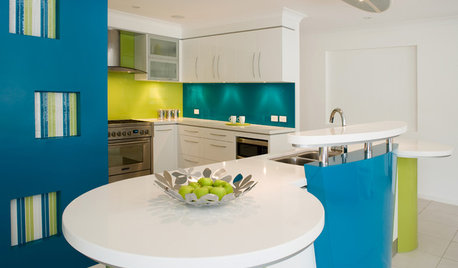
TURQUOISESummer Color Combo: Turquoise and Lime
These Two Eye-Popping Hues Will Cool You Off on Hot Days
Full Story
MOST POPULAR7 Ways to Design Your Kitchen to Help You Lose Weight
In his new book, Slim by Design, eating-behavior expert Brian Wansink shows us how to get our kitchens working better
Full Story
DECORATING GUIDESThe Most Helpful Furniture Piece You May Ever Own
Use it as a table, a seat, a display space, a footrest ... and indoors or out. Meet the ever-versatile Chinese garden stool
Full Story
HOUZZ TOURSMy Houzz: Saturated Colors Help a 1920s Fixer-Upper Flourish
Bright paint and cheerful patterns give this Spanish-style Los Angeles home a thriving new personality
Full Story
Guest Picks: Give Your Home a Helping of Spring Greens
Celebrate garden growth with this collection of housewares and gardening gear in the shades of budding plants
Full Story
COLORPick-a-Paint Help: How to Create a Whole-House Color Palette
Don't be daunted. With these strategies, building a cohesive palette for your entire home is less difficult than it seems
Full Story
SELLING YOUR HOUSE10 Low-Cost Tweaks to Help Your Home Sell
Put these inexpensive but invaluable fixes on your to-do list before you put your home on the market
Full Story
HOME TECHTurn 'Obsolete' Tech Into Fun Home Help
Here's how to put your old Mac, Atari or Newton to work around the house
Full Story
DECORATING GUIDESDownsizing Help: Color and Scale Ideas for Comfy Compact Spaces
White walls and bitsy furniture aren’t your only options for tight spaces. Let’s revisit some decorating ‘rules’
Full Story
LANDSCAPE DESIGNGreen-Only Gardens Draw the Eye and Soothe the Spirit
Use plant and foliage variety to create a monochromatic landscape as visually pleasing as it is calming
Full Story

edweather USDA 9a, HZ 9, Sunset 28
fruitnut Z7 4500ft SW TX
Related Professionals
Florence Landscape Architects & Landscape Designers · St. Louis Landscape Architects & Landscape Designers · San Francisco Landscape Architects & Landscape Designers · Redding Landscape Architects & Landscape Designers · Salt Lake City Landscape Architects & Landscape Designers · Grand Forks Landscape Contractors · Canton Landscape Contractors · Farmington Landscape Contractors · Southaven Accessory Dwelling Units · Kalamazoo Accessory Dwelling Units · Binghamton Accessory Dwelling Units · Brooklyn Accessory Dwelling Units · Sacramento Accessory Dwelling Units · Everett Accessory Dwelling Units · Vancouver Accessory Dwelling Unitsdigdirt2
seysonn
kawaiineko_gardenerOriginal Author
Anne Wolfley
digdirt2
woohooman San Diego CA zone 10a