Software
Houzz Logo Print
neptune25

Questions about old apple tree

15 years ago

We have an old apple tree on our property that I was trying to locate recently. When I was in the 6th grade, I remember picking apples from it, and there were a ton of them. That was about 30 years ago. Unfortunately, that part of our property hasn't really been tended, and what was once an open field is now almost a forest. So trying to find the tree hasn't been easy at all. I think I've found it, but I'm not completely sure.

Way back when it had a lot of apples, it wasn't a small tree, and probably at least 10 years old. That would mean it's now at least 40 years old.

I have a few questions:

1) About how wide would a 40+-year-old apple tree be at the base? The tree that I'm looking at is about 17 inches wide at the bottom.

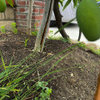
2) The tree is about 30 feet tall, and most of the branches are out of reach. I looked at the lower branches and couldn't find any fruit on it at all. Then I cut one thin limb that was growing straight up, and at the very end of it I finally found what looks like a small apple:

Is this definitely an apple tree? I looked and looked and eventually found another similar small fruit on the tree as well.

3) This tree is surrounded by a lot of other trees that are significantly blocking the sunlight it receives. If these were cut down, is it very likely that this tree, assuming it is an apple tree, could start producing lots of apples again?

Thanks for any info.

Comments (15)

  • 15 years ago

    Yes, your picture is of a small apple. You have found the tree! To produce well, the tree should get at least 6 to 8 hours of sun a day.

    Can't tell from the leaves, but the reddish brown spots could be mechanical damage, such as if you had had a hail storm, or they could be from cedar apple rust.

    Where are you located to have apples this size already? My trees are just breaking dormancy and starting to swell their buds. Mine won't look like that for another 6 weeks or so.

  • 15 years ago

    i dont know where he is at but I am in Missouri and I have apples and pears nickle size right now

  • 15 years ago

    If you clear the land around it you can gradually bring down it's height- maybe 10' a year of so. The tree can start producing fruit immediately but will need spray to produce anything useful unless you're real lucky and your site is low pressure and variety resistant both to insects and disease.

  • 15 years ago

    beeone wrote:

    Yes, your picture is of a small apple. You have found the tree!

    Great, thanks.

    Can't tell from the leaves, but the reddish brown spots could be mechanical damage, such as if you had had a hail storm, or they could be from cedar apple rust.

    No hailstorms, so maybe they're apple rust.

    Where are you located to have apples this size already?

    North Georgia.

    harvestman wrote:

    If you clear the land around it you can gradually bring down it's height- maybe 10' a year of so.

    OK, thanks--I guess I need to take it slow.

    The tree can start producing fruit immediately but will need spray to produce anything useful unless you're real lucky and your site is low pressure and variety resistant both to insects and disease.

    Well, this tree was never sprayed 30 years ago, and it had a ton of apples, which were usually pretty good. OTOH, we have plum trees that get quite wormy. :)

  • 15 years ago

    Some years the bugs are worse than others- did this tree produce reliably?

  • 15 years ago

    Hi, don't want to hijack this thread so let me know if I should start a new one. I've posted here before about trying to bring back an old orchard (actually the "new" orchard) that is roughly 110 yrs old (it was producing when my great-grandparents bought the place 98 years ago). The "old" orchard is even older, it was still producing (though not good fruit for sale, they kept those apples for their own use - ate a lot of applesauce and rice for dinner when they couldn't afford anything else) maybe 50-60 years ago when my dad was growing up.

    I'm assuming it's not worth trying to renovate any of the apple trees (that are left) in the "old" orchard, but what about the "new" orchard? There is one whose trunk looks nearly hollow but it's still alive, probably not going to do anything, but there are roughly half a dozen on our side of the property line and maybe same number or more on my uncle's side that look vigorous, planted fairly close together (6-10 ft?), they're 30 ft tall and must still produce some fruit that the deer like b/c my uncle has a tree stand in the "new" orchard.

    We also found another 3 a little farther away (closest is maybe 50 ft from orchard, next one maybe 20ft from that, and farthest is on top of a hill maybe 100 ft from the middle one). Crabapple tree about 6 ft from the one on the hill, another maybe 50 ft away fell over after heavy rain a couple of years ago but had 1 apple last year, lots of new growth this year.

    So what's worth saving? I want to plant some dwarf trees next year, but would like to renovate some of the trees in the orchard, I remember 35-40 yrs ago some of the most delicious Spies and Baldwins out of that orchard, there may be other varieties too. Thanks

  • 15 years ago

    It isn't a matter of how old but how vigorous. All vigorous wood is equally young and all young wood can produce highest quality apples. You can get as good a Baldwin from a 150 year old tree as from a 10 year old one. You can also graft any varieties you want on existing trees.

    Dwarfs are less work to tend but trees are so much more beautiful than bushes and apple trees are much tougher than apple bushes.

  • 15 years ago

    Thanks - aside from that 1 that I can't figure out how it survived this long (1 good branch off hollow trunk), they all look pretty vigorous. The older (300-400 yrs old? By the old foundation behind our house - the family farmhouse was built in 1743, my cousin lives there now) are pretty much gone, only found 3 but if DH wants to renovate them I'll let him since they are closer to our house but 1 is pretty far from the other 2 and all are very far from "new" orchard.

    I'll start another thread for "how to" - Thanks again.

  • 15 years ago

    Can't they age a tree without killing it? I think they take a "core" sample and count the rings. If you think they are that old they could be some of the oldest trees in the country.

  • 15 years ago

    The "new" orchard was there and producing 98 years ago, my great-uncle (who moved in when he was 2 weeks old) says the old owners used to run a cider mill but took the press with them, his parents and grandparents used those apples to sell at market and kept the ones from the "old" orchard (back by the old foundation, about a mile away) for themselves. So I'm guessing at 110-120 since they would have had to have been about 10 yrs old to be bearing at that time? And they were still bearing good amounts, nice sized apples when I was a kid (and I'm 47.5).

    Anybody's guess on how old the few remaining trees in the "old" orchard are - I'm just guessing they're as old as the foundation, and that predates the current farmhouse which was built in 1743. Say 1700? But could be mid-17th century for all I know...

    DH says the one closest to our house is huge, easily 50-60ft tall (the new ones are maybe 30ft), and I'd have to measure diameter or circumference but I'm going by memory, maybe 2ft in diameter? The one next to it is much smaller - could be offspring. The one closest to the old foundation is in between in size, really can't say, maybe 30ft tall? Might not have been planted on purpose. I think all but the 1 giant have disappeared from the rows and rows my great-uncle remembers in the Old orchard. I sure can't find any sign of organization.

  • 15 years ago

    I consider old apple trees to be treasures. I manage 100's of them on estates in southeastern NY and have for over 2 decades now. There may even be a rare treasure in the mix- a variety that has been lost but has wonderful qualities.

    Apples are amazingly cooperative reconstruction projects and an eyesore that has become sprawling and gangly (or another undesirable form) can often be converted to a stout, beautiful and manageable tree. If a tree still has vigor you can do a lot with it.

  • 15 years ago

    harvestman wrote:

    If a tree still has vigor you can do a lot with it.

    How precisely do you tell if a tree has vigor? If the leaves look green and healthy?

    Tonight I took an ax and chopped down a few trees around the old apple tree that may be blocking out some of the sunlight. I guess it's no hurry since the tree flowered over a month ago, but think I'll try to gradually knock down a few more as well. Definitely good exercise, even though my hands are blistered. :) Anyway, I spotted a couple of other trees within about 30 feet of the apple tree that also kind of look like apple trees, though I don't remember them from 30 years ago. (One of them looks almost ancient.) Is it common for an old apple tree to have other apple trees around it as well (which grew from the seeds of its fruit, I would assume)? If I took a picture of these trees, would it be very easy to tell if they're apple trees too?

  • 15 years ago

    harvestman wrote:

    Some years the bugs are worse than others- did this tree produce reliably?

    As far as I can remember.

    ajsmama wrote:

    Hi, don't want to hijack this thread...

    Don't worry--we've already called Security. ;)

  • 15 years ago

    Once you clear out the competition, see how tree responds. Hopefully you're in a cooler part of the country and there's still time for you to do a major branch reduction and see what the response is. If you know how to ID annual growth you can tell right now, but there are so many variables if the tree was in lots of shade. As long as the tree is well leafed out and major scaffolds aren't dead or dying the tree is probably adequately healthy to be worth saving.

  • 15 years ago

    harvestman wrote:

    Once you clear out the competition, see how tree responds. Hopefully you're in a cooler part of the country and there's still time for you to do a major branch reduction and see what the response is.

    Unfortunately, I'm in 7B, which is getting pretty warm. :)

    As long as the tree is well leafed out and major scaffolds aren't dead or dying the tree is probably adequately healthy to be worth saving.

    Thanks--it does seem to meet those criteria. Right now I'll just stick with cutting down competing trees to improve the sunlight. Even if I wanted to, most of the important branches are very high and trying to prune those might be too difficult without professional assistance.

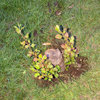
    Here's a picture of the tree along with some neighboring trees that look like apple trees too:

    Apple tree and neighbors