Software
Houzz Logo Print
wildlifeman_gw

ants and anthills

18 years ago

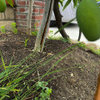
about 5 feet away from a recently planted asian pear ants have decided to build a condo. its about the size of a basketball already. should i be concerned about this as i'm sure they probably have a basement and subway underground also ? i don't know whether they will harm the trees root system in any way.

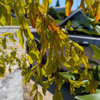
these ants are definitly eating the leaves off another asian pear about 25 feet away.

i did a search on this forum regarding ants and there seems to be a consenses that they do no harm - as a rule. i'v seen lots of ants in fruit trees, but i've never known them to be harmful.

if i need to remove the nest it's probably better to do it now rather than when my tree gets bigger.

Comments (7)

  • 18 years ago
    last modified: 11 years ago

    The only types of species of ants that "eat" leaves are

    Leaf Cutter ants, and they live in tropical climates like

    the Amazon. They don't even eat the leaves they use the

    leaves to grow a special type of fungus they eat. Ants are

    pretty much harmless to a tree unless they are Carpenter

    ants(big black ants that live manly in wood), or ants that

    protect colonies of Aphids for the sweet nector

    they secrete from their abdomins. Aphids are easy to

    control(Spray with water/chemicals or use a leaf blower).

    Overall I wouldn't work much about the ants.

  • 18 years ago
    last modified: 11 years ago

    Good Lord, Wildlifeman, if you are concerned about the ants, just whack the basketball nest with a sledge and spray them with permethrin, which is very effective and long-lasting on ants. I don't think I would leave them there, but ants are, of course, wildlife.

    Tapping on the computer is no substitute for action.

    Don Yellman, Great Falls, VA

  • 18 years ago
    last modified: 11 years ago

    ANDRED1101,

    in my research( books and mainly internet) i came across the south american leafcutters. here in north america we also have texas leafcutters(tx and la)and desert leafcutters(american southwest)same deal.

    in addition i did find that harvester ants ( western u.s) and allegheny mound ants (mid-atlantic states) chow down on leafy foliage. the info. regarding food and feeding habits vary between sites and appears as if leafy foliage is a minor foodstuff.

    the alleheny mound ant apparently can kill vegetation and young trees 2-5 years old and up to eight feet tall by depositing formic acid ( or something like that) near their mounds. study done in west virginia. with the knowledge and experience of contributors from this region such as jellyman, scott smith and others and nobody mentioned this, i suspect this must be incredibly rare.

    my efforts to find out exactly my specie of ant was somewhat unrewarded, but a ray of light may come from the local ext.office. wasu puts out a pamphlet identifying washingtons ants, will try to pick 1 up.

    i'm mainly worried about the mound so close to the tree rather than the stinkpots eating my leaves. we're in a cold rainy spell and the leaves look as though they may get a jumpstart on the ants as insect activity has been low.

    it sure appears as if they are eating leaves or at least chewing them and spitting them out. where the ants are still and then move when a cocked finger comes toward them, there is missing leaf and more interesting black stuff along the "eaten" part. i don't know if that is from saliva or other secretion they are leaving behind. the black stuff crumbles off when i touch it. in comparison to other insects chewing leaves on nearby cherries and apples-no black stuff. i observed two "still" ants with their little heads bobbing up and down the leaf as "eating".

    i do have carpenter ants but never saw any in a tree.

    gonna pick-up a magnifying glass and see if i can find out anything more revealing. this has now piqued my interest.

    JELLYMAN,

    you hit the nail on the head ! they are wildlife and as such i don't wish to kill them if it is unnecessary. i belive in a well balanced, healthy and interactive ecosystem.

    like smelling the roses, i rarely walk by an anthill without stooping over and watching them.

    just like your squirrels though, if it's the tree or the nest, i will be ruthless as they are not endangered as i know of 3 other mounds on my place.

    after watching a dog once dig up a mound in a few seconds ,i think i will just try and relocate the mound with some quick shoveling (soft mounds) away from the trees. the "dogs" mound showed back up a couple weeks afterwards about 20 feet from the original "carnage". same ants-i don't know but maybe i'll get lucky. this way no spray, although organic, may be needed if they relocate further away.

    as far as computer tapping goes, the biggest lesson i learned was never try to identify a specific ant specie on the net unless it is a carpenter ant or u know it's latin name in which case u don't need to search anyway.

    thanks guys !
    wildlifeman

  • 18 years ago
    last modified: 11 years ago

    Read years ago that ground up citrus peels provide visas for ants to travel. Has been working for me whenever the ant population decides to build in my neighborhood...near my fruits and veggies.

    Any citrus peels are frozen until a quart or two collects-thawed and processed and refrozen if not used immediately. I package this in already used ziplock bags and freeze flat, so it's simple to break off a chunk as needed.
    Used some recently when I discovered hoards of ants near the fig growing near the house. Have also used in the blueberry patch when we had a drought and the ants sucked the juice from the berries.

    Ground nutmeg works as well-but is money out of pocket...and the citrus lasts longer. The lawn ants are left alone.

    Good luck!

  • 18 years ago
    last modified: 11 years ago

    I've done lots of organic gardening and this is the most effective method of decreasing population.

    Using a mortar & pestle, crush white rice and sprinkle completely around perimeter of anthill. The ants will take their booty to the hill so all can partake and once ingested the rice will expand and kill them.

  • 18 years ago
    last modified: 11 years ago

    I wrote the UNH cooperative extension regarding this subject and this was their response: "I am responding to your e-mail about Allegheny Mound Ants. We do have thses ants here in New Hampshire. The most conspicuous feature of this species is the large mound that is built. These are accumulations of soil brought to the surface as the ants excavate burrows and chambers that extend deep into the ground. A 5 month-old mound can be about 2 feet wide and 8 inches tall, within two years, mounds can be up to 3 feet tall. In infested areas, mounds tend to be built in pastures that are grazed regularly and mowed infrequently.

    If control is necessary, the Allegheny mound ant can be controlled by direct application of a residual insecticide to the mound. A variety of products are labeled for ant control in gardens. Search the area to locate mounds. For best results, the top of the mound should be scraped away with a shovel to expose the large tunnels below it. It is safe to assume that the ants will not ignore this intrusion, so be prepared by having on long pants which have been tucked into socks or boot tops. A brush will be useful to remove ants that crawl on to you during the operation. After opening a mound, you can use a liquid drench, be sure to use an insecticide labeled for use in home vegetable gardens. Many insecticides commonly used in home vegetables include label directions for mixing and applying as a mound drench. Products containing the active ingredients spinosad, permethrin, or carbaryl are quite effective as mound drenches and are often used to control other pests in the home vegetable garden."

    I have also read that ants do not like geraniums, so I've planted one around the area affected. However, with the weather being somewhat wet this season it is hard to tell whether it was effective. Have you tried diatomaceous
    earth?

  • 18 years ago
    last modified: 11 years ago

    tazmo,

    i decided as a quick,easy and organic method of removing my mound was to just do some quick shoveling,fetch a kettle of boiling water off the fire and flood the hole.

    worked like a champ. have a couple of other mounds about 10-12ft from other trees, but at this time i will leave those alone given a bit more distance from my trees.

    thanks all for your info. !

    wildlifeman