Software
Houzz Logo Print
nyamy

parasitized tomato hornworm

15 years ago

I found a parasitized tomato hornworm hanging from one of my tomato plants today. surprisingly, the plant is fine, no sign at all of any damage. I checked all of my other plants for more worms (live or otherwise) and found none.

should I destroy the worm or leave it there? this plant is in a pot on the patio, near the house, so I'm wondering if maybe its not a good idea to be breeding wasps so close to the door.

(I cant move the plant at this point, it is way too big)

Comments (14)

  • 15 years ago

    Leave the worm so the eggs can hatch. You want to encourage those wasps. There have been some years when I've found only one tomato hornworm but this year I usually find one or two each time I check. First I look for obvious damage, missing leaves at the top of the plant. I have found some young, smaller worms but usually I don't find them until they are huge.

    I have borage plants in my garden which bumble bees love. Around my kitchen porch, I grow herbs and some flowering plants like calendula and nasturtiums so we have quite a few insects flying around. I have 2 young granddaughters who go out in the garden with me. The insects don't care about us, they are looking for the flowers. Just watch where you step, reach and sniff so you don't touch them by accident. I think all our insects provide great food for our wild birds. We have at least 6 blue birds. Phoebes and others will sit on pea fence waiting to swoop after an insect. Think "beneficial". I attended two talks on garden insects by Merrimack County (NH) Coop Extension and love the speaker's approach to encouraging the good guys. (Dottie Perkins if you ever get a chance to hear her.)

  • 15 years ago

    Definitely leave him alone so they can feed off him.

    Dave

  • 15 years ago

    "Leave the worms so the eggs can hatch." The eggs hatched inside the caterpillar a long time ago. Those are 'cocoons' for the little wasp to pupate inside before emerging as an adult.

    Once you see those white cocoons, the deed is done!

  • 15 years ago

    this guy is full of white cocoons. how do I know when the wasps have emerged?

    I'm learning to think of 'bugs' as beneficial but when I grew up all bugs were 'bad' and to be swatted or sprayed. my dh used to think it was his role as good husband, father, homeowner to decimate any bug, fly, spider, etc. but I'm trying to help him grow out of that along with me.

    here's a story...we had carpenter bees in our swingset and the kids were afraid to use it. dh tried to fill in the holes they made, but the bees drill 'em faster than he could fill 'em.
    anyway, one day I notice a swarm of wasps around the set. dh thinks there must be a nest or something, heads to the garage for some poison. I tell him to wait while. good thing too, because since that swarm, no more wasps, no more bees. a bit of googling and I learn that wasps eat bees! so hurrah for mother nature!! and my kids now happily play on the swings : )

    so long as you guys tell me these wasps are 'beneficial', I will leave them be. but I must say, the sight of this hornworm is shocking to this former city-girl.

  • 15 years ago

    this guy is full of white cocoons. how do I know when the wasps have emerged?

    If you just leave him alone then you don't have to worry about it. But if you look closely you'll see the small open ends on the cocoons.

    If it really bothers you then just move him somewhere out of sight.

    when I grew up all bugs were 'bad'

    90% of all bugs associated with the garden are either beneficials or at worst, neutrals. :) Only a small minority pose any problems.

    Dave

  • 15 years ago

    These wasps are tiny.I wish I had some! Yes, they are very beneficial. 90% of all bugs are good bugs. Hornworms are shocking to this country girl!

  • 15 years ago

    Look closely...you can see the open ends where the tiny parasitic wasps have already hatched...
    {{gwi:102076}}From Garden 2011

  • 15 years ago

    is the worm in that pic still alive? the one we have is clearly dead and done for. its brown and dried out, barely hanging on to the vine with one leg.

  • 15 years ago

    rhizo, thanks for the correction. Now I will look closer at the next hornworm I see with white cocoons to see if they have holes in them. Great picture, coffeehaus.

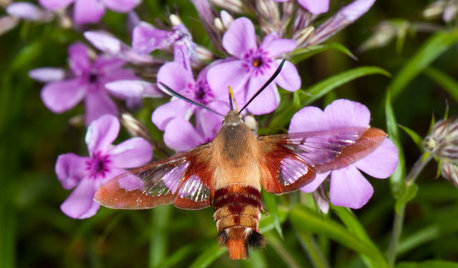
    I am a little concerned that my tall white garden phlox were filled with sphinx moths. I guess I can expect more tomato hornworms next year.

  • 15 years ago

    If it has the white cocoons it is already screwed. I put on gloves (I HATE those things! ICK!) and throw it down a woodchuck hole. I do not kill it, I let the wasps do their duty!

  • 15 years ago

    That IS a great picture!

  • 15 years ago

    I have these hornworms for the first time this year. They are huge before I catch them. Is there anything I should do next season to keep them from my tomato plants? Any way that things overwinter which I should take steps about? Some plants didn't get them, but those that did sure got whomped. And the hornworms took a swipe at every single tomato (even the small cherry ones) on their way to the top of the plant, so I lost a lot of near-ripe fruit. Next year I'll patrol every day!

    Deborah

  • 15 years ago

    Early next season, begin looking for the tiny little eggs deposited singly on the upper or lower surface of the leaves. They are whitish, yellowish, cream colored or maybe greenish, not much bigger than the head of a pin. Get rid of the eggs and you won't have anything to worry about.

    Hornworms pupate and over-winter in the soil, but they tend to wander off before doing so. Doesn't make much sense, I don't think, to dig around too much. You might want to look up tomato/tobacco hornworm pupae so that you know what they look like.

  • 15 years ago

    I had none of those bad boys last year, I've found 3 this year. One I found and picked off before I knew what it was, covered in those wasp eggs. Once I figured out what they were and found another, I let it be. It's long gone, sitting on the tomato and hasn't moved, I'm assuming long dead. I let it be and just work around it. I finally found the one branch he ate. I found another one this morning, much smaller, no wasp eggs but he was all brown and shriveled. Not sure what got him! I've had tons of wasps in my garden this year and not once has one paid any attention to me.

Sponsored
Peabody Landscape Group
Average rating: 3.5 out of 5 stars8 Reviews
Franklin County's Reliable Landscape Design & Contracting