Software
Houzz Logo Print
beeonegw

Blue Plums for Konrad

15 years ago

..Not too many European plums grow on their own root,... what is it?

I only know of the Mt.Royal doing fairly well. ..

Konrad:

My blue plum does sucker like crazy. These days it may also have some seedlings, but I know it suckers. Unfortunately I don't know what variety the tree is. My folks found it on an old homestead they purchased when I was a kid. It was multi-trunked with the largest probably 4" thick, but the tree was struggling. My mom recognized it as a plum tree of some kind--it might have had a few fruit on it-- and insisted my dad dig it up and move it home where it would get water and the soil salinity was lower--he was going to uproot it with the other brush he was clearing out of the fence. He transplanted it using the loader on the tractor so it had a fair root ball, but it just sat there not growing much and not dying for a number of years, never blooming. It winterkilled to near the base of the trunk a few times, also. One year I noticed several suckers coming up a few feet from the tree. These grew and a year or two later the original tree bloomed and set a few blue plums. When the suckers were a few years old, they started blooming and setting fruit. Since then I've got a grove of 20 trees or so in that area and I cut off the new suckers each year to keep it from getting too dense. I've also transplanted a few suckers to other locations and after a few years I will have more suckers coming up at those locations, too--but before the new tree starts fruiting. Because of it's origins, I don't know if it was a chance seedling from some fruit the homesteaders ate or a grafted tree they planted, but the few fruits we got off the original tree is identical to what we get from the suckers, so if it was a grafted tree originally, it must be the rootstock that we recovered.

The plums are round and about 1 to 1" 1/2" inches in diameter. Deep purple/blue with a nice waxy coating, the pulp goes from greenish-yellow to a nice amber when fully ripe. It can be susceptible to frost here when blooming in early May, but we usually get at least some fruit and it hasn't suffered winter kill in many years. Every few years it is very prolific--the plums hang like bunches of grapes. The plums hang well and don't fall off until the fruit is extremely soft/slushy, usually after freezing and thawing, so once ripe enough to eat, I just pick what I will use in a few days and leave the rest until I need them.

I assume it is self-fruitful although we do have quite a few american type plums-also unknown transplants--and one wild plum that all bloom at the same time. The tree also develops a few thorns. However, the fruit is very good.

Does this sound like any variety you recognize?

Comments (20)

  • 15 years ago

    A lot of the Euro plums hold fruit indefinately and will produce prunes on the tree when weather is dry enough. Some are self-fertile and their seeds will produce something very similar to the mother tree. Your odds of identifying this plum would seem to be extremely slim and probably would rely on it being a local variety and identified by a nearby old-timer.

    Your description could probably fit dozens of varieties- I couldn't even tell from it whether it is prunus domestica (I do suck at varietal identification). From there it would still be extremely difficult to know if it was a clone or a similar seedling.

  • 15 years ago

    YES, this definitely sounds like Mt. Royal!
    Somebody gave me a sucker from the Mondair area last spring, he didn't know what is was, it was only a little sucker,
    but looking at the wood, I was about 99% sure that it was Mt. Royal.

    This plum must have been a favored among early European settlers, when reading more on the Web it say's that this plum was found in
    the Montreal area first. The only drawback on this plum I found is that it is cling-stone...thus making it difficult to use when dehydrating.

    Prone to get winter die back, especially in the rural area, a fairly slow grower.

    This is a top graft
    {{gwi:121637}}

    Konrad

  • 15 years ago

    But the hardiest of decent Euros. Not the best down here in Z6 where we can grow most of them.

  • 15 years ago

    How does Mt. Royal rank against Stanley or Italian plum?

  • 15 years ago

    Agree with Harvestman,
    Stanley and Italian are better. So far that's the best we have for the cold
    north.

  • 15 years ago

    I never tried Stanley even though it's kindof the northeast standard or maybe because of it. It's always sold in stores hard and sour and when I started my nursery Cornell was touting Castleton as a replacement and Castleton is a very reliable plum and capable of getting that sugary amber flesh that I love. Will Stanley get there?

    Italian tends to be a light bearer here and has good plums but small. Valor kicks it all over town in my "town". being 3 times bigger with a more complex flavor along with more productive. Adams is selling it now.

  • 15 years ago

    Stanley is very good. Also, the Green Gage is good. Both of these mature trees gave me 2 Five gallon buckets apiece. Wow. The Jap plum Burbank also gave me that much. The euro plum Victoria is very good. Small, extremely hardy and productive. The Valor sounds good.
    Bberry

  • 15 years ago

    I've been blown away by the productivity here of Victoria for the last 3 years of strongly contrasting weather during growing season. It is a beautiful plum to look at (a slightly purple red, whatever that is) but only of fair quality IMO and of moderate size when thinned. It doesn't get up the syrupy sugar that I want from these Euro prune plums, but then it's not a prune plum.

    I do love the quality gage plums but have harvested only Oullins in recent enough history to have an accurate "gauge" on its quality. Oullins is delicious in a more complex way than prune plums IMO and as I recall same can be said of Green Gage.

    Down here, in southeastern NY, GG can be tough to grow due to cracking when you get rain anywhere near harvest. I've put one in my orchard anyway, so I'll have a better handle on evaluation in a few years. It should begin bearing next year.

    When you say Stanley is good quality, does that mean that as it ripens its flesh turns from green to amber and besides the skin it's pure sugar?

  • 15 years ago

    Stanley is good quality but probably cannot compare to some of the newer releases in the brix area. However it is tried and true and one of the more popular home owner plums. It can take a harsh winter and still bear well. It is good enough so that I cannot walk by it and not grab one and eat it and then I have to pick a couple more!!!! Sizes up quite well here also. It has one fault that is bothersome in some places and that is it's attractiveness to black knot.
    Victoria for me seldom get to golf ball size but I don't bother thinning plums.

  • 15 years ago

    "Oullins is delicious in a more complex way than prune plums IMO..."

    Hman, would you say this statement also applies to Valor? That is, is Oullins considerably higher quality than Valor prune plum? Have both, but trees are still juvenile.

    Also, where would you rank Long John in there for flavor? I'm still interested in adding it for it's huge size.

  • 15 years ago

    I think the majority of opinions I post here are based on a much better background of experience then comparing various gage plums to Valor.

    In the case of Oullins, I've only gotten a few plums off my tree and they came much earlier in the season than Valor so not only was the comparison not side by side but the Oullins was the first euro I had that year. I like it enough that I transplanted the tree to a more favorable location and that cost me the crop this year.

    I can't imagine any improvement over a fully soft, tree-ripe Valor so I don't know if my description of "more complex" is aprapos and maybe it's just that I eat a lot more prune plums than gages. Maybe even the fact that they are easier creates a situation where I crave the rarer item. Most years I get so many Valors and Castletons that I can get jaded.

    The French seem to rate Green Gage (Reine Claude) as the ultimate, but they have difficulties growing it there also as untimely rain often ruins the crop, or so I've been told. Deprivation always leads to greater appreciation when the goods come.

    I will say that if you don't take time to thin your plums you probably aren't tasting anywhere near the quality of the potential of any given plum. I will also suggest that if you are growing plums where it tends to rain near harvest, don't grow any of the gages as your first varieties. You will be more than satisfied with varieties that are much easier to grow.

    I feel very lucky to be able to grow both Euro and Jap plums here- they are so varied in flavor and appearance and only late frost has been a limiting factor for many of the varieties I grow- but so far has never skunked me of either.

    There are some years where one or the other sets light crops with the Euros being more reliable and Castleton being the most reliable of those I grow.

    In a couple years I'll get back to you with a better basis of comparison between my favorite gages and favorite prune types, with any luck.

  • 15 years ago

    Thanks for the comments folks.

    Konrad--your Mt. Royal is very similar, however the leaves look longer. Whatever it is, though, I do like it.

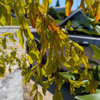
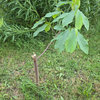
    Attached are a couple pictures up close when the fruit was on. I don't have any at more of a distance, however. It does have a tendency to grow more like the smaller plums which look almost "brush" like to me rather than "trees", and I only prune if there are dead branches to remove since it doesn't get that tall when not starved for light. Here are a couple photos.
    {{gwi:126064}}

    {{gwi:126065}}

  • 15 years ago

    So "Valor" is best of the Euro plums?

  • 15 years ago

    No, Valor is not the best it's just my favorite for several reasons and I'm just one set of taste buds in one little corner of the earth. I haven't even tasted the majority of Euro plum varieties.

  • 15 years ago

    Beeone, this looks like the same plum, my plum leaves might look
    longer because they are not flat like yours,...kind of curled up a bit.

  • 15 years ago

    A new plum for the North was developed at the UW-River Falls (which is only 15 miles from our home) and introduced for sale by Jungs last spring. It is supposed to rival the California plums. Although originally called Lydecker, it is sold as BlackIce. I planted one last spring, so we will see how it does. It was a nice, healthy-looking tree.
    Northwoodswis4

  • 15 years ago

    Sounds interesting....is it free stone?...I would think not.

  • 15 years ago

    I see Fedco also sells Black Ice now for $23. They list it as semi-freestone, whatever that means. Northwoodswis4

  • 15 years ago

    This would mean the pit clings to the flesh but not a hell of allot.

  • 10 years ago
    last modified: 10 years ago

    The introducer of Castleton, Prof. Robert Andersen, Stone Fruits Breeder at the USDA-ARS Clonal Germplasm facility/Cornell at Geneva, NY, was a beloved and deeply respected teacher of mine, now sorely missed! There were several other prune-plums of the 66 series, meaning pollinated in the year 1966, that seemed also exceptional (to me) but were never released. Rosy Gauge is another release from the same program and I have a plant along with the Geneva Green Gage.


    One interesting fact I have noticed is that woodchucks will climb more than 6 feet up a welded -wire mesh enclosure surrounding these 2 varieties and then climb down INSIDE the wire cylinders wrapped around the plants to fend off deer. So much do they love the taste of the leaves and shoots! A revelation for me, living in a critter-infested yard, where I have given up growing anything.


    Another fun fact: Toka is extremely vigorous, the most vigorous plum I have, AND also very distasteful to deer that will graze everything [ especially my Stacey and Nova pears] to the bone left and right of the Toka, leaving it with only a few nibbles!!Slim fawns will flatten and insinuate their precious selves UNDER deer fencing to get at apple and pear leaves, when scores of acres of Cornell alfalfa, maize, and the entire Cornell Arboretum lie not 50 yards away! Why?


    There are other mysteries re: deer food preferences/wild & cultivated species of the Rosaceae that completely blow my mind. Konrad, thanks for your great inputs. I used to live in Logan, UT, a Zone 4 a & b climate, depending on location. Green Gage was excellent there, but never very high-yielding; I am envious of the grower who harvested 5-gallon bucketsful of GGs!


    For those who are so minded, please do visit the Cornell-Geneva Stone Fruits collection on a balmy day. It is situated in a remarkably beautiful location, with a lovely pond in the middle, next to a grove of wonderful apricot trees, part of the small collection.

    Nowadays, things have become more formal for visitors, since newer faces have taken charge. Not so in our times! We are told it is because of security issues since 9/11, when huge fences were erected all around the clonal repositories, the apple collection, etc. and admission + access severely restricted. Who knows what they were thinking!


    However, these repositories [and indeed ALL Land Grant Universities] are funded by CITIZEN dollars, and all US citizens have the right to request reasonable amounts of FREE propagating materials OR propagules for personal use from the USDA-ARS. That is expressly mentioned in the mandate for these repositories.