Software
Houzz Logo Print
sambo725

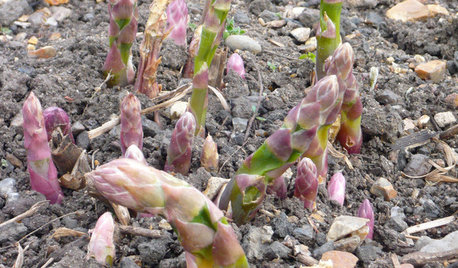
First Asparagus Bed

16 years ago

This is my first real season of gardening. I did a bunch of peppers and tomatoes in pots last year, and good success. This year I want to do a real garden. I started five lasagna beds back in September, but I donÂt think they will be ready in March. I want to build a 4x12 by 16inch high raised bed for my asparagus bed. Since I am new to gardening I donÂt have any ready compost, I have plenty of organic material in a compost pile, but it is not close to being finished. I live in Florida and my soil is pure gray sand. Any tips of what I can put in my raised bed, so I can plant my Asparagus in March??

Thanks

Sam

Comments (14)

  • 16 years ago

    Look for a bulk soil provider and select a 'garden planting mix', sometimes referred to as 3- or 5-way mix. These typically have an appropriate percentage of compost or composted manure already incorporated. I suggest a bulk soil provider because for that size bed you will need approximately 2.25-2.5 cubic yards and that's a LOT of bagged soil and very expensive if purchased that way......bulk soil is significantly less expensive.

  • 16 years ago

    Asparagus lives for a long time and shouldn't be moved, so you should get the soil right first. I am also planting Asparagus this spring I added alot of compost to my bed. Long wait ahead of us.

  • 16 years ago

    What gardengal said. You want a good loam-silt loam for a raised asparagus bed and your soil provider should be able to tell you what the fractions are, as these soils are manufactured to spec. You also need some good well-rotted manure or good compost (not just what is in the mix). Keep in mind that the soil will compact, and if you, say, leave two inches from the top you'll end up with 4 inches from the top for your grade by next year. Make sure you when you fill you take two-three inches at first and work well into native soil to blend the two layers for better drainage. That's a decent size bed for a family of four and should serve you well. Yuh-ummm!

    Dan

  • 16 years ago

    Hey thanks for all the info. I have been doing a lot of reading on asparagus, and I think I have it figured out.
    Dig a trench 1 foot deep; make a 6 inch mound for the crown
    Plant about 18 inches apart, and rows 4 feet apart? If my bed is only 4 feet wide should I just do one row?

    I am ordering 2 year old crowns; do I still need to wait 2 years before harvest?

    Any other tips or tricks would be great, like you all said I want to get it right the first time.

    Thanks
    Sam

  • 16 years ago

    The spacing is because they spread out you can go 3 feet but you will have to thin sooner. To get a reasonable harvest your waiting 2 years yes I know cant wait.

  • 16 years ago

    You can sometimes get a small harvest the following year with 2-yr crowns, but there is a chance that the plant may be weakened. One of the things that made me stand out as a landscaper back in the day was the asparagus beds I put in for clients, and the 1-yr crowns seemed to take ~longer to establish but in all cases biting the bullet, taking only a couple to taste and waiting turns out better in the long run.

    The closer the spacing, the shorter the wait and the sooner the work. Staggering the crowns seemed to work better but I wouldn't wager on it.

    One other thing: this has happened more than once with clients where the dogs found out that asparagus both tastes good and presumably a good dental floss.

    Dan

  • 16 years ago

    Sam,
    We have grown asparagus for over 20 years, both in upstate NY and here in central Texas (zone 8b). The advice you have received is very good. The importance of proper soil can't be overstated. However, once you get your crowns planted you need to be aware they take quite a bit of water and fertilizer. We don't irrigate, but we do make sure that our crowns get a good 2" of water every week, and we fertilize with well rotted cow manure when the little greenies first appear, after the spring harvest, again in late summer, and if the season allows, in late fall. We have heavy rotted hay mulch in the asparagus bed, which we found to be cheap, effective and beneficial as it rots in.
    You are going to love your asparagus! I recommend taking about three spears as your first harvest from the 2 year old crowns, and eating them on the spot--no sharing, no guilt. He who works the asparagus gets first nibble!

  • 16 years ago

    Sambo -- I thought you might appreciate this article ... complete with pictures -- of the asparagus root structure. I've been trying to find a place in my yard with correct sun/soil for a successful asparagus bed.

    http://www.soilandhealth.org/01aglibrary/010137veg.roots/010137ch6.html

    Here is a link that might be useful: root structure

  • 16 years ago

    Thanks for the link, good info.

  • 16 years ago

    Good dirt by the truck load is hard to find here in Florida, I finally found some mushroom compost for 40.00 a yard. I plan on mixing the compost with my pure grey sand soil and mix in some fine shredded pine bark. Does that sound good?

    Thanks
    Sam

  • 16 years ago

    Phosphorus is something you should focus on. Commercial growers add a lot to the soil at planting time and as needed as a top dress. Organically bone meal, would be a good slow release phosphorus to incorporate at planting time, and there is a good composted pelleted chicken manure that has a good phosphorus source to top dress if you can find some. Black hen is one brand I have seen. All this would be added to your composting efforts.

  • 16 years ago

    Lavender Lassie,
    What a great moniker. No the "grass" will be well over your head but it's such a pretty boundary. Mine is on the east side(from whence all our bad storms come.) Thus I don't lose sunshine on the south or west sides(my raised beds are on a slope slanted to the south).I would never use seeds because even using two year old crowns it's about two more years before you get a decent crop. On year three one takes only about a quarter of the spears. By the way, each year a different crop is planted in each bed('ceptin' the 'sparagus bed). I began and roughly continue the sequence of Low feeder; Medium feeder and a High feeder like corn.Experience shows the bed parallel to my asparagus doesn't do as well because it loses the early morning sunshine. Again, it's a low maintenance crop,HOWEVER it has to be first placed deep(24") with crowns at least 24 inches apart and then covered with the best soil you can commandeer at the time. It sounds like a lot but really it's only a day of digging. Jon, I still have to get to your video on your beds. Mine are 20 feet long and 4 feet across(as much as I can stretch) and I used the cheapest pines for my sides. My magic ingredient was an inexpensive Swedish metal bracket which means one can lift the rectangle,collapse it and carry it away as well as add more rectangles to give more height to your raised beds. Okay, this has turned into an epistle. Late.rsquared

  • 16 years ago

    I add composted horse manure, yard waste compost, & leaves to my asparagus bed every fall. The soil - formerly heavy clay - is very spongy and water-retentive after about 5 years of continuously amending. I get a pretty good harvest and make sure to fertilize in spring & after spear production. I do have problems, though, with asparagus beetles.

  • 15 years ago

    Use shredded leaves for mulch.
    I would break up the soil down 8-12 inches, before puting in the raised bed.

    Here is a link that might be useful: jon's raised bed for gus.