Software
Houzz Logo Print
healthierhabits

Starting a Garden

18 years ago

I will be starting a vegetable garden (10 by 10 in size), but unfortunately it won't be until the middle or end of June. Any suggestions on what will do well starting so late? Any input/advice/ideas would be much appreciated! Thanks in advance.

Comments (20)

  • 18 years ago

    Any time you start a new garden you need to look closley at the soil and do what is necessary to make that soil as healthy as you can so it will frow strong and healthy plants. Start by contacting your local office of the University of Missouri USDA Cooperative Extension Service about having a good, reliable soil test done for base soil pH and nutrient levels and then dig in with these simple soil tests;
    1) Structure. From that soil sample put enough of the rest to make a 4 inch level in a clear 1 quart jar, with a tight fitting lid. Fill that jar with water and replace the lid, tightly. Shake the jar vigorously and then let it stand for 24 hours. Your soil will settle out according to soil particle size and weight. A good loam will have about 1-3/4 inch (about 45%) of sand on the bottom. about 1 inch (about 25%) of silt next, about 1 inch (25%) of clay above that, and about 1/4 inch (about 5%) of organic matter on the top.

    2) Drainage. Dig a hole 1 foot square and 1 foot deep and fill that with water. After that water drains away refill the hole with more water and time how long it takes that to drain away. Anything less than 2 hours and your soil drains too quickly and needs more organic matter to slow that drainage down. Anything over 6 hours and the soil drains too slowly and needs lots of organic matter to speed it up.

    3) Tilth. Take a handful of your slightly damp soil and squeeze it tightly. When the pressure is released the soil should hold together in that clump, but when poked with a finger that clump should fall apart.

    4) Smell. What does your soil smell like? A pleasant, rich earthy odor? Putrid, offensive, repugnant odor? The more organic matter in your soil the more active the soil bacteria will be and the nicer you soil will smell.

    5) Life. How many earthworms per shovel full were there? 5 or more indicates a pretty healthy soil. Fewer than 5, according to the Natural Resources Conservation Service, indicates a soil that is not healthy.
    so you know what you have now and what you need to do to make that soil into that good, healthy soil you will want.

    Here is a link that might be useful: UMCES

  • 18 years ago

    I would suggest contacting your local County Extension office and ask them for advice. The people there are a wonderful resource for new gardeners and most likely have free downloads on many gardening topics on their website. Iowa's Exteneion website has a free brochure that contains a timeline for when to plant several vegetable and was tailored to my zone and area. I would guess that Missiouri's extension office has a similar brochure. Kimmsr gave you the link to MO's extension office.

    You could buy a tomato plant or whatever else you are interested in growing, from a local garden center right now. You can then pot them up into a bigger pot and this will buy you some time until you can plant it in the ground. There are also fall veggies you can plant from seed in June.

  • 18 years ago

    The info about good soil is excellent. If possible, delineate your garden perimeter, and start adding organic matter, especially compost. Create a somewhat raised bed if you can. In June, in Missouri, you should be able to plant transplants (as opposed to seeds) of tomatoes. You will have to see what the days to yield are. For example, I have a variety I think Early Girl that yields in 55 days or so. Other veggies that like the heat will do well, for example, okra, peppers, eggplant. Some melons might not work because they can take 80 to over 100 days to mature, and might run into your first frost date, depending on where you are, and when in June you plant.
    Then if you do seeds, you should be able to start the fall crop. It is a good idea to get a list and timetable of crops from the county agent, then you will know each month what you can do.
    Good luck.

  • 18 years ago

    Find out what you can about fall vegetable gardens as well. Spinach, peas, beets, carrots and others can be planted mid-summer for a fall harvest.

  • 18 years ago

    I had a wonderful garden the years I lived in St. Louis, so much warmer there than here in NY. But the soil was heavy clay. If yours is too, consider planting a cover crop that will break up the soil, improve drainage and add organic matter. Next year your garden will have a jump start. Another thing I experienced there that I haven't elsewhere is the birds eating young seedlings. I used to make little cages of chicken wire to put around them until they were big enough to hold their own.
    Happy gardening!

  • 18 years ago

    I don't usually agree with kimmsr but getting the soil right is definitly the first business. Getting a lot of organic matter into the soil is crutial. Other than that, don't worry about it much.

    If you have an area that is grass that you want to turn into a garden, spray it with roundup about 4 weeks before you till it. The only reason for 4 weeks is you will probably need to do it twice.

    After you've sprayed, add lots of compost. Composted manure or leaves/grass works great.

    For the fall, you can plant lettuce, broccoli, califlower, pac choi, garlic, etc.

    There are many things that will either grow in the fall or overwinter and be harvested in the spring.

    Have fun!
    Rick

  • 18 years ago

    There is never a good reason to spray Roundup on any soil and especially on an organic gardners soil. This product is unaccetable to anyone wanting to be an organic gardener.
    Simply covering the current growth with a good mulch, or maybe tilling it in, will aid in adding needed organic matter to that soil as well as nutrients.

  • 18 years ago

    Tried your method kimmsr. Ended up with so much grass in the garden that I couldn't get a decent garden going. I used roundup in the fall and my garden is 20x better! Roundup is a great product.

  • 18 years ago

    How can it be an organic garden when you use Roundup?

  • 18 years ago

    Roundup is completely biodegradable. I wouldn't use it in my garden but I would definitely use it to get a garden site ready. I'd much rather have used roundup to prepare a site than to deal with large amounts of grass growing in the garden. I wish I had some pictures of a garden that used to be an old field prepared without roundup. It was totally useless the first year.

  • 18 years ago

    Why would anyone even mention using Round Up in an organic forum?

    Actually, if you do intend to make a garden plot out of an area that is grass now, the best method is to double-dig the bed; certainly not to spray it. Double digging will prevent the grass from growing through, will give you a nice, raised bed and probably quite healthy, well-worked soil to plant in, and the upside down sod underneath the soil will provide a green manure of sorts to really help start your garden off right.

    I can't imagine using Round Up for any reason when there are so many much better alternatives to suit every need.

  • 18 years ago

    To whoever said Roundup is safe for organic gardening!!??:

    So What's the Problem With Roundup?
    They say: "It's Safer than Mowing"; "Biodegradable";"Environmentally Friendly"

    Some Important Facts You Should Know
    Glyphosate, the active ingredient in Roundup, is the third most commonly-reported cause of pesticide illness among agricultural workers in California.
    Glyphosate is the most commonly reported cause of pesticide illness among landscape maintenance workers in California.
    The surfactant ingredient in Roundup is more acutely toxic than glyphosate itself and the combination of the two is yet more toxic.
    Glyphosate is suspected of causing genetic damage.
    Glyphosate is acutely toxic to fish and birds and can kill beneficial insects and soil organisms that maintain ecological balance.
    Laboratory studies have identified adverse effects of glyphosate-containing products in all standard categories of toxicological testing.
    Glyphosate residues in soil can persist over a year.
    Glyphosate residues has been found in strawberries, wild blueberries and raspberries, lettuce, carrots and barley.
    Glyphosate has been measured 1,300 - 2,600 feet away from its application site.
    This year Monsanto, manufacturer of Roundup, agreed with the New York Attorney General's office to discontinue their use of the terms "biodegradable" and "environmentally friendly" in ads promoting glyphosate-based products, including Roundup.

    Effective and Safe Alternatives Exist!
    For more information, contact the Ecology Center.

    Sources:

    Cox, Caroline. 1995. Glyphosate, Pt. 1: Toxicology
    Journal of Pesticide Reform Vol.15, No.3:14 -20
    Cox, Caroline. 1995. Glyphosate, Pt. 2: Human Exposure and Ecological Effects
    Journal of Pesticide Reform Vol.15, No.4:14-19
    Moses,Marion. 1995. Designer Poisons

  • 18 years ago

    Roundup??!!?? In an organic garden forum?? If you want to kill grass, just put down a thick layer of newspaper. Kills the grass, and encourages worms, and will break down if you mulch over it. Or try a lasagna garden over the paper - works great! Roundup!?! Never!

    Kathy

  • 18 years ago

    I think most people discuss Roundup use as a tool to help the transition to an organic garden. I don't and didn't use it when establishing my garden, but I can certainly understand its use when warranted. Personally, I agree with Malcolm Beck, who feels that during startup, it is warranted and sometimes necessary to ensure quick and lasting success once you are fully organic.

    The organic weed alternative, strong vinegar, is hard to use and can cause some immediate health problems if you are not careful, just like inorganics.

    Before the responses come in, I don't feel it's appropriate to use roundup in an organic garden, but I do feel it can have a place during the move to organics.

    Here is a link that might be useful: www.gardeninginconverse.com (my garden blog)

  • 18 years ago

    I think people who post in an Organic Gardening forum that it's ok to use RoundUp must be working for Monsanto. It's companies like Monsanto (creator Agent Orange, and patenter of 3000 year old Basmati rice) and ADM that play fast and loose with genetically modified organisms with little or no thought to the consequences. These companies pretty much run the EPA now, as former board members from both companies hold very high level positions in the very agency that oversees them. Every time you pay for a bottle of round up you are paying to support this type of Agribusiness.

    See The World According to Monsanto here:
    http://dandelionsalad.wordpress.com/2008/04/01/the-world-according-to-monsanto-a-documentary-that-americans-wont-ever-see-full-video/

  • 18 years ago

    My favorite part of the movie is at 96:30 where they show monsanto employees and the employees of their PR firms post on forums to try to change opinions about their products.

    Here is a link that might be useful: The World According to Monsanto

  • 18 years ago

    Yes, if you follow the logic that it's fine to use Round-Up in preparation for starting an organic garden, you'll be one of those organic gardeners who think it's all right to give a "boost" of Miracle Grow once in a while if the plants seem to need it or use a little bit of pesticide if you see some Japanese beetles in your yard.

    People can garden any way they want. Obviously. But going organic isn't something that needs to be eased into.

    And RoundUp doesn't do the job anywhere near as well as a thick, nourishing, moist mulch will.

    A sidenote: Glysophate (is that the right word) overapplication can easily be seen if you drive around Downeast Maine and view the blueberry fields. You'll see large patches of bare field on which glysophate was overapplied. These patches have remained bare for several years.

  • 18 years ago

    As I understand it Round-Up we're sued for claiming their product was 'biodegradable' when it wasn't and made to change their label. I don't see how anyone who's done research can claim that round-up is organic. Heck I'm a total beginner and I know that round-up is bad, ie NOT organic.

  • 18 years ago

    thanks all for the useful information. i have always tried to avoid chemicals like round-up. but the information in this thread is really helpful in explaining why it should be avoided.

  • 18 years ago

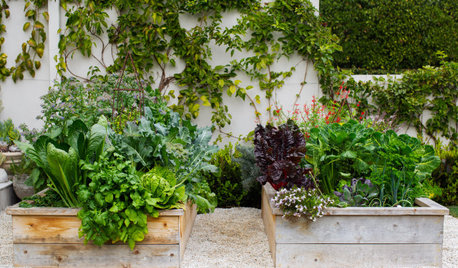
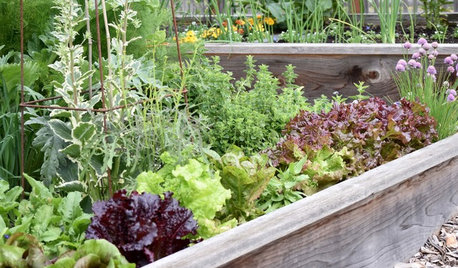
    Hello everybody: I just put in a brand new garden. We built raised beds, 2 of them. Both of them are 10 x 12. I filled them with Composted Cow manure, planted my vegatable starters,(plugs) and seeds, and lined all of the rows with newspaper, and covered them with chicken manure/shavings from the chicken coop (fresh). I have absolutely no weeds, and minimal bugs. My plants are enormous. I started my garden on may 22nd, and my potato plants are up to my hip, corn is mid thigh, zuccini is waist high and producing many many zuccinis. I have harvested mostly salad greens and basil, and some other herbs so far, tomato plants are blossoming, cherry tomato plant has tons of tiny green tomatoes on them. Everything is either blossoming are producing. My garden has done better this year than any garden I have ever created. It is so lush, healthy and green and I am very proud of it. I have used no chemicals, no roundup, just organic matter. I also lined the entire perimater of both gardens with several types of Marigolds to help ward off bugs. The newspaper and manures have not only kept away weeds, but it also holds in the moisture which is essential to most garden plants as we all know of course. I will never use another synthetic ferilizer again, or grow a garden without layering the rows. Just thought I would share my method of growing an organic garden successfully. I hope everyone else is having great luck too, as none of us need to spend the money they want at the grocery store.