Software
Houzz Logo Print
tiffy_z5_6_can

Big project next spring - need help.

20 years ago

We were going to paint the deck and veranda this year, but one thing led to another, and it's looking like a 'next year' project.

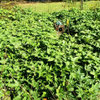
Challenge - I have a lot of plants/climbers situated at the base of the veranda and the deck. These are raised and ideal for climbers such as Clematis and Vines, so over the last four years, I've been loading things up.

Not the greatest picture, but one just the same so you get an idea.

{{gwi:155983}}

I will have to scrape and clean the wood and am wondering what you recommend. This will be done in early summer. The plants will not be moved, but will be cut back, and by the time we start this project, they will have broken dormancy. I do plan on covering them with sheets.

I want to know if there's a cleaner for such a situation which, if it has contact with the plants, will not kill them.

Thanks.

Comments (8)

  • 20 years ago

    One method of removing loose paint is to cover the affected area with duct tape, and then use a rubber roller to press the tape down. When the tape is pulled away, most of the paint will come with it, & remain attached to the tape. This helps keep paint chips out of the lawn & garden below. This method only works when the paint is peeling and nearly ready to fall off the surface.

  • 20 years ago

    There are a number of paint removers that are environmentally friendly, but ericwi has a good idea that probably is no more expensive.

  • 20 years ago

    Since it looks from the photo that the paint is in reasonable condition, I'm not sure ericwi's idea would work. If you have them covered with sheets, keep an extra sheet or 2 on hand to immediately replace any that do get splashed, and keep the hose handy to dilute anything which might splash, spreading them out on the lawn or driveway, I would think you might be able to work without too much worry.

    As Kimmsr said above, there are a number of environmentally friendly paint strippers, which I would think you might have to use on the trellis -- scraping or sanding isn't really an option there, without working until next fall! -- but you could scrape or sand on the non-trellis areas.

    If you really wanted to be clean as you went along, and there was a place to stand it, you could use a shop-vacuum to get the paint particles/dust as you go along, either coming along behind the job at frequent intervals, cleaning upover a sheet or plastic laid down, so you don't get the dirt/mulch too, or holding the hose in one hand and scraping/sanding with the other, or taping the hose end to whatever device you were using. The last two might be too awkward to actually do though....

  • 20 years ago

    Dibbit,

    This is just a small part of this project and I assure you that we will not be cleaning/scraping all areas. Too much work. I have better things to do - probably why it didn't get done this year, eh?

    But there is some 'green' stuff growing on some of the wood which will have to be cleaned with a solution of some sort. Also, the areas where the dogs come and go - and the humans too - needs to be washed as well. That's the type of cleaner I'm asking about.

    Thanks for the input. I'll check the stores to see if there is a plant friendly cleaner for such a project. I've not seen any yet, but one might surface.

  • 20 years ago

    Bleach in a spray bottle will clean the mold. Use with a brush. If it's much more than that replacing the lattice with the type that doesn't require paint may be easier.

    I have seen painters use Spic and Span to prepare a surface for painting. Or use your favorite dish or laundry detergent. I know Jerry Baker recommends Boraxo for something in the garden. Forgot which mineral is in Boraxo.

  • 20 years ago

    Boron, a micro nutrient that plants need in very minute quantities. A little too much boron is a poison, so using any form of boron in the garden is unnecessary unless a good, reliable soil test shows a deficiency.

  • 20 years ago

    I know that when my brother cleaned his deck before staining it, he used a dilute Clorox solution, on the painter's advice. He sprayed the plants around the deck with water before hand, so they were damp, and then washed them down after. At that dilution (which I THINK was a cup per 3 gal., but I may be wrong. Following the recommendations on the bottle would probably do as well?), there was no damage to the plantings. He did cover the more valued plants, but even so, I think that may have been overkill. Using a spray bottle with dilute Clorox, and maybe a bit of vinegar mixed in, scrubbing with a good brush, and then rinsing well, would probably get the green algae. The same would probably work for the dirt, etc., where people and dogs have been walking, although there you might need to use some detergent....

    You would just have to be sure that it was all very dry before you started paining, or it would soon flake. (Yes, I know, Grandmothers and eggs, sorry....)

    As far as replacing the lattice with something that doesn't need to be painted, unless you go with a cedar lattice and let it weather naturally, you will probably still get algae in the shady areas of vinyl or other plastic lattices, and have to scrub it. No painting, I grant, but.... If you can improve the air circulation in those areas, you will have less algae. Not none, but less, so you could go longer between cleanings. No guarantees, esp. since a lot of how much grows how fast where depends on the weather, and if you can control that, I can only say you've been doing a VERY poor job!!!

  • 20 years ago

    I have been a painter for way too long, if there is mildew, rent a 2500 psi pressure washer and purchase a house wash concentrate made by M1 called jomax. add a splash of bleach to the dilluted solution (not too much bleach as it will kill the life of the paint) let it soak for a few minutes and wash off the surface. Harness the power of the pressure washer by blasting all loose paint off of the surface, let dry for a few days, then scrape all loose paint and apply a bonding primer everywhere there was loose paint as it will prevent the paint from peeling in the future, then an oil primer tinted 1/2 strength of the finish paint. caulk, let dry, caulk again- (it will always shrink) and apply 2 finish coats. That is the professional way to tackle the project. Also, the jomax is environmentally friendly and will not hurt your plants (as long as you dont add too much bleach!!).
    Good luck with the grunt work.