Software
Houzz Logo Print
plot_thickens

Adding compost VS. Cover Crops?

19 years ago

Has anyone out there done a study on this? Can someone point me towards something written re: the difference between tilth, fertility, soilborne diseases in methods: spreading compost a couple of different times a year VS. growing cover crops and turning them under?

Comments (6)

  • 19 years ago

    You are kind of comparing apples and oranges. While both will add organic matter, compost does more for your soil than cover crops which are mostly to aid in preventing soil erosion. You will get far more organic matter into your soil faster with compost than with cover, or green manure, crops.

  • 19 years ago

    I'm not sure I'd agree entirely with that.....the intent of growing cover crops for home gardeners is not primarily to control erosion (although that may very well be a side benefit), but it is to add to soil organic matter during fallow periods, reduce the leaching of existing soil nutrients from winter rains and to a large extent to ADD nutrients, specifically nitrogen, as a great many cover crops are nitrogen fixing legumes.

    As to how much OM cover crops contribute compared to compost, I think that is an issue up for some debate as well. It would depend on how frequently one mulches or applies the compost and to what depth. Generally, the practice is to use both products in conjunction.

    As to the other benefits of cover crops, in some recent research I discovered several articles referencing the use of cover crops to aid in disease suppression.....I believe the pathogen was verticillium wilt in potatoes and field trials using cover crops indicated a significant reduction in the incidence of this disease.

    Here is a link that might be useful: benefits of cover crops

  • 19 years ago

    I was kinda puzzzled as to why it was VS or either/or. I do both, and the cover crops that I plant are edible. Purple top turnip, rutabaggas, broadleaf mustard greens and radishes etc. These are cold tolerant crops that grow well here in the fall and winter as a general rule and provide some good eating up until around the first of the year when I mow and mulch them to turn under with the other ammendments that I add to my garden..

    At that time, they are usually about knee high and when I mow them with the mulching mower there is always so much juice and mulched up material that the tires on the mower spin readily. I can not help but believe that this adds back quite a bit to the soil, providing quite a treat for the microbes and worms. The plants that grow root crops usually have quite a few roots left in the soil too.

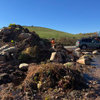
    {{gwi:260001}} is a strip that I did not mow after an unusual two hard freezes in a row knocked them back quite a bit in December. These have rebounded pretty well, the others were mowed and some leaves shredded on that portion of the garden. I will be adding some home made compost, more shredded leaves and probably some aged horse manure a little later, but first I took two soil samples in to Calloways this morning and turned them in to get free soil test and want to see what they show before I add more however.

    This approach has worked extremely well for me in the past few years. I think that my soil is in excellent condition from the way things grow there, but since the tests are free and I have not had one done in a few years, to get them would remove any guesswork.
    That is my .02
    Bill P.

  • 19 years ago

    I agree with everything said, theyre not the same thing and there is good reason to do both if you can.

    ""but it is to add to soil organic matter during fallow periods, reduce the leaching of existing soil nutrients from winter rains"

    gardengal is spot on, covercrops do more than just add nutrients to the soil and what she said above is often overlooked but it is an excellent reason by itself to use them.

    TG

  • 19 years ago

    I do something similar to Bill in tilling under thickly sowed root and greens crops late in the Winter when I'm tired of harvesting and they are getting tough.
    In the Fall of '05, I decided to convert another piece of my backyard (50' x 200') to veggies from grass. I tilled under the grass enough to plant a mixture of Cereal Rye and Austrian Field Peas. By early Spring they were shoulder high on me (6'4") and very succulent. I tilled them under, waited until the ground and air temps were warm and then seeded Buckwheat. Three successions of Buckwheat, each tilled in when in early seed stage. Now I'm back to the Rye and Field Peas.
    When I till these under in the Spring, my ground will be perfect. Each tilling I have watched the ground change progressively from red clay to loose black soil. Each time, the weeds and grass fight less to reclaim their spot.
    I have compost piles which I use to side dress growing veggies, but I could never have made the tons of organic material that I have tilled in. Green manure vs. Compost - they each have their purpose. One man's thoughts.
    Steve

  • 19 years ago

    Thanks, folks, that answers a lot of questions. In a confined space, it's difficult to justify losing a Z9 season of growing lettuce, broccoli, peas etc. to cover crops, so I guess I'll stick with spreading compost, mulching, and dreaming about enough space to be able to afford growing my own additional organic material.