Software
Houzz Logo Print
benjaminxxl

Please help with proper pruning

17 years ago

Hy all,

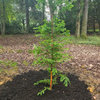
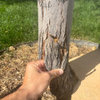
a i have a sorbus aucuparia in my garden and i discovered that one branch is decaying. There was once a misteltoe attached but it died last summer and i cut it off. I dont think it will occlude anymore so i decided to remove the whole branch. I am going to do it in April. This is not going to be an easy cut because there is no branchcollar so I'll need your help. To see the pics copie and paste the links in your browser. The last picture is showing my cut proposals.

I would decide between 1 and 2. Is this correct pruning?

http://www.bilder-space.de/show.php?file=25.01tgZZOdK9nDuNnx5.JPG

http://www.bilder-space.de/show.php?file=25.01FHXDsulflZ4tY1l.JPG

http://www.bilder-space.de/show.php?file=25.01HUBs7WgmI8chlW2.JPG

http://www.bilder-space.de/show.php?file=25.01O5akGHxsJ68UyuL.JPG

Benjamin

Comments (23)

  • 17 years ago

    When you post you can put a link in the slot that appears below the Message box.

  • 17 years ago

    The #1 cut looks about right. The #2 cut would result in a larger than needed wound and would take longer to get sealed off. Be sure not to cut through the branch bark ridge.

  • 17 years ago

    @bboy, thx for the advice, i'll try it.
    @brandon, don't you think no 1 is too high? I dont want it to look like in this pic:
    http://www1.br.cc.va.us/murray/Arboriculture/Images/Trunk_Stem_disorders/oak_Williamsburg/former_twinstem2.jpg

    Benjamin

    Here is a link that might be useful:

  • 17 years ago

    Benjamin, I could not view those firsts links, but in the one titled "proposal" the important thing is that a subordination pruning of the left stem should take place before its total removal. That is, the stem should be cut back significantly to a lateral shoot, preferably one growing outward form the trees' centerline. Over time, this will slow that stem down and a branch collar will form where there is currently none. This will aid the tree in occluding this wound when you do remove the whole thing later. Or, it may make it unnecessary to do a complete stem removal, now that it is behaving more as a branch rather than a codominant stem.

    +oM

  • 17 years ago

    Hy wisconsitom,
    the subordination pruning sounds interesting. English is not my mother language and i have diffulties understanding that part:
    ...the stem should be cut back significantly to a lateral shoot, preferably one growing outward form the trees' centerline...
    Do you have pictures or something for a better understanding?
    I want to remove the branch because of the big wound not because of its codominance.

    Benjamin

  • 17 years ago

    no .. no ... no ....

    PLEASE on your proposal.. I would vote #1 ... BUT THAT WOULD BE ABOUT THE EIGHTH CUT I MADE ON THE LIMB ....

    if you can scale down your pic a bit.. and email it to me.. i could photoshop it ....

    the last cut.. at number one.. would be the stump of the branch .. about 12 to 8 inches long [half meter] ...

    NEVER>>>> EVER>>>> make your final cut with the whole branch hanging out in space.. its a recipe for disaster.. when gravity takes over ....

    unless you understood such.. and were just skipping that part of the discussion like the experts here were ...

    the second proposal will make a wound that is 2 or 3 times the surface area ... and take twice or three times to heal ...

    on that size tree.. you will be amazed how fast the trunk thickens.. and starts to swallow up the #1

    good luck

    ken

    PS: come on guys.. he's a neophyte... we cant discuss the final cut.. without the preceding 52 cuts ... dont you think ...

  • 17 years ago

    Ken - why do you think Benjamin is a neophyte? Even if English is not his first language, he knows about occlusion and pruning to a branch collar, not topics or terms often understood by a neophyte to pruning. With that in mind I'm sure he knows enough NOT to make his initial cut at point #1 :-)

    And I'd go with that one as well, although I'd be inclined to move it up even a bit more, perhaps to the first red line indicated on the photo. This is not an all that uncommon pruning situation and I'd be less concerned about the length of the remaining stub than I'd be about making sure all the decay was removed. The higher up the branch one can go, the smaller the wound left for the tree to compartmentalize. And I think wisconsitcom's proposal has merit for the same reason.

  • 17 years ago

    Hy,
    my interpretation of wisconsitcom's proposal:
    i cut of all limbs from the branch i want to saw off except of one.(this one supplies the rest to the branch). Then a branch collar will develop where is currently none (maybe at #2?).
    And after a few years i'll saw off the whole branch.
    Did i got it right? If yes, is it 100% sure that a branch collar will develop?

    Benjamin

  • 17 years ago

    why a newbie ..

    first he signed up 1/20 .... new to forum ...

    second ... see link ... wherein he posted a bunch of conifer ???'s in the tree forum ....

    and yes.. i understand the language difficulty ...

    it all leads me to the conclusion that he is learning from step one here ... maybe i am right.. maybe i am wrong.. it doesnt matter to me.. nothing worth arguing about, for sure ...

    it took me twenty years of backyard pruning.. up until last summer to realize... three ... or 8 cuts.. are better than HOPING that one perfect cut will do the trick ...

    yeah .. me.. last year .... taking down 4 inch oak branches.. why it never occurred to me.. to cut the 15 foot branch in 2 foot sections.. which wont knock down the ladder .. because i can grip them while sawing... moving my way toward the trunk ... until i have just a half meter piece of branch left.. that i can manipulate with my left hand.. while the right hand works the pruning saw ... and guess what.. no more bark tears .. lol ...

    so all i am saying .. is that we should have him put down the saw ... and metaphorically take a few steps back.. and figure out HOW to do the ENTIRE job.. rather than worrying about the finishing cut ...

    BTW... have we ID'd this tree.. and is it worth keeping in the first place... lol .. the only time one cut is proper.. is when it is made at or near ground level with malice and aforethought... to remove the tree completely ...

    which if that is a possibility ... it should be done before the crop behind is planted ... that tree could easily be twice or three times the size it is now in the next 5 years ... your sunny garden MIGHT become a shade garden .... this tree at this size ..... is probably within your ability to take it down yourself... wait 5 years.. and you will be having to pay money for removal ... what are your plans for the rest of the yard ... rather than how do you prune this tree

    we start learning about division in math class.. after we learn how to add and subtract.. otherwise.. division wont make sense ...

    we will get you there ben.. be patient ..

    ken

    Here is a link that might be useful: link

  • 17 years ago

    Benjamin,

    Don't worry. English ... is not Ken's mother language ... either ... LOL (I have to pick on my buddy Ken when possible.)

    Ken is, of course, correct that it would take more than a single cut to remove that limb. I'm not sure about eight, but definitely a few "precuts" would be needed.

    In this particular case, I'd remove the limb immediately (soon). The decay in the picture looked pretty severe and will only spread down the trunk of the tree. If you give it time to form a branch collar, rot may have developed below your proposed pruning cuts if it hasn't already.

    The top red line is definitely too high for a final cut on the inner part of the limb. The cut needs to be as close to the branch bark ridge as possible without cutting through it. However, in regards to Gardengal's observation, it wouldn't hurt to move the cut up slightly on the outer side. Decreasing the exposed surface area of the cut is a good thing. Even without a branch collar, the tree should be able to close off the exposed cut in a reasonable time. If you are worried about rot and willing to go the extra mile, see Spruceman's suggestion for using liquid copper fungicide linked below.

    Here is a link that might be useful: Preventing Wood Rot in Trees--Liquid Copper Fungicide

  • 17 years ago

    thx brandon,
    is it possible that you edit the third picture i posted?
    I'm a bit confused now how the cut should look like because i dont want it look like in the link below.

    Benjamin

    Here is a link that might be useful: {{gwi:325411}}

  • 17 years ago

    Benjamin,

    The exact location of, or angle of, the cut in that last link you just posted is not the reason for the tree's problem. A number of factors combine to produce those results.

    First, co-dominant leaders are inherently a bad situation. The lack of a branch collar in such a situation makes it harder for the tree to quickly close off the area. That is why, in many cases, Tom's advice about transforming the leader to be removed into a subordinate branch is a good idea. It spreads the process out a little to allow the tree to more slowly adjust to the change. I don't think your tree lends itself to this treatment though because of the advanced rot present.

    Secondly, the type of tree and the tree's vigor play a huge part. If the tree is a species with especially quick roting wood, that's a big disadvantage. If the tree can cover the area before rot is established, it can avoid the mess shown in your link.

    Thirdly, the relative size of the wound is important. Removal when the branch is young/small is very important. Smaller wounds can be more quickly covered. At this point, there's not much you can do about this on your tree, except to make the removal now as opposed to years from now. Ideally the situation should have been addressed years ago.

    Other factors include such things as environmental conditions, time of year that the removal is done, presence of pathogens and pests, etc. Consistently damp conditions encourage rot more so than dry conditions. Removal in late winter/early spring is probably optimal. Using liquid copper fungicide correctly may give you a sizable advantage against rot causing pathogens.

    You can only do what's possible in this situation. The situation is far from ideal, so the results, no matter what you do, may not meet the definition of an ideal solution. If it were me, after considering Ken's advice about considering removal of the entire tree, I'd make the cut and go on with life. The worse thing that can happen is that you may decide the tree should be removed later. After removing the bulk of the limb with less than 8 cuts, I would start the final cut about half way between the green #1 line and the top red line on the outside of the tree. I would end that final cut where the green #1 line ends immediately above the branch bark ridge.

  • 17 years ago

    Benjamin, Brandon7's got the info you need. And in view of the rather advanced decay already present in that limb, I'm inclined to agree that it may just be best to get rid of the whole thing (The limb) sooner rather than later.

    FWIW, Sorbus species are not long-lived trees generally. If you are already starting to see decay in branches, that tree may not be long for the world. But you may as well get as much enjoyment out of it as you can for now. And it won't ever become huge, and therefor, a liability to you for removal.

    Your understanding of the subordination pruning concept is coming along. I would say though, that it is not necessary nor desireable to strip away all the branchlets of the limb to be subordinated. Just heading it back will remove its' terminal growing point, and this alone will slow it down significantly. 100% guarantee of branch collar formation?.......I would never promise that! But.......that is the tendency among trees following this type of pruning.

    +oM

  • 17 years ago

    ok,
    first of all thanks brandon7 and all the others for your advice. I think i am ready now to do the cut. But there are still two questions i have to ask.
    Should i start now to cut the branch or better in march or april? - I read its the best time for it, because now the trees are dormant. And i found no information to liquid copper fungicide in germany. But i found an english website as you can see in the link below. Is this the correct liquid? I also thought that copper is harmful to trees.

    Benjamin

    Here is a link that might be useful: liquid copper fungicide

  • 17 years ago

    I would suggest pruning it in late winter/very early spring. This will minimize the time that the tree is left without any progress towards growth to cover the wound. The resulting difference between doing it now and waiting a month or two probably won't be much though.

    I think the stuff in your link looks like the correct stuff, but the link doesn't give much info. Be sure to read Spruce's comments and follow-ups in the link I posted.

    Also, note the comments about when and how to apply liquid copper fungicide starting with the sixth paragraph. The solution is not applied to the fresh cut.

  • 17 years ago

    8 cuts.. was just an exaggeration.. to make a point ...

    i still cant download your pix from your pic hosting .... so i cant edit your pix.. to give guidance ...

    i would remove all branches less than one inch.. to make it safe to work under ...

    then i would go out to the ends of the branches.. and remove the first meter .... and then just work my way back to the trunk .... in pieces that are easy for you to work with ....

    to get the final cut.. you may have to cut from the exterior in toward the trunk ...pushing the stub that is left.. to gain the ability to cut ...

    you dont mention a zone equivalent.. nor a city so we are hard pressed to tell you when the proper time to do it is .... but frankly ... any time is probably OK .... i dont prune in winter.. because snow and ice make ladder work impossible ...

    even a pole saw in winter for me is problematic due to unstable footings ....

    good luck

    ken

  • 17 years ago

    hy ken,
    i uploaded a picture from another host.
    Hope you can see it now.

    Benjamin

    Here is a link that might be useful:

  • 17 years ago

    super ben... but the wrong pic.. the first pic from the list at top .. was of the whole tree ...

    this provider will allow me to SAVE it.. then i will open it in my photo editor.. then show you my thoughts on how to proceed ...

    and .. you did not answer ... is saving this tree imperative???

    ken

  • 17 years ago

    hy ken,
    here we go. Now that's the right picture:)
    For me, saving this tree is imperative, because:
    1.my father planted it.
    2.I have seen other Sorbus trees and in comparison to my tree i dont think it is very/too old.
    3.It is absolutely healthy (no other visual damages) except for the decay on this one branch.
    4. If the wound doesn't do well after the final cut i can still take the tree down in a few years as a last resort.

    So as long as the tree is still healthy and there is a little chance that the wound can occlude there is no reason for me to take the tree down.

    Benjamin

    Here is a link that might be useful:

  • 17 years ago

    if its important to you.. that's good enough for me.. and as you note in #4 .. there is always tomorrow to be done with it ...

    here is 8 cuts.. since i pulled that number out of thin air.. lol ...

    i dont know what tools you have available... a good ladder and a pole saw.. some rope .... as well as a good pruning saw would really help ... a second person to hold the ladder ... and the cell phone predialed to 911 [emergency services ... lol]

    {{gwi:325412}}

    cuts 1, 2, 3 [blue] are cleaning up for attacking the bigger branch .. surely dont have to be pretty cuts.. but it can be good practice to learn how to do it right each time ...

    cut 4, 5, and 6 [red] .. are cleaning up the bigger branch... so you can work safer.. no need to have a nicely pruned tree if you poke your eyes out.. or kill yourself trimming it ...

    4, 5 [red] , and 7 [lime green] .. you might be able to stand in the crotch while sawing ...

    use the rope and the second person .. hold the branch while cutting.. and perhaps a small tug at the final cut to pull it away from you or the ladder ...

    cut 6 would have to be made with a pole saw if you have one.. skipped if you dont think you can do it safely from the ladder ... this cut.. should take off the entire end.. contrary to the little red mark ....

    i think the final cut [8, magenta] has already been discussed ... you might.. in this situations cut from the exterior ... toward the crotch .. and have to slightly push the branch inwards as the saw starts to bind ...

    it will take a bit longer ... but you will have to cut it up on the ground anyway ... and it will be a whole lot safer in making it all fall down .. and you will end up with an easier final cut ...

    NO MATTER how the final cut works out.. it will be better than allowing the rot to continue down into the main trunk ...

    does all this make any sense??

    do any of you want to debate the multiple cut system???? its how i learn ... always willing.. if you have a better idea ...

    ken

    PS: under the 7 .. i might now see some branches coming straight toward the camera.. if so.. make that cut 3a or 3b .... so you can stand up there later ...

    PPS: here is a similar cut on a much smaller tree ...
    pre prune
    {{gwi:325413}}
    post prune
    {{gwi:325414}}

  • 17 years ago

    hy ken,
    thank you very much for the effort!
    Those last two pics also helped me to imagine the final cut.
    I know i posted this picture already but would you be so kind as to draw the final cut #8 in this picture.
    Guess the side view will also help to do it proper.

    Benjamin

    Here is a link that might be useful:

  • 17 years ago

    Ken,

    Looks like you did an excellent job on your smaller tree, but I wouldn't let you near any big pruning job with the choices you made. (-:

    Your last cut would be impossible without supporting that large limb left over from cut #7. Pre-cutting the limb in multiple locations is fine if that's what you want to do, but is not necessary in this case. The cut (or probably two cuts) that should be made before the final cut should remove almost all of the limb in preparation for that final cut.

    Here's a rough description of how to complete this task. Go up the limb to be cut far enough that you can easily cut with your saw from the top side of the limb without damage to the remainder of the tree (just from the looks in the picture, that might be just below the rotten area). At that point, cut through from the bottom side of the limb about a quarter to a third of the way through. This will keep the limb from ripping away bark and tissue from the area below that cut when the limb falls. Next, move up the limb about 4" to 6" and cut completely through the limb from the top. The limb is now removed from the tree and you are left with a relatively small stub. Now make your final cut as described in detail above.

    Hope that made sense. I'm too sleepy to proofread.

  • 17 years ago

    hey ben.. is the deed done yet??

    ken