Software
Houzz Logo Print
newbntrepreneur

Selling Compost?

15 years ago

Hello,

If I'm producing moderately large amounts of compost a week, is it possible that I could sell it? I'd prefer not to be the retailer, but rather have a company I sell it to on a regular basis. Do any of you know of any such company? If not, how would you recommend selling it? In the worst case, how would you recommend getting rid of it?

Comments (45)

  • 15 years ago

    First thing to check is with your local Dept. of Agriculture for regulations.You could be held liable for any contamination. If it's a pure organic; check with local organic gardening groups. You might be able to work a deal with local (large) nurseries.

    I doubt your moderately large guessitimate would be of any interest to large retailers. A local company here produces about 1000 yards per week and only sells locally.

  • 15 years ago

    The cost to move it so you would have to stay local. If it is quality compost like kitchen waste and vegan specialty is what stands out. Otherwise the big guys have it on lock.

  • 15 years ago

    Search the Internet for captaincompostal. He started a compost business just like what you are suggesting. I'm not sure where he is posting. He used to be the moderator on the Organic Gardening forum but I rarely see him post anything anymore. I know he is moderating regularly on a paid-members-only forum, but you should be able to find him elsewhere.

  • 15 years ago

    they would be food scraps.... without pesticides. They would be composted in earth tubs and mixed with higher carbon materials that we'd get for free (woodchips, etc).

  • 15 years ago

    They did it......

    http://www.bbc.co.uk/news/uk-england-devon-13345935

    There's video at the link but not sure if you can access it from US.

    Here is a link that might be useful: Selling compost

  • 15 years ago

    Check with one of your locally owned nursery/garden centers to see if they might be interested in what you have.

  • 15 years ago

    I contacted the local nursery and they said i would need a license? Is one required to sell compost in california?

  • 15 years ago

    Here's some permitting and contact info.

    Here is a link that might be useful: State composting requirements

  • 15 years ago

    You could also check out the forum archives at USCC.

    Here is a link that might be useful: USCC

  • 15 years ago

    Al now has his own cubit. Garden web won't let me link to their competition, but you can email me if you 're interested and I'll send you the link.

    Karen

  • 15 years ago

    Sell it for fun or a profit? I'm not sure what an earthtub is but unless you have a pay loader and a few acres to work on and some serious capitol to meet regulations It's a lot more fun to give it away to Friends and family gardening clubs or your favorite charity

    The reason companies are able to profit is they get paid tipping fees for the material and govt subsidies

    There is a ton more research you can do by simply goggling it for a while

  • 15 years ago

    I was talking to a lady who works for a waste management company and she said a lot of research is going on regarding compost. She said the company just bought a giant machine, I guess sort of like a compost tumbler but twice the size of a full size van. It had all sorts of plumbing attached to it and blew air into it and she said some liquid came out a pipe which they let some of the employees who were gardeners take home and they said the results using it were fantastic.
    She said the goal is to eventually turn all food waste into compost, and none would ever again go into a landfill. The food is first heated to kill any pathogens, and then fed into the composting machine. She said one problem is that they had to have a continuous supply of food because if they ran out for even a day the special microbes they use would die, and it was very expensive to buy a new batch. I guess sort of like the mountain men always keeping some sourdough alive to make the next batch of bread.
    She said they are selling the compost to Disneyland.

  • 15 years ago

    There are no "special" microbes needed to digest food waste, they are already present on the food. People that keep a sourdough going need to be careful because that sourdough starter has yeast in it which is much different then what digests food waste to make compost.
    If the nursery would not consider purchasing your compsot unless you had a license then selling any to anyone else without that license could get you into a heap of trouble.

  • 15 years ago

    You weren't paying attention, Kismmsr. They heat the food to kill anything alive in it first, including pathogens. BTW, they heat it with methane gas generated by the digesting compost, and also use the methane gas generated to run an electric generator. This is a high tech continuous feed operation that produces compost in a fraction of the time a home composter would take, because all environmental conditions are precisely controlled, plus they use the special fast acting microbes.
    BTW, do you still think Roly Polys don't eat seedlings?

  • 15 years ago

    Yeah kismmsr..lol! Not just seedlings.

    {{gwi:289947}}

  • 15 years ago

    Call your county agricultural extension. They'll be able to tell you the requirements, which may have to do with sourcing ingredients, minimum temperatures, testing, etc. Here in New York there's a state department called Agriculture & Markets that enforces regulations for agricultural products.

    Your best bet might be to find out the rules, make some distinctive packaging, and sell through local nurseries.

  • 15 years ago

    There are sometimes lawn care companies looking for good quality compost for lawn topdressing. That may be a way to go. Heck why not start your own topdressing service? Great summer job for teenagers.

    Lloyd

  • 15 years ago

    ..
    Special microbes? Why not just get pigs? What ever happened to that guy on Dirty Jobs in Vegas who took all the leftovers from all those Vegas buffets and just boiled 'em up and fed it to the pigs?

    Seems to me selling compost is a question of scale. At some point when you scale up the waste stream to the product you can make it cheap enough to sell at a profit. I suppose you can get your special microbes and sprayers of air and water and stuff but you still gotta find a continuous stream of feed stock cheap enough and then unload the continuos stream of product - safely. Sprayers, space and equipment to move things about all cost money.

    What's your business plan say?
    ..

  • 15 years ago

    My business plan would be this:

    instead of a school (or any facility that puts out a large amount of food waste) giving money to WM to take away their food, I go in and install either a giant worm bin (worm castings are worth more) or a compost bin, where they can generate compost on-site. They pay this installation off via payments that would be less than what they pay the waste company to take away their food waste.

    I'd get a landscaping company of some sort to drop of woodchips/sawdust for carbon to add into the mix. I'd eventually want to pick up their waste for a very small price/for free and sell the compost they generate. The main challenge in this (at least I think) is selling the compost, especially because I have no kind of background in this domain.

    what would you recommend/improve on that?

  • 15 years ago

    ..
    I'm just a backyard yahoo. Composting at a commercial scale is beyond anything I want to advise. I like the worm bin idea. I just don't know jack about worm composting.

    One link that might be helpful:
    http://www.jgpress.com/

    Another link for your homework (more than I want to know):
    http://compost.css.cornell.edu/index.html

    Some one else will have to help you. I just see the problems but not necessarily the opportunities and I believe there are opportunities if only I could see them.

    to sense
    ..

    Here is a link that might be useful: Biocycle Magazine

  • 15 years ago

    Newbntrepreneur, your name is getting ironic! Food waste is only a small fraction of the waste coming from a school or similar facility.

    Your business plan would have to include management of garbage, otherwise the school would be paying you for the composting service AND Waste Management to pick up non-compostables.

    Think plastic.

  • 15 years ago

    what If the facility were to implement sorting? WM would take away the recycling, the refuse, and I would take away the food waste?

  • 15 years ago

    Some thoughts:

    A) Compliance with 'separation at source' is poor at best. Getting a commitment to provide only the feedstocks you desire will be extremely difficult. Be prepared to do a lot of sorting.

    B) Woodchips/sawdust/paper are not the best, nutrient wise, as a C material. If one is just trying to get rid of waste materials by composting, fine, but if one is trying to make a higher end marketable product, one would be better off using higher grade feedstocks as the main source. Not saying some low end products, but don't make it the major source.

    C) Take the time to make the best compost you can, don't cut corners. People who know compost can tell the difference between a quality product and crap that is just being rammed through a system. Don't sell an immature product unless that is exactly what they want for some reason.

    D) Know your product. How old, what feedstocks, what temperature achieved, number of times turned. Not saying you need a pedigree or long form birth certificate, but be able to explain and show your process.

    E) Invite customers to your composting site. Being able to see what is done and how you do it shows you have nothing to hide. Honesty and integrity count for a lot. Similar to this, don't try to oversell your product. A lot of people show up looking for waayyy more compost than they need and it would be easy to sell them what they ask for.

    F) Start small, getting in over your head right off the get go will be very discouraging.

    G) And lastly, make sure this is something you really want to do. It sounds easy enough on paper but unless one is a certifiable whacko enthusiast, it can be daunting.

    Good luck

    Lloyd

  • 8 years ago

    Newbntrepreneur, have you found a source to pick up your compost?

  • 8 years ago

    It appears to me that this poster posted only to this thread, 6 years ago, and nothing since anywhere at Garden Web. So you are not likely to get a reply.

  • 8 years ago

    toxcrusadr, thank you. I am trying to sell 24 hour rapid compost system in US to restaurants. I am hoping this will help reduce food waste from going to landfill but my biggest challenge so far is how to get rid of the compost. I don't really want to get into the business of picking up or selling compost. Any suggestions?

  • 8 years ago
    last modified: 8 years ago

    24 hour rapid compost system? Lol... I think you mean a heated shredder that mixes food waste with a high-carbon material to decrease bulk and create a 'ready-to-decompose' mixture with multiple sustainable applications. Sorry, but these machines do not make compost. I'm not saying that they aren't effective at processing large quantities of food waste, and that your goal to reduce food waste from going into landfills isn't noble, but the end product of these systems is not compost.

    Perhaps I'm being too critical, but many of us here understand the composting process quite well. The term 'compost' has a specific meaning. Using the term in such a marketable product as this, especially since it's misleading, is a bit off-putting.

    As to your challenge of how to get rid of the processed material, I recently saw an episode of 'Growing a Greener World' about a group who collects compostable materials on bicycles. Perhaps you can contact that group (through the link above), they may have insight into a larger community of like-minded people in other areas.

    I do hope that your goal of finding ways to divert such waste from landfills is fulfilled.

  • 8 years ago

    I too support your efforts. This is a big deal in the US because food waste is a large portion of the waste stream. And for restaurants and cafeterias, it's almost all of it.

    The University of Missouri started a bicycle-based food scrap hauling operation a couple years back and it has expanded to most or all of the campus food services. Very successful.

    The restaurant business is a tough one, and any business is going to want to focus on their core mission - in this case, making food. Whether they have a processing machine or just a bin to put food scrap into, someone is going to have to haul it away. So the real business here is just that - selling food scrap collection services. You either compost it yourself, or find a compost operation you can deliver it to. and you sell it on the basis of either cost savings compared to paying to landfill it, and/or 'it's the right thing to do' even if it doesn't save them money. It has to be VERY easy and efficient.

    Given that scenario, here's the big question: what is the advantage to the restaurant to having one of these machines, in contrast to just a food scrap bin that someone empties on a schedule?

  • 8 years ago

    rgreen48(7a) Thank you for responding. I am very new to composting and still got a very long way to go. Just interested to see how I can do my part to help reduce waste and also if any luck turn it into a business. It seems to me you must be very knowledgeable in the field of composting and appreciate your willingness to help. I have 2 reports regarding some compost tested, can you share your opinions regarding the test results? I can send you the reports if you don't mind looking at them. Thank you again.

  • 8 years ago

    toxcrusadr - Yes, you said it very well and that is my biggest concern. The restaurants can save on tipping fees paid to waste collection services, but still end up with compost that they or I have to deal with. I am from California and some cities here, the government has made it mandatory for big contributors of organic waste to recycle their waste and not dump it to the landfill. I think I might have to change my focus to waste collection businesses rather than restaurants. Thank you for your insight and appreciate the help.

  • 8 years ago
    last modified: 8 years ago

    Christopher, any reports that you wish to have reviewed can be posted right here. I am a fairly knowledgeable novice, but there are a couple of forum participants who are professionals in working with compost and recycling organic waste. Drawing from a variety of opinions and experienced persons will help you with options. You could even start a new thread to focus more on your specific circumstances.

  • 8 years ago

    Is there not already some program in place that addresses how the organic waste is handled after it is isolated from other, landfill-type garbage? These state-wide or broad area recycling mandates are not exactly new - that has been a requirement here in WA state for years. And they are seldom implemented without serious study and concern as to where and how all that recyclable material will be handled and converted into compost or other usuable output and what will be done with the end product.

    Here, organic waste is part of all garbage pick-up programs in most urban/suburban areas, both residential and commercial, with cans or bins dedicated to only that sort of waste and with a separate set of trucks that picks it up and hauls it all away to whatever commercial composting facilitiy that jurisdiction or municipality has available. All compost that is generated by these facilities has to meet certain standards, is carefully regulated and the end product sold.

  • 8 years ago

    I'd recommend doing some reading to get a feel for the industry. US Composting Council, BioCycle magazine, there are lots of resources on the web. Find out what is going on in your area and who's doing what. Sometimes it leans more toward the municipality, other places it's contracted out to private companies.

  • 8 years ago

    To *update* my thoughts up thread.....stay out of the compost "business".

  • 8 years ago

    I don't know these machines but believe your point is right that the waste collection companies will be the main 'competition.' Restaurants will not want to deal with any more, and it's unlikley the waste collection cos (WCC) will need something small scale - they'll either have or work with large composting operations. For some ideas though: there may be niche markets (restaurants and others) for whom waste collection is a problem - expensive, or too far away, or whatever. Isolated hotels or smaller communities, clusters of businesses, etc. They may have food waste it is too expensive to ship away, don't want to deal with smells. Something that reduces the volume and leaves them with something they can dispose of (in accordance with law) locally may be of interest. Just an idea.

  • 8 years ago

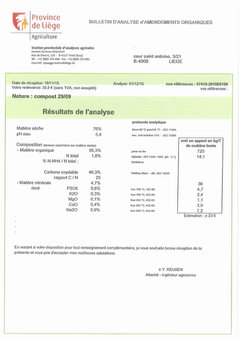
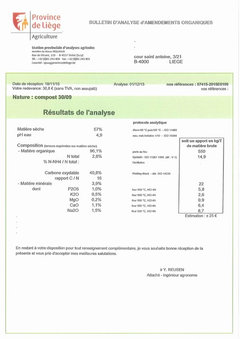
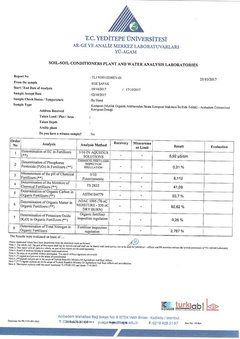
    rgreen48 - Is there a way to attach pdf files on this forum? I have a couple of reports on compost and wanted to get opinions if these are considered good results for the compost.

  • 8 years ago

    Christopher, take a screen shot, edit out your personal information in a photoshop type program, and post it as a photo.

  • 8 years ago

    Anyone can give comments about these reports? Are they considered good compost?

  • 8 years ago
    last modified: 8 years ago

    I have to agree with gardengal. One thing that may - and I say may - reveal the unfinished nature of the samples, is the pH.

    I'm not entirely sure what each of those reports represent, but the first shows a pH of 5.4; the second... 4.9; and the third... 8.112.

    If those are levels from a standard pH scale of 0 - 14, with 7 = neutral, then there's something going on in the state, and process of decomposition. Food waste, combined with common compostable carbon ingredients, will usually finish in the neutral - slightly acidic range. The fact that these pH readings are fairly far removed from that target indicate that the sources are not what might be considered 'common', or that the chemical reactions which occur during decomposition have not reached a state of stability which we like to see in a nice, finished compost.

    That said... I didn't see anything that would indicate that these samples are not perfectly fine organic materials.

  • 8 years ago

    @Christopher, what are these reports of? Compost produced by the systems you want to use? Compost you have produced yourself using the systems? Have you seen the compost? Do you know what was used as feedstock to produce these results? Does it have an odour - like vinegar or alcohol? Or a vague smell of manure? Or earthy? Anyway, my point is that the ph levels mentioned are probably an indication of incomplete conversion into compost, and the stuff being composted being more composed of food waste than the usual compost mix of greens (which is more like foodwaste) and browns (pulpy or woody).

    I'm going to make a few big generalisations, but that I think are borne out in compost-world. First, inputs matter - the compost you get at the end (and how you get there) comes from what you put in. In simple terms, there's a reason all the compost stories and examples (like in the article above) emphasize browns (leaves, woodchips, cardboard, paper, etc). Those browns are basically cellulose and lignin, the pulpy and woody parts of plants and trees. Notice in the 'compost king' story a key part of the process is to mix wood-waste with the foodwaste they get from the city.

    Browns are polymers - complex molecules made from chains of sugars. Simple sugars get consumed directly or converted into alcohols and vinegars. Polymers are harder to break down and have more structure, which helps with the other key part of composting - bulk affects how much air gets in there. (Water content also matters, as water blocks air).

    My generalisations and digression aside, I think the upshot for your compost machines is that whatever output you get may need to get mixed with woody/pulpy waste to be most like a normal compost soil amendment - bulk is important in a soil, arguably more so than 'nutrients'. That will also help stabilize the output and tend to moderate the ph. It doesn't mean the output you get directly out of these machines isn't useable, but if the inputs are food waste only (or mostly), partial composting will be noticeable.

    Another point about kitchen waste/food scraps is that they're a lot more variable - and hence from batch to batch results will differ; fatty foods or more sugar will change the output. Commercial operations almost always deal with this by mixing more browns - pulpy or woody waste.

    If the reports you have above are from somebody selling equipment, I'd be skeptical - the results will depend a lot on what they're feeding into the process.

  • 8 years ago

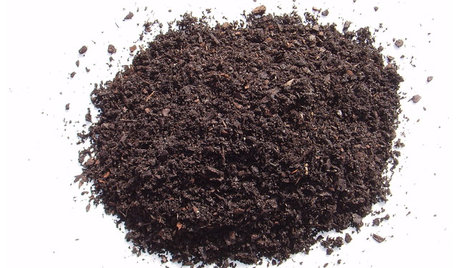
    armoured - These are reports from my supplier of a 24 hour rapid composting system. I have seen their final compost product but not for the batch mentioned on these reports. The final compost has a earthy smell and looks like garden soil.

    I checked with the supplier and he also confirm what you said about the pH value, it depends on the input material. The reports I had, 1 of them the input is bull manure and they use the final compost as bedding for the bulls to keep them dry. The other report is from a soda factory composting their water sludge and they give their compost back to employees for use in their gardens.

    They do mix their waste with wood chips and microbes and then rotates and dry. It is kind of like what the "compost king" is doing at his facility.

    I am trying to see if there is a demand for such systems here as I think being able to speed up the process and less labor is the key advantage to turn a profit making compost. As I am very new in this industry, it has not been easy for me finding the correct target market.

    I really appreciates all the inputs from everyone and it has been most helpful and make me realize composting is not as easy as it seems.

    Here is a link to their video.

    24 Hour Rapid Composting System

  • 8 years ago

    Thanks, will look at the video. With 24 hours, it's going to be a bit over the place. Most of that stuff will likely be fine if it sits and cures and gets air for a bit longer. Good luck.

  • 8 years ago

    Just checked with my guys and they say to let it sit for 3 days and it will be good.