Software
Houzz Logo Print
pam_loves_2_garden

Tea Olive Keeps Dropping Leaves

14 years ago

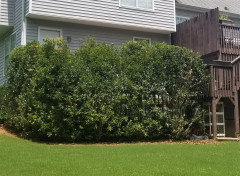
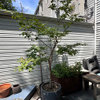
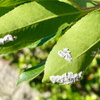
My Tea Olive Trees keep dropping leaves. When I 1st planted them last June, they dropped 1/2 their leaves within 2 weeks. They seem to NEVER stop dropping leaves though apparently some are growing back. But, they drop more than they grow. What am I doing wrong. I've tried Miracle Grow & Osmocote and neither seem to work. Thanks!! The 1st 1/2 of pic is from September 2011 & the other pic on right is from April 2012.

Comments (24)

  • 14 years ago

    PUT AWAY the Miracle Grow and Osmocote! Do you force-feed massive amounts of food down your kid's throat when they get the flu? (Not that fertilizer is food, but I think the analogy is still pretty good.) Woody plants RARELY need supplemental fertilization, and they especially do not need it pushed on them in times like this.

    We don't have enough information to tell for sure what caused the leaf loss for your trees, but I'd bet it has to do with improper watering, possibly combined with improper planting. Please describe how you water and how you determine when to water. Also, describe (in as much detail as possible) how you planted your trees. Did you amend the soil? Did you remove the burlap (if any was present)?

  • 14 years ago

    We also don't have enough information to know to say that fertilizer is not called for. Woody plants are essentially herbaceous plants mounted on a woody framework, the soft growing tips are not that much different from the bodies of non-woody plants. Like those trees and shrubs can and often do need fertilization on cultivated soils. The only general difference is that various popular herbaceous types like flowering annuals and annual vegetables are derived from plants occurring in nature on recently disturbed soils with lots of humus and minerals present.

    Within the gallery of woody plants there is a complete range of types adapted to infertile soils, moderately fertile soils and highly fertile soils. Perhaps the most vibrant deciduous magnolia I have seen here was one growing in a border among hybrid tea roses and herbaceous flowering ornamentals where there was no doubt regular substantial fertilization and other use of chemicals taking place. A great many other deciduous magnolias and other trees and shrubs in local plantings have a chronically starved appearance. The usual deficiency in my area is that of nitrogen.

  • 14 years ago

    "We also don't have enough information to know to say that fertilizer is not called for."

    Actually, we do in this case. The plant is going through a significant period of stress and probably transplant shock. Even if this was one of those rare cases where more of some nutrient was needed, this is not the time to address that need AND no determination of what nutrient(s) are missing has been made. The loss of leaves is certainly NOT being cased by lack of nutrients. As discussed above, this is like force-feeding a child with the flu. Even if the child was, for some unusual reason, being malnourished, force feeding during this stressful time is NOT the answer!

  • 14 years ago

    Osmanthus fragrans shouldn't lose one single leaf upon transplanting....UNLESS the plant has been planted improperly or not taken care of after planting.

    Pam's pictures were not attached. They 'might' shed some light on the situation.

  • 14 years ago

    didnt GA have one of the bad droughts last year???

    and june is NOT prime planting season in the deep south.. is it ..

    and we have no clue as to the size of the transplant ...

    and i wonder about the dichotomy between a peaty potting media in a large pot.. going into that famous GA red clay ...

    but my best guess is.. insufficient water .. thru the whole root zone... and then near drying.. before the next deep watering ...

    there is no other real reason for leaf loss.. other than disturbed roots that are not pumping enough water to maintain the canopy ... and that is tied up in all the other variables i mentioned ... and summed up as WATER MANAGEMENT ..

    ken

  • 14 years ago

    If it's woody, it rarely/never needs to be fertilized and if it was just planted it never needs to be fertilized are both falsewhoods, and that's the way it is. If a soil is not adequately fertile for a particular kind of tree or shrub no benefit will occur from withholding the nutrients that are deficient. At a fruit conference I went to one time there was a even a report on poor fruiting from an apple orchard in New York being corrected by applying NITROGEN. So much for applications of nitrogen favoring production of foliage and growth over flowers and fruits.

    Osmanthus fragrans seen in my area are often having problems with discoloration, tip dieback etc., depending on the conditions occurring at the time. But we have coolness for long periods, and it sometimes gets too cold for this shrub on many sites here. A type grown for many years on a greasy clay slope in the Seattle arboretum is probably a different one from those being carried at outlets, as it is apparently not so fussy and delicate.

  • 14 years ago

    We were given a nice little Tea Olive about three years ago, in late spring. We planted it in our bright red Alabama clay soil, unamended and unirrigated. It was a small plant when we got it, maybe three gallons. It never flinched at being planted in the heat, and never dropped a single leaf. Quite the opposite, the darned thing is now much taller than my 6 foot husband and a LOT bigger around, lol!

  • 14 years ago

    Thank you Brandon7 and bboy but I still confused as to what to do. However, I've posted a link so that you could view the photos please. I don't know how to resize to upload them here. I water it every 3 days unless we are scheduled to get rain here in Hinesville, Ga. I push my finger into the soil around the trees to determine if they need water. If hey are dry I water if they are moist, I leave them alone. I'm new at this.

    Here is a link that might be useful: Tea Olive Tree

  • 14 years ago

    Yikes, I doubt that we've watered our Osmanthus any more than ten times in the the years that we've had it! You might consider a cooling layer of mulch on that bed; try not to pile it up against the shrubs.

  • 14 years ago

    Did anyone view the pictures? I'd still like to know how to save my tea olives. We did have a drought last year. Would that have caused my tea olives to go into shock even now? Thanks!

    Here is a link that might be useful: Tea Olive Tree

  • 14 years ago

    I looked at the pictures...that's why I suggested the application of mulch. Not only does a 2 to 3 inch layer of mulch help keep weeds down and reduces water evaporation from the soil surface, but it cools the soil/root system.

    I've seen woody plants improve pretty dramatically after mulch was applied, with no other treatment.

    I'll also suggest that the watering frequency is an issue. If you're applying water for just a couple of minutes at a time, that won't accomplish anything. If you are watering deeply three times a week...that's too darned much water.

    Plants should be watered deeply so that you feel reasonably sure that there is moisture several inches into the soil. You can't feel that with your fingers. With layer of mulch on top, such a watering can last for weeks.

    Your watering frequency is probably encouraging the plants to develop a very shallow root system.

    All that being said...it doesn't appear to me that your Osmanthus was a particularly thriving one in the first place. It just seemed a little on the 'lean' side. We also don't know if you amended the hole when you planted...something that is not recommended, even in clay soil. We don't know if you planted too deeply or 'high and dry' as is usually suggested for clay soils. Does your soil drain well? That can be an issue for some locations and a real problem with clay soils.

    So, with so many unknowns, all I would feel comfortable suggesting is the addition of mulch (always a good idea) and the change in the watering schedule.

  • 14 years ago

    Just because someone has planted this tree a few years, ago and rarely irrigated it, has no bearing on your situation, your soil, your micro climate, your planting technique, your draining speed of your soil, basically it means nothing.

    The only person who can say for sure what your tree needs is YOU. I personally believe your tree has been under-watered...do I have proof, no, but why not deeply water it once a week and see what happens?

    With my soil I could run the hose on FULL speed nonstop til the cows come home, pull the hose up, and 1 minute later the water has fully drained, but what does that have to do with your soil? My watering habits are no prescription for your's.

    The tree is under stress; water it. Water is the basis for life, yes, I know too much water is bad, but I would doubt that over watering is the problem here.

    I totally agree with mulching the tree. I wouldn't put any tree in the ground without mulch. It's like their own little baby blanket. lol

  • 14 years ago

    Very loving answer, Lover of Trees. Shakes head as gazes at osmanuthus in backyard. An osmanthus is a tough ole Buzzard and doesn't need any Lovin'. It's sick right now, ILMT, but probably not Lovesick. It responds when you don't get too affectionate with it at all. It's a Love it Once, and Leave it Alone tree. The fundamental problem at the moment, lies somehwere in it's roots, Love...further procedures should not be proceded before an investigative procedure procedes. Hippocrates- "at first, do no harm". It needs oxygen, Love, it needs it's Space sometimes...and then it'll put on it's Perty Perfume ferya...but if you don't respect and understand her...she'll give ya the cold shoulder and wither by the bye..

  • 14 years ago

    It has failed to establish. That is likely due to improper irrigation or planting and usually both. . It may be planted too low and could use some air right aound the base of the tree. There is an investigate probing that needs to be done, soil around the base of the trunk needs to be gently pulled away plus photo after, close up. After getting some air to the top of that rootball, then you proceed by composting heavier away from the base of the tree, so roots can find their way out of that frightful looking weed mess she's been struggling for her life with...just sayin.. also, pulling the weeds may have damaged just developing roots...but she'll be a tough ole bird if you can get her established...dropping leaves says roots not getting enough oxygen or leaves are not balanced with the roots cuz your fertilizing her when she don't want it...

  • 14 years ago

    I am also having problems with my Tea Olive losing leaves. We just had landscaping done a few weeks ago and when the tea olive was planted it already looked like it was experiencing stress. There is mulch around the tree and I am watering once a week. I am hoping after a period of time the tree will bounce back. I am not fertilizing. Any thoughts or suggestions? I do have a guarantee on this tree, thank goodness.

  • 9 years ago

    We have an old tea olive in our yard that has lost almost all of its leaves over the last 3 years!!! We had an extension service come out when we first moved in to identify it and we were told it was a camellia and it needed iron, so we gave it iron, then it flowered for two seasons and then started dropping its leaves. lThen someone else properly idebtufied it as a tea olive. We had a pool put in not far from it and possbiley some of the roots were disturbed. Surely the grading of the land changed and during rain storms it would pool around the tree. We put down top soil and graded it away from the tree to no avail. It is almost completely bald except for the very top. Is it possible to revive this beauty????

  • 9 years ago

    doesnt sound like its worth it ... i can take trees years to recover from such events.. do you really want to look at it for a few more years???


    where are you.. how about some pix ... ken


  • 3 years ago

    Can Tea Olive shrubs survive a 5 day deep frost that turned all the leaves brown ?

  • 3 years ago

    HU-618156491,

    You may get an answer here but most don't like to answer a 10 yo post.

    Best to start your own thread with your specific problem and add some good pictures of the plant from a couple of different angles. You'll be a lot better answers if you do that.

    :-)

  • 3 years ago

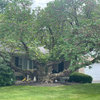
    Hi HU-618156491, I am experiencing the same thing with my tea olives. They are approximately 15 feet tall and 7 years old. I have 6 of them planted in a hedge and they have all lost nearly all of their leaves. They all turned brown and fell off after the last cold snap in Georgia. I'm pretty freaked out and hope they're not dead.

  • 3 years ago

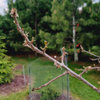
    This is what they used to look like. Now they're just bare sticks.


  • 3 years ago

    My tea olive did the same thing due to a bad cold snap over Christmas in Atlanta. It's 15 feet tall and is 12 years old. It's always been beautiful- now it's just sticks. Is it dead? Will it come back?

  • 3 years ago

    With no insult to the root mass...most plants can easily recover...


    And with the giant mature root mass... It might recover RELATIVELY fast...but the still might mean 3 to 5 years to get back to some size...


    They will not start growing until spring growth season


    Do start your own post next time...and title it appropriately...


    This very thing happened in TX a few years back...and I remember all the posts...


    The type of shrub makes little difference....the only issue is if the cold got a foot or 2 down into the soil..and I doubt that happened wherever you are


    Ken