Software
Houzz Logo Print
rosefolly_gw

American elms are back

19 years ago

I normally hang out on the Antique Roses forum, but I love trees as much as I do roses.

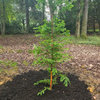
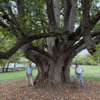
I'm visiting family here in Pennsylvania and just bought two American elms to plant in my father's garden as a Father's Day gift. He has loved these trees all his life, remembering their graceful shape lining streets all along eastern towns during his childhood. He has mourned the Dutch elm disease that nearly wiped them out. We can't grow them where I live out west, but they are native here.

I read in the WSJ of all places that Home Depot stores in the east are selling a highly resistant American elm this year. I think it is called the Princeton elm. It is a naturally resistant tree, not a hybrid, and should look just like the trees people remember from the old days. Anyway I thought there might be other be others who loved this tree who would be interested. The store we visited had all their deciduous trees marked down for the end of the season clearance, so it would be a good time to take a look if you are a fan of this tree.

Rosefolly

Comments (32)

  • 19 years ago

    I can confirm that the Home Depot here is selling potted Princeton Elms. They are 8 to 10 feet tall in a 10 or 15 gallon pot for $109 (original price).

    They have nice straight trunks, then a mess of branches at the top with no leader. I don't know how well these elms take care of themselves as far as form goes, but I think some pruning would help to avoid crowded scaffold branches.

    Alex

  • 19 years ago

    I think I paid $66 each for two trees, so they are marked down quite a bit for end of season clearance. I thought they looked beautiful and healthy.

    Rosefolly

  • 19 years ago

    I bought a Princeton Elm four years ago mail order and it is doing great here in Texas.

    My guess is having lots of leaves to make energy for the young trees is more important early on. Then you can prune and shape as they develope after the second or third season.

  • 19 years ago

    Our HD had a shipment @ $129 ea for kinda small container size.... You'd have to really want an elm. The wholesale grower I use has 2" caliper trees for that or less than that price.

    Rosefolly, why can't you grow them out west? U. americana is native all the way down to miami just about.

  • 19 years ago

    I am going to have to try at least one DED resistant Elm. Is the "form" of Princeton the best for hurricane wind survival? Any suggestions?

    Yes. I know I am obsessed with this subject....;-)

    Terry
    near Biloxi

  • 19 years ago

    $139.97 each for 15 gallon size here. HD offers a verbal 12 month warranty.
    The supplier is Sharp Top Tree Nursery, White GA.
    Anyone can propagate 'Princeton' there is no patent. American Elm is easy to propagate and prices will likely come down.
    Sam

    Here is a link that might be useful: Sharp Top Tree Nursery

  • 19 years ago

    I have planted two 'Valley Forge' elms - one in NoVA and one in z5NY. I got them as 4' bareroot whips for $40 or so from a guy in New England who just wants to propagate elms.

    American elms grow [i]very[/i] fast. My NoVA whip is now WAY over my head going into its third growing season. It needs to be staked because, at its current growth rate (3' or so per year), it's too tall for its caliper.

    The guy who sold me the 'Valley Forges' also sells Princeton and New Harmony - both 100% u. americana selections.

  • 19 years ago

    I'm out of hurricane country, so I don't know what shape is best for surviving one, but, the Princeton elm is noted for its "classic" american elm shape, which is to say a "vase" shape.

  • 19 years ago

    QuirkyQuercus, we only get fifteen inches of rain where I live, and that is an average. We didn't make ten inches last year. I suppose I could grow one with irrigation as I do my flower garden, but it seems to me that trees, once established, ought to be able to survive in the environment without human intervention. YMMV but I like to suit trees to the local climate. So, even if I could grow an American elm out here, I won't.

    I like beeches too, but won't grow them for the same reason. Fortunately, our native valley oak (quercus lobata) is one of my favorite trees. And I like our redwoods, too.

    Rosefolly

  • 19 years ago

    Marked down to $89 at my home depot.
    It doesn't look like they sold a single one. Half of them were tipped over laying on their side on the ground and I uprighted them.
    So much for having people plant something other than bradfords and crepe myrtels.

    Rosefolly I don't think you can grow them in 15" a year of rain only but there may be some local ecotypes of elm. I just don't know.

  • 19 years ago

    The Home Depot by me started with ~20, now there are about 10. I saw several tipped over as well. Strange, because it's a relatively sheltered spot, and the winds haven't been that strong. I suppose they are in lightweight potting mix?

    Alex

  • 19 years ago

    It was annoying that all the bradfords were standing upright but so many elms were laying on their side.

    What I should have done was switch the signs and move the bradford pear signs over the the elms and move the elm signs over to the pears LOL. I wouldn't switch the prices just the tags and the signs!

    Come to think of it since the signs at home depot are all made with a magic marker I could make my own counterfit signs at home and go quickly take them in to HD and scotch tape it over the elm signs. I wonder if people would know that the elms were not leyland cypress?!

    I should have done that in Florida. What are you talking about maam, I know that looks like a red maple but I assure you it's a queen palm.

  • 19 years ago

    I wonder if popular opinion of Elms is why they aren't selling. "Oh, well, EVERYONE knows Elms die from Dutch Elm Disease... yeah, these say they won't, but that's probably just marketing..."

    People probably aren't that informed: they just want their Bradford Pears so they can be unique like everone else.

  • 19 years ago

    I wonder if people haven't simply forgotten about American elms? Those that remember may have memories of the dying trees, or perhaps of those awful brittle Siberian elms that were promoted as replacement trees back in the 1960's.

    I remembered them partly because my father loved them so much, and partly because I was a student at Penn State. There is a long walk called The Mall on the Penn State campus. It leads from the main library down into town, and is lined on both sides with American elms. Simply beautiful! And I must give the university credit. As the trees slowly began to die, they fought the good fight, and replaced them with newer, more resistant specimens. Perhaps some Princeton elms are among the replacements. I don't know.

    Rosefolly

  • 19 years ago

    I purchased one of the Home Depot Princeton American elms (supplied by Riveredge Farms, Georgia) and planted it this past Mother's Day. This tree is growing like a weed! I too noticed how HD neglected these trees and on several visits I too actually uprighted and watered the remaining unsold trees -- I think HD sold about 1/3 to 1/2 of the allotment. I was happy to meet several people at the store the day I bought mine who had just heard a piece on NPR or had read the USA Today article about these elms and were well informed about the resistant specimens that include the Princeton. I only wished I could have bought and planted more (I purchased a 2 1/2 footer directly from Riveredge for our backyard and planted it on 04 July -- it too is now thriving).

    From what I've read, keeping an elm healthy is the best way to prevent DED from either infecting or ravaging the tree. As I've written in a previous post here (my apologies for that necropost) I've tried Bayer Tree and Shrub Protect and Feed with the expectation that it will kill the Elm bark beetle (as advertised), the principal carrier of DED, and thus help prevent my tree from becoming infected.

    Rosefolly, I know the elms of Penn State rather well! I can only hope that these resistant elms will beat the DED for years to come...

  • 19 years ago

    I have a 12' high princeton elm tree and I am worried it will die I desperately need shade and this tree would be great IF it survives. Will it survive. I live in Cincinnati Ohio and I am worried that I am wasting my time with this tree, someone put my mind at ease or am I worrying too much?

  • 19 years ago

    scootch,

    Why do you think it will die? Does it look sick? Princeton has good resistance to Dutch elm disease, and it has a several decade long track record as a street tree with a high survival rate. Cincinnati is well within the native range of the American elm. Tell us something about where you planted it.

    Alex

  • 19 years ago

    I was surprised to see that it looked like my local home depot had sold off the majority of their princeton elm shipment. I think there was only maybe 2 or 3 way in the back. I guess the scary part though is they sold all these during the summer. Hmmmmmmm.

  • 19 years ago

    From what I've read at Riveredge Farm's website, these trees can be transplanted in my zone from April through October and all year round further south. I was disappointed to see them all gone from the HD as of my last visit this past week, as I'm sure they couldn't have all been sold, but could have feasibly still been planted for some time...

    Here is a link that might be useful: Riveredge Farm planting guide

  • 19 years ago

    no, it doesn't look sick. I just bought it from home depot. The leaves look like they have been chewed up by some bugs, which I don't think is a big deal. I planted it in my side yard with no other trees around except for the stump of a maple that we had to take down. That is about 15' away. All and all the tree looks fine leaves are green trunk looks fine I was just worried about the dutch elm disease. That's all I see whenever I pull up anything on the internet concerning the american elm tree. I don't have a lot of experience with trees, just want to make sure whatever I plant will last. Any helpful tips on taking care of a young elm would be helpful. Thank you

  • 19 years ago

    That is the risk you run with American Elms. None of them are immune to it but some varieties, like the princeton elm that were shipped to home depots all over the country, are resistant. If you're going to worry about it, plant some other types of trees in your yard for some variety.

  • 19 years ago

    scooth,
    I really mean this benignly, but there is no doubt at all that something you plant will die before its time. It may be a reasonably priced elm. Or as you become a great gardener and buy more named or exotic plants it could be a $25 daylily or a $100 tree. But you won't grow as a gardener if you don't take some risks along the way. If nothing ever dies on you, you live in a perfect, homogenous climate, have no dogs or kids or groundhogs or chipmunks, never try a variegated plant, or pushing a climate zone.

    Enjoy your living, breathing, changing, sometimes dying plants!

  • 19 years ago

    you are right, and I am going to plant some other types of trees throughout the yard. I was thinking of some poplars and a royal empress. I am just worried about the elm because where I plant it is very vital to the shading of our house and yard since the sun shines through that part all afternoon. It gets hot!!! Thanks for puting it in perspective for me, I tend to think too much at times.

  • 19 years ago

    Elms should do better than royal empress and poplars in OH, lets put it that way.

  • 19 years ago

    I just heard from my father. Both trees are doing very well so far, but are under seige from Japanese beetles. He is out there daily capturing and drowning beetles.

    Rosefolly

  • 19 years ago

    Hey Everyone...

    This is my second attempt at my first post... I hope it works this time!

    I bought a Princeton Elm at the HD in May. (And yes, it was sad to see so many of them blown over in the parking lot...)I can report that mine is doing GREAT in the front yard. It has grown at least 6 feet with nothing but natural mulch and plenty of water (to offset our terrible drought this year). My question has to do with pruning.

    I haven't cut anything (except branches damaged at the HD) yet as I figured it had been through enough for this year. But soon I am going to need to prune it for shape and strength. I noticed that the pruning that must have been done before it arrived at HD seemed to have been done expressly to AVOID a central leader rather than encourage one...I called Riveredge about it, and they indeed told me that a princeton elm doesn't necessarily grow from a central leader and not to worry about it. Right now, the main crotch is about 5 ft. up on the tree, and while I would prefer it a bit higher, I guess it wouldn't hurt to have some low branches. Does anyone have any knowlegde/experience with the pruning/central leader situation on these beautiful trees? I want mine to be as strong and healthy as possible! thanks!!

    shaun

  • 19 years ago

    They must have done well, local HD has a fresh shipment with those classic wrappers that say "return of the American Elm". The prices are at $89 here.

  • 19 years ago

    I will have mine pruned up to about 12 feet before I let them begin their typical arching vase shape. I may go even higher as I see them develop a little more. I have "Liberty Elms," which may be a little more erect growing and less spreading. I think 5 feet it is a little low for an elm to start its division into its large ascending limbs. Without seeing what you have it is hard to give good advice, but if the tree is young and vigorous, as it apparently is, you can do some really radical pruning that may seem extreme, but as the tree grows it will quickly overcome the loss and start growing in a better shape. Maybe you could select the best and strongest limb that is nearest the center of the others and cut off or radically shorten the others. It may look like a real "hack' job for a while, but in the long run it may make for a better tree.

    One of my trees has a tendency to fork with one side somewhat stronger but deflected in the opposite direction by the lesser side of the fork. I have been cutting off the lesser side, even though it seems extreme and leaves the trunk a bit crooked. But the tree is growing fast and so far it seems that the crook to the right, and then the one to the left will hardly be noticeable as the tree grows bigger and develops a balanced crown. At about 12 feet I see the tree beginning to divide into a beautiful set of ascending branches. For my tree that is probably the height it will have unless it develops in a way in the next couple of years that makes me thing differently.

    Many of the elms that once lined our town streets had divisions of their trunks 15 to 20 feet high.

    --Spruce

  • 19 years ago

    "New Elms for American Cities" is a 90 minute lecture being given at the Brookside Botanic Garden, suburban DC on Oct 5th. It is free but you must register. I am registered, hope someone on this forum can benefit.
    Sam

    Here is a link that might be useful: Brookside's Fall Lecture Series

  • 19 years ago

    Hey Sam -

    Do you know if someone will be recording the lecture at Brookside Botanic? I would love to get a copy! Thanks!

  • 19 years ago

    I have several American Elms growing naturally in the woods around our cabin, and I'm worried that they will eventually contract DED. None of the trees are mature. The biggest one has a 4" DBH and is about 15' tall.

    There are branches on it growing almost all the way to the ground, and I'm going to prune them off to about 6' once the leaves drop (pretty soon this far north!).

    One of these is almost in the yard, and I'd really like to save this one. Any ideas?

  • 19 years ago

    Here is a good link to National Arboretum's introductions of American Elm.
    Sam

    Here is a link that might be useful: Nat'l Arboretum Article

Sponsored
Peabody Landscape Group
Average rating: 3.5 out of 5 stars8 Reviews
Columbus' Reliable Landscape Design & Contracting