Software
Houzz Logo Print
halds

Help with Sick Oak Part 2

16 years ago

OK, I am providing more photos as requested in my previous post.

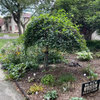
First is the comparison with my neighbor's Oak. I am pretty sure they are the same oak, but I flunked tree identification in Cub Scouts....

They look like pin oaks to me.

{{gwi:381929}}

{{gwi:381930}}


Note that the neighbor's tree (left) is much darker green than mine.

Here is comparison of the trunks

mine

{{gwi:381931}}

{{gwi:381932}}

neighbor's tree

{{gwi:381933}}

{{gwi:381934}}

Here is an example of the nodules and spots on my leaves

{{gwi:381935}}


compared to neighbor's (their tree also as some nodules on some leaves as shown, but no major spotting)

{{gwi:381936}}


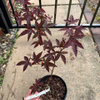
here are closeups of what I am seeing on my leaves

{{gwi:381938}}

{{gwi:381940}}

these affected leaves are more noticeable on the north side of the tree.

Should I be concerned?

thanks

Comments (11)

  • 16 years ago

    First, I nominate halds to create a template for others to submit their issues, based on this.

    Second, I did a study of zelkova in Davis, CA where I found the largest, healthiest trees were sited in the largest turf areas. I see that association here as well.

    I do see a touch of chlorosis in the plant and in that place I'm not quite sure why, but I'm a westerner. I suspect the plant has perhaps limited rooting volume and resultant bit of decreased vigor, which is manifesting itself in the touch of chlorosis, leaf spot and a little bit of critter visitation. With the abnormal-soon-to-be-normal weather up there the pests likely are having a field day.

    I don't see anything to be too concerned about, the tree has a case of the sniffles with a touch of flu and body ache. It'll shake it off. I'd maybe fertilize the lawn one more time a year with something maybe with a little iron in it.

    That's what I see pre-full caffeination & interested to hear others' takes on it, including the fun leaf morphology variation.

    Dan

  • 16 years ago

    First, I nominate halds to create a template for others to submit their issues, based on this.

    ======>>>> i will second that emotion ....

    i would recommend a soil test ... contact your local soil conservation office or Ag office or extension office.. in the yellow pages under government ... EVERY county in the US has all three ... even the big cities ...

    then i would ask.. with that absolutely perfect lawn.. do you use weed and feed??? .. is so.. stop it ... its a good product to start a lawn with.. but just isnt necessary any more ... get a spray tank and just spray the few weeds you get each year ...

    and then.. everything else dan said ....

    i think bottom line.. all that is needed is for you to get it out of your head.. that it is sick ... should i say my kid is sick, because the neighbors kid is a different shade of tan??? a different shade of green???

    you have made a one year observation of a what.. 80 year old tree ... keep watching for the next decade or two ... and then maybe we can come to some conclusions ... but in the mean time.. lets see if the soil is deficient in some way ... and go from there ... even regarding the iron application.. the soil test will tell us if that is an issue ....

    good luck

    ken

  • 16 years ago

    Pin oaks need acidic soil. Are you putting anything special on the hostas? I really don't like the planting beds around the trees. Like Ken said...no weed & feed either.

  • 16 years ago

    Thank you everyone for putting my mind at ease. My hope was that I was just being overly concerned, but a tree is a valuable resource to loose simply because of ignorance.

    I will have a soil sample tested. I have been meaning to have it done anyway. I have been using weed n feed for the past couple of years (only once in the spring) because the dandelions are so bad here if you do not control, but as you said, it is now to the point where I can easily control with a sprayer, which I do.

    I don't put anything on the hostas, not even mulch....except iron phosphate slug bait (lol). If I had to choose between hostas or the tree, it would be like Sophie's Choice for me.....

    I would predict that the soil is not acidic, as I have a hydrangea planted in that area and it blooms pink.

    I am very grateful for all of your comments,

    Hal

  • 16 years ago

    I'm still interested in the chlorosis and why the neighbor's tree doesn't have it. May be the picture angle, but their lawn is a touch greener too. Are they using a different fertilizer consumer product, maybe like a Richlawn with iron in it?

    & Ken, the architecture & street design aren't 80 years old, I'd say that was the second wave of building after WWII & maybe early 50s (not that familiar with NE, tho) so the tree is about same. Just settling into early middle age & can be affected by this year's weather as well. And I agree with Ken about the weed and feed going away.

    All in all, good eye and if winter cooperates and a decent spring, should be perky next year.

    Dan

  • 16 years ago

    Our home was built in 1964, assuming the tree was not here prior to construction.

    I do not see an obvious difference in the green of the grass with the neighbor. I have never seen them have a lawn service, so I doubt they teat with iron, but I will ask.

    No more weed n feed, and will get the soil test to know for sure about pH and iron.

    Depending upon results, I am wondering if I should treat with iron sulfate. I read that one method is to drill 3/4 in holes 2-3 ft apart around the dripline 14-18 deep and add iron sulfate at an amount depending upon diameter of trunk.

    This method sounds better (but slower results) than to have a company drill holes in the trunk to deliver the iron?

  • 16 years ago

    Hmmm...1964...hm. Nonetheless, deep root feeding won't help much if at all, there is a relatively fresh thread on this forum about that. And drilling a hole in the trunk is a last resort for any arborist, as this is a pathogen superhighway right to the tree's goodies.

    Dan

  • 16 years ago

    Hmm. I know I posted on both your threads a day or so ago. So here's another try. Unfortunately, I may well disrupt the ease your mind has settled into --

    I suggest you stop worrying about planting depth, and start figuring out why the roots are dead (refer to the final picture in your other thread). That's very likely to be the underlying reason for the current challenges topside.

    Further, I think you should also figure out whether or not the tree is still stable.

    To determine the latter, I suggest you have a certified arborist who is qualified to evaluate potentially hazardous trees to take a look.

    For anyone who is interested, OP's other thread is at http://forums2.gardenweb.com/forums/load/trees/msg0614251219677.html?31732

    Here is a link that might be useful: OP's other thread

  • 16 years ago

    Yo Jean, you're on the wrong thread.

  • 16 years ago

    Thanks, I will move forward with topical application of a iron containing fertilizer to the lawn.

    Hal

  • 16 years ago

    Hey. It happens.