Software
Houzz Logo Print
bveronico

First Winter - Azalea Damage

12 years ago
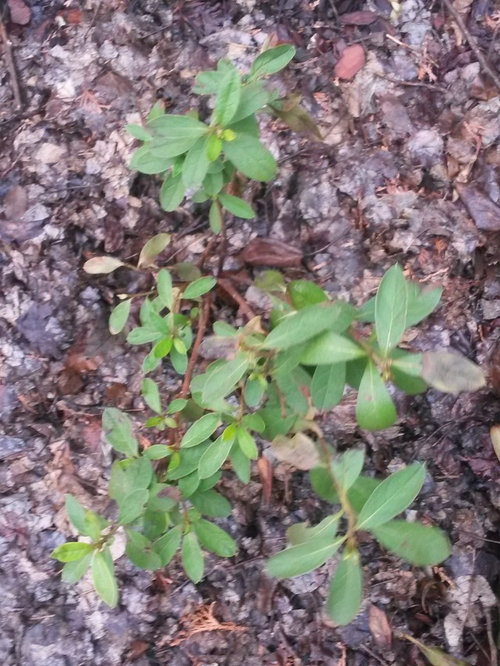
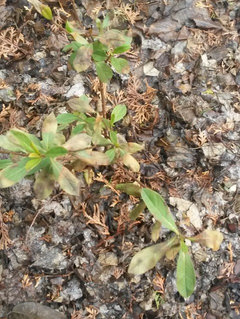
Well, my six little azaleas have had a tough winter. I took inventory first a few weeks ago and noticed one that had the worst damage, a Lavender Bloom-A-Thon azalea, seemed like it was a gonner. Wilted leaves covered the plant, most were discolored brown and sickly looking. The heavy snows this year had also broken one of it's low and long branches off. The recent deluge of rain though seems to have given it a bit of a lift, but I am not optimistic. I have already planned to purchase a replacement for it.

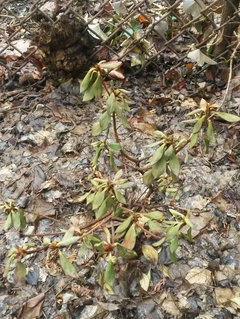
Of the others, here are three that have varying degrees of damage, one of which looks almost the same as it did six months ago - bright happy green. The others have severe discoloration of the leaves from the outside in and I'm not sure if that is from wind or lack of water or sun, or some combination. I admit I thought with the close buildings on the South and West providing shade and wind-blocks, I did not need to provide further protection beyond mulching with pine bark and crumbled leaves a few inches deep. Live and learn. I just hope these pull through so I don't have to replace more than one plant (the one to be replaced I did not bother with a picture since it's very gone).

Comments (12)

  • 12 years ago

    Can't figure out how to post more than one pic at a time so here is the second.

  • 12 years ago

    And third.

  • 12 years ago

    If these just aren't hardy there you should grow them in pots that are placed inside protection during the winter or choose other kinds that are hardy there.

    Wind is compressed by walls and rushes along it, hence the use of the term "sheltered wall" when discussing plant placement; when using the extra sun or shade provided by walls to grow marginal plants the location or angling of the wall must also be one that places the plants out of strong winds for the full benefit to be realized.

  • 12 years ago

    If these just aren't hardy there you should grow them in pots that are placed inside protection during the winter or choose other kinds that are hardy there.

    Wind is compressed by walls and rushes along it, hence the use of the term "sheltered wall" when discussing plant placement; when using the extra sun or shade provided by walls to grow marginal plants the location or angling of the wall must also be one that places the plants out of strong winds for the full benefit to be realized.

  • 12 years ago

    Actually they look quite good, especially given the severity of this past - let us hope - winter throughout the northeast. There is some leaf browning from wind/sun, but they are clearly alive. Be patient. Once the weather warms, you can prune back to live wood and pinch if you want bushier plants, but even if they do not bloom well they should fill out on their own over the summer.

    Making sure they entered the winter with moist soil is important. Watering during the winter itself is just not practical in parts of the country where the ground freezes and is not necessary once they have entered dormancy. The roots of azaleas and rhododendrons remain in the upper level of the soil. The thermal mass of the ground as well as the adaptive mechanisms of the genus protect the roots from freezing damage.

  • 12 years ago

    Glad to see this post. I just unwrapped my rhodie and found a significant amount of browning, and also some dark spots on a few leaves. Definitely due to this last winter. I know it may not be easy to wrap smallish plants, but perhaps next year it would work? There are also some neat "tents" that would probably work too, you can find them at Lowe's etc.. Maybe a little hollytone would be a nice way to give them some added help too. After they bloom, and perhaps a dormant feed in the fall. Anyway, anyone know what the small black spots could be on mine?

  • 12 years ago

    There are many possible causes for the spotting. None are usually life threatening. Giving fertilizer to stressed plants is not a good idea unless a soil test shows a real need. In cold climates especially, fertilizer after the end of June is a bad practice. Even if you think the plant is dormant, stimulating late soft growth is a sure way to increase winter damage.

  • 12 years ago

    Is there not a dormant feeding practice for azalea/rhodos? Hollytone even specifies that this is what should be done on their packaging. I know that many of the companies do this so you buy with more regularity so could that be the reason. I always have fed the plant after they bloom in the spring, after deadheading. Perhaps just some compost would be more effective/safer?

  • 12 years ago

    Fertilizer after bloom is fine, even though it may not be necessary, especially for larger, well-established plants. A soil test is the only way to know for sure. Compost can also be helpful, but may or may not contain the needed nutrients. Rhododendrons and azaleas are not heavy feeders, so often maintaining a mulch which gradually breaks down is often all that's needed. Again, a soil test is the best way to determine what needs to be done.

    There are some advocates for dormant feeding. Trouble is an unexoected warm spell can trigger renewed growth. In any case, it's not at all necessary. Hollytone at about half the recommended rate can be used twice: once in early spring, once after bloom. It's not a substitute for good soil preparation or mulch, but will not do any harm, either.

  • 11 years ago

    How did those bloom-a-thons do? This 2015 Northshore Boston winter really browned my little bloom-a-thons. I covered them completely with a styrofoam cover. I also wrapped my pencil plants ipex with burlap. All dried up and leaves are just falling off. What more could I have done???? I scratched all of them with my fingernail and they are still green, but naked! Should I wait it out. Last year it was flower less hydrangeas and this year it is dead evergreens...

  • 11 years ago

    The snowfall in the Northeast this year was unprecedented in its depth and persistance. Theoretically it should have protected plants, but the weight was too much in many cases. I would certainly wait and see how things develop. You may be surprised with how completely things recover. Two suggestions: Styrofoam covers often encourage various fungal infections. Much better to use something that provides shade but allows good air circulation. Burlap is a good material for winter protection, but it should not be wrapped directly around a plant. Use stakes to leave an airspace between the burlap and what you are trying to protect.

Sponsored