

Source for Lithocarpus Henryi tree
I tried Woodlanders, they have other Lithocarpus but no Henryi.
Comments (46)
 11 years ago
i might have a small seedling or two available----if interested in more information you can contact me at "dismalvista(at)yahoo(dot)com"
 11 years ago
George...I wouldn't normally butt-in like this but...
1) how do you know for certain any seedlings you have might not be hybrids with the local Lithocarpus of the Oregon coast, which, though it would be an interesting thing in its own right, would obviously not be as adaptable to zn 6 on the east coast. Of course you could have another, distant source for acorns, or they could flower at different times of the year.
and
2) not to cast aspersions on your garden cleanliness, but you are in or very near the area of sudden oak death endemism. Please be sure you don't ship it to the east coast.This post was edited by davidrt28 on Sun, Sep 28, 14 at 10:02
Related Professionals
Dubuque Landscape Architects & Landscape Designers · Oneonta Landscape Architects & Landscape Designers · Rochester Landscape Architects & Landscape Designers · Shreveport Landscape Contractors · Starkville Landscape Contractors · Mansfield Landscape Contractors · Denver Landscape Contractors · Bowling Green Home Additions · Rolla Home Additions · Grand Rapids Home Additions · Minneapolis Home Additions · Winona Home Additions · Bennington Home Additions · Everett Home Additions · Hilo Home Additions- 11 years ago
thank you for your concern and interest. seeds that produced seedlings are from atlanta, georgia botanic garden from a plant there via a plant friend in that area and there is no SODS known past southern curry county in oregon---70 miles from where i am in coos county NOT in the infected/quarantine zone there. FWIW, have heard of no reported hybrids between the west coast native NOTHOlithocarpus densiflorus (no longer regarded as in the "true" lithocarpus genus) and the east asian lithocarpus species. you may draw your own conclusions on either the possibilities of hybridization or the presence of SODS in the seedlings i might share. BTW, any and all plants that might be shared and sent are sent bare root and washed clean of all soil wrapped in a moist towel and placed in a sealed plastic bag---the easiest and safest way to send from both an economic and plant disease prevention aspect.
This post was edited by georgeinbandonoregon on Sun, Sep 28, 14 at 15:18
- 11 years ago
George, no problem, thanks for clearing everything up. Botanist like to move things around somewhat arbritrarily at times, but now I read that in fact Notholithocarpus (can't they be a little more original than that?) is not closely related to the Lithocarpus, and is in fact a case of convergent evolution...it having evolved from the North American Quercus! Makes me wish for someone to try a bigeneric Notholithocarpus X Quercus hybrid...would presumably be much more likely than a Notholithocarpus X Lithocarpus hybrid.
Lucky Poaky, I wish every plant I sought was held by some bloke on gardenweb who has extras haha.
- 11 years ago
well, if you would like a seedling of the lithocarpus and i do have one to share you are most welcome to it. also have seeds and seedlings of a variety of relatively rare evergreen oaks from mexico and the s.w. (among other places) that i might be able to send IF you are into such weird and wondrous stuff. if interested, you can contact me by private email.
- 11 years ago
Thanks, but no, I've got one of the last (maybe?) Woodlanders offerings. They listed for over a decade so I wonder what happened to their source tree.
- 11 years ago
maybe nothing at all happened to the source tree but instead they simply decided that demand for the plant was not sufficient to warrant production at this time. FWIW, woodlanders just brought back machilus/persea thunbergii (an awesome tree IMHO) after at least 3 years absence so who knows what may happen with the lithocarpus?
poaky1
Original Author11 years agoGeorge, before I say yes to the Litho henryi, can you tell me about their "habit". I tried images in the web and the leaves are in the pics, but the size and shape isn't clear. Can I fit one in a small space or are they oak-like in way of appearance and size? Thanks.
- 11 years ago
both the trees of this species i have grown are naturally rather dense and bushy. my oldest is abut 24 years old and about 20' high/12' wide. when happy, some of the leaves can approach a foot long. as with most broad leaf evergreens in colder climates they will greatly appreciate a sunny but sheltered spot (protected against cold winter winds). how it will fit in your garden is likely very dependent on what you consider a "small space"---i would guess that it needs a minimum space of roughly 10' x 10' at maturity (say in 15 years or so). it may well tolerate LIGHT pruning to reduce spread a bit. hope this helps..
- 11 years ago
In their native habits many of these Asian evergreen trees get absolutely enormous. Though Flora of China says 20m so only a little more than 60 ft., it's hard to imagine some old ones might not be bigger still. I've seen pictures of the trunks of some of the evergreen oaks of southern Japan, and they are huge trees.
Issue is though, their growth is slower here in North America for a variety of reasons. Just as we don't have any 40' Asian rhododendron hybrids yet, even though some of them are derived from species that get that big. On our west coast, natural summers are too dry though everything else is generally favorable; OTOH on the east coast summers are a little bit too dry but also prone to long dry spells that don't occur in Asia, and our winters too cold and long, or in the south, too variable. (that's why the streets of Charleston, SC, are not lined with Magnolia campbelliis) I've seen my Quercus variabilis send out long arching shoots, only to have them start to gently wilt during a couple week period w/o rain. Which would not occur during the height of summer in China. I didn't water it though: better to force it to grow a bigger root system.
The Howard County trees have some competition, but don't really look much bigger to me than they did 6 years ago. Still around 20' high, planted in the early 80s I think, so growing well less than 1 ft. a year. Most native Quercus would be taller by now.
I was looking in the Atlas of Woody Plants of China for size information. Somewhat worryingly, the "cold index" they give for this species is very low, only 1.4. For reasons I don't have time to explain, it's a fairly poor tool for making US climate comparisons. But, by comparison Keteleeria davidiana has a mean coldness index of 3. A species from really cold areas like Pinus koraiensis has an index of 80. It's something like the number of celcius degree-months below 5C. So, this means there is only 1 month where the average temp. is 3.6C, in the typical native habitat of Lithocarpus henryi...with a spread up to 13.6. As I've pointed out before though, most species are hardier than their native habitats, some much more so. This might be one of those. Of course, many other Lithocarpus have a index of 0.0. In fact looking at the book as a whole, it was kind of a foolish inclusion because over 1/4 the plants in the volume have a trivial range of 0 to 1 for their index. Would have been a bit more logical just to try to code them to something like USDA zones, though that might have seemed too US-centric or something. It does imply to me though that in China, they mostly occur in zn 9 or even 10 areas, and no worse than zn 8 areas. Certainly nothing like zn 7.
This post was edited by davidrt28 on Mon, Sep 29, 14 at 13:38
- 11 years ago
IMHO, it all goes to show that "your mileage may vary" in growth rate and other areas of plant performance from region to region in north america and in comparison to it's natural habitat in s.e. asia. my guess is that plant performance in colder areas (USDA 7 and below) will likely be slower and smaller than warmer areas for a variety of reasons---including shorter (potentially cooler summers) and cooler winters with the possibility of periodic cold damage to repair. Sean Hogan of cistus nursery in his (very useful book) "trees for all seasons" rates it as hardy to around 0 f. or a little bit below but benefiting from a cold wind protected spot in coldest areas. certainly the tree i have in my brother's place in salem, oregon (USDA 8a roughly) survived exposure to near 0 this winter and looked just fine (machilus thunbergii right next to it suffered some definite branch kill at the same time). this tree is the one i mentioned earlier that's about 20' tall after planting sometime around 1992 or so. i might add that this tree is growing in an area with relatively deep soil and some summer water (it's in a lawn). the area gets a fairly warm summer( by pacific northwest standards at least) with average highs 75-85 and periodic hot spells with highs in the 90's and sometimes hotter.
- 11 years ago
Thanks for the details from Sean's book George.
I guess we both are underscoring that there is some variance and not every individual of this species could be guaranteed to survive temps well under -10F...even though we now know of at least 2 that have. (Howard Co. MD and Kansas) I wonder if Barry Yinger had one in central Pennsylvania. It's a bit odd to think of a plant coming from a place where winter averages are over 40 F surviving those temperatures. But it is good that they do!BTW that book is an amazing volume. It's clear there are still many interesting plants that have not come out of China. I would particularly like to track down the Acacia that had the highest cold index, I think it was Acacia delavayi. But it's only part of the story: what's probably going on is certain high elevations in SW China might have a moderately high cold index, but they still never really get that cold because of the blocking of the Siberian High. Still I wish seeds from that part of the world were easier to get...like the zn 7 hardy Rosewood at NCSU. I wonder what the wood looks like and if it could be grown as a lumber crop in the south.
poaky1
Original Author11 years agoDavid and George, I only considered the Lithocarpus Henyri because Hairmetal knows of one in zone 6 Kansas, which is 20 years old. It, being an Evergreen oak relative, peeked my interest. But if it is zone 8 hardy and a little tiny tree, I can do without it. I will try and get Hairmetal to get specific on the tree he has seen that is zone 6 hardy. Even if small I could use it somewhere for winter interest. Thanks for the replies. Poaky1
- 11 years ago
Note that in the past it has appeared that Sean (in the Cistus online nursery descriptions at least) has had the usual tendency to say if it came through temperatures that fall in the AVERAGE ranges of lows attributed to a USDA zone then it is hardy in that zone. Nevermind that most places sooner or later get well below the 0F-10F, 10F-20F AVERAGE lows that tend to occur there.
It seems Dan Hinkley did the same thing, writing from the assumption that Heronswood was in Zone 7 (presumably because it sometimes gets below 10F around here - I am more or less directly East of Kingston, across Puget Sound) and rating numbers of items in the catalog one zone too hardy as a result.
I haven't discussed it with either of them but if you compare what you know with what they have said that is how it looks. And the false assumption that the low temperatures given for each USDA zone are the coldest it gets in each of them seems to be quite general among gardeners.
Agents from the state agricultural agency up here were claiming to have found SOD in local operations, directing them to take control measures (as in renting a backhoe and burying infected stock in plastic bags 6 ft. under the ground) some years ago. So I find it quite doubtful that there is now none north of a certain point in coastal Oregon.
I have also been told by one of the world authorities on water molds that the cat was long since out of the bag as far as containment of SOD is concerned - it having become too widely dispersed.
This post was edited by bboy on Mon, Sep 29, 14 at 22:12
- 11 years ago
Thanks bboy. I respect someone willing to stick their neck out and be the bearer of bad news. Agree completely with everything you've written.
That being said, all available evidence suggests that at least in hot summer climates, Lithocarpus henryi is probably the hardiest truly evergreen oak. I say, truly, because I think a handful of semi-evergreen oaks could be as hardy or hardier, except in winters remotely that cold they will definitely lose their leaves. - 11 years ago
I've reviewed some of my old personal notes and emails from the owner of the Howard Co. trees:
As I said on the other thread, I do not believe Compton's oak were completely evergreen even in a normal Williamsburg winter, and certainly lost all their leaves in 1994. A "semi-evergreen" plant knows when it cut its loses.Q. myrsinifolia in the parking lot of the Williamsburg Inn was fine too after 1994...bright green and healthy looking. IF ONLY we'd had digital cameras back then...but I specifically remember checking it to compare with mine. That was at 0F. However, in NoVA at -8F or so, my 8', spindly, 1.5" caliper tree was killed to the ground...it was only 2-3 years old from my very first Woodlanders order. The same winter, the Lithocarpus henryis in Howard Co. saw -16F: NO damage. In the same bed, Q. myrsinifolias lost their leaves, but survived. Now, I also see a note that a Q. acuta survived that - but with damage. Which is a bit odd because I don't remember seeing an acuta when I visited the Howard County site in the late 2000s.
So...compiling everything:
hardiest:
Lithocarpus henryi (the Wichita tree is strong corroboration, obviously)Q. myrsinifolia (some survived Howard Co. 1994, but Hairmetal is aware of one that didn't. Hairmetal: was it at Patuxent Valley Nursery by any chance? His site is the only other collection of rare plants I know of in that county.)
the various hardiest Q. acutas and Q. virginiana (a reminder, the Q. virginiana at Udel looked pretty beat up after this long drown out winter, at only 2-3F. While the Q. myrsinifolia looked like something out of a Hong Kong garden that has never seen a temp below 35F..)
Q.phillyraeoides probably goes here
less hardy Q. acutas and Q. virginiana. I'm 100% sure both acutas and glaucas were injured at 0F in 1994, because I remember mentally writing them off as less hardy at that point, even compared to the local, hardy Q. virginiana
So...Q. glauca? not very hardy/least hardy of this group. Also in my opinion, the various Mexican oaks also go here. At NCSU this spring, I don't care if they technically survived, they all looked awful after only 7F. I had ordered one at Camforest and requested I switch it out for something else when I picked up my order. You only want a semi-evergreen oak if it *does* go gently into that good night. Not looking like it was sprayed with a mix of liquid nitrogen and chlorine gas.
This post was edited by davidrt28 on Tue, Sep 30, 14 at 12:46
- 11 years ago
"It, being an Evergreen oak relative, peeked my interest. But if it is zone 8 hardy and a little tiny tree, I can do without it"
I can tell you right now, NO broad leaved evergreen tree, of any description, is ever going to grow both large and fast in PA zn 6. Just something you better be aware of.
- 11 years ago
Some of the hardiest Magnolia grandiflora selections are supposed to be quite cold tolerant.
There were a few instances of spoiling damage to long-established Ubame oaks in Seattle during the 1990 winter, so I see that one as tender. A 30 year winter in the Seattle area means it got down to like, 5F-10F, depending on where you were (minima are usually at the high end along Puget Sound and may fall off rapidly a rather short distance inland, but this is not completely consistent - the international airport has seen 0F whereas the record low for the University of Washington station, inside Seattle proper is 10F; both are quite near the water, as far as it goes).
- 11 years ago
Thanks Bboy but there are old specimens in central North Carolina that have survived all the cold winters of 1980s. There are also several at the US National Arboretum and even one at the Scott Arboretum. Might be hardier in a hot summer climate.
"Some of the hardiest Magnolia grandiflora selections are supposed to be quite cold tolerant. "
They are, but big old ones north of the Mason-DIxon are extremely scarce. Still it probably is Poaky's best bet if he wants something that has a chance of becoming a big tree in his life time.This post was edited by davidrt28 on Tue, Sep 30, 14 at 17:22
- 11 years ago
i would suggest consideration of some forms of evergreen forms of magnolia virginiana like "henry hicks" for example. that said and as already mentioned, zone 6 is likely not the place to grow a LARGE evergreen broadleaved tree to mature size but even a 20' tall tree can be impressive in the landscape for various purposes and seasons or why would so many people plant small trees like flowering cherries and japanese maples?
 11 years ago
One of the more evergreen M. virginianas (var. australis, or named variety) is a great suggestion. Even if they eventually defoliate, they're still very hardy.
- 11 years ago
>why would so many people plant small trees like flowering cherries and japanese maples?They notice them and are attracted by what they see. And they look good or at least acceptable when they look for them at outlets later. And they are able to find them at outlets later - there is a snowball effect wherein people want what they see around already, growers produce what they know will sell and so on.
When I helped a friend with a garden center he was trying to make a go of we ordered a Sorbus hupehensis cultivar and he later had them on display with (if I remember correctly) their pink fruits in view.
They stiffed - it seemed everyone who responded by expressing an interest in mountain ashes at all wanted the orange fruited S. aucuparia they already saw around everywhere (it is actually weedy in this ecosystem) instead.
I thought of Sweetbay also but it doesn't have the laurellike appearance of most of the other trees discussed previously, anyone wanting a more chunky, tropicalesque appearance (like that of a Bull Bay, for perhaps the most dramatic example) will not get it from this tree.
This post was edited by bboy on Wed, Oct 1, 14 at 12:28
- 11 years ago
bboy--just curious, what do you define as a "laurellike appearance"? would suggest that magnolia virginiana"s smaller evergreen (in var. australis at least) somewhat ovate leaves are rather similar to a number of species commonly called "laurel" (think prunus lauracerasus/"english laurel") or members of the "true" laurel family (lauraceae)---machilus(persea) thunbergii or cinnamomum japonicum also with relatively/somewhat broad leaves? the term "laurel" has been used for a variety of unrelated plants seemingly unified IMHO only by the fact that they have evergreen broad leaves so it would seem the criteria for "laurel" looking appearance (including leaves no doubt in most cases) is rather broad---a club that's fairly easy to get into, LOL.
poaky1
Original Author11 years agoI have an evergreen Magnolia in my yard now. It is in it's 3rd year here, and just defoliated last winter, but came back fine. And last winter was a horrible one here. It is about 5 ft tall and looking great. I think I may put off the Litho Henryi purchase to see how my Live oak from Joeinmoe does til spring. I may change my mind though. In case I want to get it this fall, any sources you know about? If I get a small one and it's cheap, then croaks I'll be fine.I have Magnolia Virginia too, and it survived roundup drenching (accidental), but I will see it's winter hardiness, should be fine.
- 11 years ago
again, i have a small seedling of the lithocarpus available for " free" (it would be nice if whoever was to get it would at least pay postage for shipping the bare-root plant, LOL). you might also try to contact cistus nursery in portland, oregon (www.cistus.com) and see if they might have anything available to send. hope this helps. good luck whatever you do.
 last year
Only 10 years later…hoping someone has a Lithocarpus henryi seedling or even some of the other broadleaf evergreen oaks mentioned above.
poaky1
Original Authorlast yearI don't have 1, but if you're zone 8a you have your pick of MANY evergreen oaks. Consider yourself very lucky!
- last year
Pete, politely email or call Camellia Forest Nursery. Although not listed on his website, he might have them in production. Another nursery to try is Garden Treasures. Lastly, most of those sold for the past 35+ years came from Woodlanders in Aiken, SC, now under new management. So also check there.
All in all, should be an easy plant to acquire in the next 2-3 years for you, though it may not be immediately available.
 last year
It looks tropical, and it’s always a good feeling when a plant flowers for the first time.
- last yearlast modified: last year
Yep. Having seen both species now (had never seen a mature L. edulis until I saw one at UNC Chapel Hill's arboretum) I can say L. edulis is a bit more tropical looking, but it's also known to be more tender. L. henryi will be rock hardy for me, but I plan to protect the edulis in its first few winters, and expect possible setbacks. Nevertheless a cross between them would have hybrid vigor and possibly be more tropical looking than either!
Dave in Nova has a related Castanopsis that was one of the most tropical looking temperate BLE I've ever seen. Hopefully that becomes more widely available! It's sad how so many impressive Asian BLEs are still either practically unknown in the west, or are rare and hard to obtain, like Ilex purpurea that I searched for years to find. Famously hard to root, and the only plants I ever sent to the renowned Kathy Van Veen ('could put roots on a pencil') that she couldn't root! I finally found some at Heartwood Nursery in York County, PA...the owner there has cracked the code! Interestingly, I've seen plants in North Carolina labeled Ilex purpurea that don't look right, the leaves are not as big as the clone in the National Arboretum. That's where Heartwood get their scions. The plants are tough as hell. I barely needed to water the one I planted last summer even though it was in full sun. Even compared to the various Asian evergreen oaks, the purpureas at National Arboretum are some of the most subtropical looking trees in the collection.
Oh a quick update to another part of this thread, I was well intentioned many years ago when I said this:
how do you know for certain any seedlings you have might not be hybrids with the local Lithocarpus of the Oregon coast,
But we now know the PWN 'Lithocarpus' are actually Notholithocarpus, and very unlikely to at least naturally cross with the Asian ones!
- last yearlast modified: last year
Compare the long leaves of the true species:
https://www.treesandshrubsonline.org/articles/ilex/ilex-purpurea/
With the plants labeled as purpurea in various southern gardens:
https://www.invasive.org/browse/detail.cfm?imgnum=1607353
- 6 months agolast modified: 6 months ago
@UpperBayGardener (zone 7) - Not sure why I didn’t see your reply 7 months ago, but I do appreciate it! I know David at camforest and unfortuntely he doesn’t have any Lithocarpus henryi. I have gotten Cinnamomum chekiangensis from him. Now, Tony Avent at Plant Delights Nursery has a L. henryi and L. edulis in the botanical garden but none for sale. He does sell a variegated L. edulis ’Starburst’ or used too. Tony and I collected acorns below his L. henryi in the fall and I have them stratifying in the garage fridge. An inquiry last fall to Woodlanders has spurred on their interest in possibly offering L. henryi again. None at Nurseries Caroliniana but had a possible hit from Cistus Nursery. Still waiting to see how that pans out. It’s been a fun but frustrating search. lol
Do you remember the Castanopsis you mentioned above? I have C. hystrix though it took a real hit this winter.
@poaky1 - Yeah, I have a large number of number of BLE oaks and other trees/shrubs. it does wonders for protection of other hardy tropicals such as Cycas. Always looking for rare BLEs!
- 6 months ago
Where did you get Castanopsis hystrix seed!? At any rate, that one ranges into Nepal, Bhutan, and NE India, and generally those BLEs (or conifers for that matter) are less adaptable to other regions with more continental climates (sometimes, even England), so I'm not surprised it had trouble.
@Dave in NoVA • N. Virginia • zone 7A would know more about his Castanopsis.
If I have time in the fall I can send some L. henryi seeds from 'the Howard County trees' west of Baltimore. I'm not at liberty to disclose their location.
- 6 months agolast modified: 6 months ago
@UpperBayGardener (zone 7) I purchased a young Castanopsis hystrix along with Quercus schottkyana from Cedar Rose Nursery (https://cedarrosenursery.com) last year. Looks like they still have them in stock.
- 6 months ago
Fascinating. There's another one of those niche nurseries I wouldn't have found out about anywhere else, probably. As with the NC nursery I mentioned in this thread. Thanks for sharing.
https://www.houzz.com/discussions/6550714/nursery-goings-on-2025-and-beyond
- 6 months agolast modified: 6 months ago
I checked the Atlas of Woody Plants in China. The most promising for hardiness are C. sclerophylla and C. delavayi. But the former is more centered in the mountains of eastern China, while the latter is more in cloud-foresty SW China, so if I had a choice I'd try to get the C. sclerophylla. (Which I don't! There's no way to get legit seed of any of these, sadly!)
Interestingly, in the goofy hardiness rating system of the Atlas, both of those are indicated to be potentially hardier than L. henryi! But treesandshrubs online seems to say C. sclerophylla hasn't been especially hardy in the US SE, being limited around -14C. This just makes me suspect the collection locale was better for the Lithocarpus...those C. sclerophylla are from a very old 19th century collection, perhaps from a milder part of China near the coast. OTOH many of the current crop of L. henryi were collected in China by or on behalf of the USNA in the 1980s, and they probably intentionally looked in a colder area.
C. hystrix actually has a fairly wide range, but definitely at lower latitudes than many of them, which probably explains the lack of hardiness.
Look at the crazy acorns of C. delavayi!!! https://www.treesandshrubsonline.org/articles/castanopsis/castanopsis-delavayi/
Oh I forgot there's a chance I'm going to have L. henryi available when I start my 'micro-nursery'. That won't be until spring 2028 at the earliest, though.
- 6 months ago
There’s a C. delavayi at JCRA in Raleigh, NC. Maybe I should talk to them about propagation chances since I am a member. Do you have any experience with C. cuspidata? Camellia Forest in Chapel Hill, NC sold this in the past. I feel like I remember reading somewhere that C. cuspidata didn’t pan out as hardy as hoped. But who knows?
I will always be interested in L. henryi so I will try not to forget the possibilities when you get started in 2028!
- 6 months agolast modified: 6 months ago
It appears there are all 3 at the arboretum?
https://jcra.ncsu.edu/horticulture/our-plants/results.php?search=castanopsis
Something for me to look for the next time I'm there.
- 4 months ago
Still not related to the subject of L. henryi, but my Castanopsis hystrix did not perish as I thought. It has a new shoot coming out of the itty bitty trunk, just below the bark split that happed. I will try to grow this to a larger calipher before subjecting it to another winter. Hopefully size will make a difference, much like formosa azaleas or pittosporum tobira.
- 4 months ago
I hope the same happens with my Lithocarpus edulis 'Sunburst', but I'm not optimistic. It was only planted last spring, and was no bigger than 24" x 24" with a < 1/3" caliper. (Purchased in spring 2023 as a 1 gallon/large liner size.) How big was your C. hystrix?
- 4 months ago
The C. hystrix was 18” height x 14” width with right at 1/4” caliper.
- 4 months agolast modified: 4 months ago
OK maybe there's hope for me. L. edulis comes from a colder area than C. hystrix. ̶C̶.̶ ̶h̶y̶s̶t̶r̶i̶x̶ ̶i̶s̶ ̶r̶e̶a̶l̶l̶y̶ ̶r̶i̶g̶h̶t̶ ̶a̶l̶o̶n̶g̶ ̶t̶h̶e̶ ̶s̶o̶u̶t̶h̶e̶r̶n̶ ̶b̶o̶r̶d̶e̶r̶ ̶o̶f̶ ̶C̶h̶i̶n̶a̶,̶ ̶o̶n̶l̶y̶.̶ ̶ Wait I was mixing that up w/another one. But it is on average more southerly than the other C. species mentioned in this thread or grown at NCSU; and of course L. edulis is from Japan, but probably not as cold hardy as L. henryi.
It's easy to have a brain freeze keeping track of all of these! And confusingly the Atlas called the evergreen Chinese oaks like Quercus mysinifolia, Cyclobalonopsis. There are a whole bunch of them that could be hardy but have never been imported to the US AFAIK, like C. oxydodon! https://www.treesandshrubsonline.org/articles/quercus/quercus-oxyodon/
Chinese plants have a slight advantage in cachet over Japanese ones for me personally, but so far I most like the look of C. cuspidata. The acorns look slightly less dangerous than the Chinese ones, too! I tried, for the second time, seeds of it from Sheffield, and once again the damn things aren't germinating.
- 4 months ago
We got to 12 degrees twice…once in December and once in January. One day below freezing for the winter. It was brutal on a few things like C. hystrix, Chamaerops humilis and Serenoa repens. Both palms had been established for years. Most of my cycads (also established) had minimal damage after the first 12 degree night but the second one a month later defoliated them. Wasn’t a fun winter result for sure.
- 4 months agolast modified: 4 months ago
You should buy a C. cuspidata from Camellia Forest. Their website may not be updated but they do have very small ones in stock they can ship. Give them a call.
I love my Q. myrsinifolia. I have two and they are really quite pretty.

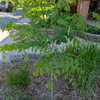
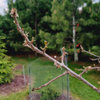
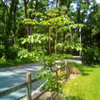
UpperBayGardener (zone 7)