Software
Houzz Logo Print
upperbaygardener

Last of the davidrt28 trip reports!

For various reasons I don't see myself having the occasion to post these anymore. For example, I have travel plans in New England (Mount Washington is near the top of my US bucket list) but I've seen the Arnold Arboretum 3 times, and "I've got its number" so to speak. I know it's the best botanic garden in the northeastern US and I'm familiar enough with their collection that I can't imagine what earth shattering development would make me want to go back there. (Hhhhmmmm...let's see...they have a plant sale where they sell seedlings grown from their precious supply of Larix mastersiana seeds. Rather unlikely I daresay!) So unless I did a retrospective review based on my old caches of digital photos, it's unlikely to happen.


So this trip was conceived to fill in the gaps of my VA/NC garden visits. We'll start at the Lewis Ginter Botanical Garden in Richmond, that I've been meaning to see for almost 2 decades. As usual I'm not going to post the kind of overview pics you could find in google images et al. My overall take on this garden is that it's trying to be an 'upscale destination display garden' in the tradition of Longwood. They charge admission of $20.


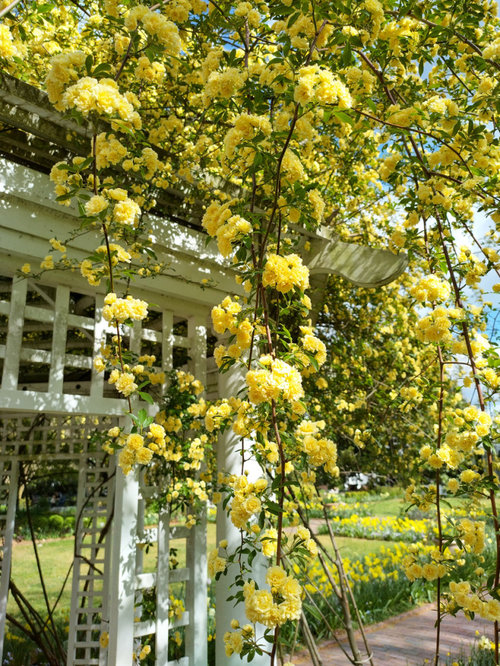
Can you believe I've never seen a blooming Lady Banks rose? There's one horticultural bucket list item scratched off!


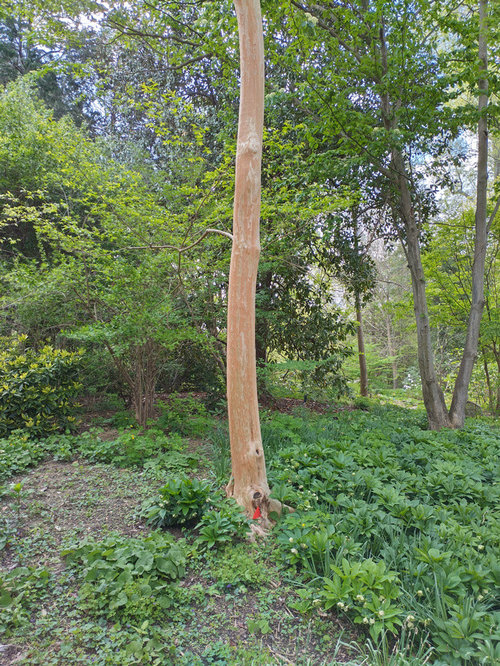
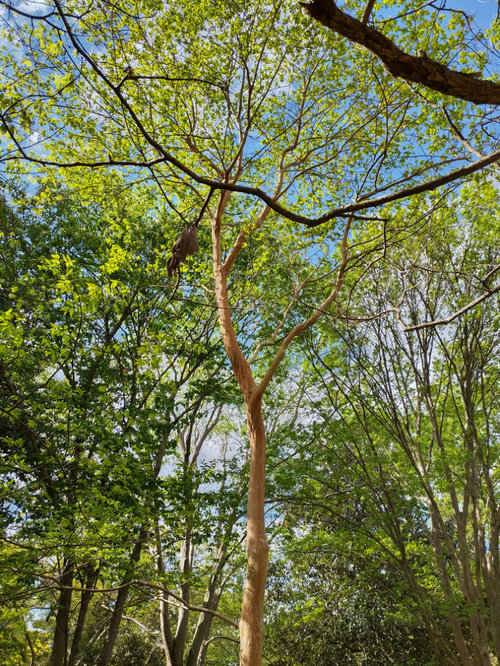
This has to be a crape myrtle although it wasn't labeled. It would be the tallest one I've seen by far.


So, they do have some nice specimen plants for a plant lover. But...my issue with this garden is that some of the 'Botanical' part of 'Botanical Garden' just isn't up to snuff. It's one thing if you want to be like Butchart Gardens in Canada and eschew labels entirely because you see yourself as purely a display garden and not a scientific endeavor (may not be true anymore, but was the case when I visited as a teen) but if you're eh, 'going through the motions' of labeling stuff and acting all serious, you gotta get it right.


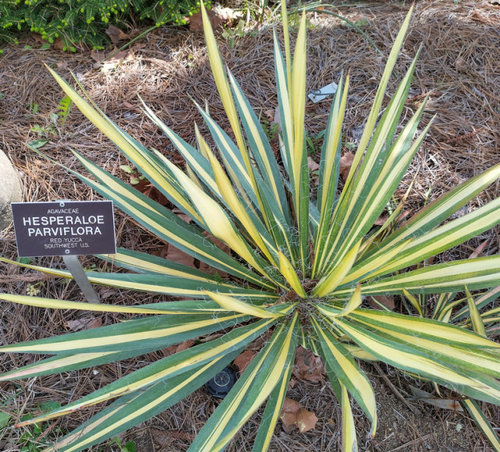
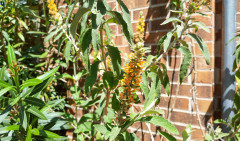
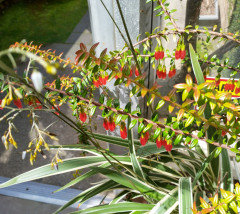
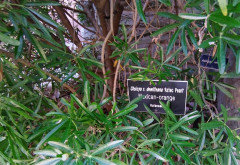
Newsflash - this is not a red yucca. And we're not talking about getting an ID on an esoteric and rare Chinese BLE, we're talking about plants any landscaper in the SE US, or at least the coastal southeast, should recognize in an instant!


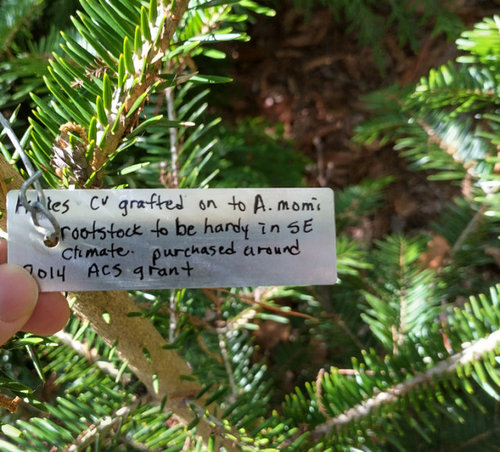
Even more comical is the fact this precious hand written label has been moved up on this fir as it grew. But...I got bad news for ya sugar (I'm channeling Stephnie Weir's hilarious southern psychic lady character from MadTV). "That scion is dead, child. It died a long time ago." This is the rootstock and there's no other cultivar attached! 100% sure it is firma, it's such an easy fir to diagnose because it's the only one with scentless needles. (nvm their distinctive look!)


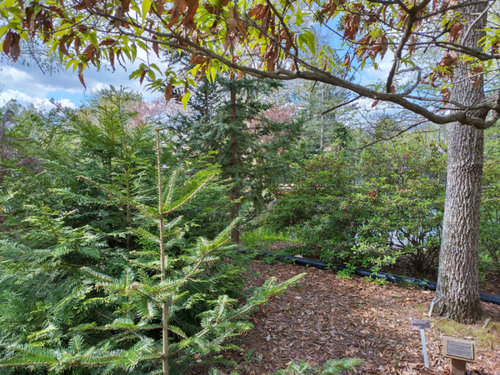
Besides, what is the rationale for cramming 3 large conifers, only one nominally shade tolerant, under a mature oak?


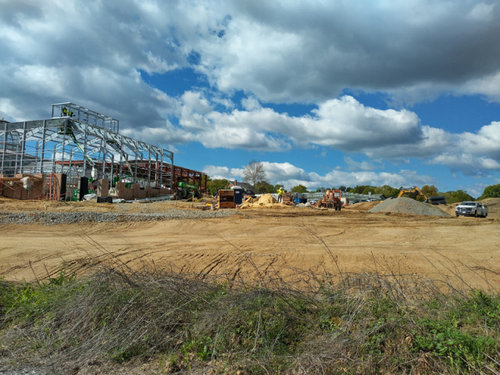
They are spending a lot of money to greatly enlarge their conservatory. Again this feels Longwood inspired, which is fine. But they need some work on the serious horticulture part.


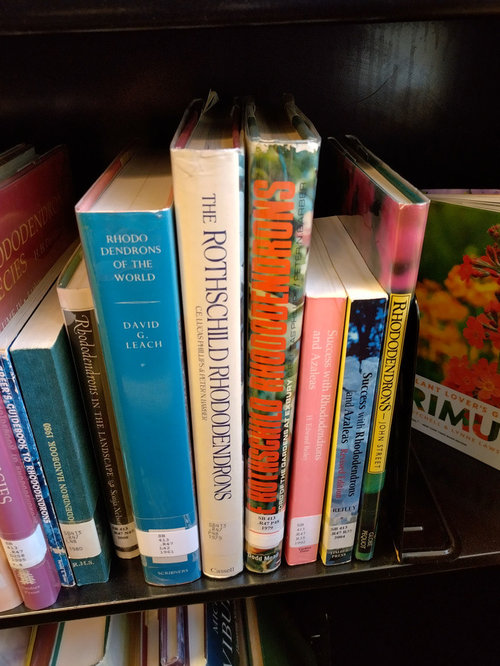
I do give special commendation to the amazing library. As a horticultural library facility within a public garden, it might be the best I've ever seen. I couldn't fully evaluate the collection quality per se, but it's clearly way up there, in the same league as Longwood or the University of Delaware, if not a little beyond them in some areas. I was tickled they had not one, but two editions of the Rothschild Rhododendrons. Funny because practically no Rothschild Rhododendron would grow in this garden unless it were grafted...more on that in a moment. So an extra half star for that, gives...

2.5 out of 4 stars.


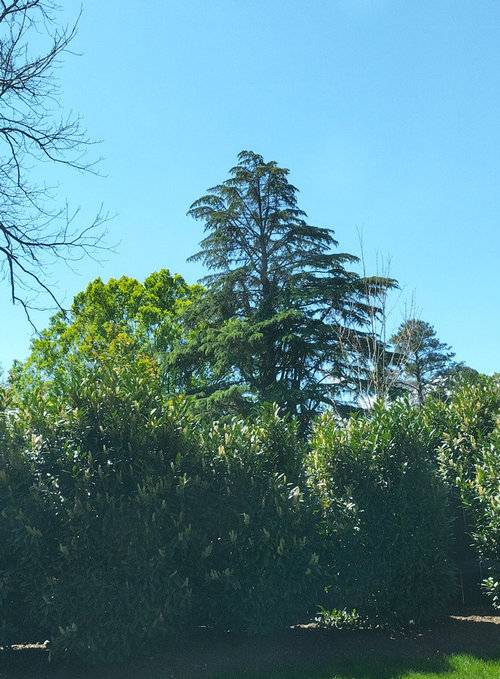
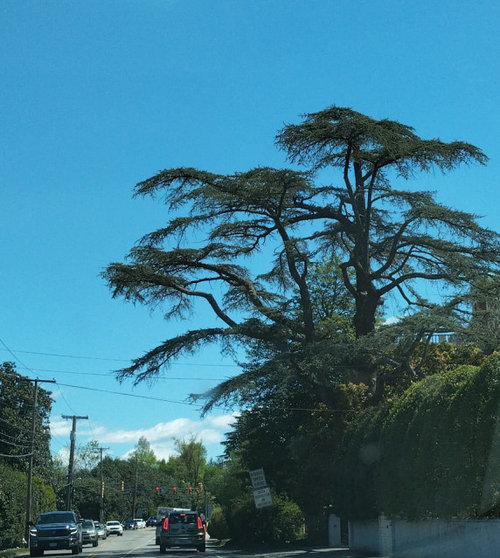
A footnote to this is that I drove through the richest part of Richmond to survey how properties are landscaped. There are some lovely cedars to see.


I also visited 1) Agecroft Hall. Interesting to see (smaller inside than expected) but nothing noteworthy enough on the horticultural front to post. 2) the famous-for-being-beautiful University of Richmond campus. Nice, very well 'kept up', a smattering of pleasant specimen type plantings but nothing too special that I spotted at least, and lacking that sense-of-place 'je ne sais quoi' of, for example, the Princeton campus. (or, even orders of magnitude greater: Oxford, Cambridge, and a bunch of other places in Europe!) Like the campus of Virginia Tech, it's a bit sterile and Disneyfied seeming. I haven't driven past my alma mater in over 10 years, but back in the day the vibrant plant collection on the campus of William and Mary would have elevated it above U of R in my opinion, in spite of the lower quality of buildings and groundskeeping. But that may not even be true anymore - don't know, don't care. Hopefully they never cut down their somewhat iconic redwoods. Digression over!


Part 2, stand by:

Comments (12)

  • last year
    last modified: last year
    Next, UNC Charlotte. They don't have a horticulture program and thus on some fronts, will always be second fiddle to NCSU. But they've done a damn good job playing second! I'd stumbled upon mentions of the rhododendron collection years ago in old ARS journals. As I said in the winter damage thread, it's as far as I know, a unique collection for the east coast, combining Dexter rhodies with subtropical plants. Although, with a lot of their rhodies dying, hopefully someone in the southeast can start a pipeline of grafted plants to replace them. Not surprisingly, the healthiest looking elepidote rhodie in the garden is the Taiwanese Rhododendron hyperythrum. As I've explained, grafting onto hybrids of that is the only way to grow a bunch of fancy PNW/English cultivars in places with hot muggy summers. Although the largest rhododendron wholesaler in the world, in Germany, grafts *ALL* of their plants, the American nursery industry is thus far too lazy to do it even for a subset of customers.* PNW retailers know many of their plants will die on the east coast and don't give one jot.

    I'm glad I set aside time to explore the 'main' garden, Susie Harwood, vs. the Van Landigham Glen with rhodies that I already mentioned here. (<- actual hyperlink) It's a fine collection.


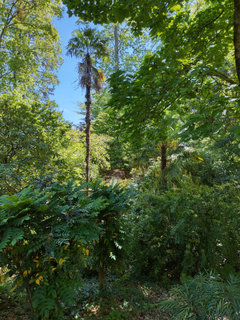
    Trachycarpus are properly displayed as Asian woodland plants, here, a backdrop to a huge Mahonia. This almost looks like a scene from a Cornish garden or whatnot. Bravo.


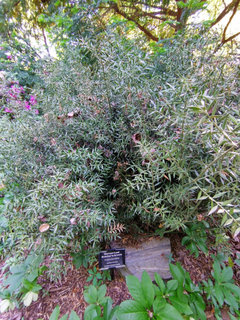
    I love this Ruscus aculeatus 'Angustifolia' that I'd never heard of.


    Here is one of the tenderish orange/yellow butterfly bushes, already blooming like crazy...Nerium not far behind.


    Their conservatory, though small, was very thoughfully stocked. Though I'm sure Longwood has them somewhere, I don't think I've ever seen an Agapetes in an eastern US conservatory. Again, bravo.

    So...a strong 3 stars of out 4 stars. If, for example, they were to restock the rhododendron pond with grafted beauties like 'Nancy Evans', 'Medusa' etc., they could easily get to 3.5.

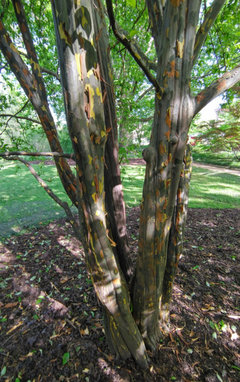
    The Coker Arboretum of UNC Chapel Hill was one I'd heard of for years, but, TBH, often in the context of being 'not as good as Duke Gardens (already seen twice) or JC Raulston/NCSU'. It isn't - but it is none the less a very compelling collection. If not so much for the absolute variety and rarity of the plants, for how distinguished some of their specimens are.


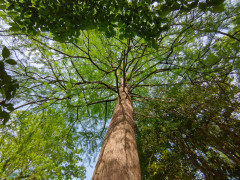
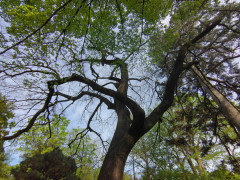
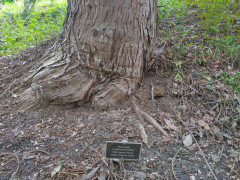
    This is the biggest, most beautiful Taxodium I've ever seen. I was rushed and forgot to photograph the trunk, apparently, but it was huge, 3'+ across. And the trunk and limb structure were perfect. I was reminded of the giant Eucs that shelter AU's national rhodie garden at Olinda, the Dandenongs, Victoria. Easily 100' tall and 'strong as an ox', looking like nothing short of a direct hit from a tornado could bother it.


    Likewise, this enormous Pistacha chinensis amazed me. An 'absolute unit' as the bros say haha.


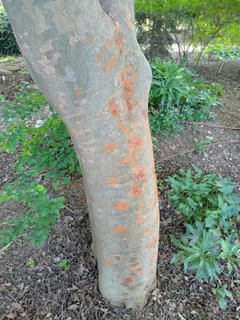
    There are some nice Pseudocydonias. The non-tropical man's rainbow gum! LOL


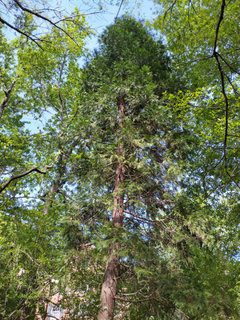
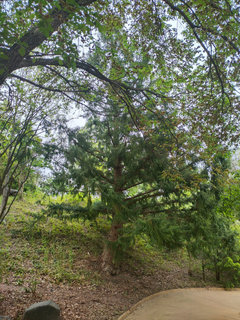
    This has to be one of the only Calocedrus decurrens in NC, looks basically healthy but like a lot of plants in this garden, crowded! It's time for some tough decisions and taking a chainsaw to some of the clutter here.


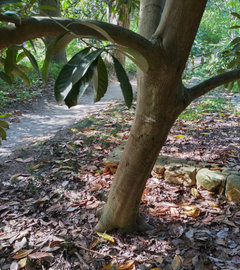
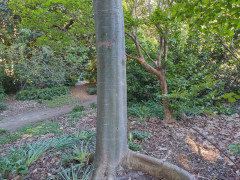
    I LOVED the Lithocarpus edulis, which is more subtropical looking than the hardier Lithocarpus henryi. (but both are amazing, and I hope to cross them in my garden someday) David Parks told me his father Clifford Parks probably grew this and planted it here.


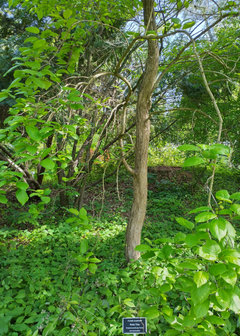
    Don't get me wrong, they got some rarities. Here's an Ehretia. I wish I could come back in summer to experience the (legendarily, to a certain PNW plant writer...) fragrant flowers.

  • last year
    last modified: last year


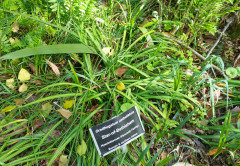
    There are some real head scratchers though. Why is a notorious weed planted?


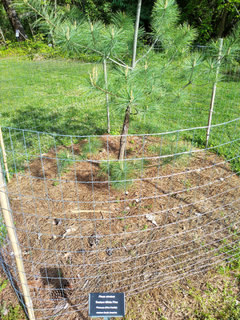
    And, WTH, why such effort over growing a bland as heck white pine? You can view (or experience - if a limb falls on your head during a light windstorm!!!!!) scads of them in every cookie cutter suburb from DC to Portland ME! Totally mystifying. I could maybe see this if it were a special cultivar, but it's not. The southern pines are so much more appropriate in southern gardens. Why not plant a Pinus palustris, which was missing from this garden?

    I'm going to overlook the white pine nonsense and give them 3 out of 4 stars, too. But, very close to slipping to 2.5 stars. Like I said, time for some tough decisions in this garden. Including not planting stupid junk like white pines that won't do well long term in this climate at all.

    Now...drumroll please...my n-th visit to JC Raulston. Seriously though, I can kinda keep track, it's at least the 7th or 8th. Definitely my favorite east coast collection.


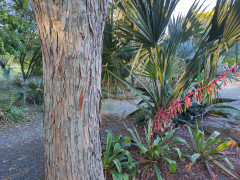
    Here's such an iconic scene that captures the feel of this garden...a rare south eastern swamp tree with shaggy bark - Planera aquatica, next to a Mexican Beschorneria, and a big Sabal from somewhere in the subtropical Americas.


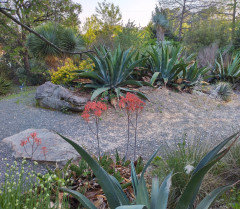
    And, hey it's not the Huntington, but these Aloes with huge Agaves are pretty damn impressive for North Carolina!


    Here's a visually arresting combo of an Akebia vine and a variegated Pittosporum.

    I discover new things on every visit here, and they've just planted a HUGE new section of the garden w/scads of cutting edge rarities, none of which I'm sharing pictures of for now. I'll be back in a few years to see how they settle in. But that's one thing I love about JC Raulston Arboretum, they are always pushing American horticulture forward, whereas it seems other once-legendary pioneering institutions like Longwood are now just content to be admission-charging destinations.


    For example, this Zelkova sinica I'd never noticed before...why is it unavailable in North American horticulture?! Arrrrggghhhhhh!


    I love the crazy trunk of this Firmiana simplex. Closest we on the east coast can get to a baobab tree, although I know it wouldn't be quite hardy for me. That was a wistful aspect of this trip for me...there were plenty reminders that, although I'm happy to be one version of a 7b climate - just miles from 7a(!), I'm definitely not their version of a 7b climate!

    It isn't perfect. That have a 'Sydney Pierce' Aesculus indica - Indian Horsechestnut - which might be the only one on the east coast. It is crowded out and looks pathetic in the pic I took. They need to recognize the rarity of stuff like that and give it a more fitting position. But a well deserved 3.5 out of 4 stars.

    Finally...

    Finally, kind of a bonus...it wasn't officially something I planned to visit, but I did swing by the National Arboretum because I was running ahead of schedule (very unusual for me on a roadtrip!) For a VERY quick spin through the Asian Valley. Their Taiwania is starting to gain some size, which made me happy because this is now one of my favorite Asian conifers.


    * - Europeans do rhodie grafting for resistance to calcareous soils, but the idea is the same

  • last year

    Thanks for this. The Olbrecht Botanical Garden in Madison has a nice library, too.

    UpperBayGardener (zone 7) thanked Sigrid
  • last year

    Great pictures and wonderful commentary! Thank you for sharing your journey!

    UpperBayGardener (zone 7) thanked KW PNW Z8
  • last year

    I think the White Pines are planted because they are native here. I am probably going to put one in the far back of our yard where I am trying to get to 80% native plants. Slow going.

    UpperBayGardener (zone 7) thanked cyn427 (z. 7, N. VA)
  • last year
    last modified: last year
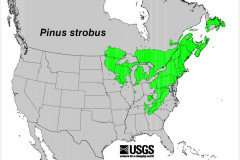
    Thanks, I was about to say it's not broadly native to central NC...but then I found the map to be sure...and perhaps, Chapel Hill is the little easternmost NC blob.


    I think it well could be: although Camellia Forest is near Chapel Hill, I'm sure I've never driven into Chapel Hill itself, until last week. And, guess what? In a not entirely surprising development, it actually is a hill! Not a huge one but a noticeable climb for my vehicle. I wish I'd had a GPS app running to see the elevation change. (Not even as steep, though, as some of the hills here in northeastern Maryland, since this is where the fall line almost meets the Ches. Bay)

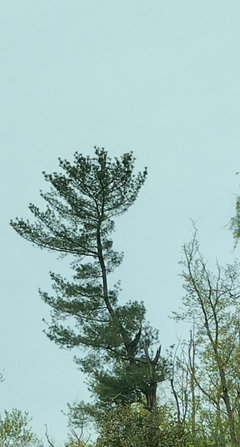
    In any case, I'm glad they can look forward to this towering over the arboretum in another century LOL:


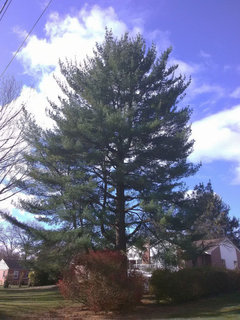
    Actual picture I took from the suburban DC town I grew up in, showing how trashed old white pines get. This is a striking thing I notice driving through Arlington, Potomac, Vienna, etc. All the white pines that were planted in the post WWII/cold war housing boom are either gone, or now look utterly haggard like this one. Barring maybe a handful that were judiciously pruned over the decades. Various other conifers, including southern pines, look much better. Relatedly, the blue spruces in the neighborhood I grew up in are all gone for separate reasons. But related in a sense. (Planting something without knowing its end state in your region/climate...which is what arboretums should be for, right? So I guess it will be good there's one at the Chapel Hill Coker Arboretum!!!)

  • last year
    last modified: last year
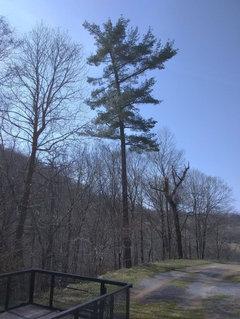
    Thanks, David. I think, if you venture out again, please do a report. Personally, I savour these posts -- far more engaging than the "What tree would you recommend for my yard" posts. Agree white pines often are relatively short-lived, even in their natural range. They seem to be a tree needing rather sheltered areas to avoid eventual wind destruction -- I see older, tall ones getting taken out in my area regularly, like from the recent derecho that went thru here. Here's a tall, top-heavy one already leaning and somewhat of a threat to my neighbor's house -- lost a big limb from the recent derecho. BION, that's a cucumber magnolia on its left!


    UpperBayGardener (zone 7) thanked bengz6westmd
  • last year
    last modified: last year

    David, have you visited the Swarthmore College campus near Philadelphia? Their plantings have some majestic old trees -- a giant Amer elm, Amer beech and northern catalpa for example..

    UpperBayGardener (zone 7) thanked bengz6westmd
  • last year

    David, I agree with Beng. I always read enjoy your posts. Even if you aren't traveling so much, please don't disappear. Heck I may even have to go back and read all of your old posts!

    UpperBayGardener (zone 7) thanked cyn427 (z. 7, N. VA)
  • last year
    last modified: last year

    Funny timing as I was just logging in again after the tedious job of scrubbing my tile bathroom floor! (time to investigate a grout sealer) Thanks cyn and beng.

    I actually feel like I did a report on Swarthmore a long long time ago! I wish GW had a better way to find your old posts, like grouping them by year in a table interface.

    But, yes have been to the Scott Arboretum several times. It's a great collection. Alas the campus is under major renovation now so I'm going to avoid it for the next couple years. But it is pretty close to me so I could someday go back. As with NCSU, it's so expansive, I've discovered something new every time I'm there. Last year I found I courtyard that uses the shelter of large stone buildings to great advantage, growing things like Choisya ("mexican orange") that you'd never expect to see so far north. I've only seen them in Virginia Beach/JC Raulston (took a pic of one but didn't post!) - places along the 8a/7b border.

    BTW a courtyard like that would protect on 2 fronts actually: block the cold winter wind, and stop the winter morning sun from hitting sensitive evergreen leaves. When I do my damage report, I'll note how I've found it easier to keep marginals like Ceanothus alive on the western wall of my house, than the southern wall that gets hit with that morning/mid afternoon sun.

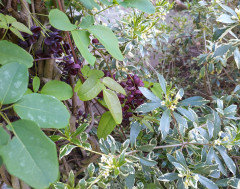
    Here's a pic of the Pennsylvania Mexican orange. I bet it was injured this winter, but recovering. It had some size.


  • last year
    last modified: last year

    Speaking of white pines, one beside my brother's house branches low and perhaps alittle less vulnerable to wind breakage as it's not as tall as could be, but I've seen white pines badly damaged or even taken out by ice-storms like on the Virginia Tech campus when I was there in late 70s.


    UpperBayGardener (zone 7) thanked bengz6westmd