Software
Houzz Logo Print
katrina1_gw

Ponderosa Pine tree questions

18 years ago

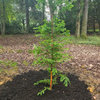
One of my local nurseries surprised me last Summer, when I saw them selling Ponderosa Pine trees. Previously, I never knew Ponderosa pines could grow well in Northeast, OK.

The two feet tall ones, which I purchased and planted on a lot that I do not water, have remained alive even when the soiled dried out enough to kill other newly planted evergreen trees.

They also are now showing no damage from our December 8th through 11th days when continuous off and on freezing rain damaged so many of our local trees.

Maybe my Ponderosa trees withstood the icing conditions due to them being still so small. Does anyone know if Ponderosa pines are stronger and more resistant to winter ice damage than compared to Loblolly pine trees?

Comments (16)

  • 18 years ago

    Very cold hardy and drought tolerant tree native to a big area featuring lots of harsh weather. In my region grows on edges of zones too dry for tree growth (as well as under better conditions). Have also seen planted specimens surviving and developing in standing water! (P. contorta may be seen growing wild in my state on both sand and in swamps that flood during winter, I have stood next to trunks in summer with dirt and debris indicating a high water mark well over my head).

    Loblolly pine on the other hand is characteristic of moist depressions (loblollies) in comparatively mild southern climates. I would expect that to be much less forgiving.

  • 18 years ago

    Apparently not find wild in your part of the state but does occur in Oklahoma - but maybe you knew that.

    Here is a link that might be useful: Biosurvey - Oklahoma University - Pinus ponderosa

  • 18 years ago

    Planted 3 Western Valley Ponderosa Pines here, very tiny saplings put in ground Dec05. They're growing nicely, a bit slow but healthy. They're all in well-draining spots. Planted 3 shore pines, 2 in wettish spots -- they're not doing as well. Researched and read the shores would do well in standing water. Mine aren't in standing but during heavy rains boggy for a day. The one with better drainage is doing better, and it also gets more sun. Have to wait another year to see how they establish.

    The Ponderosas in eastern Oregon withstand harsh cold and summer sun and heat. Wish they weren't being cut down everywhere.

  • 18 years ago

    Try digging them up and planting on little mounds that put them put them above the water level for the time being.

  • 18 years ago

    I read somewhere that they cannot take the heat very well, and were limited to Z7 in a southerly direction. The "Texas Native Trees" website lists their heat endurance as "low" and winter hardiness as Z5. They grow in west Tx. in the 4,000 ft and up elevation range, which puts them into the few mountains we have here.

  • 18 years ago

    It is the dominant tree in the black hills area of South Dakota, so it does well pretty much across the nation of you source it right.

  • 18 years ago

    Yes, I have a dwarf ponderosa pine broom seedling that Jerry Morris donated to the central region conifer society plant auction that is doing very well in my zone 4a garden, in Mpls. Very hardy trees.
    Mike

  • 18 years ago

    I don't know the answer but this is a great example of how "Just because you don't see it around doesn't mean it won't grow there" and do well!

  • 18 years ago

    Couple of points to bear in mind:

    1. Ponderosa Pine has a huge range. In OK, some origins (e.g. Rocky Mts.) will survive, others (e.g. Calif Sierra Nevada) won't. See if the nursery know the origin of their plants.

    2. The further southeast you go in the US, the more hot and humid the summers get; in hot humid conditions, Ponderosa Pine tends to suffer from various needle blights. There is a lot of individual variation in susceptibility, even within a single seed origin; so plant several, and thin out the ones that get it badly, keep the ones that don't.

    Resin

  • 18 years ago

    Wow, The biosurvey link posted above left me even more confused. The climate and soils are far different in the panhandle of OK than the soil and climate that my two, young ponderosa pines are experiencing here.

    Mine are located in an area which can, in no way, be considered a mountain, or considered a semi-arid region like our OK panhandle. Rather, they are planted in slightly sloping, silty loam soil land that is only around 710 feet above sea level.

    Only 2 months after I planted these trees late this year's spring, the temps rose to the very humid, mid 90 degrees F. and before the summer's end these two young trees did not even hicup when the temps rose to a more dry level near 100 degrees.

    Then last week, every day we were getting lows in the mid 20 degrees F. with highs flirting around the freezing mark. Today, though, the high temps are forecast to reach 61 degrees F, with night time lows remaining well above freezing.

    All these extreme fluxuations would have hit hard many other newly planted, not yet well established, trees. Yet these young Ponderosa trees, while not showing much new growth, are still alive. Simply amazing! All that, and not one bit of suplimental water did they get during the dry season.

    After spending some time researching ponderosas, and getting more confused, I called the nursery today to find out what variety my ponderosa's are. turns out that the order documentation did not specifiy the variety. The supplier had simply assured the nursery owner that these Ponderosa's would do well in this area.

    So, as of now; I have concluded that my trees could possibly be a cross between the Rocky Mountain (var. Scopulorum)and (var. arizonica.) If not a cross, then they could be one of those two varieties.

    It is so good that my ponderosas did not display damage, from last summer's high heat or our recent 4 days of freezing rain; still, it remains to be seen how they will handle such future winter events or spring and fall storms once these trees begin to get some height on them.

    Hope I am not making a mistake trying to grow them. It did enourage me to read that they each send down a very deep tap root for stabalization, once they each begin to grow their canopies to great heights.

  • 18 years ago

    The extremes you mentioned occur in the Black Hills too. Te southern black hills are more of arid than semi-arid, but the tree also competes with ferns and oaks on the streambeds. it reaches up to 120 for days at a time there, and snow is never a guarantee in the winter when it gets to -10 or lower. I think you have the rocky mountain variety, as the Arizona variety is rare in commerce.

  • 18 years ago

    katrinal,
    Just remember that even 4-5 yrs of survival/growth, do not necessarily mean success.
    Down here, for example, Afghan Pines usually grow fairly well for 4-10 yrs, and then almost inevitably contract some type of fungal disease and die. Quite a few Christmas tree growers lost big chunks of money when whole plantations of these trees sickened and died. Hopefully nothing like this will happen to your trees. I'm experimenting with pinus sabiniana down here, but after the Afghan pine experience, assume it will be 10-20 yrs before one can state any tree will be successful in a given area.

  • 18 years ago

    It just seemed strange to me that the Rocky Mountain ponderosa var. scopulorum would do so well being planted at a 710 feet above sea level location. Previously thought that 800 to 900 feet was the lowest elevations where they were known growing.

    Thanks for the FYI about them doing well in the drastic extremes you described occuring in the Black Hills.

    True, it is too soon to know for certain how well they will survive here, but I know of no other locally growing trees, which would have done as well as these Ponderosa have; before they had the chance to become well established.

  • 18 years ago

    Existing wild stands of trees indicate where the total combination of circumstances experienced over a long period of time has permitted them to live. There are lots of trees and other plants in widespread cultivation that have tiny or comparatively small modern natural ranges. In a dry region something like fire suppression or irrigation may be all it takes to make a district or a site completely suitable for a given species.

  • 18 years ago

    Careful if you have pine beetles, the beetels have gone from P. contorta right onto the ponderosas locally.

  • 18 years ago

    Looked up and behold, Howard Garrett's book on Texas Trees showcases Ponderosa Pine as one of the pine trees that can grow in the Dallas/Ft. Worth area. Had a picture of one in the book that looked fairly big. Apparently other people south of you have raised them successfully.
    Might try dirtdoctor.com for anymore info he has.