Software
Houzz Logo Print
ashley_plant_addict

2 NOIDs, help please

Hey! I have a couple of succulents that I can't seem to identify.

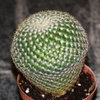
This one I recently got from Sandra, a fellow GW member, who offered me some cuttings of a "mystery succulent, I'm not sure what it is but it looks like a Jade and has cute little pink flowers." she says. So any help IDing would be great! It lost most of the leaves because it was very dry when it arrived but there appears to be new leaves growing in, I hope it makes it! Let the guesing begin unless you know what it is ;)

{{gwi:486921}}

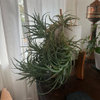
I believe that this one might be an echeveria but I'm not sure on the exact type.

{{gwi:486923}}

Thanks for the help :D

Ashley

Comments (10)

  • 16 years ago

    The first one could possibly be Crassula multicava. The Crassula multicava is a thicketing ground cover plant that only gets about 18 inches tall maximum, and blooms in late winter/early spring with masses of tiny pale pink flowers that float above the foliage, with the common name of Mosquito Flower. The Crassula is probably okay as a houseplant as it doesn't need much light to stay compact indoors, and it tends to suffer freeze damage right at freezing here in California, unless it has some overhead protection. It is often used here in coastal California as a no summer water ground cover for shady areas, as it is extremely drought tolerant if grown in some shade.

    Your second plant looks very much like Graptoveria 'Fred Ives', and individual leaves of this can also be used to start new plants from the leaf base.

  • 16 years ago

    Thanks so much bahia! I think you hit them right on the mark! As for the Graptoveria; when I removed some of the leaves I thought that I would be able to root them because the plant in the photo was just a cutting that rooted in sand within a matter of one week but I haven't had luck yet with the leaves. Any suggestions?

    Have a great day. :D

    Ashley

  • 16 years ago

    Lay the entire leaf upon your potting mix in bright shade of filtered sun, and it will generally sprout a new plantlet at the leaf base, it might take several weeks before you see any results. I suspect it might even be easier to get it to start new plants once it warms up in the spring, and do it outdoors in bright shade. Once the plant gets larger it will also branch freely and most often will even sprout new plants from the flowering stalk. In a year's time one mother plant can become dozens here in California, and the rosettes can easily get 18 inches across with cool yet balmy coastal California weather.

    You can also plant this directly in a more soil or fir bark based soil mix, it isn't necessary to use straight sand. They also grow faster with regular feeding, but watch out for aphids on new growth and particularly on the bloom stalks, about the only pest besides slugs and snails in the cooler months.

  • 16 years ago

    Here is a photo of it as of yesterday. Once the roots began to grow I moved the plant into Al's gritty mix, I did this about 2 weeks ago. So no more sand. :D
    {{gwi:486925}}
    When you say "lay the enitre leaf upon your potting mix", do you mean lay the leaf on its back on the soil and roots will sprout from the back? Or to lay the leaf tip( area that was connected to the main plant)in a little of the dirt to root the tip?

    Until Spring is here should I keep this plant on my windowsill or will that be too cold of a location? I also have a lamp by the window so that on cloudy days I can still provide artificial light for them, would this be better?

  • 16 years ago

    Bingo for bahia on the crassula. We have this growing outside as a groundcover around a Yucca tree. Thus, it does have overhead protection and it also is tucked into a corner near the house so that also provides cold protection. Gets some morning sun, but its location is quite shady for most of the day. It is very vigorous, but it is quite easy to yank out. It tries to smother alstromerias planted in that area. Bahia's description of this plant as "thicketing" quite hits the mark and describes a happy healthy plant in the right location. I'm in the Bay Area. And I believe we also have that Graptoveria planted outside. Forms mounds about a foot tall, maybe 2 feet wide by branching out and filling in. Also vigorous, but extremely low maintenance and doesn't mind some shade.

  • 16 years ago

    Deep roots do you happen to have any photos of those two in your yard? I'd love to see them as large as you say. They must be gorgeous! :D

  • 16 years ago

    {{gwi:486928}} {{gwi:486930}} {{gwi:486932}}

    Brad

  • 16 years ago

    Beautiful plants Brad! I've read that they change color depending on light and temps. I'm excited to see how it will grow and what colors it will change to when spring gets here.
    Thanks
    Ashley

  • 16 years ago

    The first and third photos showing greens and blues were taken in mid-September 2008. The middle photo with mauve, tans, and bronze is from March 2009. It's a great plant, grows fast, clumps readily, and tolerates the winter rain and cold here without difficulty. I don't think it will survive a hard freeze, so it will need some protection in your climate zone. Enjoy!

    Brad

  • 16 years ago

    'Fred Ives' It survived a hard freeze down here into the 20F for 5 nights no damage at all, it was out in the open with no protection facing west. Norma