Software
Houzz Logo Print
joel_bc

Sempervivums always go red??

16 years ago

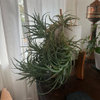
Just wondering if Sempervivum and Jovibarba (Hens & Chicks) always go red. If healthy, will they go through a red phase as part of an annual cycle (turning green again, too)? Or if they do turn red in response to soil properties?

We have several varieties, and all are tending toward red. None seem to have as much green in them as when we acquired them, some seem to go red rather permanently and completely.

We wonder if they're not getting enough soil magnesium or nitrogen. Or if they are not in a soil with a high enough pH. (Are they alkaline-loving, like many desert plants?) Or are they getting too much water?

Ours are all outdoors. We're in zone-6 here... winters get coldish w/o being truly frigid like Minnesota or Alaska. Soil is fairly neutral pH. We water things regularly (and Sempervivum and Jovibarba ARE succulents - so maybe it's too much?)

Comments (10)

  • 16 years ago

    I think only those who have the DNA to do so. The cold helps. Some go purple, some have maroon, some are yellow, other ? ? ? ? Pink, blue, black, green, orange, ??????? I think perhaps the weather has something to do with it, the sun will make them flower, so many hybrids now. Norma

  • 16 years ago

    some turn red in the winter and the green returns in the winter.

    some add colors in the summer- i have a variety that blushes a peach color in late spring.

    the only amending you'd probably ever have to do is if it doesn't drain quickly- they're quite tough

  • 16 years ago

    Okay, but is it usual for most varieties to return to green as a predominant color during some part of the annual cycle?

  • 16 years ago

    Oh, yeah... and a friend has suggested - while disclaiming any solid knowledge on this - that maybe some of our Sempervivum plantings are over-crowded, and therefore stressed.

    It seems possible to me, because we've kind of let the plants multiply themselves and root freely. Could crowding stress be a factor?

  • 16 years ago

    For me...
    as long as they're not rotten, I'm happy.

    I have a local semp nursery so I'm up to around 50-60 different semps. I have some that cycle through red, purple, even one that will be orange at time (Larissa)

    I have some that bake in the sun and some that stroll along in shady areas. Some even in really acidic areas with lots of moss... of course they grow slower there for me. I have purposely put some in different areas and compared them over the last couple years, depending on water, shade, and soil,,,,, they never look alike.
    I'll get larger size from the ones growing in more dappled light, but more vivid colors from the ones baking in the sun.

    Enjoy,
    Chris

  • 16 years ago

    Chris, thanks. I'm curious... You wrote: "I'll get larger size from the ones growing in more dappled light, but more vivid colors from the ones baking in the sun."

    Do you think the sun is the factor that may trigger the "color" (in our case, mainly being reds or various hues)? Would we get a higher proportion of green if we placed our Sempervivum planters and clusters in more dappled light?

  • 16 years ago

    Yes, much more green in shade/part-shade. Younger plants will be greener than more mature rosettes. There are a great many varieties selected specifically for their colors. They will change colors throughout the year. How dramatic the color change is depends on the variety/species. It is not a symptom of bad soil chemistry.

    These photos show the same cultivar at different times of the year, and ages. No rosette in the first photo larger than 8cm/3". The second plant in a 25cm/10" container, the central rosette is about 15cm/6":

    November 30, 2008 in morning light and shade:
    {{gwi:506991}}

    March 6, 2010 in full sun and cold all winter:
    {{gwi:506992}}

    Look at Squaw Mountain Gardens, a very reputable nursery specializing in Semps, Jovibarba, and Sedums. Yes, they ship to Canada.

    Brad

  • 16 years ago

    Joel,
    Yep, and I have some that grow almost in complete shade... In the shade, Neptune will keep a lavender color almost all summer, where in the sun it turns silvery really quickly.

    Chris

  • 16 years ago

    Here on our place we've seen how Hens & Chicks, planted in a large container, will fill the surface of the container within one gardening season. After a certain time, as they continue to proliferate, newer ones will actually live on to of the older ones (eventually using the older ones as "compost", it seems). So there is a natural tendencies, at least with some varieties, toward crowding.

    It's been suggested to me that crowding may be one more factor contributing to the rosettes going red. But even if this is not the case, would there be some wisdom in thinning the original layer of rosettes down - in order to make room for the new ones, which will be green to begin with? (I'll reiterate that we don't just want to know why H&C go red.) Would this be a way to get more green into a cluster?

  • 16 years ago

    Joel,

    I let Nature take its course with my Semps, but they're all in the ground and are not subject to overcrowding, at least in the sense that you're speaking of. The closest I get to that situation is when the plant is located in the various rock gardens here and completely cover the spot of soil that they're allocated, growing, as you mention, prolifically and filling up the spot completely.

    If you want yours to remain green thin them out constantly, water often and allow for open space. Personally, I likes em' red, but you might also keep them green by decreasing the amount of sun they're getting.