Software
Houzz Logo Print
bahia_gw

Favorite tree of California

18 years ago

A question about favorite trees in the trees forum got me to thinking that this would also be a good topic for a California perspective. As we can grow so many types of trees here, and across the state, there are so many different types of forest and woodlands, it is hard to list just one favorite tree. I'd be interested to here other's takes on their favorites, and why. Here are some of mine:

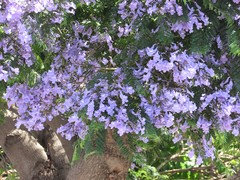
I'd probably have to say that trees with exotic trunks, bark or flowers are the ones that I prefer. One tree that combines all of these attributes in one tree is Brazilian Floss Silk tree, Chorisia speciosa. I find the sculptural bright green trunks with heavy thorns, towering size and vivid orchid pink blooms in winter when the trees are almost leafless is something that appeals to me, and is just the thing to see in bloom as we head into winter. the South African Cape Chestnut, Calodendrum capense is another exotic blooming now, that I find irresistable in bloom, for being so "other" and also beautiful.

Another similar blooming subtropical tree is the entire Tabebuia genus, which has so many species that light up the forest when they bloom at the end of the dry season in places like the west coast of southern Mexico or Brazil. Tabebuia chrysotricha and T. impetiginosa are pretty magnificent even as ordinary street trees as seen around southern California.

But perhaps my most perfect tree is actually a palm, Cocos nucifera, which is the essence of the tropics, and looks as good as a young plant, or by the thousands lining tropical shores. Not only is it beautiful, but so supremely useful for food, water, building materials, and to string up a hammock and enjoy the shade and breeze off the ocean.

Favortie trees that are less tropical, would include those with such beautiful smooth bark as our native Madrone, Arbutus menziesii, or the much easier to grow hybrid, A. 'Marina', which is almost never without bloom or colorful fruit, and has such graceful, twisting and sinuous branching and lovely smooth deep cinnamon bark. Lemon Gum Eucalyptus, E. citriodora is also in this category, with the smooth peeling bark that reveals the powdery white trunks, the statuesque form and wonderfully fragrant citrusy foliage are not bad either.

If I had to only pick natives, there are so many here in California that have their own special charm. Valley Oaks, Quercus lobata can be so strongly dramatic in profile in winter, sentinels in the landscape and so provident for wildlife. Really old Coast Live Oaks, Quercus agrifolia can be just as dramatic as a Southern Live Oak for imparting atmosphere and a connection with the past. The California Buckeye, Aesculus californica is also wondrous in winter with its contorted smooth gray branches that contrast so well against both the green hillsides of spring, or the tawny golden hillsides of fall, and the way it is the first to leaf out, often as early as February, and the massively showy blooms later in May.

Coast Redwoods commingled with Douglas Firs, Madrones and Big Leaf Maples are also all beautiful in their own right, especially when viewed as a mountain backdrop in the coast hills, and are original growth. There are so many other California native forests and trees that have their own impressive beauty, such as the forests of Monterey Pines and Monterey Cypress on the Monterey Peninsula, or Ponderosa Pines up in the Sierras, with their massive trunks with fragrance of vanilla on a hot day, and such large distinctive cones.

Lastly, the Australian imports such as Eucalyptus viminalis and E. globulus have their own charm when seen as remnant windbreaks or boulevard plantings from the turn of the last century, and even more so when they catch the fog and drip it down to those below, effectively mining the clouds of their moisture. I wouldn't want one in my own garden, (for lack of space and unwillingness to have to keep up with the constantly shedding debris), but they are beautiful from a distance.

So many trees have their own particular charm, and it is a pity that there are not more mature urban plantings for everyone to really appreciate the beauty that trees can add to a landscape. I often feel fortunate to have grown up on the San Francisco peninsula, in the era that the grand estates with their vast plantings of exotic trees from around the world were still there, and being able to wander the hills as a boy with his dog, and take it all in.

Comments (78)

  • 18 years ago
    last modified: 10 years ago

    "The environment is unthinking, unfeeling, uncaring, and unaware."

    Yeah...particularly so in southern California.

  • 18 years ago
    last modified: 10 years ago

    Fig tree by far. Beautiful trunk and folliage, delicious fruit (2 crops a year!), pest and disease free, drought resistant, prune to any shape. Number two would be loquat. Awesome fruit, few pests or diseases, drought resistant, starts putting on new growth in the fall just when most other plants are dying back.

  • 18 years ago
    last modified: 10 years ago

    Bahia

    You mention the chorisia. I planted one in my garden 2 years ago and it has never bloomed, although it has grown and is pretty big - about 8 meters high. Until now, it has also never shed its leaves; for the first tinme this winter it is starting to do so. My gardener reackons the tree is about 10 years old. All of the leaves have the same uniform browing at their tips - every single one, although the tree looks otherwise very healthy. I love this tree and planted it when we bought our bought our house.I would dearly love to see it bloom. Any thoughts? Could it be a dodgy graft? How long should I give it?

  • 18 years ago
    last modified: 10 years ago

    Joannacala,
    You don't mention where you are in California, this might make a difference in how long until it finally blooms. Grafted trees of Chorisia can bloom even in a 15 gallon can sized tree, but seedling Chorisia speciosa trees here in northern California can take a long, long time to bloom, I have some planted out that are already 25 feet tall, and show no signs of being ready to bloom. I suspect that they might already be blooming at this size in the more favorable climate for these trees in southern California. They come from areas in southern Brazil/Paraguay/northern Argentina where it is quite hot in summer, and do seem to bloom better here in the SF Bay Area where they can get all the accumulated heat possible, and appreciate hot summer areas where they won't freeze in winter. I know I lost my original smallish sized trees, (planted out as one 15 gallon and one 24 inch box grafted specimens in the December 1990 freeze where it got down to 24F in my garden, and they were in full bloom at the time. Older, larger trees are more frost hardy, as there is one that survived this same freeze out at the Ruth Bancroft Garden in Walnut Creek, which was probably subjected to below 20F temps, and although it lost major parts of the tree, it did survive and regrow.

    It may also help to get your tree to bloom if you can give it a dry period of rest in late summer/early fall, where you don't water it much. It is normal for them to brown leaves and drop them if stressed from cold or drought.

  • 18 years ago
    last modified: 10 years ago

    bahia
    Thanks for your reply. I am in Israel and there are alot of blooming silk floss trees in my town, most of them much smaller than mine. We have no rain at all from April to November and winter is very mild - no frost ever, so I doubt the tree has been stressed by cold. Maybe drought is the problem? Should I water the tree in summer? It is in a bed that gets some irrigation in the summer but not much. Could its roots have been poisoned to some extent by the product (something like Roundup?) which a tree man used to kill of a mulberry tree in the vicinity? This happened at the same time the tree was planted and my new gardener has commented that the pattern of the browning on the leaves looks like fertiliser burn.

  • 18 years ago
    last modified: 10 years ago

    We have a cabin up in the mountains of Lake County surrounded by big leaf maple, madrone, buckeye, black oak, bay, and the occasional pine. Just love the peeling bark of the madrone against the green foliage, but they're all my favorites!

    Drive down the hill a mile or so and there beautiful stands of
    the common manzanita. They are so many closely grown that no human could easily pass through. Must have been a fire many years ago to get some many plants in such a small area.

    This summer we had to remove 3 large oaks that were threating to fall, it opened an area with lots of sun light and was thinking of planting the slope with some manzanita. Will they look out of place in that wooded area?

  • 18 years ago
    last modified: 10 years ago

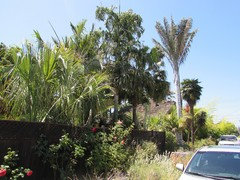
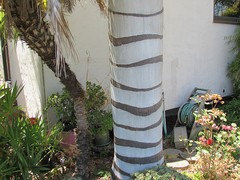
    My favorite exotic tree in the bay area is the 140 year old Ficus macrophylla at Shinn park in Fremont.Perfect form. Buttressed roots like no other i have seen here.Native? The Hayward California bay-all 1,100 years of it.No,you havent seen any bay tree like it.Its General Sherman like in girth. King palms,in small groves.A trio is a designers dream.Some,with white trunks and bright green crownshafts-very royal palm like. Queen palms.I just saw a home with three of the fullest and greenest crowned queens i have seen. So ugly when young,queens are impressive and to be cherished when large.Tree ferns-all of them. A large Cyathea in full sun in the cooler areas is traffic stopping.The umbrella shaped crown-wow.
    And last of the short list- Shefflera puckleri. I have one planted in 1978 that has the trunk of an old buckeye tree..rippled silvery white and a full 25' tall. The glossy leaflets scream tropics. I would never be without one.

  • 18 years ago
    last modified: 10 years ago

    I'd say any of our native Oaks and/or native Redwoods. Can't beat those.

  • 18 years ago
    last modified: 10 years ago

    Sycamores! : )

  • 18 years ago
    last modified: 10 years ago

    I'm particularly fond of the buckeyes and redbuds, and I wish I had room for a madrone in my yard. Love that peeling bark, too!

    I think manzanitas would look great where you describe, Caudex.

    Brenda

  • 17 years ago
    last modified: 10 years ago

    This thread is wonderful, thank you to all for posting your opinions and educating me on the various tree types and their pros/cons.

    I am in coastal San Diego, about two miles from the water, and I am looking to plant a tree that is both enjoyable and practical/respectful of my climate. Ideally, I'd like it to provide shade and also a place for my children to climb/play in future years (5-10 years off). I live in an urban area but I have space, so I'm not afraid of something that will grow quite tall. Currently I have queen palms & lots of citrus (lemons, satsuma, avocado, lime, grapes) Nurseries I've talked to recommend carrotwoods, but I'm not keen on how they look, they seem very top-heavy & dark to me.

    What would you plant?

    I appreciate in advance your suggestions!

    -Lisa

  • 17 years ago
    last modified: 10 years ago

    Why not a fruit tree like plum or apricot or cherry?. Kids dont notice a tree unless it has something to attract them. A tree that draws butterflys..or makes some kind of seed pod to throw at each other,ok,maybe that last isnt what you really want!Maybe a cork Oak?..they can write there names on them to their hearts content and not hurt the tree one bit.Those are the kind of trees that make memorys...

  • 17 years ago
    last modified: 10 years ago

    I'm with Joe and Stan on this one: with rising human populations pressuring resources globally, henceforth ALL landscaping should be edible. Pomegranate would be my first pick: beautiful show of flowers in the spring, pest and disease free (thereby pesticide free also), drought resistant, bird resistant prolific delicious fruit. Loquat #2: disease and pest free, year round beautiful folliage, drought resistant, prolific and delicious early season fruit ( be sure to get a smaller pitted variety). Fig #3: Most beautiful of all landscaping trees in my opinion, disease and pest free ( except gophers when young), TWO crops of delicious fruit every year.

  • 17 years ago
    last modified: 10 years ago

    I think I'm really in love with interesting bark. On a walk through Strybing arboretum I was stopped in my tracks by a prunus serrula (birchbark cherry). In the California native section, I was very impressed by the bark of a Tecate cypress (cupressus forbesii, which I didn't think would even grow here).

    And madrones, definitely--in the county park near me they kind of rise up here and there from stands of manzanita and hazelnut and scrub oak--and like bahia, I appreciate the large numbers of A. "Marina" planted as street trees in San Francisco--the older they get, the lovelier they are. I'm trying to grow a few on the slope behind my house, and so far they're hanging in there.

    And sycamores, and manzanitas, and blue oaks (it's probably too cool for them here, but as an experiment I'm trying to grow one of those, too). If the eucalyptus globulus weren't so invasive I'd love them for their bark, and their smell (but as it is they're driving me crazy, constantly ripping out ten-foot-tall saplings).

  • 17 years ago
    last modified: 10 years ago

    "Welllll, California is a really big state with a wide variation of climate and topography and soil types."

    Yes, indeed. What's Sunset up to now, 24-25 zones?
    Here's my non-Med zone. : )
    {{gwi:503297}}

  • 17 years ago
    last modified: 10 years ago

    My favorite native tree is the valley oak, though I also love the western redbud and the redwood. All three grow on our property on a hillside overlooking the Silicon Valley. The redwoods were planted 60 or so years ago and came with the house, as did a redbud. I planted another redbud and two valley oaks.

    Rosefolly

  • 17 years ago
    last modified: 10 years ago

    Carlsbadgardener: I suggest a Torrey Pine, Pinus torreyana. Natural populations exist near your area, and the tree looks beautiful when grown near the coast. Native plant nurseries (e.g. Las Pilitas in Escondido) carry it. We had one in our front yard of our former home in the Mira Mesa area of San Diego, and it never performed as well as they do near the coast, but in the proper environment they grow quickly.

  • 17 years ago
    last modified: 10 years ago

    Loved reading Nonaberry's post. Reflects my own journey into native plants.

    Do folks know that of 50 species of ceanothus in North America, fully 41 occur in California? (The east coast has just 1 ceanothus.) There is a California ceanothus for practically every type of soil and exposure, from beach bluffs to chaparral to alpine slopes. I encourage folks to find the one that works for their garden. The book by Bornstein, Fross, and O'Brien is a great reference for garden-worthy California native plants.

    Ceanothus don't do well in gardens that receive summer water or have clay soil; they prefer fast-draining soil and no summer water.

    As for favorite trees, I am growing a valley oak, a coast live oak, and a blue elderberry.

  • 17 years ago
    last modified: 10 years ago

    Here's another.WIGANDIA. A 20+ foot sprawling shrub/tree with big two foot leaves and unlike Ficus species(the only other evergreen giant leafed trees) Wingandia covers itself with massive rich purple blooms in late winter and spring.And unlike tha giant leaved ficus, Wigandia needs little water when established. I think the most attractive plant period, at the UC botanical garden. And they are where i got mine..

  • 17 years ago
    last modified: 10 years ago

    Favorite Tree (native deciduous): Quercus lobata. Valley White Oak. Or Quercus kellogii (black oak)

    Favorite Tree (native conifer): Pinus lambertiana (Sugar Pine) and Abies bracteata (Santa Lucia Fir)

    I don't care for non-native trees.

  • 17 years ago
    last modified: 10 years ago

    My favourite trees are also natives: I like Quercus Lobata (Valley Oak), Cercis occidentalis (Western redbud) and Chilopsis (Desert Willow)

  • 17 years ago
    last modified: 10 years ago

    Everybody who says they love native trees-then list trees that dont grow anywhere near their home.Mountain trees,desert trees..as non native as ficus essentially.
    AND If you live near either border,or state lines-what's native?

  • 17 years ago
    last modified: 10 years ago

    If I were to list a tree native to my site, then I would have none. I live in a grassland.

    Growing trees native to California is important as their natural ranges vanish to development. People choosing to make them part of their gardens may be their only hedge against extinction.

  • 17 years ago
    last modified: 10 years ago

    Well I do love fruit trees. I have a fig, a lemon, grapefruit, kumquat, an apple, a nectarine and an apricot.

    I also have a small avocado but it's really not doing much. Anyone have advice on young avocados?

    I do agree that natives ARE important & I disagree that non-natives don't hurt. From all I understand they hurt b/c plant & animal life day out daily, never to be recovered.

    (Not to mention they escape to the wild choking out natives.)

    I've heard Hawaii has like 10% of their natives plants. ALL the rest are non-native & it's a real problem there for the animals, wildlife, etc. Basically their eco-system's being obliterated. Cali has similar problem in that almost anything will grow here.

    And so do I have any native trees in my yard? Of course not. I'm just stupid like that. And also I'm not sure which native trees to plant. They all seem so big & my yard's small. I've looked & looked for a western redbud but could only find seed, which so far I haven't been able to germinate, despite trying two seasons.

    I do have a lot of native plants tho' & I find them, ironically, finicky as hell. I've had so many die over the years...too much water? not enough water? who knows

    however, my big beef is GRASS. did you know the entire Cali drought would be non-existent if we didn't have lawns?

    not to mention the runoff of chemicals into the ocean.

    well thanks for letting me stand on my soapbox

  • 17 years ago
    last modified: 10 years ago

    G.G. I have found native redbud and native everything at the Tilden botanical garden sales no.1 and the other botanical gardens like Berkeley and SF. I even found some very nice natives Like Heuchera maxima and coffeeberry at Regans nursery. In Fremont.
    If you live in SouCal, Rancho Santa Ana is premier I understand.
    Going 100% native is like being vegan, Hard to argue against in the long run,harder still to follow even if you agree.

  • 17 years ago
    last modified: 10 years ago

    Another thing..have any of you ever heard of an enlightened Homeowners association of say,a brand new subdivision ever pass a law stating natives only?..that would be the logical place to see a whole neighborhood of natives. A good experiment to see or study the results.
    I can hear them bragging now of low water use and return of the yellow bellied sapsucker and passenger pigeons...

  • 17 years ago
    last modified: 10 years ago

    bahia opened this with a bunch of trees that included coast redwood.

    In a landscape, Sequoiadendron is one of my favorite evergreens.

    But lately, I'm very fond of redwoods after hiking and exploring among them almost every 2 to 3 weeks. This page below will explain partly.

    We are moving north in a week. We may just plant one genus or the other at the new home.

  • 17 years ago
    last modified: 10 years ago

    SMOKE TREE
    Family: Anacardiaceae
    Genus: Cotinus (ko-TYE-nus) (Info)
    Species: coggygria (kog-GY-gree-uh) (Info)
    Cultivar: Royal Purple

  • 17 years ago
    last modified: 10 years ago

    I know i'm in a minority of one, since i've never seen another house with them, but i love my variegated ficus (rubingosa?) trees. beautiful, soft yellow leaves with a touch of green, nice form and slow growing like most variegated, and has not had a root invasion problem, and no pests. looks great in contrast to grey winter sky, and sparkles in the bright summer sun. i've only seen one other tree at quail botanical gardens. i guess you have to be a variegated fan. only downside is leaf litter year round. Mo

  • 17 years ago
    last modified: 10 years ago

    @bahia: there are over 20 species of real, honest to goodness trees native to San Francisco county.

    Aside from Oaks and Willows, there are Elder, Maple, Buckeye, Madrone, Walnut, Sycamore, Pines, Firs, etc.

    @everyone: The link below will give native species info for every county in California. You can search for a specific species or common name, by county, or by habitat type. All species are linked to the Jepson Herbarium which will give you a color coded range map for each species. Most are also linked to CalPhotos which gives you a visual of what to expect. There are many other links to useful resources and for most plants there are several links to nurseries that specialize in California natives.

  • 9 years ago
    last modified: 9 years ago

    It's very rarely planted here but Spanish Cork Oak.

    Another rare one is the Yellow Cotton tree, which puts out beautiful yellow blossoms once a year, but it only does marginally in Southern California.

    I also think Mulberry trees have beautiful shade foliage, though they are very messy with all the squishy fruit they drop (and I wouldn't want to plant a male because of pollen issues/allergies). All the fruit is kind of an added plus, though I'm not a huge fan of mulberries and the juicy black fruit does stain. Best tasting variety is Persian Black mulberry. The leaves can be fed to pigs and goats, and are a favorite food for butterfly caterpillars as well.

    Fruiting Quince can also make an attractive ornamental, and is well suited to growing in the Mediterranean climate of Southern California. When the big yellow fruits appear on the tree they can be very pleasantly fragrant. The fruit of the quince is hard and firm and stay on the tree for a long time without going bad, great for cooking with. Small animals are not going to eat the fruits, since they tend to be too hard and astringent raw, only larger animals like deer.

  • 9 years ago

    Live and learn= Wigandia turned out to be not as good as I hoped. For a large yard its still a fantastic show shrub. For a small yard,its not very refined and hard to tame.

    Still,I have it in a another part of the property. We will see.

  • 8 years ago

    If you want to see other exotic trees that may grow in Southern California, this topic may give some ideas: Sacred trees in India

  • 8 years ago
    last modified: 8 years ago

    The trees most sentimental to me are the big weeping Peppers I grew up with in Irvine and redwoods of Big Basin area. I love any trees that can pull carbon dioxide out of the air.

    We need them all now. The more, the better.

    I really like Camellias as small trees but most people cut them into shrubs. I think they're prettier as natural trees.

  • 8 years ago

    Nine years since my last reply- I've found new favorites and planted them. I put in a number of London plane trees. Nice big shade. Numerous Crape Myrtles add color to my garden. I especially like the red ones. My three california natives are Cal Sycamore, Mexican elderberry and Tecate cypress. Those along with native shrubs being some of the look of my favorite places to hike.

  • 8 years ago

    I am going to go negative on the coast Redwood tree, hopefully I'll be forgiven, but I strongly advise against planting them as a yard tree. I made the huge mistake of planting Redwood trees on my small property.. They have huge water seeking root systems that are near the surface and they are ruining my property for gardening, lifting pathways, and more recently, threatening my deck and my house. Even worse, my neighbor has a older redwood tree whose roots are invading my yard and one root is perhaps 24" in diameter (yes, the size of some mature trees!) and now stands above the soil at least 12". It's greedy roots are everywhere. I wish I could afford to have them taken down!

  • PRO
    8 years ago

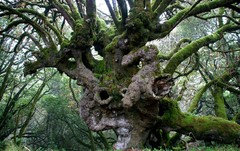
    i'm in love with particular trees, more than particular kinds of trees. here are a few i am madly in love with.

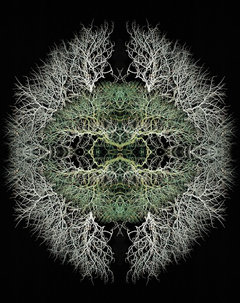
    this one is known as the grandmother buckeye and is near bolinas and point reyes. the last photo is just my artistic tribute to it.

  • PRO
    8 years ago

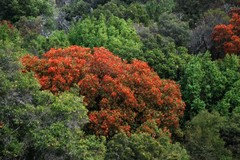
    here's another Madrone loaded with edible fruit in the hills of Central California.

  • 8 years ago
    last modified: 8 years ago

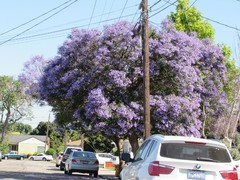
    You guys with the natives win. But I also like this-

  • 8 years ago

    Yeah, Stan, that's just what home looks like, even if it isn't a native, it feels like a native.

    i once moved to Chicago for a few years. If the weather wasn't so horrible, it would be an incredibly nice place to live, but one winter, as I was walking through a mall, I passed a stand selling eucalyptus wreaths. The scent caused such a rush of homesickness that I still remember it. The funny thing is, I still hate those stinking eucs, even if they remind me of home.

  • PRO
    8 years ago

    echolane: i own a native plant nursery and landscape business and i strongly advise against planting redwoods in a small yard. they're great on a very large property and i work where there are some enormous ones and i love them, but they are so impractical for a small yard. they'll eat your house!

  • 8 years ago

    kerrican2001(z9b CA), nonaberrie(sf bay area), sandylighthouse(7), fruithack, teajm_yahoo_com Can you tell me more about fig trees? Ive never noticed them up here in the SF Bay as much as I did in Venice/Santa Monica in LA. Which varieties do well here? Do they grow tall? Can they be pruned so that they grow tall and stay narrow?


    I have a small front yard that is mandated to have a tree and I just cut down our existing one and am considering putting in a fig tree on both sides of the driveway. ( I started a separate thread in this subforum for it as well)

  • 8 years ago

    You got that Right! Their roots are getting close to my house and I've no doubt they will eventually eat it. I HATE redwood trees. Well, at least the ones threatening me and mine.

  • 8 years ago

    I have a Black Jack fig which is supposed to be relatively smaller. Absolutely delicious figs. I don't like pruning it. It does not seem to grow on well after being pruned.

  • PRO
    8 years ago

    i LOVE redwood trees, but they require alot more room than they can get in a small yard. they should always be planted in threes in order to support each other, and each one can fill a small yard. but i certainly don't 'HATE' them!

  • 8 years ago

    If you could see what they are doing to my beautiful garden......it's really hard to have a neutral opinion about them.

  • 8 years ago

    Fig trees can be pruned as aggressively as you want. I topped one once and the only sign, other than the size was that the first crop of figs were each the size of pears.

  • 8 years ago
    last modified: 8 years ago

    Downtown Hayward used to be part of a huge estate..so for about a couple of mile radius you see GIGANTIC old Redwoods planted around 1850- 1870..fronting some tiny 800sf homes or poking out of a parking lot. Some have beautiful red trunks and dense canopy..other have- on the same street I saw this too- deeply fissured brown trunks and tiered branching.

    I did noticed one Giant had a thriving colony of Nasturtiums under it. Heavy bloom,not bothered by the Ancient tree's roots or litter . A tip?

  • 8 years ago

    How about this Ceroxylon palm?


    Or ficus elastica..