Software
Houzz Logo Print
dav4vid

Notocacti ?

16 years ago

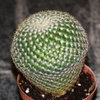
When I first planted these three gems, I was certain they were all Notocactus uebelmanianus.

{{gwi:531270}}

Then they started to bud, and one of them started showing purplish lumps

{{gwi:531271}}

Then the buds started showing different colors

{{gwi:531272}}

And today the blooms are defintely not the same.

{{gwi:531273}}

Can anyone tell me what these three (two different kinds) are?

Comments (7)

  • 16 years ago

    All three are Parodia werneri = Notocactus uebelmannianus. There are two flower colors, yellow and purple. I have both, and so do you! Changes in color intensity can occur over time as flowers open and close daily.

    Brad

  • 16 years ago

    Your plants are terrific. Well grown, plump, and happy.

    One of mine:

    {{gwi:531274}}

    {{gwi:531276}}

    Brad

  • 16 years ago

    Thanks Brad... I know this is a nasty can of worms but which name is more accepted?

  • 16 years ago

    All of the genus Notocactus has been absorbed by Parodia. Many still use the name Notocactus, but it is technically obsolete.

    There has been lots of lumping of formerly distinct groups in recent years, and many genus' have become obsolete as a result of DNA analysis. For example, Trichocereus is obsolete, lumped with Echinopsis, even though the former are tall columnar cacti from high altitudes with white flowers, and the latter were small, globular cacti from lowlands more colorful flowers. Trichocereus as a group has much more ethnobotanical interest than lowland Echinopsis, but the hallucinogenic alkaloid content was obviously not distinctive enough for the international botanical nomenclature committee.

    Notocactus (and Trichocereus) are no more ;(

    Brad

  • 16 years ago

    "but the hallucinogenic alkaloid content was obviously not distinctive enough for the international botanical nomenclature committee."

    It sounds as you are disappointed with that. Why would the the alkaloid content be important for the division of plants into groups with a common ancestor? Many cacti produce them, but the concentration varies a lot.

    (And as you indicated, Trichocereus as a group has not disappeared, it is just not currently regarded as a separate genus.)

    Btw, most Echinopsis sensu stricto have white flowers, colorful flowers are more common in Lobivia, Acanthocalycium and Helianthocereus (all of them currently lumped with Echinopsis).

  • 16 years ago

    tjicken wrote: "It sounds as you are disappointed with that"

    Hardly, but perhaps I went too far in trying to give examples of differences that might justify classification in a separate genus. Why the nitpicking, Tjicken? I was just pointing out that these groups have been lumped together, and not everyone agrees with the changes. Not being a botanist, nor seller or consumer of Trichocereus, I don't particularly care. Similarly, I have no objection to any of the other lumping that has been the recent trend of the ICBN. It's not my call to make.

    Thanks for your corrections, tjicken. Your can opener works very well, indeed.

    Brad

  • 16 years ago

    "Why the nitpicking, Tjicken? I was just pointing out that these groups have been lumped together, and not everyone agrees with the changes."

    Yes, but you specifically mentioned the ethnobotanical aspects, so I thought it was possible that you found it important. I was just curious, there are so many different opinions about how plants should be divided into different taxa. I am not really interested in systematic botany though (too disordered and subjective for me).

0
Sponsored
Custom Home Works
Average rating: 4.6 out of 5 stars10 Reviews
Franklin County's Award-Winning Design, Build and Remodeling Expert